Sliced pork tenderloin medallions tucked into a silky mushroom cream sauce are the kind of dinner that looks a little special without asking much from you in return. The pork stays tender because it gets a hard sear first, then finishes gently in the oven instead of being cooked to death on the stovetop. The sauce earns its richness from the mushroom fond left in the pan, a splash of white wine, and just enough Dijon to keep the cream from tasting flat.
What makes this version work is the order of operations. The tenderloins are browned well before they go into the oven, which gives the outside flavor and keeps the inside juicy. Then the sauce is built in the same skillet, so every browned bit from the pork and mushrooms ends up in the finished dish instead of being washed down the drain. That’s the difference between a cream sauce that tastes one-note and one that tastes like someone paid attention.
Below, I’ll walk through the part that matters most: how to keep the pork juicy, how to get the mushrooms deeply golden, and how to thicken the sauce without making it heavy.
The pork stayed juicy and the mushroom sauce thickened up perfectly in the same pan. I loved that the Dijon and white wine kept it from tasting heavy, and my husband went back for seconds before I even sat down.
Save this creamy pork tenderloin with mushroom sauce for the nights when you want a skillet dinner that feels polished but still comes together fast.
The Trick to Keeping Pork Tenderloin Juicy While the Sauce Comes Together
Pork tenderloin dries out fast when it gets pushed too far past 145°F, and that’s where a lot of skillet recipes go wrong. The goal is not a long, hard stovetop cook; it’s a fast sear for color, then a short oven finish that lets the middle stay tender. Once it’s out, the five-minute rest matters. Slice too soon and the juices run straight onto the board instead of back into the meat.
The sauce has its own trap. If you try to make it before the mushrooms have browned, you’ll end up with a pale cream sauce that tastes thin. Let the mushrooms take on color first, then add the garlic only at the end of that stage so it doesn’t burn. The wine needs a brief simmer too. That’s what cooks off the sharp edge and leaves behind the depth you want in a pan sauce.
What Each Ingredient Is Actually Doing in This Dish
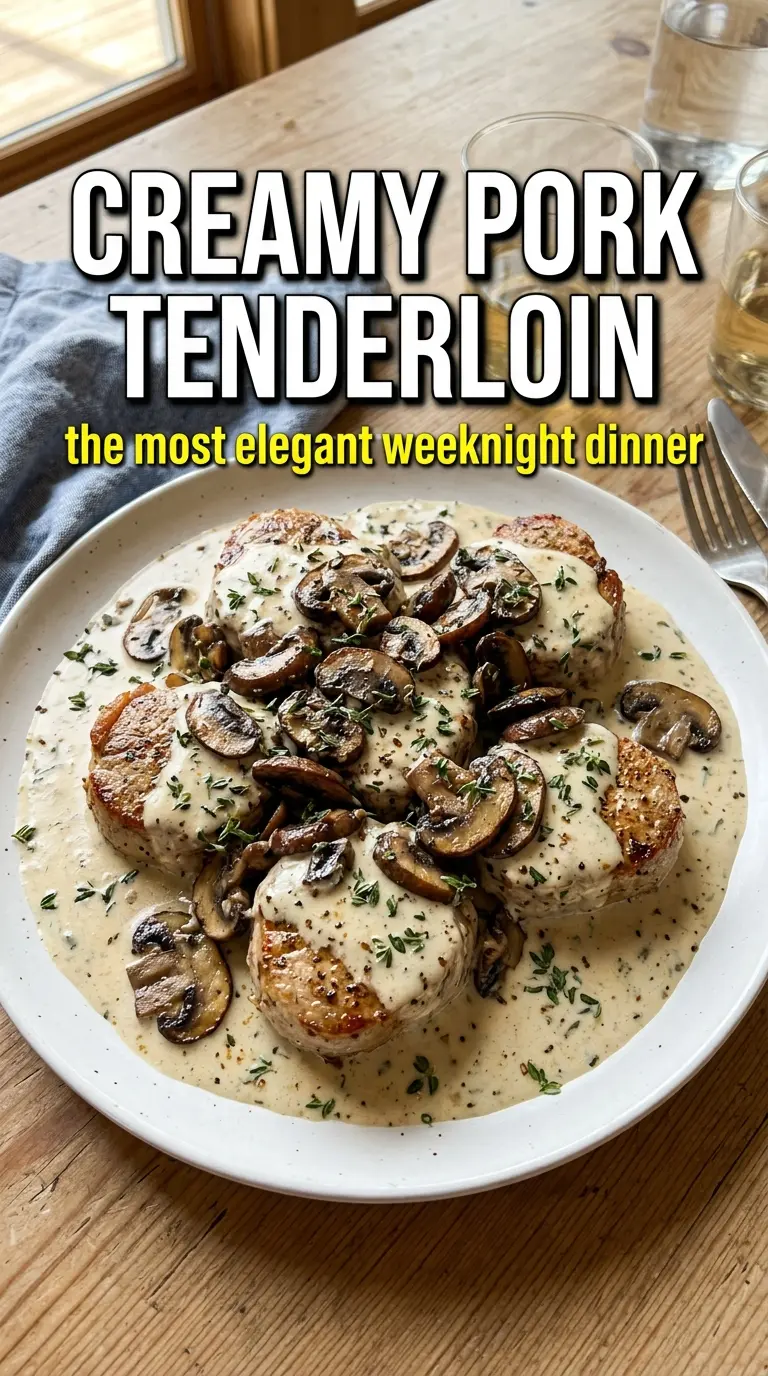
- Pork tenderloins — These are lean and mild, which is why they work so well with a rich sauce. Don’t swap in pork loin and expect the same timing; loin is thicker and needs longer, and it can turn dry before the center is done.
- Cremini mushrooms — They bring the savory base of the sauce. White mushrooms work in a pinch, but cremini have more depth and hold up better when browned in butter.
- Dry white wine — This cuts the richness and lifts the pan fond. If you don’t cook off the wine for a couple of minutes, the sauce can taste sharp instead of rounded.
- Heavy cream — This is what gives the sauce its body and silkiness. Half-and-half will work only if you keep the heat low and accept a thinner finish.
- Dijon mustard — A small spoonful keeps the cream sauce from tasting flat. It doesn’t make the sauce taste like mustard; it just adds structure and a little brightness.
- Parmesan — Use finely grated parmesan so it melts smoothly. Large shreds can clump or make the sauce grainy if they go in too fast.
Building the Pan Sauce Without Losing the Pork’s Juices
Searing for Color, Not for Doneness
Season the tenderloins well, then sear them in hot oil until the outside is deeply golden on all sides. You’re building flavor here, not cooking them through, so don’t leave them in the pan long enough to dry out the surface. If the pan is crowded or the heat is too low, the pork will steam instead of sear, and you’ll miss the browned crust that carries the whole dish.
Finishing in the Oven
Move the pork to a 400°F oven and cook it just until the center hits 145°F. That temperature gives you pork that’s juicy and still sliceable, not chalky. If you don’t have an instant-read thermometer, start checking early rather than guessing, because tenderloin goes from perfect to overdone quickly. Rest it for five minutes before slicing so the juices settle back into the meat.
Cooking the Mushrooms Down Properly
Use the same skillet and let the butter and mushrooms work over medium heat until the mushrooms are browned and the moisture has cooked off. If they still look wet, keep going. That moisture has to leave before they can actually brown. Add the garlic and thyme only after the mushrooms take on color, because garlic burns fast and turns bitter when it sits in the pan too long.
Finishing the Sauce
Deglaze with white wine and scrape up everything stuck to the bottom of the pan. That fond is where the sauce gets its depth. Let the wine reduce before adding the cream, Dijon, and parmesan, then keep the heat gentle so the dairy stays smooth. If the sauce looks thin at first, give it another minute; it should coat a spoon and cling lightly to the pork.
How to Adapt This Creamy Pork Tenderloin for Different Nights
Dairy-Free Version
Swap the butter for more olive oil and use a full-fat unsweetened coconut cream or a plain dairy-free cooking cream. You’ll lose the sharp, cheesy finish from parmesan, so add a little extra salt and a small squeeze of lemon at the end to bring the sauce back into balance.
No Wine, Still Good
Use chicken broth in place of the wine and let it simmer a minute longer so the flavor concentrates. The sauce will be a little less bright, so the Dijon matters even more here.
Gluten-Free Dinner
This recipe is naturally gluten-free as written, as long as your Dijon and broth or wine are certified gluten-free. The sauce gets its thickness from reduction and cream, not flour, so nothing else needs to change.
Make It With Chicken Instead
Boneless chicken cutlets will work if you want a quicker swap. They need less oven time than pork tenderloin, so pull them as soon as they’re cooked through and keep the sauce method the same.
Storage and Reheating
- Refrigerator: Store leftovers in an airtight container for up to 3 days. The sauce will thicken as it chills, and the pork stays best when it’s sliced rather than left whole.
- Freezer: The pork freezes okay, but the cream sauce can separate a bit after thawing. If you do freeze it, freeze the pork and sauce together for up to 1 month and expect a slightly less silky texture when reheated.
- Reheating: Warm gently on the stovetop over low heat with a splash of broth or cream. High heat is what breaks the sauce and tightens the pork, so go slow and stop as soon as it’s heated through.
Answers to the Questions Worth Asking

Creamy Pork Tenderloin
Ingredients
Equipment
Method
- Season the tenderloins with salt and pepper. Keep the seasoning even so the surface browns uniformly.
- Heat olive oil in a cast iron skillet over medium-high heat, then sear tenderloins 2–3 minutes per side until golden all over. Transfer the browned tenderloins to a 400°F oven and roast 15–18 minutes until 145°F internally.
- Rest the tenderloins for 5 minutes, then slice into medallions. This helps the juices redistribute for a tender texture.
- In the same skillet, melt butter and cook mushrooms for 5 minutes until golden. Add garlic and fresh thyme, then cook 30 seconds until fragrant.
- Deglaze with white wine, simmer for 2 minutes, then stir in heavy cream, Dijon mustard, and parmesan until thickened. Keep stirring until the sauce is silky and coats the back of a spoon.
- Serve the medallion pork over the creamy mushroom sauce and garnish with fresh parsley. Spoon extra sauce over the top for an even, herb-flecked finish.