Juicy seasoned beef, crisp lettuce, sharp cheddar, pickles, and a creamy burger sauce make these burger bowls taste like the best part of a cheeseburger without the bun getting in the way. The beef stays front and center here, with enough browning in the skillet to give you that burger-shop flavor in every bite. It’s the kind of dinner that hits fast, looks abundant in the bowl, and still feels light enough to make on a weeknight.
The trick is treating the beef like burger meat, not taco filling. Let it sit long enough in the pan to brown before you start breaking it up too much, because those caramelized bits are what make this taste like an actual burger bowl instead of plain seasoned ground beef. The sauce matters too: the mayo, ketchup, mustard, and relish make a familiar burger-style dressing that pulls everything together without drowning the lettuce.
Below, I’ll walk you through the small choices that make these bowls work — from the beef blend to the best way to keep the toppings crisp — plus a few easy swaps if you want to change up the bowl without losing what makes it good.
The beef browned beautifully and the sauce tasted just like a burger joint. I loved that the lettuce stayed crisp and the whole thing came together in under 20 minutes.
Save these burger bowls for the nights when you want all the cheeseburger flavor in a crisp, low-carb bowl.
The Reason Burger Bowls Taste Better When the Beef Browns First
Ground beef can go gray and soft fast if you keep stirring it from the start. For burger bowls, that’s the wrong texture. You want browned edges and a little concentrated beef flavor, because the lettuce and toppings are fresh and clean while the meat carries the savory part of the meal.
The other mistake is overcooking the sauce into the beef. This isn’t a skillet dinner where everything mingles together for 20 minutes. The beef gets cooked, drained if needed, then the sauce goes on at the end so the lettuce stays crisp and the pickles still taste bright instead of getting lost.
- Use 80/20 ground beef — That bit of fat keeps the meat juicy and gives you better browning. Leaner beef works, but it can taste dry in a bowl unless you add extra sauce.
- Drain excess fat after browning — You want flavor, not a greasy bottom of the bowl. Leave a little behind if the skillet looks dry, but don’t pour the fat back over the lettuce.
- Shred the cheese yourself — Pre-shredded cheddar works, but freshly shredded melts and tastes cleaner. In a cold bowl, it still gives you a softer, richer bite.
- Use crisp lettuce — Romaine or iceberg both work because they stay crunchy under warm beef. Spring mix wilts too fast here and turns the bowl muddy.
What Each Ingredient Is Actually Doing in This Burger Bowl
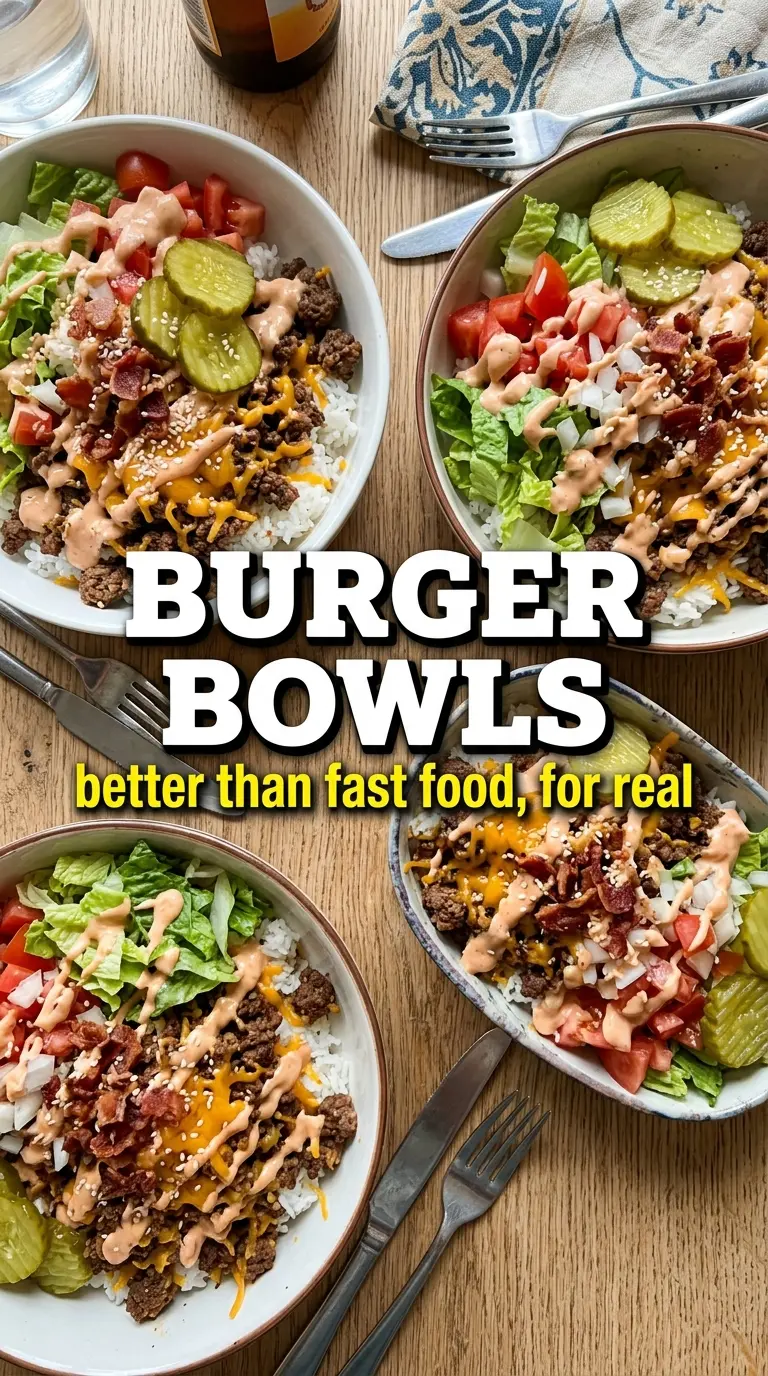
Ground beef (80/20) is the backbone of the bowl. That fat content gives you real burger flavor and enough moisture that the meat doesn’t eat like dry crumbles. If all you have is leaner beef, add a spoonful of oil to the pan and watch the texture closely so it doesn’t seize up.
Garlic powder and onion powder bring the seasoning you’d expect from a burger without adding chopped aromatics that can make the pan wet. Fresh garlic can burn in the time it takes the beef to brown, which is why the powdered version works better here.
Mayonnaise, ketchup, mustard, and relish make the burger sauce taste like the condiments you’d pile onto a cheeseburger. The relish is doing more work than it looks like; it adds sweetness and pickle tang that keeps the sauce from tasting flat. If you don’t have relish, a spoonful of finely chopped pickles is the closest swap.
Romaine or iceberg gives the bowl its crunch. Iceberg is the most classic burger-shop option because it stays cold and crisp under the warm beef, while romaine brings a little more structure and a slightly greener taste.
Sharp cheddar, pickles, tomatoes, and red onion are the supporting cast that makes the bowl feel complete. The cheese should be sharp enough to stand up to the sauce, the pickles need to be briny, and the red onion should be diced small so it pops without taking over.
Building the Bowl So the Lettuce Stays Crisp and the Sauce Stays Bold
Cook the beef like a burger, not a stew
Season the beef first, then spread it into a hot skillet and let it sit long enough to take on color before you start breaking it up. Once it browns, keep crumbling until the pieces are cooked through and no pink remains. If you stir constantly, you’ll steam the meat and miss the savory edges that make the bowl taste like a real burger.
Mix the sauce until it tastes balanced
Whisk the mayonnaise, ketchup, mustard, relish, and garlic powder until smooth and glossy. Taste it before you assemble anything, because this sauce should be tangy first, creamy second, and sweet only in the background. If it tastes flat, it usually needs a pinch more salt or a little more mustard, not more ketchup.
Assemble in layers, not piles
Start with lettuce, then add the beef, then scatter the tomatoes, pickles, onion, and cheese across the top. That order keeps the warm meat from crushing the greens too quickly and lets every bite catch a little of each topping. Drizzle the sauce over the center and around the edges so the bowl looks generous without turning soggy in the middle.
Three Smart Ways to Adapt Burger Bowls Without Losing the Point
Make it dairy-free
Skip the cheddar or use a dairy-free shredded cheese that melts well enough to soften over the warm beef. The bowl still works because the sauce and pickles carry the burger flavor, and the lettuce gives you the crunch you’d usually get from the bun.
Make it lower carb without it feeling stripped down
This recipe is already naturally low carb as written, which is part of why it works so well. If you want it even lighter, cut back on the ketchup in the sauce and add more mustard and relish for a punchier finish.
Turn it into a chopped burger salad
Chop the lettuce smaller and dice the tomatoes, pickles, and onion a little finer so every forkful feels more like a classic burger salad. This change doesn’t affect the flavor, but it makes the bowl easier to eat if you want a sturdier lunch-style salad.
Storage and Reheating
- Refrigerator: Store the beef and toppings separately for up to 3 days. The lettuce will lose some crunch if it’s already dressed.
- Freezer: The cooked beef freezes well for up to 2 months. Freeze it flat in a sealed bag, then thaw in the fridge before reheating.
- Reheating: Warm the beef in a skillet over low to medium heat or in the microwave in short bursts. Don’t reheat the assembled bowls; the lettuce will wilt and the sauce will turn watery.
Answers to the Questions Worth Asking
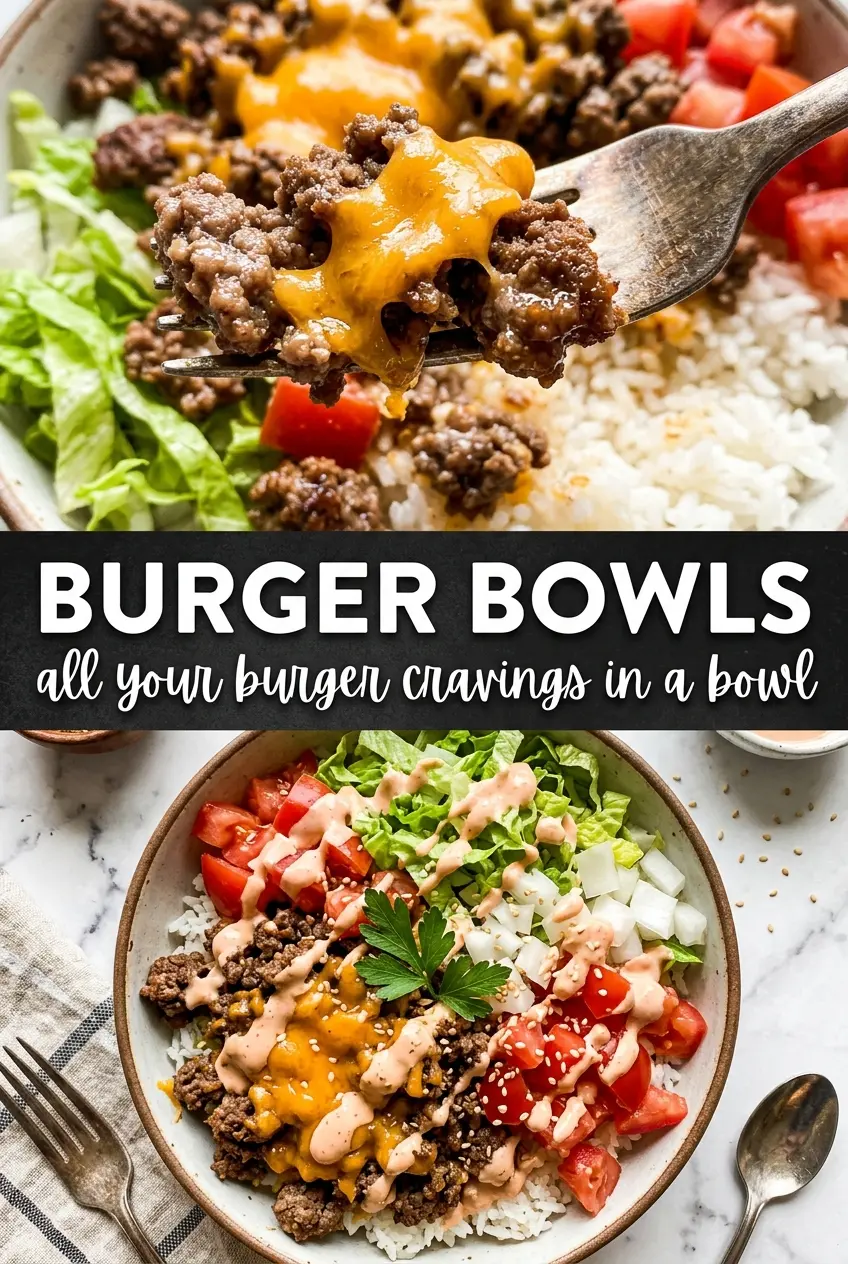
Burger Bowls
Ingredients
Equipment
Method
- Season the ground beef with garlic powder, onion powder, salt, and black pepper.
- Cook in a skillet over medium-high heat, breaking into crumbles, until browned, about 8-12 minutes.
- Drain the excess fat from the skillet so the crumbles stay juicy but not greasy.
- Whisk together mayonnaise, ketchup, mustard, pickle relish, and garlic powder until smooth.
- Divide shredded lettuce among four bowls as the base.
- Top each bowl with beef crumbles, cherry tomatoes, dill pickles, diced red onion, and shredded cheddar.
- Drizzle generously with burger sauce in a spiral and serve immediately.