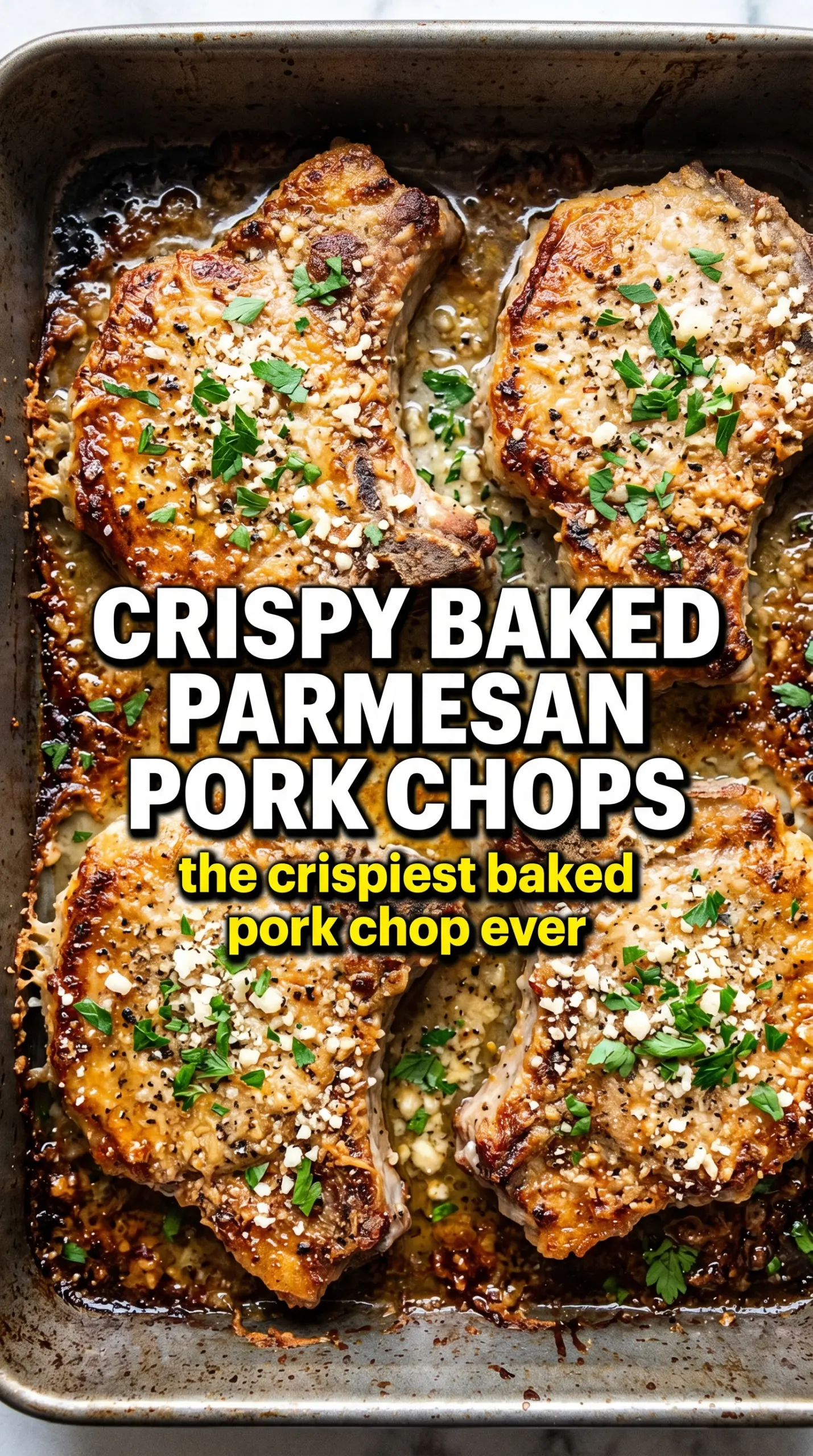
Pork chops under a golden parmesan-panko crust deliver the kind of crunch that makes baked dinner feel worth the effort. The outside turns crisp and shattery, while the center stays juicy if you stop cooking at the right moment and give the chops a short rest before serving.
What makes this version work is the mustard-mayo coating underneath the crumbs. It acts like both glue and a little insurance, helping the coating cling tightly and brown evenly without needing eggs or a flour dredge. Panko keeps the crust lighter and crispier than regular breadcrumbs, and the parmesan adds salt, nuttiness, and that deep savory edge that makes you want another bite.
The trick is pressing the coating on firmly and baking the chops on a parchment-lined sheet with a light mist of oil. That combination gives you better color and less soggy bottom than a crowded pan ever will. Below, I’ve included the little details that keep the crust crisp and the pork tender, plus a few swaps if you need to work with what’s already in the kitchen.
The parmesan crust browned up beautifully and stayed on the pork chops instead of sliding off. I baked mine right at 20 minutes, and the center was still juicy. My husband asked if I could put this one on repeat.
Crispy baked parmesan pork chops with a crunchy crust and juicy center deserve a spot in your weeknight rotation.
The Coating Needs Pressure, Not Just a Sprinkle
The most common mistake with breaded pork chops is treating the crumb layer like a dusting. That leaves patchy spots, loose crumbs, and a crust that falls off the second you move the chop. Press the parmesan-panko mixture onto both sides with real pressure so it bonds to the mustard-mayo layer and forms one solid shell.
The second issue is heat. If the oven runs too cool, the coating dries out before it browns, and the pork can go chalky by the time the crust looks done. At 425°F, the crumbs toast fast enough to get color without parking the chops in the oven long enough to dry them out.
- Boneless chops work best here because they cook evenly and stay easy to slice after a short rest.
- Parmesan gives the crust its salty bite, but it needs to be finely grated so it blends into the panko instead of clumping.
- Olive oil spray is what helps the top crust turn deeply golden instead of looking pale and dry.
- Resting matters. The pork finishes cooking as it sits, and those juices settle back into the meat instead of spilling onto the plate.
What Each Ingredient Is Actually Doing in This Dish
- Boneless pork chops — Three-quarter-inch chops are thick enough to stay juicy but thin enough to cook through before the crust overbrowns. Thicker chops need a little more time; thinner ones cook too fast and can dry out.
- Dijon mustard — This gives the coating something tangy to grab onto and helps balance the richness of the parmesan. You’ll taste it only faintly, but if you swap it for plain yellow mustard, the flavor gets sharper and less rounded.
- Mayonnaise — It looks unusual, but it helps the crust brown and stick without a flour or egg step. If you’re out of it, use Greek yogurt, though the crust will be a little less rich and slightly tangier.
- Panko breadcrumbs — Panko is what gives you that crisp, airy crunch instead of a dense breading. Regular breadcrumbs work in a pinch, but the texture lands flatter and less fragile in a good way.
- Parmesan cheese — Use finely grated parmesan, not thick shreds, so it melts into the crumb mixture and browns evenly. The pre-grated shelf-stable kind can work, but fresh-grated parmesan tastes cleaner and crisps better.
- Olive oil spray — A light coating on top is enough to help the crumbs toast. Too much oil softens the crust, which defeats the whole point.
Getting the Crust Golden Before the Pork Overcooks
Mix the Binder First
Stir the Dijon and mayonnaise together until smooth before you touch the pork. That gives you an even layer that spreads cleanly and helps the crumb mixture attach in one pass. If the binder is streaky or too thick in spots, the breading will clump instead of forming a tight crust.
Press the Crumbs Like You Mean It
Season the chops first, then coat both sides with the mustard mixture and press them into the parmesan-panko blend. Don’t just dip and lift; use your hands to pack the crumbs on so they stay put during baking. The surface should look thickly coated with no wet patches showing through.
Bake Hot and Stop at 145°F
Set the chops on parchment and give the tops a light spray of oil before they go into the oven. Bake until the crust is deep golden and the pork reaches 145°F in the thickest part, usually 18 to 20 minutes. If the crust is browning faster than the pork cooks, move the pan to a lower rack rather than dragging out the bake time.
Let the Juices Settle
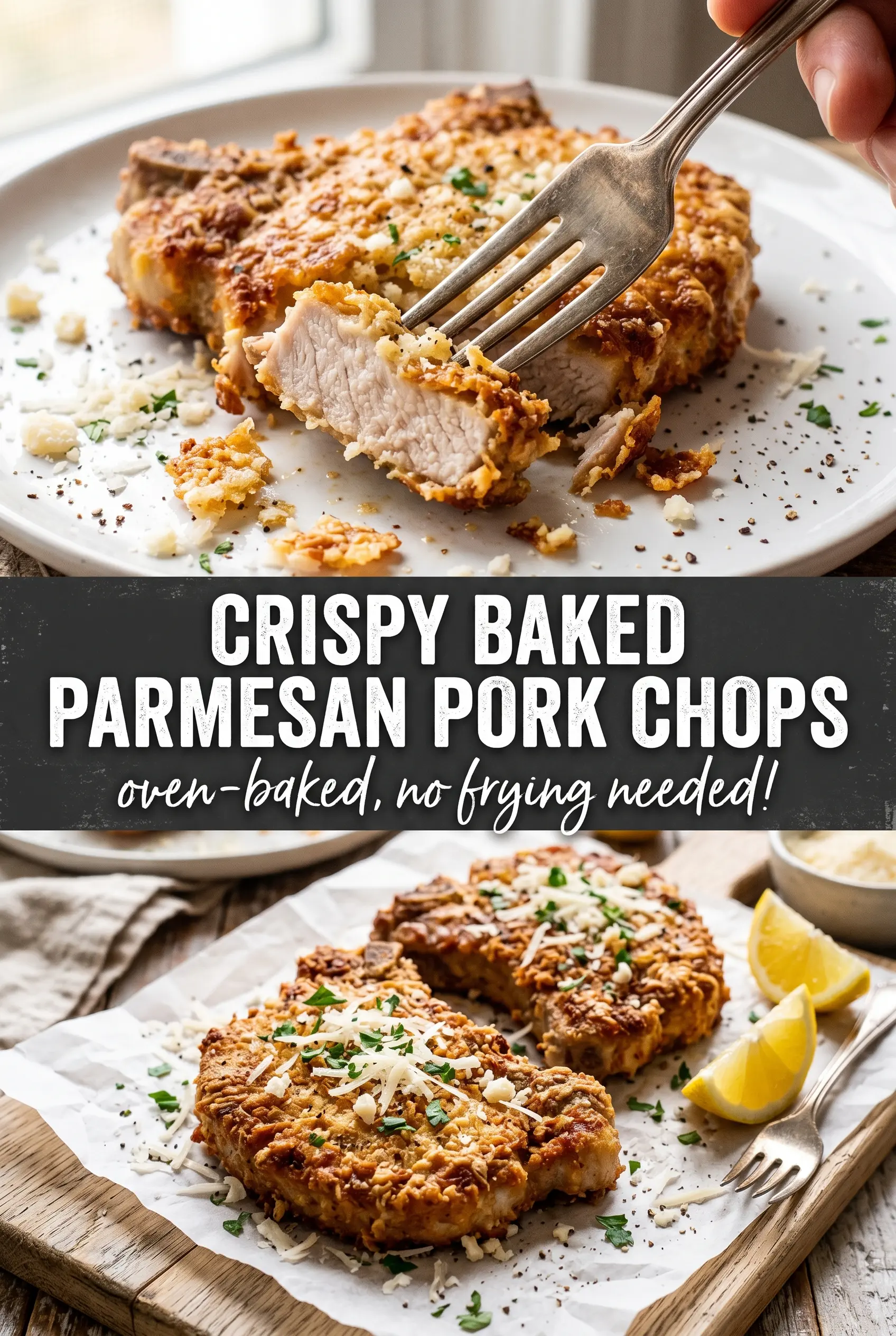
Rest the chops for 3 minutes before cutting in. That short pause keeps the juices from running out the second the knife hits the meat, and it gives the crust a moment to firm up after the oven. Serve with lemon wedges and parsley so the richness gets a bright finish.
Three Ways to Make These Pork Chops Fit What’s in Your Kitchen
Gluten-Free Crust with the Same Crunch
Swap the panko for gluten-free panko-style crumbs. You’ll still get a crisp finish, though the texture may be a touch finer and less airy than standard panko. Keep the coating light so it doesn’t feel heavy on the pork.
Dairy-Free Version
Use a dairy-free parmesan-style cheese in place of the parmesan and keep the rest the same. The crust won’t have quite the same salty depth, so taste the crumb mixture before coating and adjust the seasoning a little more boldly.
Use Bone-In Chops When That’s What You Have
Bone-in chops work, but they usually need a few extra minutes in the oven and may cook unevenly if one side is much thicker. Pull them when the thickest part hits 145°F and let the residual heat finish the job. The bone adds flavor, but the crust can brown before the center is done, so watch the temperature closely.
Make It Extra Lemony
Add finely grated lemon zest to the panko mixture and serve with plenty of lemon wedges. The zest brightens the parmesan and cuts through the richness without changing the crisp texture. Keep the amount modest so the coating still tastes savory instead of citrus-forward.
Storage and Reheating
- Refrigerator: Store leftovers in an airtight container for up to 3 days. The crust softens a bit, but the flavor holds up well.
- Freezer: They freeze better after baking than before. Wrap each cooled chop tightly and freeze for up to 2 months, though the crust won’t stay as crisp after thawing.
- Reheating: Reheat on a rack in a 375°F oven or air fryer until hot and re-crisped. Skip the microwave if you want the coating to stay crunchy, because it turns the breading soggy fast.
Answers to the Questions Worth Asking
Crispy Baked Parmesan Pork Chops
Ingredients
Equipment
Method
- Preheat the oven to 425°F and line a baking sheet with parchment. Make sure the oven is fully heated so the crust browns quickly.
- Mix the Dijon mustard and mayonnaise in a bowl. Stir until smooth and thick enough to coat the pork evenly.
- In a second bowl, combine the panko breadcrumbs, parmesan, garlic powder, Italian seasoning, salt, and pepper. Mix until evenly distributed with no dry clumps.
- Season the pork chops with salt and pepper. Keep the seasoning light but even on both sides.
- Spread the mustard-mayo mixture over both sides of the pork chops. Cover completely so the crumb coating sticks.
- Press the panko parmesan mixture firmly onto both sides. Press with your fingertips to create a tight, crunchy layer.
- Place the pork chops on the baking sheet and spray lightly with olive oil. Arrange with space between them for even browning.
- Bake for 18–20 minutes at 425°F, until the crust is deep golden and the pork reaches 145°F. Look for a visibly crisp, golden crust as the visual cue.
- Rest the pork chops for 3 minutes before slicing or serving. This helps the juices settle so the centers stay juicy.
- Serve with lemon wedges and fresh parsley. Squeeze lemon over the chops right before eating for brightness.