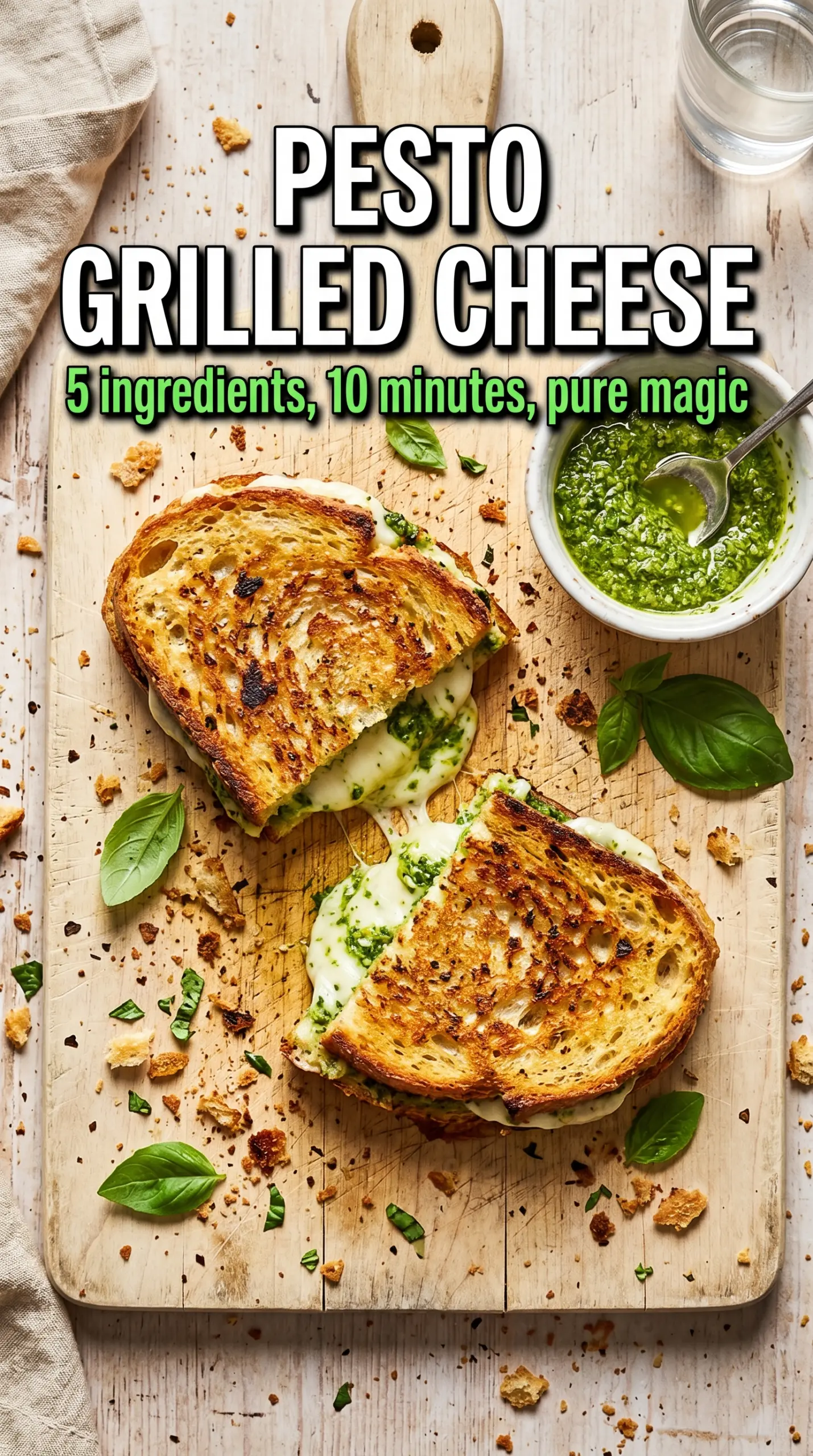
Golden sourdough, melted mozzarella, and basil pesto make this grilled cheese feel a little more considered than the one you throw together on autopilot, but it still lands squarely in quick-lunch territory. The crust gets crisp and shattery while the center turns plush and stretchy, with sun-dried tomatoes adding little pockets of sweet-tart intensity that keep every bite from tasting one-note.
The trick is using medium-low heat and giving the sandwich time to build color slowly. If the pan runs too hot, the bread darkens before the mozzarella has a chance to melt through, and you end up with a sandwich that looks done but eats stiff in the middle. Softened butter on the outside gives you even browning, while pesto on the inside keeps the basil flavor bright instead of cooked off.
Below, I’m walking through the small details that make the difference: which bread holds up best, how to keep the pesto from leaking, and the easiest way to get that gooey center without burning the crust.
The bread turned out perfectly crisp and the mozzarella melted all the way through without the pesto getting greasy. The sun-dried tomatoes added just enough tang that my husband said it tasted like a restaurant sandwich.
Save this pesto grilled cheese for the day you want gooey mozzarella, crisp sourdough, and a fast lunch that still feels special.
The Sandwich Fails When the Heat Is Too High
Most grilled cheese problems start with impatience. High heat gives you a dark crust before the mozzarella fully softens, which is why people bite into a sandwich that looks perfect and still feels cold in the middle. Medium-low heat stretches the process just enough for the cheese to melt while the bread slowly turns deep golden brown.
The other thing that matters here is where the pesto goes. It belongs on the inside so it flavors the cheese directly and stays protected from the skillet. Put it on the outside and it can scorch fast, which steals that fresh basil taste and leaves you with bitter edges.
What Each Ingredient Is Actually Doing in This Sandwich
- Sourdough bread — Thick slices hold up to the filling without collapsing, and the sturdy crumb gives you a crisp shell instead of a flimsy toast. If you swap in softer sandwich bread, keep the heat lower and watch closely, because it browns faster and can go soggy at the center.
- Basil pesto — This is the main seasoning, so use one that tastes good straight from the spoon. Store-bought pesto works fine here, but if it’s very oily, stir it first so the flavor doesn’t separate in clumps.
- Fresh mozzarella — Fresh mozzarella gives you the stretchy, creamy melt that makes this sandwich worth making. Slice it thin so it melts before the bread overcooks; thick hunks can leave you with hot bread and stubborn cheese.
- Sun-dried tomatoes in oil — These bring sweetness, tang, and a chewy bite that cuts through the richness. Drain them well so the sandwich doesn’t turn greasy, but don’t rinse them or you’ll lose the seasoning they carry.
- Softened butter — Soft butter spreads in a thin, even layer and helps the bread brown evenly. Melted butter can soak in unevenly and give you patchy color instead of that clean, even crust.
Building the Sandwich So the Cheese Melts Before the Bread Burns
Butter the Outside First
Spread the butter on the outer faces of each bread slice before anything else. That gives you better control and keeps the bread from tearing when you assemble the sandwich. A thin, even layer is enough; thick spots can brown too fast and leave you with blotchy toast.
Stack the Filling on the Pesto Side
Spread the pesto on the unbuttered sides, then layer the mozzarella and sun-dried tomatoes on two slices only. The cheese should cover most of the surface so the sandwich seals into one cohesive melt. If the filling is piled in the center, the edges toast before the middle catches up.
Cook Low and Slow in the Skillet
Set the sandwich in a skillet over medium-low heat and let it go for 4 to 5 minutes per side. Press gently with a spatula so the bread makes full contact with the pan, but don’t smash it flat or the filling will squeeze out. Flip when the first side is deep golden and the cheese is starting to soften at the edges; if it’s too dark before the second side goes in, the heat is too high.
Slice While the Cheese Is Still Loose
Let the sandwich rest for a minute, then cut it in half. That tiny pause keeps the mozzarella from rushing out the second you slice it, and it gives you a cleaner cheese pull. Serve it right away while the crust is still crisp and the center is silky.
Three Practical Ways to Adjust It Without Losing What Makes It Good
Make It Gluten-Free With a Sturdy Sandwich Bread
Use a gluten-free bread that’s built for toasting, not a soft, airy loaf. The sandwich will still work, but you may need to lower the heat a touch because some gluten-free breads brown faster on the outside before the center has time to warm through.
Swap the Mozzarella for Provolone or Fontina
Provolone gives a sharper, saltier sandwich, while fontina melts just as well and tastes a little nuttier. Either one is a good choice if you want a richer melt, but you’ll lose the delicate stretch that fresh mozzarella brings.
Use Vegan Pesto and Plant-Based Cheese
A dairy-free pesto and meltable plant-based mozzarella can work here, especially if the cheese is one that softens instead of just turning greasy. Keep the heat low and give it extra time, because plant-based cheeses usually need longer in the pan to get properly melted.
Add a Tomato Layer for a Brighter, Juicier Sandwich
A few thin slices of fresh tomato can replace part of the sun-dried tomatoes if you want a softer, juicier bite. Pat them dry first or the bread will steam instead of crisp, and keep the layer thin so the filling doesn’t slide around when you flip it.
Storage and Reheating
- Refrigerator: Store leftovers wrapped tightly for up to 2 days. The bread will soften a little, but the flavor holds up.
- Freezer: Not ideal. The fresh mozzarella changes texture after freezing and the sandwich can turn watery when reheated.
- Reheating: Reheat in a skillet over low heat until the bread crisps again and the center loosens. The mistake to avoid is the microwave, which makes the crust limp before the cheese has warmed evenly.
Answers to the Questions Worth Asking

Pesto Grilled Cheese
Ingredients
Equipment
Method
- Spread the softened butter on the outside of each sourdough bread slice, leaving the inside unbuttered for better pesto adhesion.
- Spread the basil pesto generously on the inside (unbuttered) side of all four bread slices.
- Layer the sliced fresh mozzarella and drained sun-dried tomatoes on two of the pesto-covered slices.
- Top with the remaining two bread slices, pesto-side in and buttered-side out, to form two sandwiches.
- Heat a skillet over medium-low heat, then place the sandwiches in the pan and cook 4–5 minutes per side, pressing gently to help the cheese melt.
- Flip the sandwiches carefully and cook another 4–5 minutes per side until deep golden brown and the cheese is fully melted.
- Slice each sandwich in half and serve immediately to keep the interior gooey.