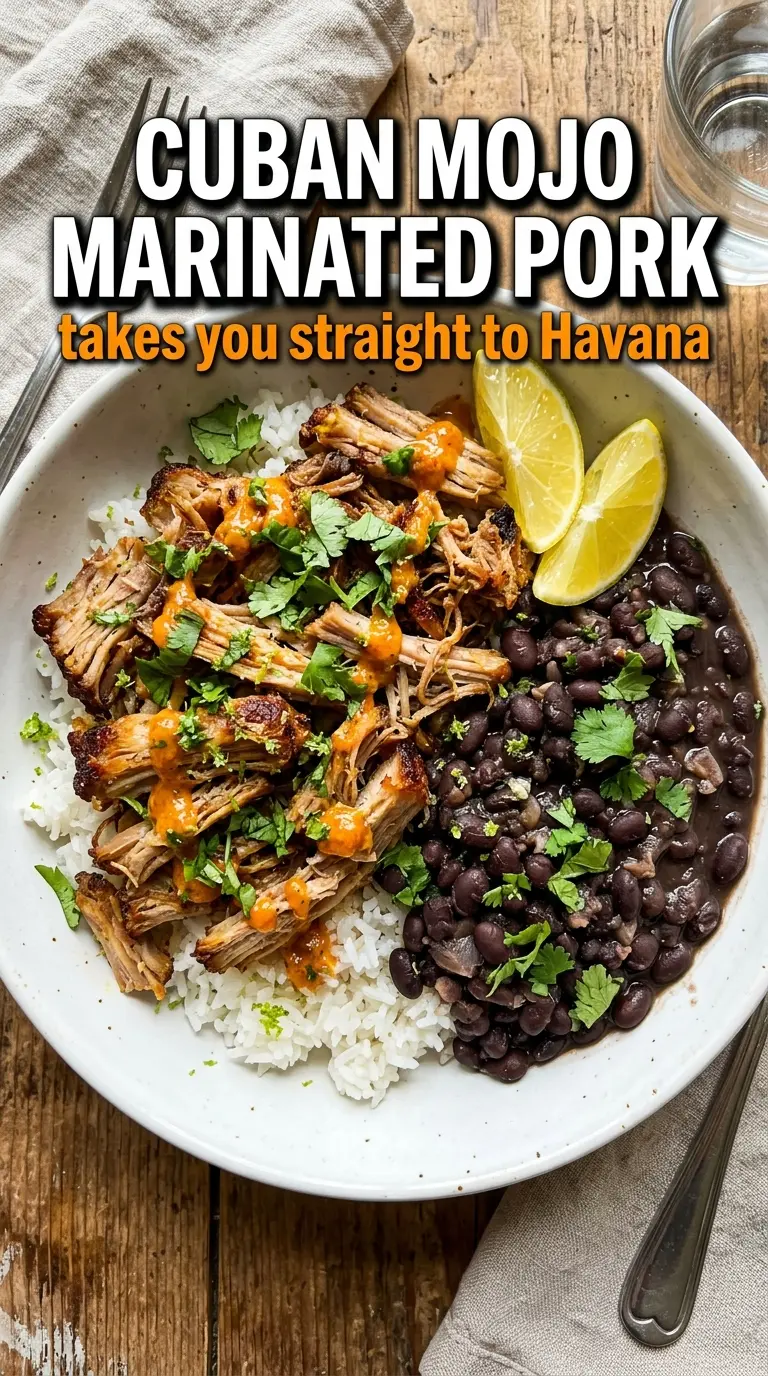
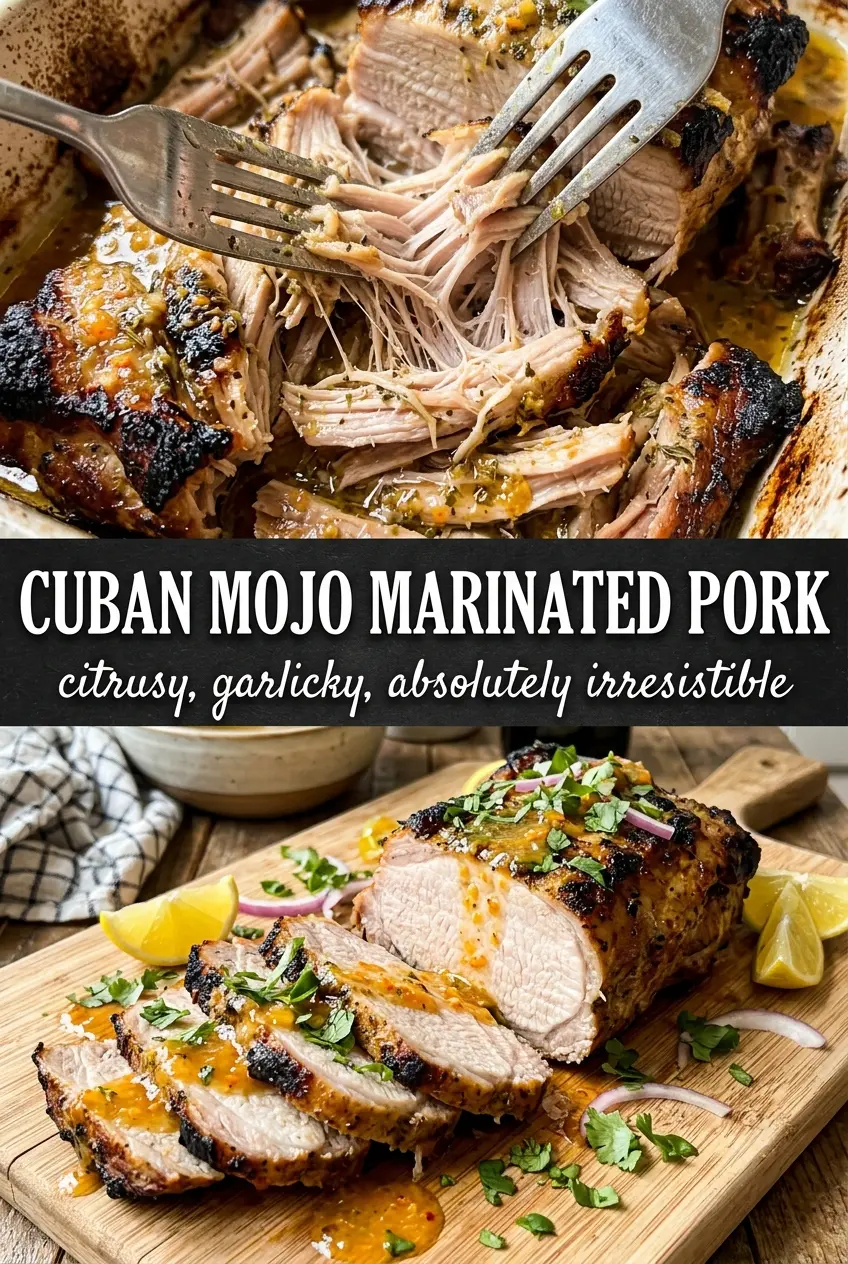
Caramelized, citrusy pork with a pull-apart interior is the kind of roast that disappears fast once it hits the table. The outside turns deep and golden in the oven while the inside stays juicy enough to shred into tender pieces that soak up every bit of the garlicky mojo. It tastes bold without being heavy, which is why it works just as well for a Sunday dinner as it does for the next day’s rice bowls.
The part that makes this version stand out is the balance in the marinade. Fresh orange juice gives it sweetness and browning power, lime keeps it sharp, and enough garlic and cumin carry the whole roast through its long cook. Scoring the pork matters too. Those cuts let the marinade get into the meat instead of just coating the surface, and that’s what gives you flavor all the way through, not just on the crust.
Below, I walk through the exact roasting cues I use so you don’t pull it too early or let the crust go past caramelized into dry. I’ve also included the swap I use when I want a more citrus-forward mojo and the best way to handle leftovers without losing that juicy texture.
The pork shredded into the softest pieces and the crust had that sticky, garlicky edge I was hoping for. I let it go the full 4 hours in the marinade and the lime-orange combo came through all the way to the center.
Save this Cuban mojo pork for the nights when you want a citrus-garlic roast with a crackly, caramelized crust and juicy shredded meat.
The Marinade Needs Time to Penetrate, Not Just Coat
The biggest mistake with mojo pork is treating the marinade like a sauce. It’s not there to sit on top and look glossy. It needs hours to move into the pork shoulder and season the meat from the outside in. Pork shoulder has enough fat and connective tissue to handle that long soak, and the citrus acids soften the surface just enough to help the aromatics work their way in.
The second mistake is rushing the roast uncovered. If you start with dry heat, the sugars in the citrus can scorch before the pork has time to turn tender. Covered roasting first traps moisture and gives the shoulder time to loosen up. The final uncovered roast is where the magic happens: that’s when the crust deepens, the edges crisp, and the pan juices concentrate.
- Pork shoulder or butt — This cut has the fat and connective tissue that turn silky after a long roast. Loin won’t give you the same shreddable texture and dries out before the crust is ready.
- Fresh orange juice — Bottled juice won’t carry the same brightness or aroma. Fresh orange gives the marinade its round sweetness and helps the pork brown in the oven.
- Fresh lime juice — Lime keeps the marinade sharp enough to cut through the richness. If you need a fallback, bottled lime juice works in a pinch, but the flavor will be flatter.
- Garlic, cumin, oregano, and smoked paprika — These are the backbone of the mojo. Mince the garlic fine so it disperses evenly; large bits can burn on the surface during the final roast.
- Olive oil — Oil helps the marinade cling to the meat and carries the spices across the surface. Use a decent everyday olive oil, not anything so grassy it dominates the citrus.
- Fresh cilantro — Stir it in at the end of the marinade or use it for serving. It adds a clean, herbal finish that keeps the roast from tasting heavy.
What Each Ingredient Is Actually Doing in This Pork Dish
- Pork (cut properly for method) — Pat dry so it browns instead of steams. Even thickness ensures uniform cooking.
- Oil or butter (the browning medium) — High-heat oil essential for proper searing. Creates pan flavor.
- Seasonings (salt, pepper, spices) — Build flavor boldly. Pork carries the entire profile.
- Aromatics (garlic, onion, herbs) — Cook with fat to bloom flavors. Become the foundation.
- Sauce or braising liquid (if using) — This keeps lean pork from drying. Balance richness with acid.
- Vegetables (if using) — Layer by cooking time. Hard vegetables first so everything finishes together.
- Acid (vinegar, wine, or citrus) — This brightens sauce and prevents heavy flavor. Add near end.
- Proper doneness (145°F with slight pink center) — Pork is safe here and stays juicy. Higher temps dry it out.
Roasting the Pork So It Stays Juicy and Still Gets a Real Crust
Build the Mojo Until It Smells Bright and Sharp
Blend the garlic, citrus juice, oil, cumin, oregano, paprika, salt, pepper, and cilantro until the marinade looks loose and emulsified. You want a fragrant liquid with no big chunks of garlic left behind. If the garlic stays coarse, it can burn in patches during the roast instead of seasoning the meat evenly. Taste the marinade before it goes on the pork; it should be aggressively seasoned because the shoulder will mellow it during cooking.
Score, Marinate, and Let the Pork Work Slowly
Cut shallow scores all over the pork shoulder, then slide it into a zip-top bag or roasting dish and pour the marinade over it. The scoring gives the mojo a way in, and the bag keeps the meat in full contact with the liquid. Four hours is the minimum for flavor, but overnight gives you the best payoff if you have the time. If you’re tempted to shorten the marinade, know that the outside will taste good, but the center won’t have the same depth.
Roast Covered Before You Chase Color
Set the pork in a roasting pan with the marinade, cover it tightly with foil, and roast at 325°F until it starts to turn tender. The foil traps steam and keeps the surface from drying before the interior softens. If the foil is loose, moisture escapes and the shoulder can toughen around the edges before the center is ready. After about 2 1/2 hours, the meat should be yielding and just starting to pull apart at the thickest point.
Finish Uncovered for the Caramelized Edges
Remove the foil and roast until the outside turns deep golden and the internal temperature reaches about 190°F. That higher temperature is what gives you shreddable pork; stop at 145°F and you’ll get slices, not that soft pull-apart texture. Watch the surface closely during this final stage because the citrus and garlic can go from bronze to bitter if they sit under heat too long. Rest the pork for 15 minutes before shredding so the juices settle back into the meat instead of running across the cutting board.
How to Adapt This Cuban Mojo Pork for Different Tables
Make It More Citrus-Forward
Add a little extra orange juice and a teaspoon of lime zest to the marinade. The roast will taste brighter and slightly sweeter, though the crust may brown a touch faster because of the extra natural sugar.
Make It Dairy-Free and Gluten-Free Without Changing Anything
This recipe already fits both diets as written, which is one reason it’s such a reliable main dish. Serve it with rice, black beans, roasted plantains, or a simple salad and you’ve got a naturally gluten-free, dairy-free meal.
Use It for Sandwiches the Next Day
Shred the pork a little finer and spoon some of the pan juices back over it before piling it onto rolls. That extra moisture keeps the meat tender and gives you the same garlicky citrus flavor in every bite instead of a dry stack of leftovers.
Storage and Reheating
- Refrigerator: Store the shredded pork in its juices for up to 4 days. It stays moist better this way, and the flavor gets deeper by the next day.
- Freezer: Freezes well for up to 3 months in airtight containers or freezer bags. Portion it with a little of the pan juice so it doesn’t dry out when thawed.
- Reheating: Reheat gently in a covered skillet with a splash of the reserved juices or in a low oven covered with foil. High heat dries out the shredded meat fast, so warm it slowly until just heated through.
Questions I Get Asked About This Recipe
Cuban Mojo Marinated Pork
Ingredients
Equipment
Method
- Blend the garlic, orange juice, lime juice, olive oil, cumin, dried oregano, smoked paprika, salt, black pepper, and chopped cilantro until smooth.
- Score the pork shoulder all over with a sharp knife, then place it in a zip-lock bag and pour the marinade over it.
- Refrigerate the pork 4–8 hours or overnight to marinate.
- Preheat the oven to 325°F.
- Place the marinated pork in a roasting pan, pour in any remaining marinade, cover tightly with foil, and roast for 2.5 hours.
- Uncover and continue roasting 30–45 minutes, until the outside is golden and caramelized and the internal temperature reaches 190°F.
- Rest the pork 15 minutes before shredding or slicing so the juices redistribute.
- Serve with lime wedges and cilantro.