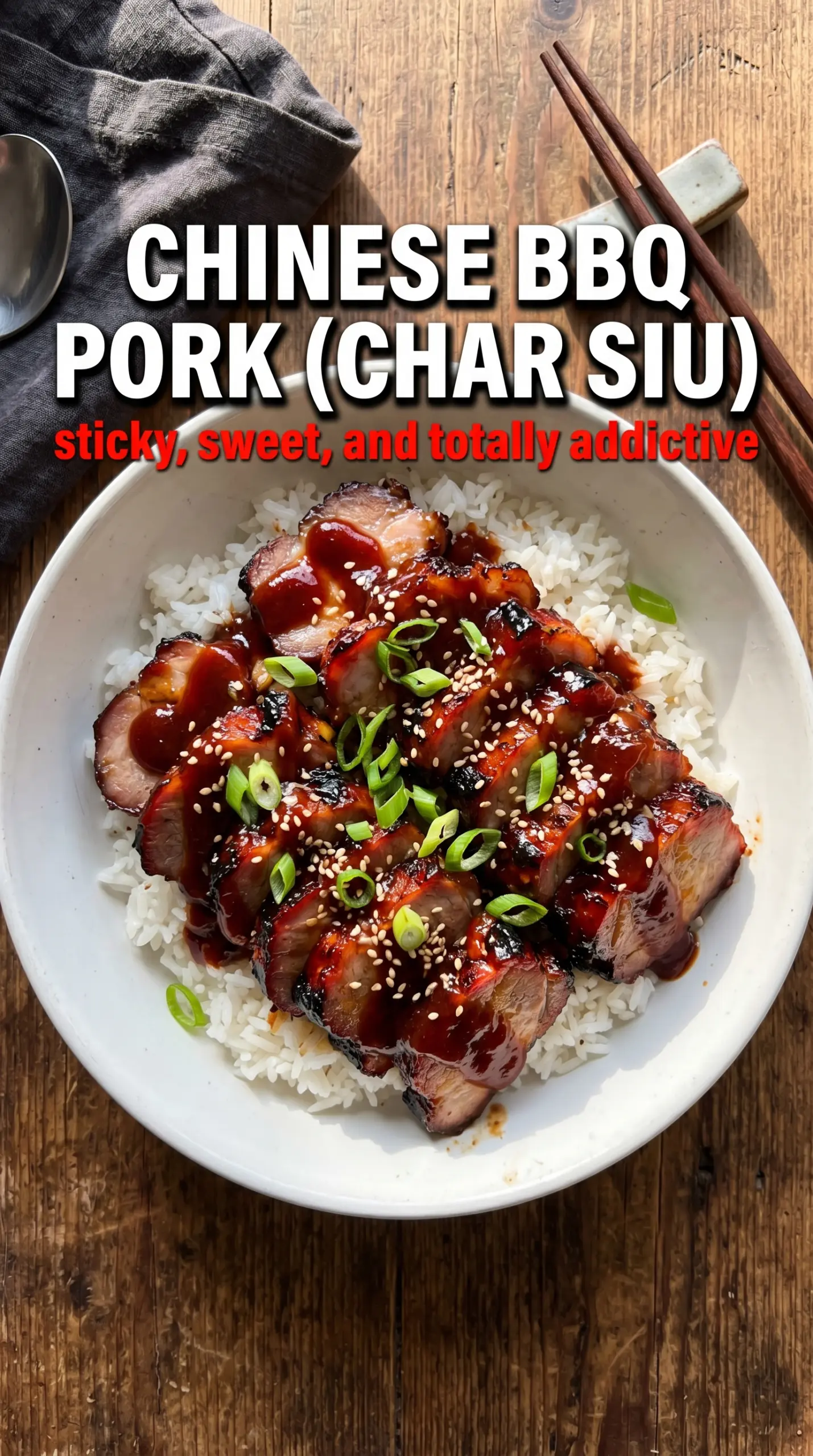
Char siu should come out glossy, sticky, and deeply savory with those caramelized edges that crackle a little when you slice into them. The best versions don’t taste like plain roast pork with sauce on top; the glaze gets baked into the meat, and every bite carries that balance of honey, hoisin, soy, and five spice. When it’s done right, the outside turns lacquered and mahogany-red while the center stays tender and juicy.
The trick is in the marinade and the heat. Hoisin and soy give the backbone, honey and brown sugar build the shine, and a little oyster sauce adds the round, savory depth that keeps the sweetness from taking over. Roasting the pork on a rack lets the fat drip away instead of pooling under the meat, and that matters more than people think. If the pork sits in its own juices, it steams. If it’s elevated, it browns.
Below, I’ve laid out the parts that matter most: why the marinade works, how to get that glazed finish without burning the sugars, and a few smart swaps if you don’t have every ingredient on hand. The method is simple, but the details make the difference between decent and unforgettable.
The glaze set up beautifully and the pork stayed juicy even after the broil. I used shoulder, and the edges got that sticky char siu finish without drying out.
Pin this lacquered char siu for the nights when you want glossy Chinese BBQ pork with caramelized edges and tender pink slices.
The Reason Char Siu Gets Glossy Instead of Burnt
Char siu lives or dies on sugar management. Honey, brown sugar, and hoisin all help build that shiny red-brown finish, but they can turn bitter fast if the heat is too aggressive. That’s why this recipe starts hot enough to caramelize, then finishes with a shorter roast and a quick broil only at the end. The broiler gives you the charred edges people expect; it should never be the main heat source.
Another place people go wrong is brushing on glaze too early and too often. Raw sugar-heavy marinade on high heat will darken before the pork has had time to cook through. Reserve some marinade, loosen it with honey, and use it during the final stretch when the surface has already started to set. That gives you shine without scorching.
- Pork shoulder gives you the most forgiving result because the fat keeps the strips juicy even if they go a minute too long. Pork tenderloin works too, but it needs closer attention and will be leaner and a little less plush.
- Hoisin sauce brings the signature sweet-salty depth. There isn’t a perfect substitute, but if you’re in a pinch, use a mix of barbecue sauce and a little extra soy, knowing the result will taste more Western and less distinctly char siu.
- Chinese rice wine or dry sherry helps the marinade taste rounded instead of flat. Skip it only if you have to; if you do, use a splash of water plus a little extra soy, but the aroma won’t be as layered.
- Five spice powder is the backbone of the whole dish. Even a tiny amount reads clearly after roasting, so don’t overdo it or the pork will taste perfumy instead of balanced.
What Each Ingredient Is Actually Doing in This Pork Dish
- Pork (cut properly for method) — Pat dry so it browns instead of steams. Even thickness ensures uniform cooking.
- Oil or butter (the browning medium) — High-heat oil essential for proper searing. Creates pan flavor.
- Seasonings (salt, pepper, spices) — Build flavor boldly. Pork carries the entire profile.
- Aromatics (garlic, onion, herbs) — Cook with fat to bloom flavors. Become the foundation.
- Sauce or braising liquid (if using) — This keeps lean pork from drying. Balance richness with acid.
- Vegetables (if using) — Layer by cooking time. Hard vegetables first so everything finishes together.
- Acid (vinegar, wine, or citrus) — This brightens sauce and prevents heavy flavor. Add near end.
- Proper doneness (145°F with slight pink center) — Pork is safe here and stays juicy. Higher temps dry it out.
How to Build the Glaze So It Turns Sticky, Not Burned
Mixing the Marinade Until It Goes Smooth
Stir the hoisin, soy sauce, honey, rice wine, oyster sauce, brown sugar, sesame oil, five spice, garlic, and optional red coloring until the marinade looks glossy and fully blended. If the honey sits in streaks at the bottom, the pork won’t marinate evenly and the glaze will look patchy later. The mixture should smell sweet, savory, and warm from the spice. Coat the pork well enough that every strip looks lacquered, then cover and refrigerate for at least 4 hours so the seasoning has time to move past the surface.
Roasting on a Rack for Better Caramelization
Set the oven to 425°F and put a foil-lined sheet pan on a lower rack to catch drips, then place the pork on a wire rack over its baking sheet. That gap matters because char siu needs airflow around the meat; otherwise the bottom steams and softens while the top browns. Roast for 15 minutes, then flip the strips so the second side gets equal heat. If the pork still looks pale and wet after the first roast, it hasn’t started to set yet — keep going until the edges start looking sticky.
The Final Brush and Broil
Mix the reserved marinade with a spoonful of honey and brush it over the pork after the flip. That extra honey helps build the lacquer, but only once the meat has already firmed up a little. Roast another 12 to 15 minutes until the outside is dark red-brown and the edges look caramelized, then broil for 2 to 3 minutes to deepen the char. Watch it closely at this point; the line between deeply glazed and burnt is short, and sugar changes color in a hurry under the broiler.
Three Practical Ways to Adjust This Char Siu Recipe
For a leaner version, use pork tenderloin
Pork tenderloin cooks faster and slices neatly, which makes it a good choice if you want a lighter result. The tradeoff is that it won’t have quite the same rich, plush texture as shoulder, so pull it sooner and don’t let it dry out under the broiler.
For a gluten-free version, use tamari and a gluten-free oyster sauce
Swap the soy sauce for tamari and check that your oyster sauce is labeled gluten-free. The flavor stays close to the original, and the glaze still gets that deep savory finish without changing the cooking method.
For a more classic red color, use the food coloring
The food coloring is optional, but it gives the finished pork that familiar deep red char siu look. If you leave it out, the flavor doesn’t change at all; the pork just looks more naturally mahogany-brown from the caramelized marinade.
Storage and Reheating
- Refrigerator: Store leftovers in an airtight container for up to 4 days. The glaze softens a little as it sits, but the pork stays tasty for slicing into rice bowls or noodle dishes.
- Freezer: Char siu freezes well. Wrap slices tightly and freeze for up to 2 months, then thaw overnight in the fridge so the glaze doesn’t weep too much.
- Reheating: Warm gently in a skillet over low heat with a splash of water or in a 300°F oven, covered loosely with foil. High heat dries the pork out and can harden the sugary glaze before the center is hot.
Answers to the Questions Worth Asking
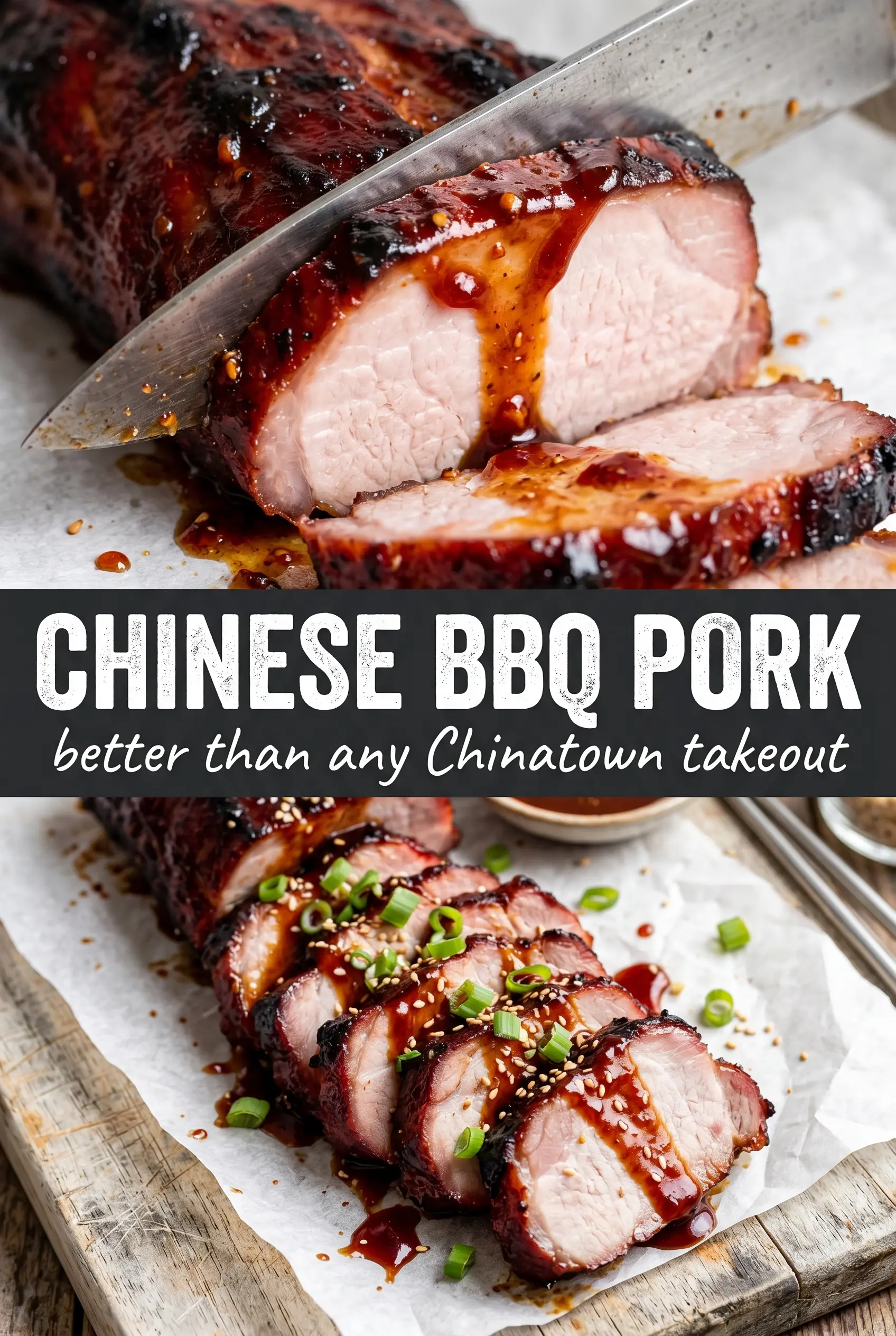
Chinese BBQ Pork (Char Siu)
Ingredients
Equipment
Method
- Mix hoisin sauce, soy sauce, honey, Chinese rice wine or dry sherry, oyster sauce, brown sugar, sesame oil, five spice powder, red food coloring (optional), and minced garlic until smooth.
- Coat the pork shoulder or tenderloin strips thoroughly in the marinade, cover, and refrigerate for 4–8 hours or overnight.
- Preheat the oven to 425°F and place a rack in the upper third with a foil-lined baking sheet on the rack below to catch drips.
- Transfer the marinated pork strips to a wire rack over the sheet and reserve the marinade for later.
- Roast the pork for 15 minutes.
- Flip the pork, brush with the reserved marinade mixed with a spoonful of honey, and roast 12–15 more minutes until the edges are caramelized.
- Broil for 2–3 minutes for deeper char, then slice and serve.