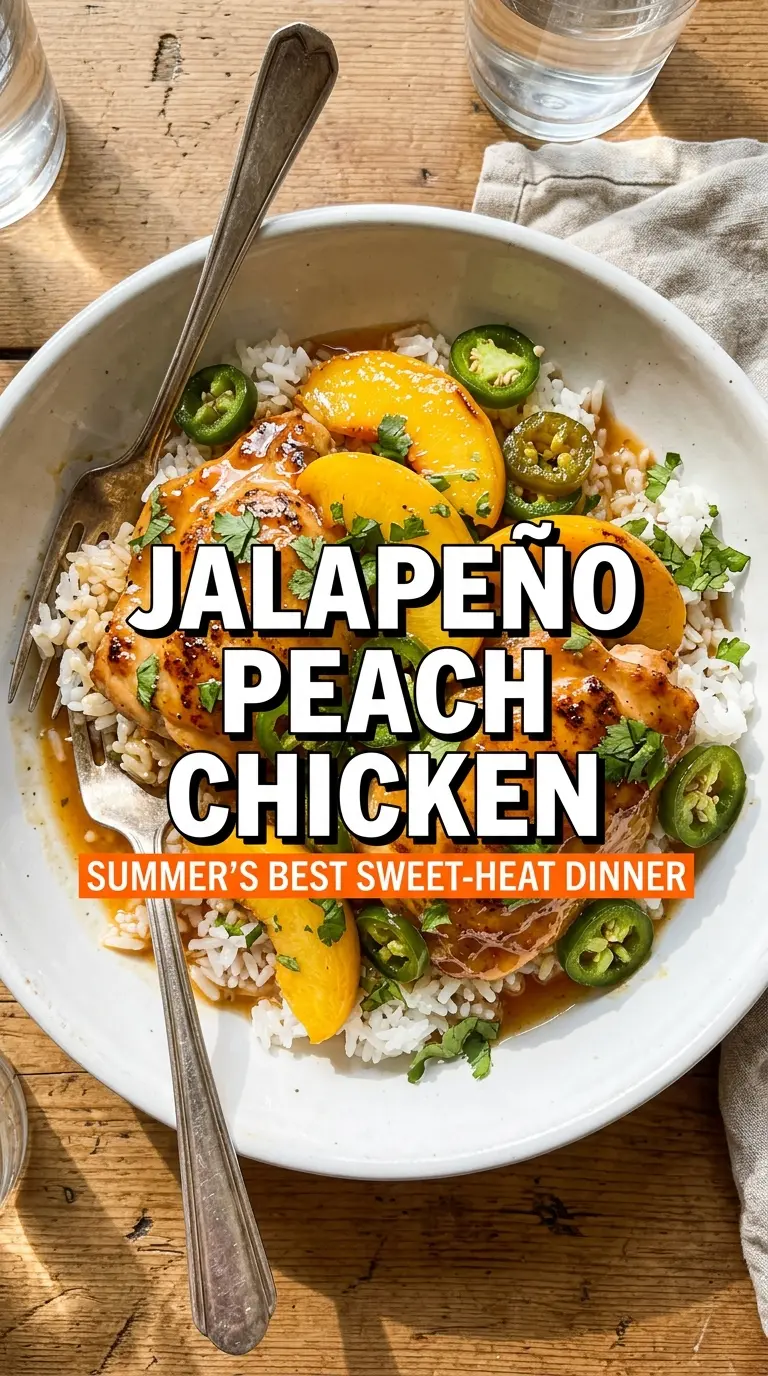
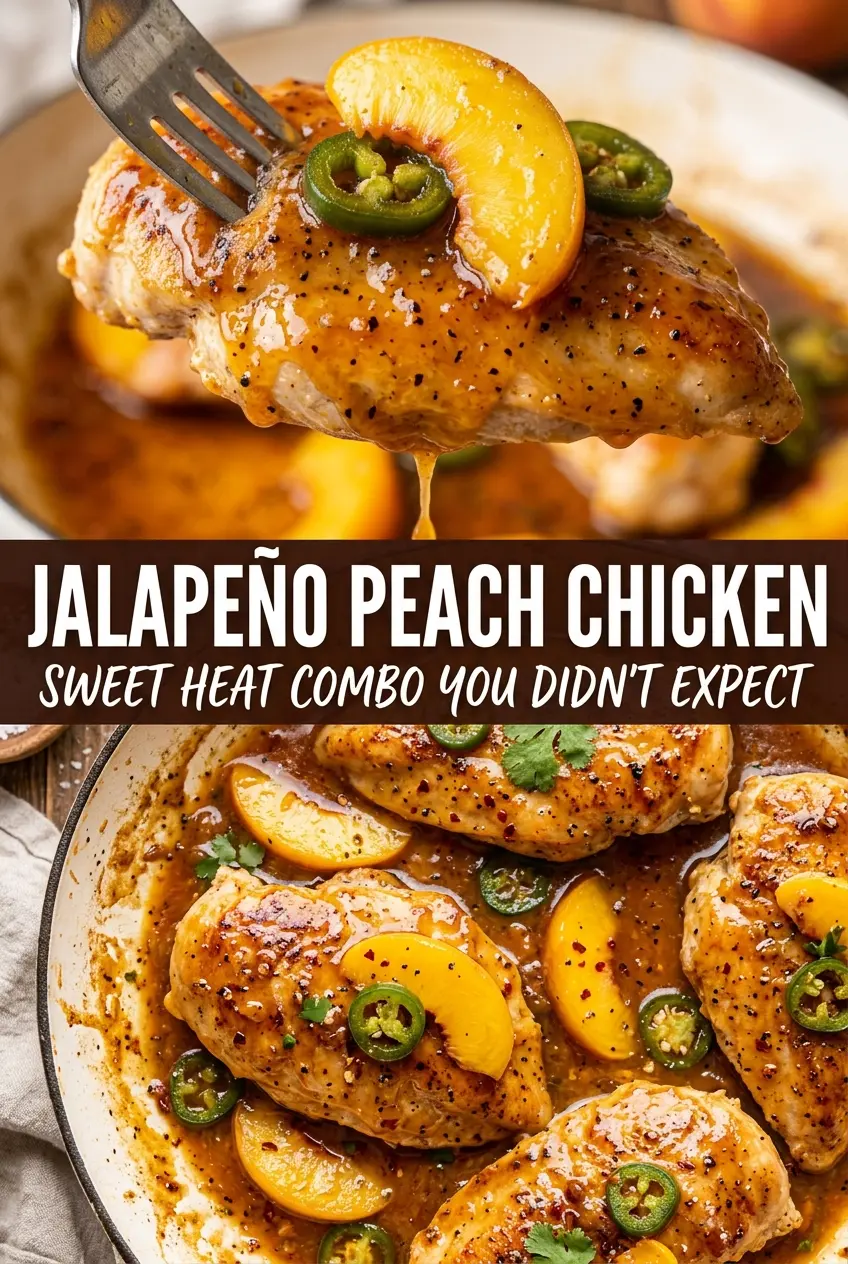
Jalapeño peach chicken hits that sweet-spicy line in a way that keeps you going back for one more bite. The chicken sears into a deep golden crust first, then gets finished in a glossy peach glaze that clings to every edge instead of running thin on the plate. Fresh peaches soften into the sauce, jalapeños bring a clean heat, and the whole skillet smells like dinner with a little extra personality.
What makes this version work is the order. The chicken browns before it ever sees the glaze, so it keeps its texture instead of turning soft in the sauce. The peaches go in after the garlic and jalapeños have had a minute to wake up, which keeps the glaze bright and layered instead of flat. Honey rounds out the heat, soy sauce adds depth, and a splash of apple cider vinegar keeps the whole thing from tasting heavy.
Below, you’ll find the exact timing that keeps the chicken juicy, plus a few smart swaps if your peaches are more sweet than fragrant or you want the heat a little lower. The skillet sauce comes together fast, so it helps to have everything sliced and measured before the pan gets hot.
The glaze thickened up beautifully and coated the chicken instead of pooling at the bottom. I used fresh peaches from the farmers market and the skillet smelled incredible. My husband asked if I could make it again the next night.
Pin this jalapeño peach chicken for the nights when you want a glossy skillet dinner with sweet heat and almost no cleanup.
The Secret to Keeping the Peaches Bright Instead of Mushy
Peaches can go from perfect to dull fast once they sit too long in a hot pan. The trick here is to let them soften just enough to release their juices, then stop cooking once the sauce turns glossy and lightly thickened. If you simmer them until they collapse completely, you lose the fresh peach flavor that makes this dish stand out.
The other common mistake is crowding the skillet with chicken that hasn’t browned yet. That steams the meat and leaves you with pale, flat-tasting chicken under a good sauce. You want a true sear first, because those browned bits in the pan become part of the glaze and give the sauce the savory backbone it needs.
- Chicken breasts — Use boneless, skinless breasts that are close in size so they cook at the same pace. If one side is much thicker, pound it lightly or slice it open to even it out.
- Peaches — Fresh peaches bring the clearest flavor, but frozen peaches work well when they’re the better option. Don’t thaw them fully; add them straight to the skillet so they don’t turn watery before the sauce reduces.
- Jalapeños — Seeds in will give you the most balanced heat. If you want a softer burn, remove the seeds and the white ribs, which carry most of the heat.
- Honey, soy sauce, and vinegar — This is the base that turns fruit into a glaze. Honey gives body, soy sauce adds salt and depth, and vinegar keeps the sauce from tasting sticky or one-note.
- Chicken broth — Use a broth you actually like the taste of, since it becomes part of the sauce. Water will thin the glaze without adding anything back.
- Fresh thyme — Thyme adds a light herbal note that works with peaches without fighting them. Dried thyme can step in, but use less because it reads stronger and less delicate.
What Each Ingredient Is Actually Doing in This Chicken Dish
- Chicken (pat dry for browning) — Room temperature cooks more evenly. Even thickness ensures uniform cooking.
- Oil or butter (the browning medium) — High-heat oil essential. Creates pan flavor through browning.
- Seasonings (salt, pepper, spices) — Apply generously. Chicken carries the entire flavor profile.
- Aromatics (garlic, ginger, or herbs) — Cook with fat to bloom flavors. Become the foundation.
- Sauce or braising liquid (if using) — This keeps chicken moist. Balance richness with acid.
- Vegetables (if using) — Layer by cooking time. Hard vegetables first, soft vegetables last.
- Acid (vinegar, wine, lime, or pineapple) — This brightens and prevents one-dimensional flavor.
- Proper doneness (165°F internal temperature) — Use thermometer for accuracy. Overcooked is dry and flavorless.
Building the Glaze in the Same Skillet You Used for the Chicken
Searing the Chicken First
Season the chicken with salt and black pepper, then lay it in the hot oil and leave it alone long enough to build color. You want a deep golden crust that releases cleanly when it’s ready to turn. If the chicken sticks, it’s not ready yet. Pulling it too early tears the surface and leaves you with pale patches instead of a proper sear.
Waking Up the Garlic and Jalapeños
Once the chicken comes out, add the garlic and jalapeños to the same skillet and cook them just until fragrant, about a minute. The garlic should smell warm, not sharp or bitter. If the heat is too high here, the garlic can brown before the glaze even starts, and that bitterness carries through the whole sauce.
Reducing the Peach Glaze
Add the peaches, honey, soy sauce, vinegar, and broth, then let the mixture simmer until the peaches soften and the sauce starts to coat the back of a spoon. Stir now and then so the honey doesn’t catch on the pan bottom. If the glaze still looks thin after five or six minutes, keep it at a steady simmer rather than turning up the heat, which can make it reduce too fast and taste harsh.
Finishing the Chicken in the Sauce
Return the chicken to the skillet and spoon the glaze over the top until every piece is lacquered and hot through. Those last two minutes matter because they let the chicken pick up the sauce without overcooking. Finish with fresh thyme right before serving so the herbs stay bright instead of fading into the glaze.
How to Make This Jalapeño Peach Chicken Work for Your Kitchen
Make it milder without losing the sweet heat
Remove the jalapeño seeds and white ribs, or use just one pepper instead of two. You’ll still get that peppery backbone, but the glaze will read more fruity than hot.
Use frozen peaches when fresh ones aren’t worth buying
Frozen sliced peaches work well here, especially out of season. Add them straight from frozen so they release liquid gradually as the sauce reduces instead of turning the pan watery all at once.
Make it gluten-free without changing the texture
Swap the soy sauce for tamari or a certified gluten-free soy sauce. The sauce will still thicken and glaze the chicken the same way, with the same savory edge.
Turn it into a thigh recipe for richer flavor
Boneless chicken thighs work well if you want a juicier, richer result. They may need a few extra minutes in the skillet, but they hold up beautifully under the glaze and stay tender even if you cook them a touch past the ideal point.
Storage and Reheating
- Refrigerator: Store leftovers in an airtight container for up to 3 days. The glaze will thicken as it chills, and the peaches will soften a little more.
- Freezer: It freezes reasonably well for up to 2 months, though the peach pieces will lose some texture. Freeze in a shallow container and thaw overnight in the refrigerator.
- Reheating: Warm gently in a covered skillet over low heat with a splash of broth or water to loosen the glaze. High heat is the mistake here, because it tightens the chicken and can make the sugars in the sauce catch.
Answers to the Questions Worth Asking
Jalapeño Peach Chicken
Ingredients
Equipment
Method
- Season the chicken breasts with salt and black pepper. Heat the olive oil in a cast iron skillet over medium-high heat and sear for 5–6 minutes per side until golden, then set aside.
- In the same skillet, add the minced garlic and thinly sliced jalapeños and cook for 1 minute. Add the sliced peaches, honey, soy sauce, apple cider vinegar, and chicken broth.
- Simmer the glaze for 5–6 minutes, stirring occasionally, until the peaches soften and the sauce thickens. Scrape up any browned bits so they blend into the glaze.
- Return the chicken to the skillet and spoon the glaze over the top. Cook for 2 more minutes to coat the chicken and warm through.
- Sprinkle with fresh thyme and serve with the pan sauce spooned over the top. Let it rest for 1–2 minutes if you want the sauce to cling a bit more.