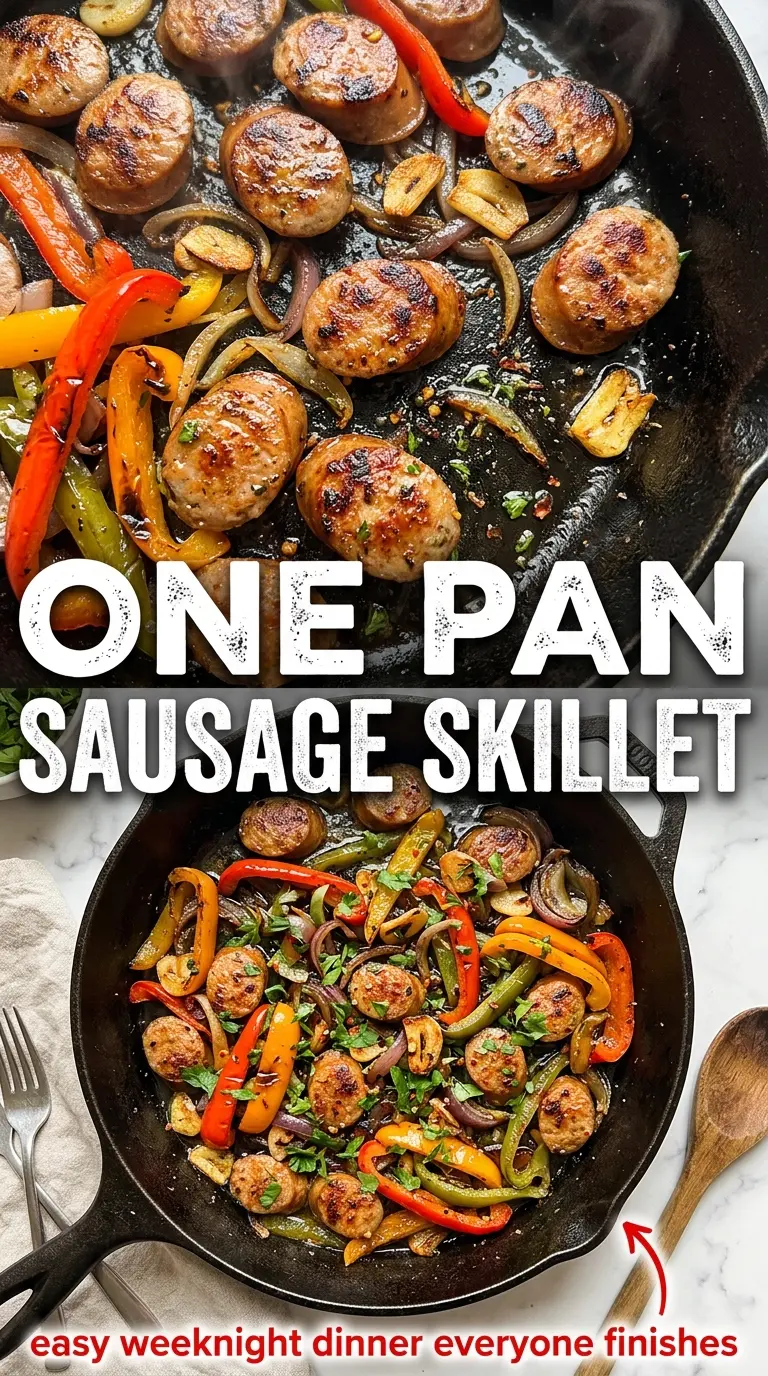
Golden sausage rounds, blistered peppers, and tender zucchini make this skillet dinner feel like far more than a quick weeknight fix. The payoff comes from the contrast: crisp-edged sausage, vegetables that still have bite, and just enough seasoning to tie everything together without turning the pan into mush. It’s the kind of meal that disappears fast because every bite has a little char, a little sweetness, and a lot of savory depth.
What makes this version work is the order. The sausage goes in first so it can brown in its own fat and leave behind all those browned bits that season the vegetables later. Then the peppers and onion get enough heat to blister instead of steam, which is where the flavor lives. Zucchini goes in last because it softens quickly and can go watery if it hangs around too long.
Below, I’ve included the small details that make a skillet like this dependable: how to get color without overcooking, which sausage gives the best result, and a few easy ways to change it up depending on what’s in the fridge.
The sausage browned up beautifully and the peppers stayed crisp-tender instead of turning soggy. I added the lemon at the end like suggested and it pulled everything together.
Save these caramelized sausage rounds and blistered veggies for the nights when you want one pan, big flavor, and almost no cleanup.
The Trick to Getting Color Instead of Steamed Vegetables
The biggest mistake with a skillet like this is crowding the pan and turning the vegetables soft before they brown. High heat works here because you want the edges of the peppers and onion to take on a little char while the zucchini stays intact. If the pan looks wet, the heat isn’t high enough or the vegetables are piled too thick.
Another thing that matters: don’t rush the sausage. Letting it sit undisturbed for a few minutes gives you that deep golden crust that makes the whole dish taste cooked, not just heated. Those browned bits left behind are what season the vegetables once they hit the skillet.
- Smoked sausage or kielbasa — This is the backbone of the dish, so pick one with good seasoning and enough fat to brown well. Turkey sausage works, but it won’t give you the same crisp edges or rich pan drippings.
- Bell peppers and onion — These need high heat to soften at the edges and char in spots. Any color of bell pepper works, but the mix gives you better sweetness and color contrast.
- Zucchini — It goes in late because it cooks fast and releases moisture quickly. Slice it into thicker half-moons so it holds its shape instead of turning limp.
- Smoked paprika — This adds a deeper, grilled note that fits the browned sausage and charred vegetables. Regular paprika will work in a pinch, but the smoky version makes the pan taste fuller.
What Each Ingredient Is Actually Doing in This Recipe
- Primary ingredient (the star) — Quality matters most. Choose the best you can find.
- Cooking medium (oil, butter, or broth) — This carries flavors and prevents dryness.
- Seasonings (salt, pepper, spices, herbs) — Layer flavors so nothing overpowers. Build depth gradually.
- Aromatics (garlic, onion, herbs) — Cook with fat to bloom flavors. Become the foundation.
- Supporting ingredients — Complement the main ingredient without overpowering it.
- Sauce or liquid (if applicable) — Brings flavors together. Balance richness with acid.
- Acid (lemon, vinegar, wine, or other) — Brightens and prevents flat-tasting results.
- Final finish (garnish, glaze, or sauce) — Prevents one-dimensional taste and adds visual appeal.
Building the Pan in the Right Order
Brown the Sausage First
Heat the olive oil in a large cast iron skillet over medium-high heat, then add the sausage in a single layer. Leave it alone for 3 to 4 minutes so the bottom turns deeply golden before you flip it. If you keep stirring, it will dry out before it ever gets that crust. Pull it out once both sides are browned; it finishes later and won’t need more time than that.
Char the Peppers and Onion
Add the peppers and onion to the same pan and spread them out so they’re touching the hot surface instead of steaming in a heap. You want blistered skins, softened edges, and a few dark spots on the onions. If the vegetables start giving off lots of liquid, the heat is too low. Let that moisture cook off before you move on.
Finish With Garlic and Zucchini
Stir in the zucchini and garlic next. Garlic only needs a brief run in the pan or it turns bitter, and zucchini should still have some firmness at the center when you stop cooking. Season with smoked paprika, Italian seasoning, salt, and pepper, then return the sausage and toss everything together for a minute or two. The goal is hot, glossy, and well coated — not soft.
How to Change This Skillet Without Losing the Good Part
Make It Dairy-Free and Naturally Gluten-Free
This dish already lands in a good place for both, as long as your sausage is labeled gluten-free. The texture and flavor stay the same because the skillet relies on browning, not cream or breading.
Swap in Chicken Sausage for a Lighter Version
Chicken sausage works well if you want a lighter skillet, but it usually browns a little less aggressively than smoked pork sausage. Add a touch more oil if needed and keep the heat up so the vegetables still char instead of sweating.
Use Whatever Vegetables Need Using Up
Mushrooms, broccoli florets, or yellow squash can stand in for part of the zucchini and peppers. Just keep the same rule: the densest vegetables go in first, and anything that softens fast goes in near the end so the skillet still has texture.
Storage and Reheating
- Refrigerator: Store in an airtight container for up to 4 days. The vegetables soften a little, but the flavor holds up well.
- Freezer: It freezes, but the zucchini softens after thawing. If you plan to freeze it, expect a looser texture and use it more like a cooked veggie mix than a crisp skillet dinner.
- Reheating: Warm it in a skillet over medium heat so the sausage re-crisps a bit and the moisture cooks off. The microwave works, but it tends to steam the vegetables and dull the edges you worked to get in the first place.
Answers to the Questions Worth Asking

Sausage and Veggies Skillet
Ingredients
Equipment
Method
- Heat 2 tablespoons olive oil in a large cast iron skillet over medium-high heat. Add sausage rounds in a single layer and cook undisturbed for 3-4 minutes until deeply golden on one side.
- Flip the sausage rounds and cook another 2 minutes. Remove and set aside once the edges are deeply golden and caramelized.
- Add bell peppers and onion to the same skillet and cook over high heat for 4-5 minutes until blistered and charred at the edges. Keep the heat high so you get dark, caramelized spots.
- Add zucchini and garlic and cook another 3-4 minutes until just tender. The vegetables should be bright and slightly browned, not soft.
- Season with smoked paprika, Italian seasoning, salt, and pepper; stir to distribute the spices. Return the sausage to the pan so it warms through with the vegetables.
- Toss everything together for 1-2 minutes until heated through. Garnish with fresh parsley and serve with lemon wedges.