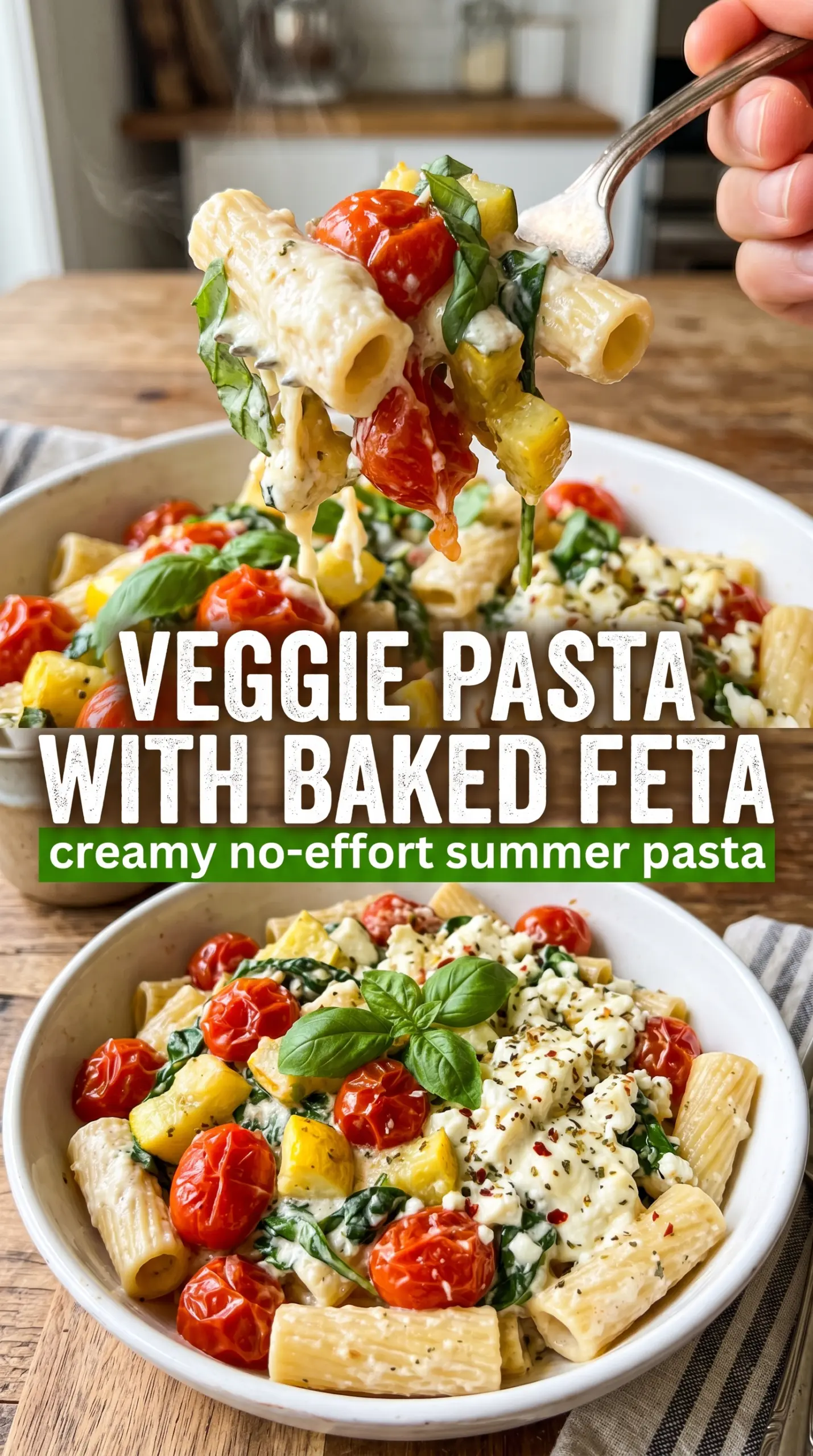
Baked feta pasta earns its place in the rotation when the tomatoes collapse into a jammy sauce and the feta turns creamy at the edges, salty enough to carry the whole pan. With zucchini, red bell pepper, red onion, and garlic roasting right alongside the cheese, the dish lands somewhere between weeknight comfort and something you’d happily serve to friends without changing a thing.
The part that makes this version work is balance. The feta goes in whole so it softens instead of disappearing, and the vegetables roast until they have color, not just heat. That caramelization matters because the sauce isn’t built from cream or stock; it comes from tomato juices, olive oil, and the salty fat from the feta. A little pasta water finishes the job and turns the pan into something glossy enough to cling to every ridge of the noodles.
Below you’ll find the easiest way to get the feta creamy without drying it out, plus a few swaps that keep this pasta flexible if your fridge is full of different vegetables.
The feta got creamy and the tomatoes turned into the best sauce without any extra cream. I tossed in a little pasta water like you suggested and it coated the penne perfectly. My daughter asked for the leftovers the next day, which never happens.
Save this baked feta veggie pasta for the nights when you want a creamy, roasted-tomato dinner with almost no cleanup.
The Reason the Feta Turns Creamy Instead of Dry
The biggest mistake with baked feta pasta is treating the cheese like a topping instead of part of the sauce. If the feta sits there exposed to dry oven heat too long, it tightens up and gets chalky at the edges before the tomatoes have had time to burst. Nestling it in the center of the vegetables and surrounding it with plenty of olive oil and tomato juices keeps it soft and spoonable.
Another detail that matters is the tomato-to-pan ratio. A 9×13 dish gives the vegetables enough room to roast instead of steam, which is how you get those browned edges and concentrated flavor. If the pan is overcrowded, the vegetables release too much liquid and the sauce turns thin instead of glossy.
- Feta — A block of feta melts into a creamy, tangy base in a way crumbled feta can’t match. Use a full block if you can; pre-crumbled feta often contains anti-caking agents and stays grainier.
- Cherry tomatoes — These are the engine of the sauce. As they burst, they release sweet-tart juice that mixes with the feta and olive oil. Grape tomatoes work too, but very large tomatoes don’t concentrate as well.
- Zucchini, bell pepper, and red onion — These vegetables add body and keep the dish from tasting one-note. Dice them into similar sizes so they roast evenly; bigger chunks will stay firm while the tomatoes finish.
- Whole garlic cloves — Whole cloves mellow in the oven and turn sweet enough to mash straight into the sauce. Minced garlic can burn before the vegetables are ready, so leave it whole here.
- Olive oil — This isn’t just for coating the pan. It helps the vegetables roast, carries the seasoning, and emulsifies with the feta and tomato juices. Use a good one if you have it, since the flavor shows up in the finished sauce.
- Pasta water — The starchy water is what turns the sauce from chunky to glossy. Add it a splash at a time after mashing the feta until the sauce loosens and coats the pasta instead of pooling at the bottom of the dish.
What Each Ingredient Is Actually Doing in This Pasta Dish
- Pasta (cooked to al dente) — Reserve cooking water for sauce. Thick, starchy water is essential.
- Sauce or oil (the vehicle) — This carries flavors and coats pasta. Quality ingredients shine.
- Aromatics (garlic, onion, herbs) — Cook with oil first to bloom. They become the foundation.
- Protein (if using) — Cook until done but not overdone. Integrate with sauce smoothly.
- Vegetables (if using) — Cut uniformly so they cook evenly. Add by cooking time.
- Cheese (if using, like feta or parmesan) — Add off heat so it melts smoothly. Prevents clumping.
- Acid (vinegar, wine, or lemon) — This prevents heavy sauce and balances richness.
- Final emulsification (toss gently with starchy water) — This creates silky sauce that clings to pasta.
How to Roast It So the Sauce Comes Together in One Pan
Building the Roasting Base
Start with the feta block in the center of a 9×13 baking dish, then scatter the tomatoes and vegetables around it so everything has contact with the hot pan. Drizzle generously with olive oil and season before it goes into the oven; dry vegetables won’t brown the same way. The pan should look glossy, not flooded. If the vegetables are piled too high, they steam instead of caramelize.
Watching for Burst Tomatoes and Soft Edges
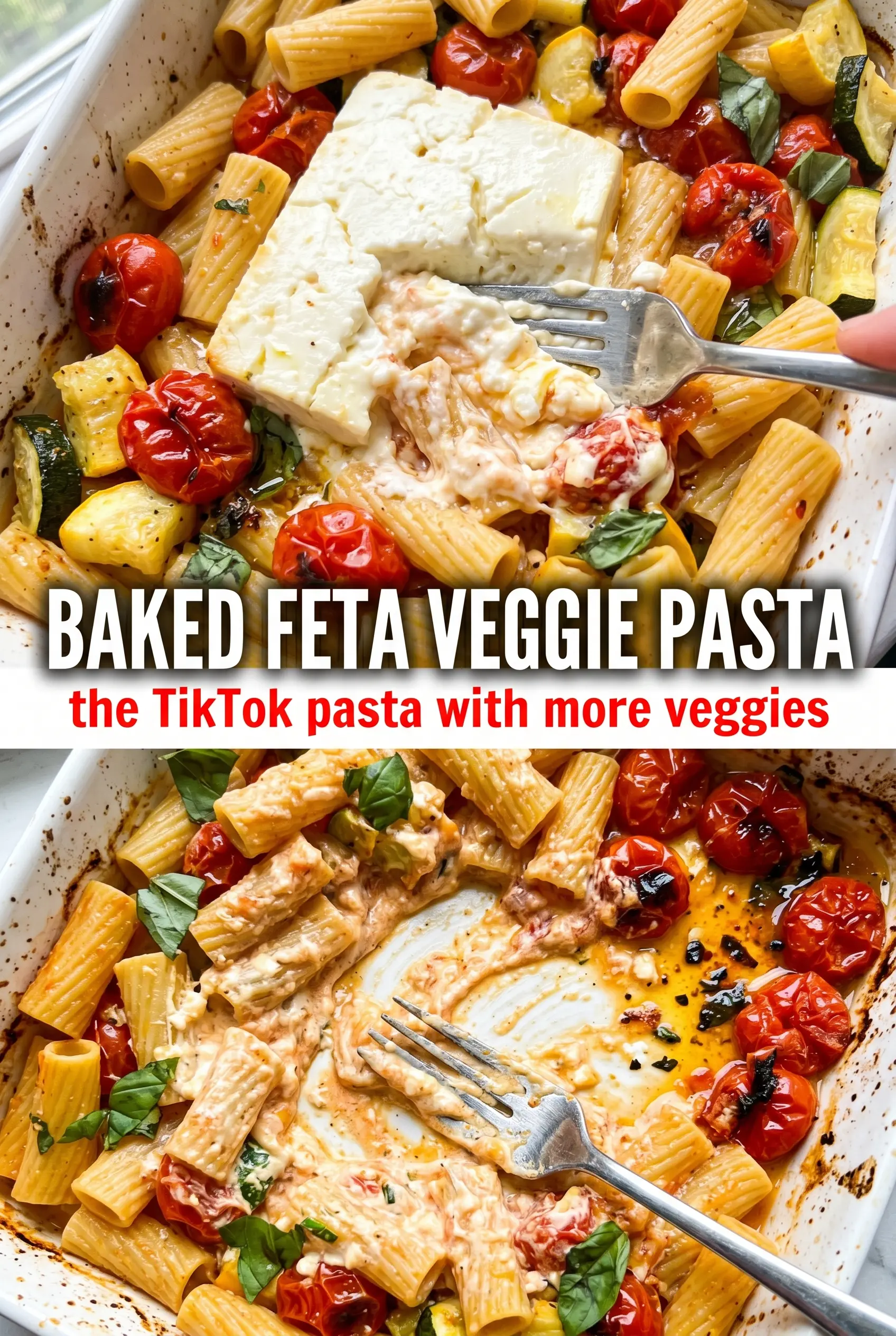
After 30 minutes, the tomatoes should be split and collapsing, the onion edges should be browned, and the feta should look softened with a little color on top. If the cheese still looks firm, give it a few more minutes, but don’t wait until it dries out and gets crusty all the way through. You’re looking for creamy at the center and just set around the edges.
Mashing and Loosening the Sauce
Use a fork to break down the feta and mix it into the tomatoes and vegetables. The sauce should look chunky at first, then turn more cohesive as you stir. If it seems thick or pasty, add a splash of the reserved pasta water and keep stirring until it turns silky. The starchy water helps the cheese and tomato juices bind instead of separating.
Tossing the Pasta and Finishing the Pan
Add the cooked pasta straight into the baking dish and toss until every noodle is coated. If it looks dry, add another small splash of pasta water instead of more oil; too much oil can make the sauce slide off the pasta. Finish with fresh basil and a final drizzle of olive oil right before serving so the top stays bright and the aroma stays fresh.
What to Change When Your Fridge Has Different Vegetables
Make it gluten-free
Swap in your favorite gluten-free pasta and cook it just shy of tender so it doesn’t turn mushy when tossed with the hot sauce. The sauce itself is naturally gluten-free, so the main thing to watch is the pasta texture and the amount of reserved water you use.
Turn up the heat
Add extra red pepper flakes or a pinch of Aleppo pepper for a gentler warmth with a little fruitiness. More heat works best here because the feta and tomatoes can handle it, but don’t overdo it or you’ll drown out the sweetness from the roasted vegetables.
Use what vegetables you have
Broccoli florets, mushrooms, or asparagus all work well, but keep the total amount similar so the pan doesn’t overcrowd. Firmer vegetables need to be cut a little smaller, while mushrooms should be left in larger pieces so they don’t vanish into the sauce.
Make it richer without changing the method
Stir in a spoonful of ricotta or mascarpone after mashing the feta if you want a softer, creamier finish. That makes the sauce more luxurious, but it also dials back the salty punch, so taste before adding more seasoning.
Storage and Reheating
- Refrigerator: Store leftovers in an airtight container for up to 4 days. The sauce thickens as it chills, so it will look a little tighter when cold.
- Freezer: This pasta freezes, but the texture softens a bit after thawing because of the feta and vegetables. Freeze in portions for up to 2 months and thaw overnight in the fridge before reheating.
- Reheating: Warm it in a skillet over low heat with a splash of water or olive oil, stirring until the sauce loosens again. The common mistake is blasting it in the microwave without adding liquid, which leaves the pasta dry and the cheese grainy.
Answers to the Questions Worth Asking
Veggie Pasta with Baked Feta
Ingredients
Equipment
Method
- Preheat oven to 400°F and place the feta block in the center of a 9x13 baking dish.
- Surround the feta with cherry tomatoes, zucchini, bell pepper, red onion, and garlic; drizzle with olive oil and season with red pepper flakes, salt, and cracked black pepper.
- Bake for 30-35 minutes until the feta is golden and creamy at the edges and the tomatoes have burst and caramelized.
- Use a fork to mash the baked feta and stir it into the roasted vegetables to form a chunky sauce.
- Add a splash of pasta water as needed to loosen and help everything coat evenly.
- Add the cooked pasta to the baking dish and toss until coated in the feta tomato sauce.
- Drizzle with extra olive oil and scatter fresh basil over the top, then serve immediately.