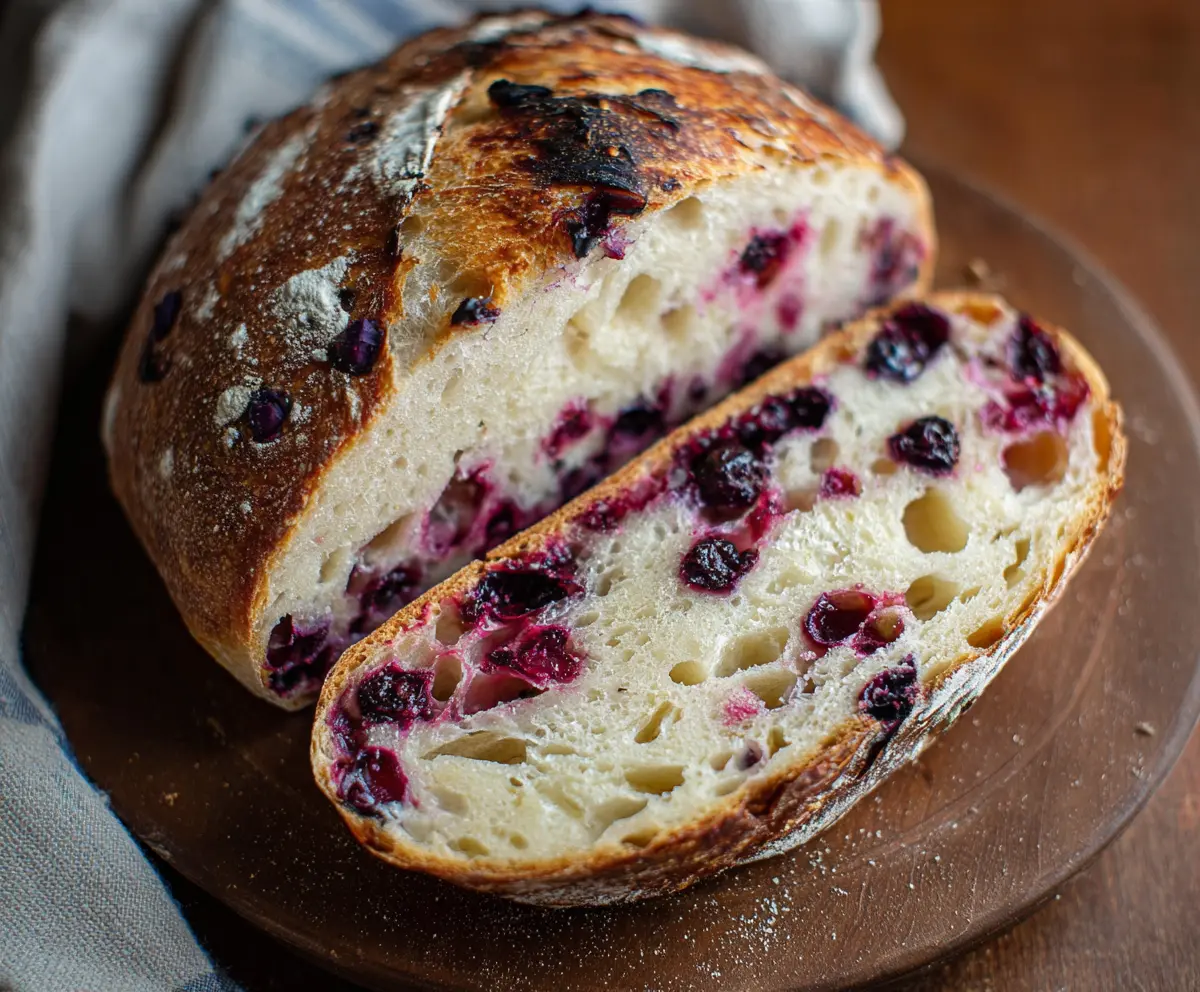
This blueberry lemon sourdough bread is a perfect mix of sweet and zesty! With plump blueberries and a hint of tangy lemon, it brings a lovely flavor to your table.
It’s such a joy to make, especially when the blueberries pop open during baking! I love enjoying a slice warm with a pat of butter. You should try it too! 🍞💙
Key Ingredients & Substitutions
Bread Flour: This is essential for structure. You can substitute with all-purpose flour for a softer bread, but the texture won’t be as chewy. For a gluten-free version, try gluten-free flour blends, but the results may vary.
Sourdough Starter: Always use an active starter for best results. If you don’t have one, you can make a simple version using equal parts flour and water, letting it sit until bubbly. Alternatively, store-bought yeast can be used, but adjustments in method will be necessary.
Lemon Zest: A splash of fresh lemon juice can also be used if you don’t have zest, but remember, zest gives a stronger flavor! For a different twist, try using lime zest or even orange zest.
Blueberries: Fresh blueberries shine in this recipe, but frozen ones work too! Avoid thawing them to prevent a soggy mix. For a fun twist, try mixing in some chopped strawberries or raspberries.
How Do I Properly Stretch and Fold the Dough?
Stretching and folding is a technique to build gluten strength without kneading. It’s easier than it sounds! Here’s how to do it:
- With wet hands, grab one side of the dough and stretch it upwards.
- Fold it over to the opposite side. Repeat this for each side – do this for 4 total sides.
- Cover the bowl and let the dough rest for 30 minutes between each stretch and fold.
This method helps create a nice structure in your bread without overworking it, which leads to a better rise and texture!

Blueberry Lemon Sourdough Bread
Ingredients You’ll Need:
- 500g (about 4 cups) bread flour
- 350g (about 1 ½ cups) water, room temperature
- 100g active sourdough starter (100% hydration)
- 10g salt
- Zest of 1 large lemon (about 1 tablespoon)
- 1 cup fresh or frozen blueberries (if frozen, do not thaw)
- 1 tablespoon honey or sugar (optional, for a slight sweetness)
How Much Time Will You Need?
This delightful blueberry lemon sourdough bread will take about 30 minutes of active prep time, but you should consider around 12-16 hours for fermentation and proofing. You’ll find that the process is easy; most of the time is just letting the dough rest and develop those delicious flavors!
Step-by-Step Instructions:
1. Mixing the Dough:
In a large mixing bowl, combine the active sourdough starter and room temperature water. Use a spoon or spatula to stir everything together until the starter is well mixed with the water. Now add the bread flour and lemon zest (plus honey or sugar if you want a bit of sweetness). Mix until a rough dough forms, then cover the bowl and let it rest for 30 to 60 minutes. This resting time is called autolyse, and it helps with gluten development!
2. Incorporating Salt:
Once your dough has rested, sprinkle the salt over the top. Mix in the salt thoroughly until it’s fully incorporated into the dough. It’s important for flavor and control of fermentation!
3. Stretch and Fold:
Now comes the fun part! Over the next 2 hours, perform a series of stretch and folds every 30 minutes. To do this, wet your hands slightly, grab one side of the dough, stretch it up, and fold it over itself. Do this on all four sides of the dough. This will help build the gluten structure you need. Be sure to cover the bowl between each fold.
4. Adding Blueberries:
After you’ve completed your last stretch and fold, it’s time to gently incorporate the blueberries. Carefully fold them into the dough with your hands; be gentle so you don’t squish them too much!
5. Bulk Fermentation:
Cover the dough and let it sit at room temperature for about 4 to 5 hours. You want it to rise about 30-50% and develop bubbles on the surface, showing it’s full of life!
6. Shaping the Dough:
After the bulk fermentation, turn the dough out onto a gently floured surface. Shape it into a round boule by tucking the edges into the center. Place the dough seam side up into a well-floured banneton or a bowl lined with a floured kitchen towel.
7. Cold Proofing:
Cover the dough and place it in the refrigerator to proof overnight, which can take 8-12 hours. This slow fermentation enriches the flavor!
8. Preheating the Oven:
The next day, when you’re ready to bake, preheat your oven to 480°F (250°C). If using a Dutch oven or baking stone, place it inside to heat up beautifully.
9. Scoring and Baking:
When the oven is hot, carefully transfer the dough from the banneton onto a piece of parchment paper. With a sharp blade, score the top of your dough to allow it to expand while baking. Then, place it inside the preheated Dutch oven, cover it with a lid, and bake for the first 20 minutes.
10. Finishing Touch:
After 20 minutes, remove the lid and bake for another 20-25 minutes, or until the crust is a deep golden brown and slightly blistered. The aroma will be amazing!
11. Cooling:
Once done, take the bread out of the oven and transfer it to a wire rack to cool for at least 2 hours before slicing. This cooling time is essential for the crumb to set properly!
Enjoy your tender, blueberry-studded, lemon-scented sourdough bread plain, with butter, or spread some cream cheese on top. Happy baking!
Can I Use All-Purpose Flour Instead of Bread Flour?
Yes, you can use all-purpose flour, but the texture will be softer and less chewy than with bread flour. Bread flour has a higher protein content, which helps create better gluten structure in the bread.
How to Store Leftover Bread?
Store any leftover bread in a paper bag at room temperature for up to 3 days. For longer storage, wrap it tightly in plastic wrap or foil and freeze. Just make sure to slice it before freezing for easy access!
What Should I Do If My Dough Isn’t Rising?
If your dough isn’t rising, it may be due to an inactive starter or cold temperatures. Ensure your starter is bubbly and active before using it. If the room is too cold, try placing the dough in a warm spot, like near an oven or on a heating pad set to low.
Can I Omit the Sugar or Honey?
Absolutely! The sugar or honey is optional and mainly adds a hint of sweetness. If you prefer a tart loaf, feel free to leave it out entirely.