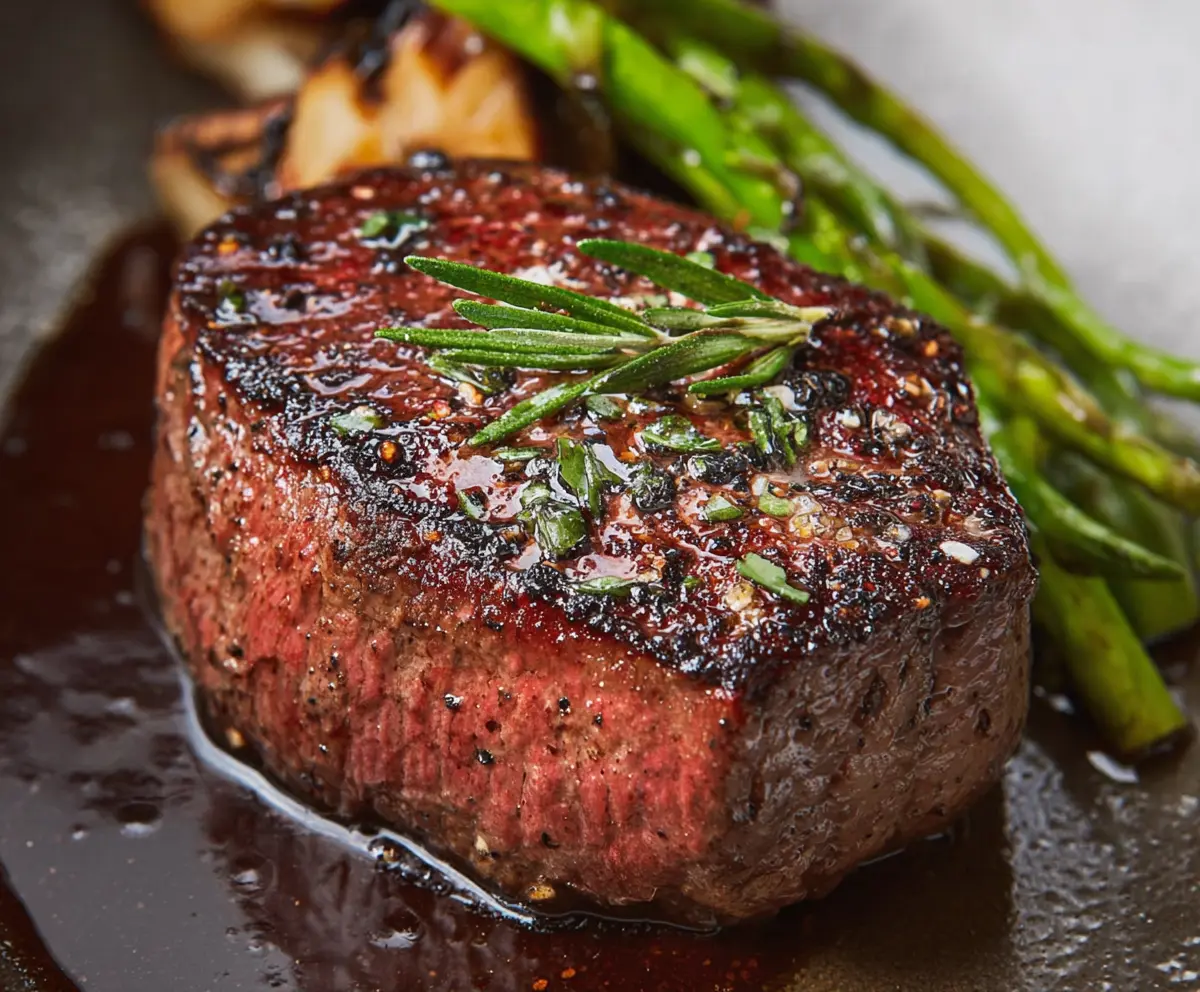
Filet Mignon is a tender and juicy cut of beef that melts in your mouth. It’s known for its rich flavor and buttery texture, making it a favorite for special dinners.
Cooking it just right gives you a delicious steak that impresses everyone. I love serving it with a side of roasted veggies; it feels fancy without all the fuss! 😋
Key Ingredients & Substitutions
Filet Mignon: This is the star of the dish! If filet mignon isn’t available, consider using tenderloin or even ribeye for a different flavor and texture. Just remember that they may cook differently.
Salt and Pepper: Use freshly ground black pepper for the best flavor. If you’re watching your sodium, feel free to use low-sodium alternatives or season with herbs and spices to boost flavor.
Butter: Unsalted butter is preferred for control over seasoning. If you’re looking for a dairy-free option, try vegan butter, coconut oil, or even ghee for a nutty flavor.
Red Wine: Choose a dry red wine like Cabernet Sauvignon for a rich sauce. If you don’t drink alcohol, consider substituting with more beef broth or use grape juice mixed with a bit of vinegar for acidity.
How Do I Achieve a Perfectly Sear on My Steak?
Getting a nice sear on the filet mignon will elevate the flavor and texture of the steak. Follow these steps for success:
- Let the steak come to room temperature for even cooking. It helps the steak cook faster and retain juiciness!
- Pat the filet mignon dry with paper towels before seasoning. This ensures the meat sears rather than steams.
- Use a heavy skillet or cast iron pan and preheat over medium-high heat. The pan should be hot enough that the oil shimmers but not smoking.
- Once the steaks are in the pan, resist the urge to move them. This allows a beautiful crust to form. Sear each side for 3-4 minutes.
- Consider basting the steak with melted butter and herbs halfway through cooking to keep it moist and flavorful.
By following these tips, you’ll be able to serve a deliciously seared filet mignon that impresses family and friends!
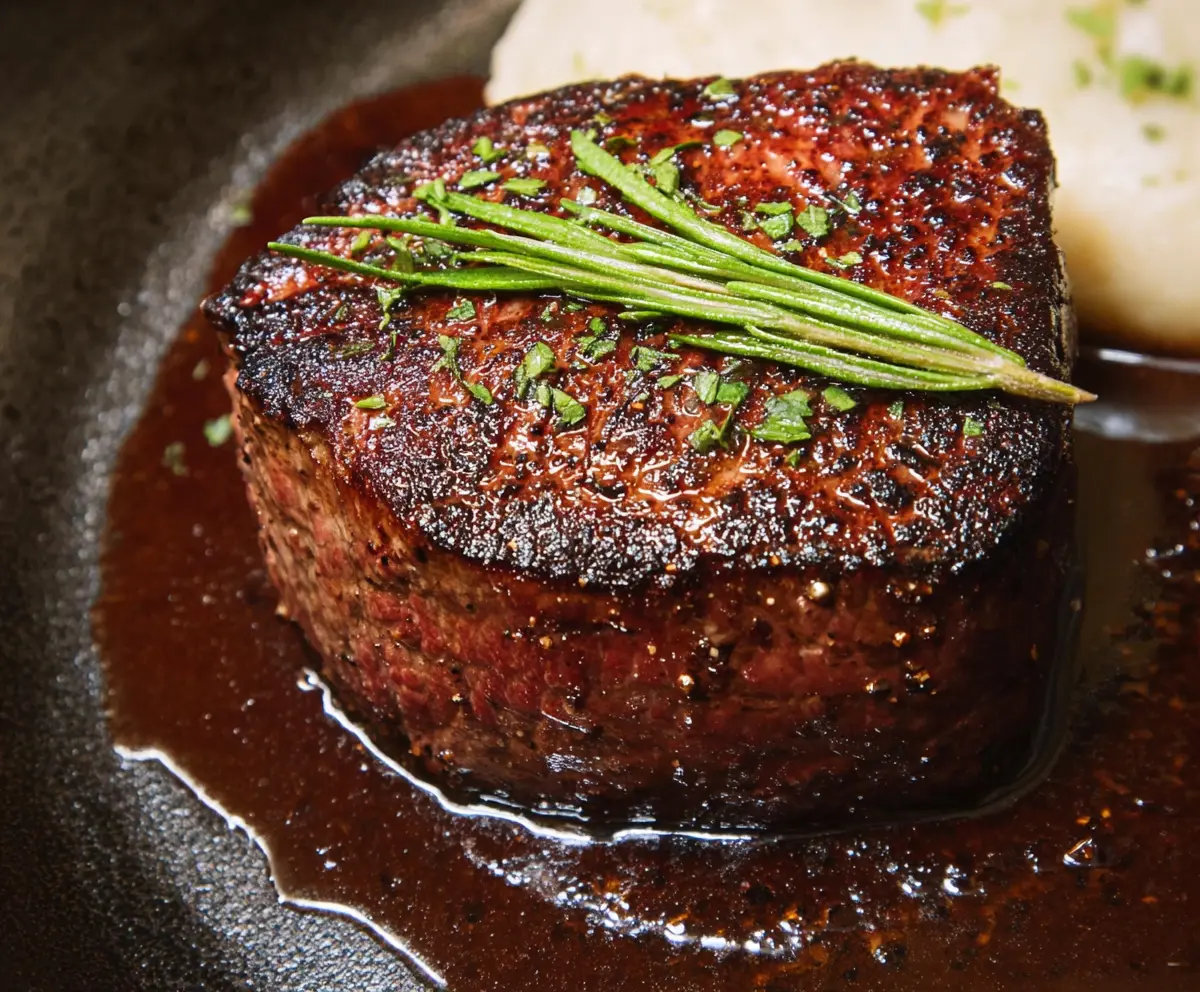
Filet Mignon with Herb Butter and Red Wine Sauce
Ingredients You’ll Need:
For the Steaks:
- 2 filet mignon steaks (6 oz each, about 1.5-2 inches thick)
- Salt and freshly ground black pepper, to taste
- 2 tbsp olive oil
For the Herb Butter:
- 3 tbsp unsalted butter
- 2 sprigs fresh rosemary (plus extra for garnish)
- 2 sprigs fresh thyme
- 2 cloves garlic, smashed
For the Red Wine Sauce:
- 1/2 cup red wine (dry, such as Cabernet Sauvignon)
- 1/2 cup beef broth
Optional Sides:
- Asparagus spears
- Sautéed mushrooms
How Much Time Will You Need?
This recipe takes about 15 minutes of prep time and 20-25 minutes of cooking time. Make sure to also set aside an additional 5 minutes for the steaks to rest after cooking, so they’re perfectly juicy when you serve them!
Step-by-Step Instructions:
1. Get the Steaks Ready:
First, take the filet mignon steaks out of the refrigerator about 30 minutes before you plan to cook them. This allows them to come to room temperature, which helps them cook more evenly. While waiting, you can season the steaks generously with salt and freshly ground black pepper on all sides.
2. Sear the Steaks:
Next, heat 2 tablespoons of olive oil in a heavy skillet or cast iron pan over medium-high heat. Once the oil is shimmering, carefully add the seasoned steaks to the pan. Sear them for about 3-4 minutes on each side until a beautiful deep brown crust forms. Make sure not to move the steaks during this time—just let them cook!
3. Add Herb Butter:
After searing, reduce the heat to medium-low. Now it’s time to add the butter, smashed garlic, rosemary, and thyme to the pan. As the butter melts, tilt the pan slightly and use a spoon to baste the steaks with the melted butter and herbs for another 2-3 minutes. This keeps them nice and moist!
4. Check the Temperature:
For perfectly cooked steaks, aim for an internal temperature of about 130°F (54°C) for medium-rare. Keep an eye on the time, as you’ll want to check for your desired doneness by using an instant-read thermometer.
5. Let Them Rest:
Once cooked to your liking, remove the steaks from the pan and place them on a plate. Cover with foil and let them rest for about 5 minutes. This allows the juices to redistribute, making your steaks extra tender.
6. Make the Red Wine Sauce:
While the steaks rest, increase the pan heat back to medium-high. Add the red wine to the pan, scraping up any browned bits from the bottom. This is where all the flavor lives! Let the wine simmer and reduce for about 4-5 minutes.
7. Final Touches:
Next, add the beef broth to the pan and let it reduce by half until it’s slightly thickened. After that, remove from heat and swirl in any leftover butter for that glossy finish. Be sure to season the sauce with salt and pepper to taste.
8. Serve:
Now, it’s time to plate up! Serve the filet mignon with the luscious red wine sauce spooned over the top, and garnish with extra rosemary. If you’d like, add some asparagus or sautéed mushrooms on the side for a deliciously complete meal.
Enjoy your perfectly cooked, tender, and flavorful filet mignon! It’s sure to impress your guests or make any dinner special!
Can I Use Frozen Filet Mignon for This Recipe?
While fresh filet mignon is preferred for the best flavor and texture, you can use frozen steaks. Just make sure to fully thaw them in the refrigerator for at least 24 hours before cooking. Pat them dry and treat them as you would fresh steaks.
How Do I Store Leftover Filet Mignon?
Store any leftover filet mignon in an airtight container in the refrigerator for up to 3 days. To reheat, use a low heat setting in the oven or microwave, and cover it to prevent drying out. Adding a splash of beef broth can help keep it moist during reheating.
What Are Some Good Side Dishes to Serve with Filet Mignon?
Popular sides for filet mignon include asparagus, sautéed mushrooms, garlic mashed potatoes, or a fresh garden salad. You can also add grilled vegetables or roasted potatoes for a hearty meal!
Can I Cook Filet Mignon in the Oven?
Absolutely! If you prefer, you can sear the filet in a skillet for a few minutes on each side, then transfer it to a preheated oven at 400°F (204°C) to finish cooking. Use a meat thermometer to ensure it reaches your desired doneness.