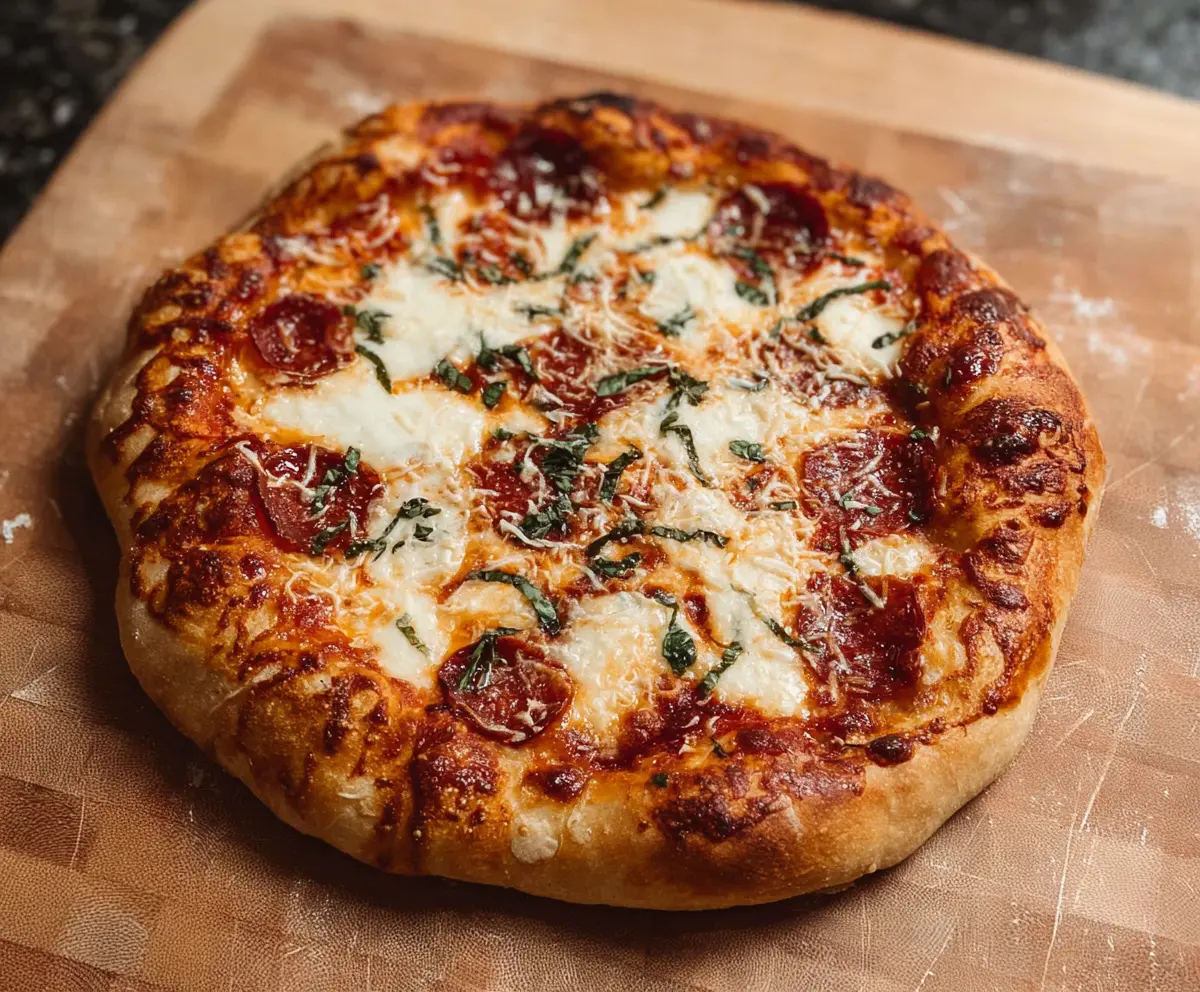
This sourdough pizza crust is crispy on the outside and soft on the inside. It has a yummy, tangy flavor that’s a real treat for pizza lovers!
Making this crust is easy and fun! I love how it brings a little flair to pizza night. Plus, it’s the perfect base for all your favorite toppings, so go wild!
Key Ingredients & Substitutions
Sourdough starter: Using a fed and bubbly starter is key for great flavor and leavening. If you’re new to sourdough, you can use a store-bought pizza dough as an alternative, but it won’t have the same tangy goodness.
Flour: All-purpose flour works perfectly, but you can experiment with bread flour for a chewier crust. For a gluten-free option, consider a gluten-free all-purpose blend, ensuring it’s suitable for yeast recipes.
Warm water: The warm water helps to activate the starter. If it’s too hot, it can kill the yeast. A good tip is to check the temperature with a kitchen thermometer or just feel that it’s warm to the touch, like a warm bath.
Olive oil: While optional, I love brushing the crust with olive oil for added flavor and a beautiful finish. You can also use melted butter or leave it out entirely if you prefer a lighter dough.
Semolina or cornmeal: These add a nice texture to the bottom of your crust and help prevent sticking. If you don’t have either, you can use flour, but it won’t give that same crispiness.
How Do I Knead Dough Effectively?
Kneading is so important for developing gluten in your dough, giving it strength and structure. Here’s a simple way to do it:
- Transfer your dough to a lightly floured surface.
- Press the dough down with the heel of your hand, then fold it over itself. Turn the dough a quarter turn and repeat.
- Keep kneading for about 8-10 minutes until the dough is smooth and elastic. It should feel slightly tacky but not stick to your hands.
- If it sticks, dust with a little more flour, but don’t overdo it; you want a soft dough.
This technique is all about feel, so don’t rush it—your dough will be much better for it!

How to Make Sourdough Pizza Crust
Ingredients You’ll Need:
For the Pizza Crust:
- 1 cup (240g) active sourdough starter (fed and bubbly)
- 3 cups (360g) all-purpose flour, plus extra for dusting
- 1 cup (240ml) warm water (about 80°F/27°C)
- 1 tsp salt
- 1 tbsp olive oil (optional, for dough and for brushing)
- Semolina or cornmeal for dusting the pizza peel or baking surface
How Much Time Will You Need?
This recipe will take about 4-6 hours for the first rise, with an additional hour for shaping and resting. Overall, you’ll invest about 10-15 minutes in initial preparation and about 15 minutes baking the pizza, totaling around 5-7 hours, including rising time. But don’t worry, most of that time is just waiting for the dough to rise!
Step-by-Step Instructions:
1. Mix the Dough:
In a large bowl, take your active sourdough starter and warm water. Mix them together to combine the starter well. Then, sprinkle in the flour and salt. Stir everything together until it forms a rough dough. Don’t worry if it looks a bit messy; that’s perfectly fine!
2. Knead the Dough:
Next, sprinkle some flour onto a clean surface and turn the dough out onto it. Knead the dough for about 8-10 minutes. You’ll want it to be smooth, elastic, and a little tacky (but not sticky). If it’s sticking too much, add a little more flour as you go.
3. First Rise:
Now, put your kneaded dough into a lightly oiled bowl. Cover it with a damp cloth or plastic wrap. Let it rise at room temperature until it has doubled in size—this should take about 4-6 hours, depending on how active your starter is and the room temperature.
4. Shape and Rest:
After your dough has risen, gently punch it down to release any gases. Shape it into a ball and cover it again. Let it rest for about 30 minutes to 1 hour. This resting period helps relax the gluten and makes it easier to shape later.
5. Preheat Oven:
Time to get your oven ready! Preheat it to the highest setting (between 450°F to 500°F or 230°C to 260°C). If you have a pizza stone or steel, place it in the oven to heat up for an even better crust.
6. Shape the Pizza Crust:
Now comes the fun part! On a floured surface, stretch or roll out the dough into a round pizza base about 10-12 inches in diameter. Make sure to flour your pizza peel or baking sheet with semolina or cornmeal to prevent sticking. Transfer the stretched dough onto it.
7. Add Toppings and Bake:
Time to customize! Add your favorite pizza sauce, cheese, and any toppings you like. Carefully slide your pizza onto the preheated stone or set the baking sheet in the oven. Bake for about 10-15 minutes, or until the crust is golden and crisp, and the cheese is bubbling and lightly browned.
8. Finish and Serve:
Once it’s done, take your pizza out of the oven and let it cool for a couple of minutes. If you like, brush the crust with a little olive oil for extra flavor. Slice it up and serve warm. Enjoy your delicious homemade sourdough pizza! It’s a delightful combination of flavors and textures, and it’s perfect for any pizza party or cozy night in.
Can I Use a Different Type of Flour?
Absolutely! While all-purpose flour works great, you can substitute bread flour for a chewier crust. For a gluten-free option, use a gluten-free flour blend that includes xanthan gum for structure.
Can I Refrigerate the Dough for Later Use?
Yes, you can refrigerate the dough after the first rise! Just place it in an airtight container and it can stay in the fridge for up to 3 days. Let it come to room temperature and rise again for about 1-2 hours before shaping and baking.
How Should I Store Leftover Pizza?
Store any leftover pizza in an airtight container in the fridge for up to 3 days. To reheat, place it in a preheated oven at 350°F (175°C) for 8-10 minutes to restore its crispiness, or use a microwave for a quick warm-up.
What Can I Use if I Don’t Have Semolina or Cornmeal?
If you don’t have semolina or cornmeal, you can simply use all-purpose flour for dusting your pizza peel or baking surface. While it may not provide the same texture, it will still help prevent sticking.