Jammy cranberry sauce with bright, sharp berry flavor earns its place on the table because it tastes like cranberries instead of a sugary spread. The berries burst just enough to thicken the pot into a glossy sauce, and the chill time finishes the job, turning it from loose and saucy into spoonable and set.
The short ingredient list matters here. Sugar balances the tart fruit, while water gives the cranberries enough space to cook down without scorching before they pop. A quick boil dissolves the sugar fully, which keeps the sauce smooth instead of grainy, and a gentle simmer gives the berries time to split open without turning the whole pot into mush.
Below, I’ve added the details that make this recipe dependable every time, including the texture cue that tells you when it’s done and the small variation I use when I want a little extra depth.
I loved how the berries burst into a thick, glossy sauce in just about 10 minutes. It set up perfectly after chilling and wasn’t runny at all on the plate.
Save this 3 Ingredient Cranberry Sauce for a thick, ruby-red side that sets up beautifully after chilling.
The Trick to Cranberry Sauce That Sets Instead of Staying Soupy
Most cranberry sauce problems start before the berries even go in. If the sugar isn’t fully dissolved in the water first, the sauce can taste a little gritty and the cranberries can cook unevenly. Bringing the sugar and water to a boil before adding the fruit gives you a clean base and helps the berries soften at the same pace.
The other thing to watch is the simmer. You want enough heat for the cranberries to burst, but not such a hard boil that the sauce reduces too fast and turns sticky before the fruit has broken down. It should look loose and glossy in the pan, then thicken as it cools. That cooling step is not optional; that’s when cranberry sauce finds its final texture.
What the Three Ingredients Are Doing Here
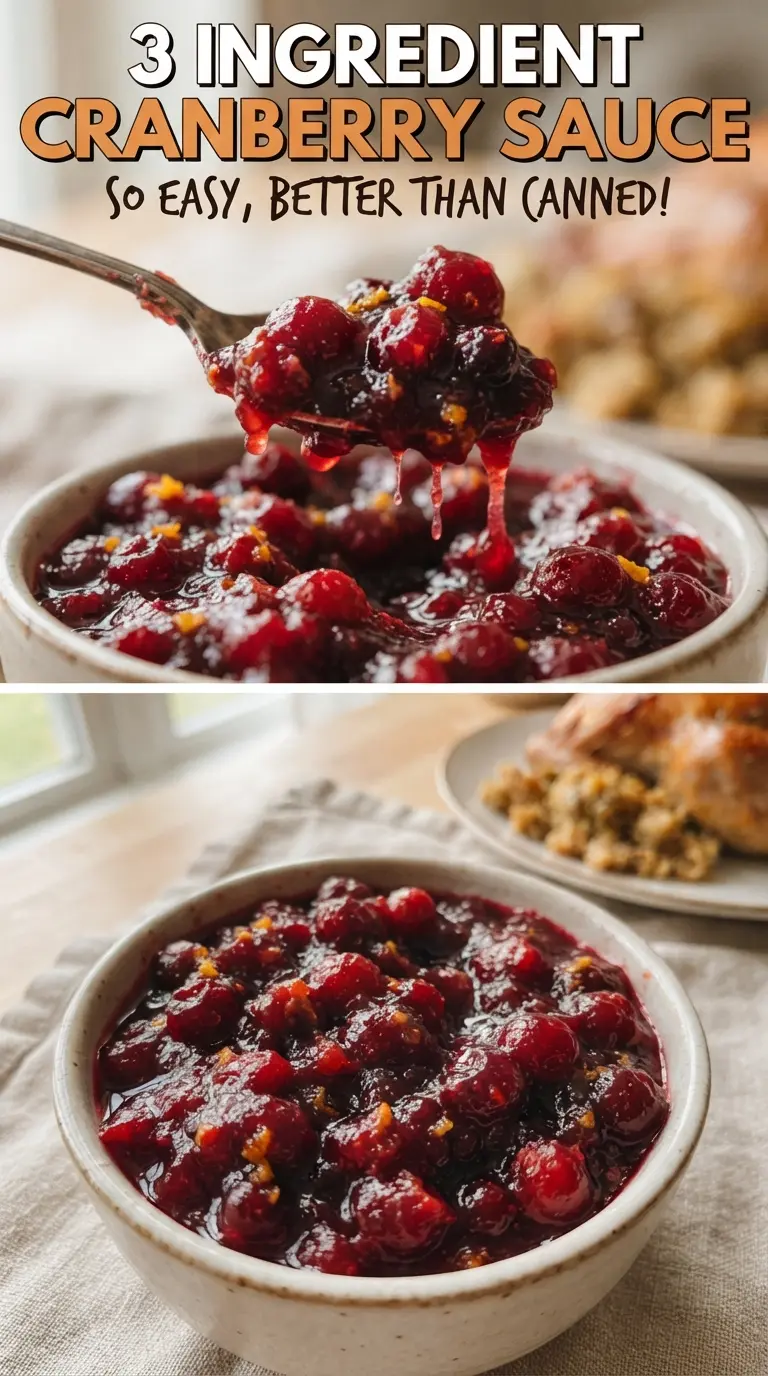
- Fresh cranberries — These bring the tart, punchy flavor and the natural pectin that helps the sauce set. Frozen cranberries work too; use them straight from the freezer and expect them to take a minute or two longer to burst.
- Granulated sugar — This balances the sharpness of the berries and gives the sauce its classic spoonable finish. I wouldn’t swap in a coarse sweetener here unless you’re prepared for a slightly different texture, because regular sugar dissolves fastest and cleanest.
- Water — It looks simple, but it’s what keeps the sugar from scorching and gives the berries room to simmer before the mixture tightens up. If you use less, the sauce can reduce too quickly and become jammy before every berry has popped.
Letting the Berries Pop Before You Touch the Heat Again
Dissolving the Sugar First
Start with the water and sugar in a saucepan and bring it to a full boil, stirring until the granules disappear. The liquid should look clear, not cloudy or sandy. If you skip this and dump in the cranberries too early, the sauce can come out uneven and the sweetness won’t distribute cleanly.
Cooking Until the Cranberries Burst
Add the cranberries and bring everything back to a boil, then lower the heat to a steady simmer. Stir occasionally and watch for the berries to split open and release their juices; that’s the signal that the sauce is thickening from the inside out. If the heat is too low, the berries just sit there and soften without fully breaking down.
Cooling for the Final Set
Pull the pan off the heat once most of the berries have burst and the sauce looks slightly loose. It will thicken a lot as it cools, then firm up even more in the fridge. If it seems thin while warm, that’s normal; judge it after it chills, not straight from the stove.
Add Orange Zest for a Brighter Finish
Stir in a little finely grated orange zest after the sauce comes off the heat if you want a fresher, more aromatic edge. The citrus doesn’t change the texture, but it lifts the tart cranberries and makes the sauce taste a little less one-note.
Use Maple Syrup for a Different Sweetness
Replace part of the sugar with pure maple syrup if you want a deeper, rounder sweetness. The sauce will still set, but it’ll taste a little softer and less sharp than the classic version.
Make It Lower Sugar
You can reduce the sugar slightly, but don’t cut it too far or the sauce will taste aggressively tart and set up less cleanly. If you want a less sweet result, start with a small reduction and taste after chilling, because cranberry sauce always seems sweeter once it’s cold.
Storage and Reheating
- Refrigerator: Keeps well for up to 1 week in a covered container. It thickens as it chills and loosens slightly as it sits at room temperature.
- Freezer: Freezes well for up to 2 months. Cool completely first, then store in a freezer-safe container with a little headspace for expansion.
- Reheating: Cranberry sauce is usually served cold or room temperature, but if you want it warm, heat it gently on low. High heat can make it boil down too far and turn sticky.
Questions I Get Asked About This Recipe
3 Ingredient Cranberry Sauce
Ingredients
Equipment
Method
- In a saucepan, combine granulated sugar and water over high heat. Stir until the mixture comes to a full boil and the sugar dissolves.
- Add fresh cranberries to the boiling syrup and return to a boil. Let it bubble until you can clearly see the cranberries begin to heat through.
- Reduce the heat to maintain a gentle simmer and cook for 10 minutes, stirring occasionally. Continue until the berries burst and the sauce looks thick and ruby.
- Remove the saucepan from the heat and cool completely. The sauce will continue to thicken as it cools, becoming spoonable and jammy.
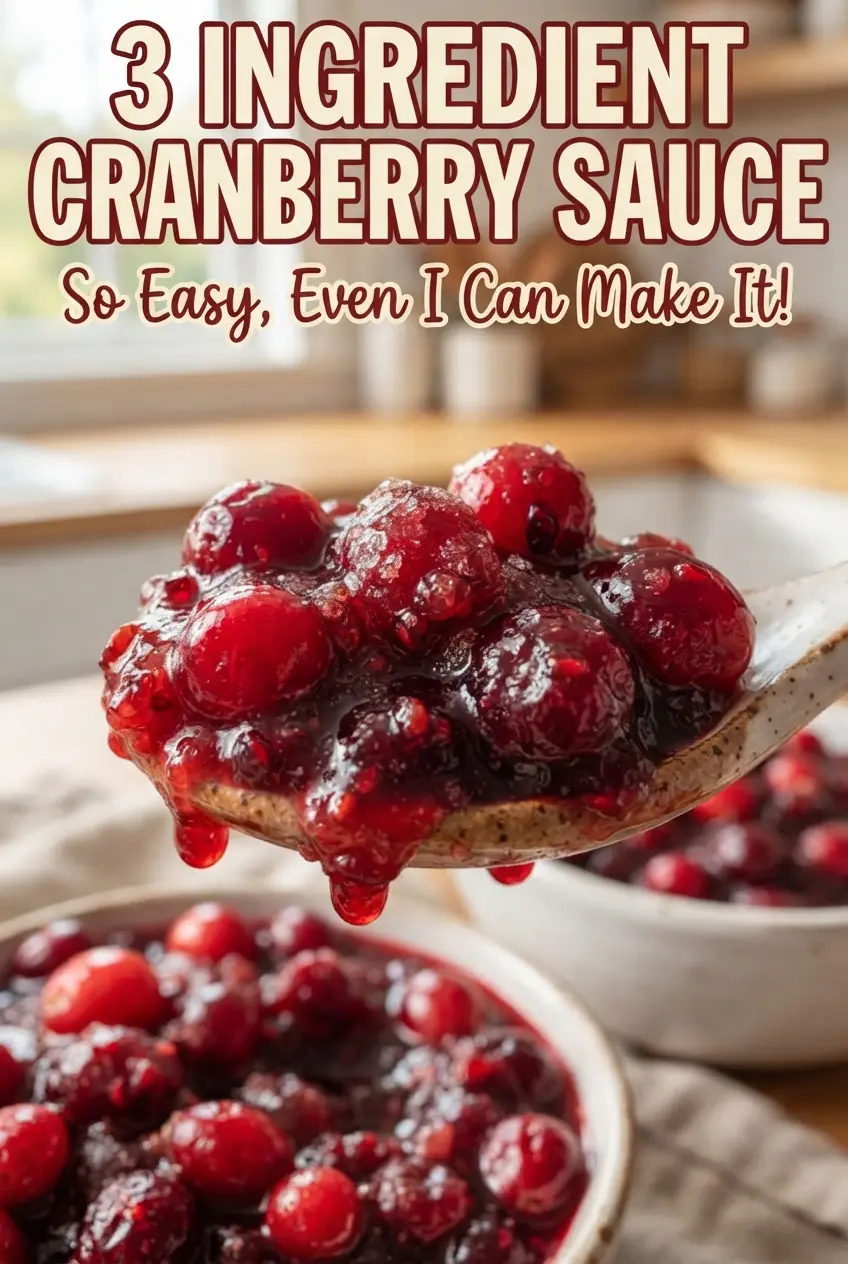
- Chill the sauce until serving. It should set into a thick, glossy cranberry jam.