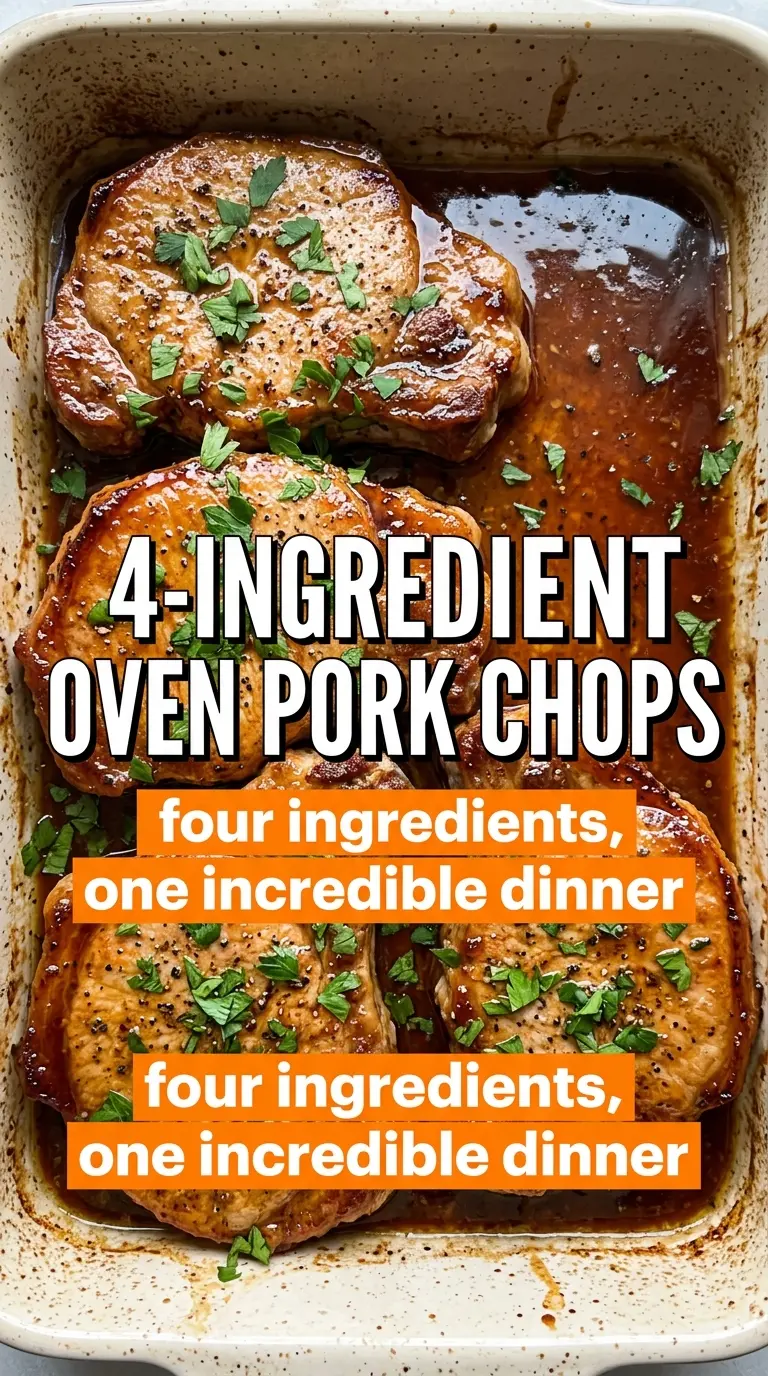
These pork chops come out with a glossy, sticky glaze and juicy centers instead of the dry, chalky texture that turns people off baked pork. The honey and soy sauce work together in a way that feels bigger than four ingredients should allow: sweet, salty, garlicky, and deeply browned around the edges. When the chops hit the oven hot enough to caramelize the glaze before the meat overcooks, the whole thing lands in that sweet spot between weeknight simple and company-worthy.
The trick is keeping the chops thick enough to stay juicy and basting them halfway through so the glaze builds in layers instead of sliding off into the pan. Bone-in chops help protect the meat from drying out, and a quick rest at the end gives the juices time to settle back in. Use low-sodium soy sauce if that’s what you keep on hand, because the glaze reduces as it bakes and the salt can sneak up faster than you expect.
Below, I’ll walk through the part that matters most: how to get the glaze caramelized without burning the sugars, plus a few smart swaps if you’re working with boneless chops or want to change the flavor a bit.
The glaze turned thick and shiny, and the chops stayed juicy instead of drying out. I basted them halfway through like you said, and my husband kept going back for the caramelized edges.
These honey soy pork chops turn glossy, caramelized, and weeknight-easy in one pan.
The Reason These Pork Chops Stay Juicy Instead of Drying Out
Most baked pork chops fail for one simple reason: they stay in the oven until they look done instead of coming out when they’re actually done. Pork chops keep cooking after they leave the heat, and that extra carryover matters. Pull them at 145°F in the thickest part, then let them rest for a few minutes so the juices settle back into the meat instead of running onto the cutting board.
The other thing working in your favor here is the glaze itself. Honey helps the surface brown and cling, while soy sauce gives you salt and depth without needing a long marinade. If the glaze looks a little thin when it first goes on, that’s fine. It thickens in the oven as the honey bubbles and the surface of the chops starts to dry and caramelize.
- Bone-in pork chops — These stay juicier than boneless chops because the bone slows down the cooking around the edges. If you only have boneless, cut the bake time a little and start checking early.
- Honey — This is what gives the glaze its shine and caramelized edges. Maple syrup works in a pinch, but the finish is thinner and less sticky.
- Soy sauce — It brings salt and umami in one ingredient, which is why this recipe can stay so short. Use low-sodium if that’s what you have, especially if your chops are heavily seasoned already.
- Garlic — Fresh minced garlic gives the glaze that sharp, savory edge. Garlic powder won’t taste the same, but it can work if you’re out; use about 1/2 teaspoon.
What Each Ingredient Is Actually Doing in This Pork Dish
- Pork (cut properly for method) — Pat dry so it browns instead of steams. Even thickness ensures uniform cooking.
- Oil or butter (the browning medium) — High-heat oil essential for proper searing. Creates pan flavor.
- Seasonings (salt, pepper, spices) — Build flavor boldly. Pork carries the entire profile.
- Aromatics (garlic, onion, herbs) — Cook with fat to bloom flavors. Become the foundation.
- Sauce or braising liquid (if using) — This keeps lean pork from drying. Balance richness with acid.
- Vegetables (if using) — Layer by cooking time. Hard vegetables first so everything finishes together.
- Acid (vinegar, wine, or citrus) — This brightens sauce and prevents heavy flavor. Add near end.
- Proper doneness (145°F with slight pink center) — Pork is safe here and stays juicy. Higher temps dry it out.
How to Caramelize the Glaze Without Burning It
Mix the glaze first
Stir the honey, soy sauce, and garlic together until the mixture looks smooth and loose. If the honey is thick and hard to blend, warm it for just a few seconds so it pours more easily. The garlic needs to be mixed in evenly or you’ll get little burned pockets on the surface of the chops later.
Season and coat the chops
Pat the pork chops dry, then season both sides with salt and pepper before brushing on the glaze. Dry surfaces brown better than damp ones, and that matters here because the glaze needs direct contact with the meat to caramelize well. Lay the chops on a foil-lined baking sheet so cleanup stays easy and the glaze doesn’t bake into the pan.
Bake, baste, and watch the edges
Put the chops in a 400°F oven and bake until the glaze starts to bubble and the edges look deep golden brown. Halfway through, flip the chops and brush on more glaze; that second layer gives you the sticky finish without needing to drown the meat from the start. If the glaze starts to darken too quickly before the pork is done, move the pan to a lower rack for the last few minutes.
Rest before serving
Take the chops out when the thickest part reaches 145°F, then let them sit for 3 minutes. That short rest keeps the juices in the meat instead of letting them spill out the second you cut in. The glaze will also set up just enough to cling to the chop instead of running everywhere.
How to Adapt These Pork Chops for Boneless Cuts, Extra Garlic, or a Lower-Sugar Finish
Boneless pork chops
Boneless chops work, but they cook faster and dry out sooner, so start checking them a few minutes early. They won’t have quite the same juicy cushion as bone-in chops, but the glaze still gives you a good finish if you keep an eye on the temperature.
Gluten-free version
Swap the soy sauce for tamari or coconut aminos. Tamari tastes closest to regular soy sauce, while coconut aminos are a little sweeter and lighter, so the glaze will lean softer and less salty.
Less sweet, more savory
Cut the honey back to 2 tablespoons and add a splash of water if the mixture feels too tight. You’ll lose a little of the sticky lacquered finish, but the pork will taste a bit more savory and less dessert-like.
Extra garlic and heat
Add another minced clove or a pinch of red pepper flakes to the glaze. That pushes the flavor toward sharper and punchier, but don’t overload it or the garlic can scorch before the pork finishes cooking.
Storage and Reheating
- Refrigerator: Store leftovers for up to 3 days. The glaze will thicken as it chills, but the pork stays tender if you reheat it gently.
- Freezer: These freeze well for up to 2 months. Wrap tightly and freeze with a little extra glaze or pan juices to help protect the meat from drying out.
- Reheating: Warm covered in a 300°F oven until heated through, or use a skillet over low heat with a splash of water. High heat is the fastest way to turn the chops tough, so keep the reheating gentle.
Answers to the Questions Worth Asking
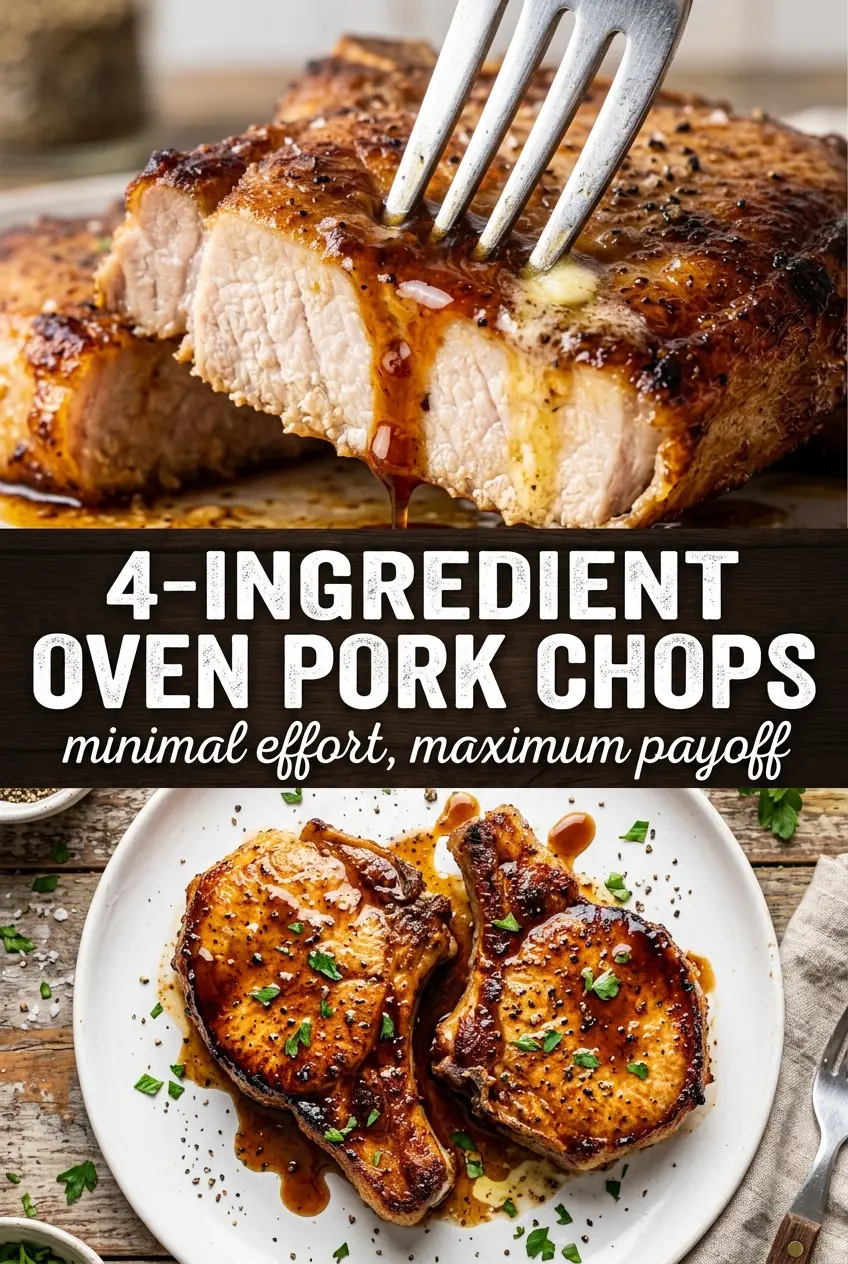
4-Ingredient Oven Pork Chops
Ingredients
Equipment
Method
- Preheat oven to 400°F and line a sheet pan with foil for easy cleanup.
- Mix honey, soy sauce, and minced garlic until combined into a smooth glaze.
- Season pork chops with salt and pepper on both sides so they’re evenly flavored.
- Brush honey-soy mixture generously over each pork chop, coating the top and edges.
- Bake at 400°F for 10–12 minutes until the glaze starts to thicken and look glossy, then flip chops.
- Bake 10–13 minutes more and re-baste halfway through, until internal temperature reaches 145°F and the glaze is caramelized.
- Rest pork chops for 3 minutes so juices settle and the glaze clings better.
- Serve immediately while the coating is shiny and warm.