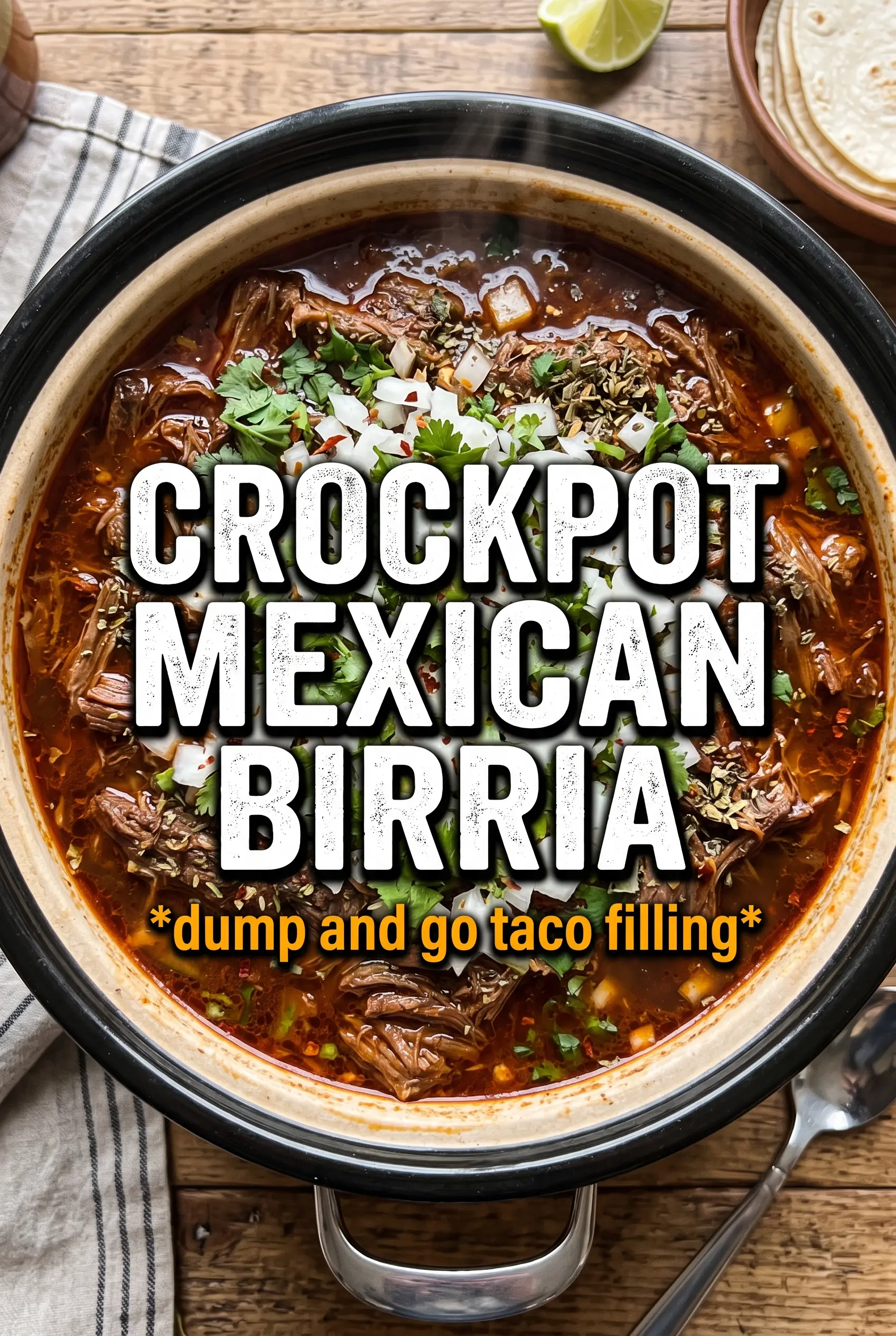
Deep red consomé, fall-apart beef, and tortillas that pick up just enough chile broth to turn crisp at the edges make Crockpot Mexican birria the kind of meal people keep talking about after the plates are cleared. The slow cooker does the heavy lifting here, but the flavor still tastes layered and deliberate: toasted chiles, a little smoke, a little vinegar, and beef that turns rich instead of stringy.
What makes this version work is the balance in the sauce. Toasting the dried chiles for just a few seconds wakes up their flavor without burning them, and soaking them until soft keeps the blender smooth. The vinegar sharpens the broth so it doesn’t taste flat after hours in the Crockpot, and the tomatoes add body so the consomé clings to the meat and tortillas.
Below you’ll find the small details that keep the beef tender and the sauce silky, plus a few smart swaps for when you need them. If you’ve had birria that came out greasy, thin, or bland, the fix is usually in the chile base and the way it cooks together.
The consomé came out deep and silky, and the tortillas crisped up perfectly after a quick dip. I used chuck roast and it shredded in big juicy pieces after 8 hours on low.
Love that deep chile broth and crispy birria taco finish? Save this Crockpot Mexican birria for the next time you want tender beef and a rich dipping consomé.
The Secret to Birria That Stays Rich, Not Watery
Birria goes wrong when the sauce tastes thin after the long cook. That usually happens when the chiles aren’t toasted enough, the sauce isn’t blended smooth enough, or the meat gives off so much liquid that the seasoning gets diluted. This version leans on a concentrated chile puree and just enough broth to get the blender moving, so the Crockpot ends up braising the beef instead of boiling it.
The other thing that matters is the cut. Chuck gives you great shreddable beef with enough fat to stay juicy, while short ribs bring even more body to the consomé. Either one works, but lean cuts dry out and lose the texture that makes birria worth making in the first place.
- Guajillo and ancho chiles — Guajillo brings bright red color and mild heat; ancho adds deeper, raisin-like sweetness. Together they build the base of the broth, and dried chiles are one place where the real thing matters.
- Chipotle in adobo — This is the smoky note. One pepper is enough to give the sauce backbone without taking over.
- Apple cider vinegar — It sharpens the broth so the finished consomé tastes lively instead of heavy. Lemon won’t give the same rounded acidity.
- Chuck or short ribs — Chuck is the best budget-friendly choice. Short ribs are richer and a little more luxurious, but both need that long low cook to break down properly.
- Tomatoes — They add body and help the sauce cling to the meat. Canned diced tomatoes work fine here because they’re getting blended smooth anyway.
What Each Ingredient Is Actually Doing in This Recipe
- Primary ingredient (the star) — Quality matters most. Choose the best you can find.
- Cooking medium (oil, butter, or broth) — This carries flavors and prevents dryness.
- Seasonings (salt, pepper, spices, herbs) — Layer flavors so nothing overpowers. Build depth gradually.
- Aromatics (garlic, onion, herbs) — Cook with fat to bloom flavors. Become the foundation.
- Supporting ingredients — Complement the main ingredient without overpowering it.
- Sauce or liquid (if applicable) — Brings flavors together. Balance richness with acid.
- Acid (lemon, vinegar, wine, or other) — Brightens and prevents flat-tasting results.
- Final finish (garnish, glaze, or sauce) — Prevents one-dimensional taste and adds visual appeal.
Building the Chile Base Before the Slow Cook Does Its Work
Waking Up the Dried Chiles
Toast the guajillo and ancho chiles in a dry skillet for about 30 seconds per side, just until they smell fragrant and look a shade darker. If they blister or turn black, they’ll taste bitter and the whole sauce will pick up that burned edge. Once toasted, soak them in boiling water until fully softened; if they still feel leathery, the blender will leave little flecks behind and the sauce won’t turn velvety.
Blending a Smooth, Concentrated Sauce
Blend the softened chiles with tomatoes, onion, garlic, broth, vinegar, cumin, oregano, smoked paprika, and cinnamon until the mixture looks almost glossy. Scrape down the blender if needed and keep going until you don’t see chile skins anymore. A coarse sauce won’t fully integrate during cooking, and you’ll end up with grainy broth instead of that deep, unified consomé.
Letting the Crockpot Braise, Not Boil
Season the beef, nestle it into the slow cooker, and pour the sauce over the top. The meat should be mostly submerged but not drowned in extra liquid; the beef will release its own juices as it cooks. Cook on Low for 7 to 8 hours, and don’t rush it on High, because faster heat tightens the meat before the collagen has time to melt.
Shredding in the Broth and Crisping the Tortillas
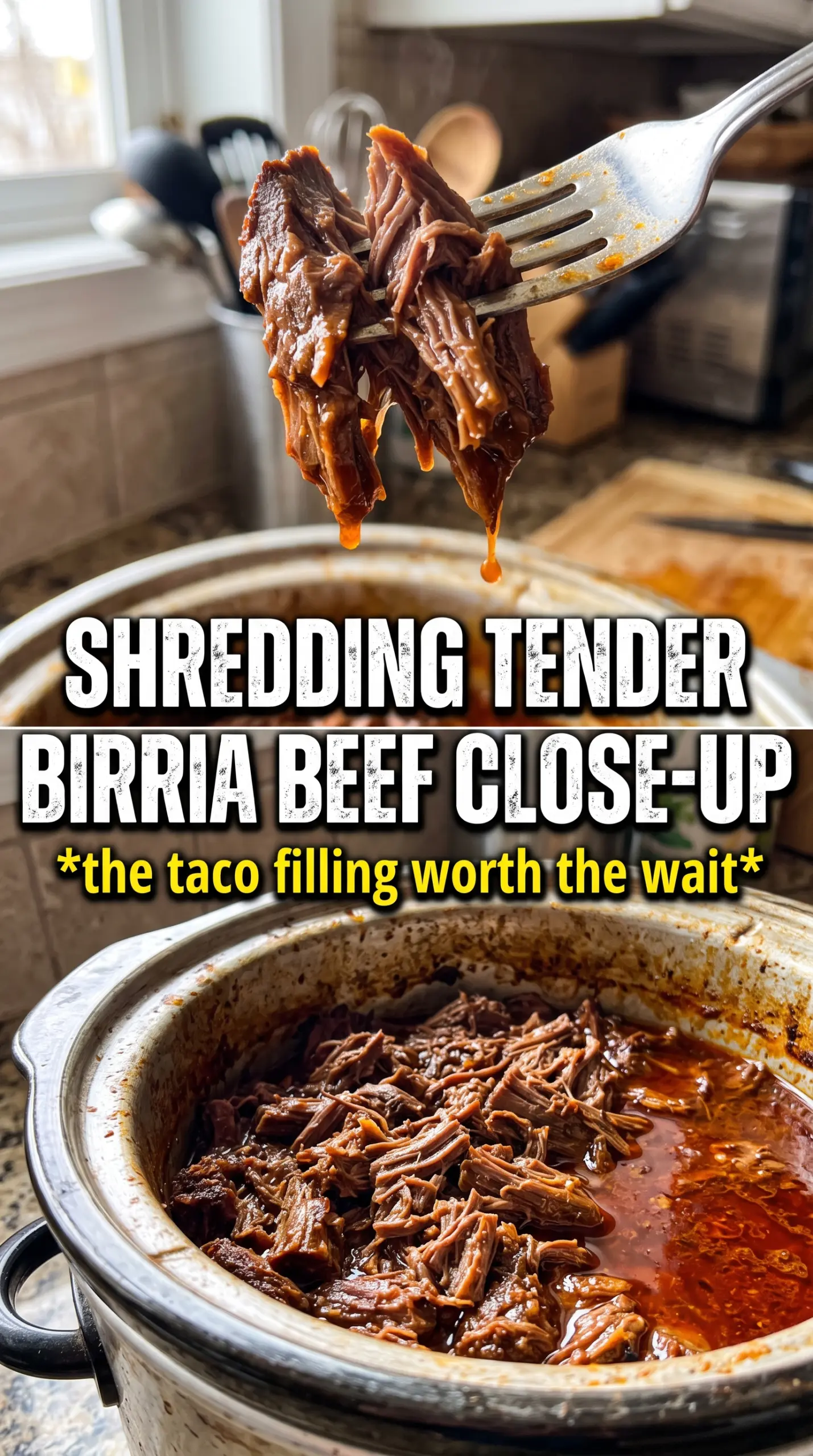
Shred the beef right in the consomé so every strand picks up flavor. Dip the tortillas into the broth, fill them with beef and cheese, and griddle until the shells are crisp and the cheese is melted at the edges. If the tortillas tear, they were dipped too long; a quick swipe through the fat-rich top of the broth is all they need.
How to Adapt Crockpot Birria for Different Pans, Budgets, and Dietary Needs
Use beef chuck for the best budget-friendly result
Chuck shreds beautifully after a long low cook and gives the consomé enough richness without leaning on expensive cuts. Short ribs taste a little deeper and feel more luxurious, but you don’t need them for a great pot of birria.
Make it dairy-free
Skip the cheese and serve the shredded birria in corn tortillas with extra consomé, onion, cilantro, and lime. You lose the melty stretch, but the beef and broth still carry the dish on their own.
Swap mozzarella if Oaxaca is hard to find
Oaxaca gives the best pull, but mozzarella melts cleanly and gives you the same crispy-edged taco effect. Use a low-moisture mozzarella if you can; fresh mozzarella holds too much water and can make the tortillas soggy.
Stretch the broth for a crowd
If you’re serving more people, add a little extra beef broth after the beef is shredded and season it again with salt and vinegar. That keeps the consomé usable for dipping without thinning out the chile flavor too much.
Storage and Reheating
- Refrigerator: Store the beef and consomé together for up to 4 days. The broth thickens and the fat rises on top, which actually helps the flavor.
- Freezer: Freezes well for up to 3 months in airtight containers. Freeze the birria in portions with plenty of broth so the meat stays moist when reheated.
- Reheating: Warm gently on the stove over medium-low heat until hot. Don’t blast it in the microwave for too long or the beef can turn stringy and the broth can separate.