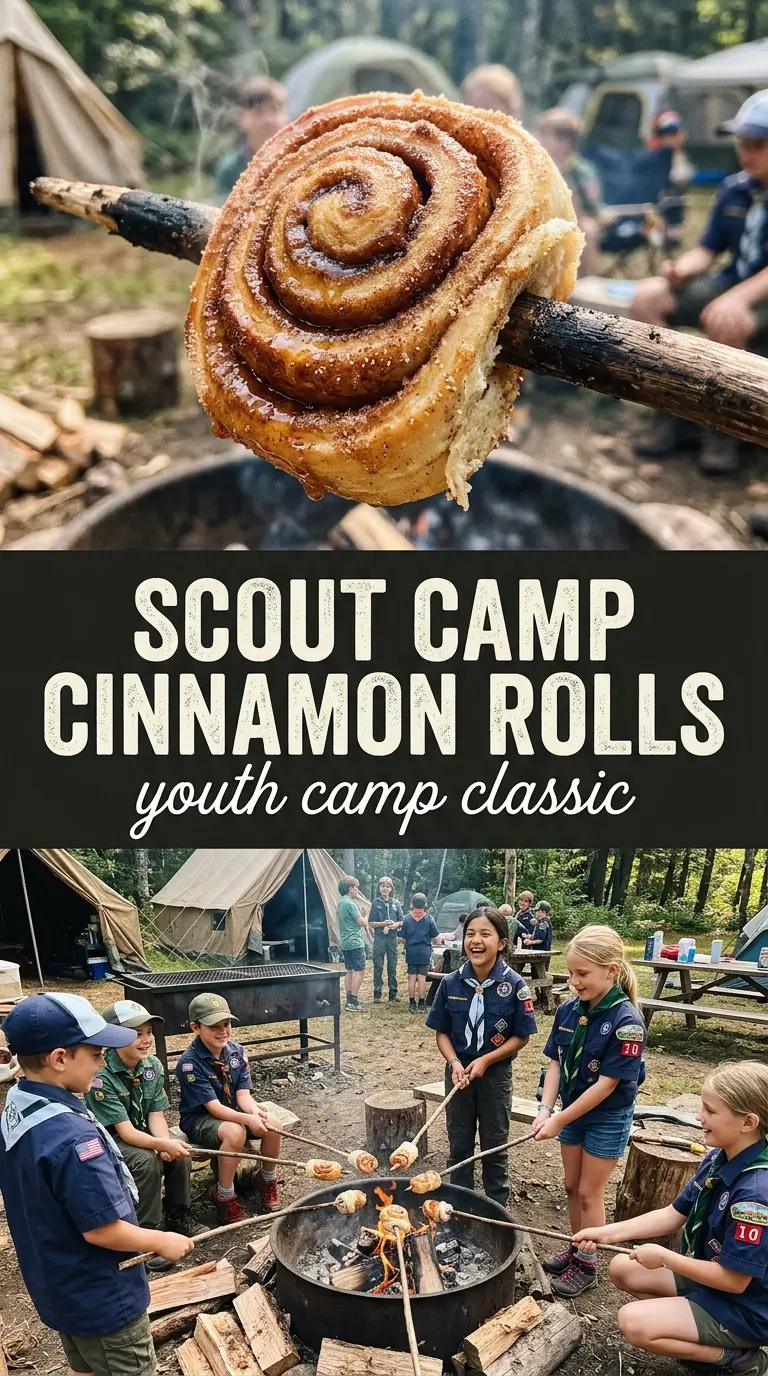
Campfire cinnamon roll ups on a stick turn simple refrigerated dough into something warm, crackly at the edges, and soft in the middle with a caramelized cinnamon shell. They’re the kind of dessert people hover around the fire for, because each one comes off the stick looking toasted, glossy, and a little irresistible once the glaze starts running down the sides.
The trick is in the rotation. Dough over open flame needs constant turning so it cooks through without scorching the outside, and the butter gives the cinnamon sugar something to cling to while the surface browns. Breadstick dough makes a cleaner spiral and bakes up a little sturdier on the stick, but biscuit dough works if that’s what you’ve got on hand. The glaze stays deliberately simple so it melts into the warm dough instead of covering up the cinnamon flavor.
Below you’ll find the small details that make these work at the fire pit: how tightly to wrap the dough, how to know when the center is cooked, and what to change if you want a richer, gooier version.
The dough cooked through evenly and the cinnamon sugar turned crisp at the edges without burning. My kids loved brushing on the glaze while they were still warm.
Like this campfire cinnamon roll ups on a stick recipe? Save it for the next fire night when you want a sweet dessert with golden edges and an easy glaze.
The Reason These Don’t Burn Before They Cook Through
Open-flame desserts fail for the same reason every time: the outside colors too fast while the center stays doughy. These roll ups avoid that by using thin strips of dough wrapped in a loose spiral, which gives heat a chance to move inward instead of trapping a thick pocket of raw dough on the stick. Constant rotation matters more than high flame. You want steady browning, not direct blasting heat.
The other thing people miss is the cooling window. The sugar crust firms as it sits for a couple of minutes, and that short rest also keeps the glaze from sliding off instantly. If you pull them too early, the center can feel gummy; if you leave them over the fire too long, the sugar goes from toasted to bitter fast.
What Each Ingredient Is Actually Doing Over the Fire
- Refrigerated breadstick dough — This gives you a slimmer, more even shape that cooks through faster than biscuit dough. Biscuit dough works too, but it tends to be thicker and a little more uneven on the stick, so keep the spiral looser and give it a few extra turns over the fire.
- Butter — The butter helps the cinnamon sugar stick and browns into that toasted outer layer. Melted butter is the right move here; softened butter won’t brush on evenly, and any dry spot will brown less nicely.
- Cinnamon sugar — This is what turns the dough from plain campfire bread into dessert. Store-bought cinnamon sugar is fine, but if you mix your own, use more cinnamon than you think you need so the flavor still comes through after roasting.
- Powdered sugar and milk — The glaze is meant to be loose enough to drizzle over warm dough without caking. If it’s too thick, add milk a teaspoon at a time until it falls in a ribbon; too thin and it just disappears into the crust.
- Roasting sticks — Long, sturdy sticks keep your hands safely away from the flame and let you rotate the dough without tearing it. If you’re using wooden skewers, soak them first and keep them pointed well away from the hottest part of the fire.
How to Wrap, Roast, and Glaze Them Without Ending Up With Raw Dough
Shaping the Spiral
Separate the dough into individual pieces and roll each one lightly if it needs a little length. Wrap it around the end of the roasting stick in a spiral, leaving small gaps between the coils so heat can reach the center. If the dough is wound too tightly, the outside browns before the inside sets. Press the ends gently so they stay put, but don’t pinch the spiral closed.
Building the Cinnamon Shell
Brush the dough with melted butter until the surface looks evenly coated, then shower on the cinnamon sugar while the butter is still wet. That layer should cling in a thin blanket, not fall off in clumps. Too much sugar can scorch before the dough cooks, so aim for full coverage without a heavy crust. A quick extra swipe of butter on any dry patches helps the coating brown more evenly.
Roasting Over the Flame
Hold the dough over hot coals or a steady flame and rotate constantly for 8 to 10 minutes. You’re looking for deep golden color all around, with no pale doughy seams left between the spirals. If the fire is aggressive, pull the stick a little farther from the heat rather than speeding up the rotation. A charred exterior with raw dough inside usually means the heat was too high, not that it needed more time.
Finishing With Glaze
Slide the roll up off the stick and let it cool for 2 minutes before glazing. That short rest keeps the glaze from melting straight off and gives the sugar crust time to set. Stir the powdered sugar and milk until smooth, then drizzle while the rolls are still warm. If you want a thicker drizzle, use less milk; if you want it to soak in more, thin it slightly.
How to Adapt These for Different Fires, Diets, and Cravings
Biscuit Dough Instead of Breadstick Dough
Biscuit dough gives a richer, more bread-like bite, but it’s thicker and can stay undercooked in the center if you wrap it too tightly. Flatten it slightly before spiraling it on the stick, and plan on a slower roast over gentler heat.
Dairy-Free Version
Use a plant-based buttery spread for brushing and swap in an unsweetened non-dairy milk for the glaze. The texture stays the same, though the topping will taste a little cleaner and less rich than the butter version.
Extra Gooey Cinnamon Sugar Finish
Add a light second brushing of butter halfway through roasting and dust on another pinch of cinnamon sugar. That builds a thicker, stickier shell, but it also means you need to keep the stick moving so the sugar doesn’t darken too fast.
Storage and Reheating
- Refrigerator: Best eaten the same day. If you do have leftovers, keep them covered for up to 2 days, but expect the outside to soften.
- Freezer: I don’t recommend freezing them after roasting. The dough turns dry and the glaze gets sticky in a bad way once thawed.
- Reheating: Warm leftovers in a 300°F oven for 5 to 7 minutes or until heated through. The microwave makes them rubbery fast and turns the sugar coating tacky instead of crisp.
Questions I Get Asked About This Recipe
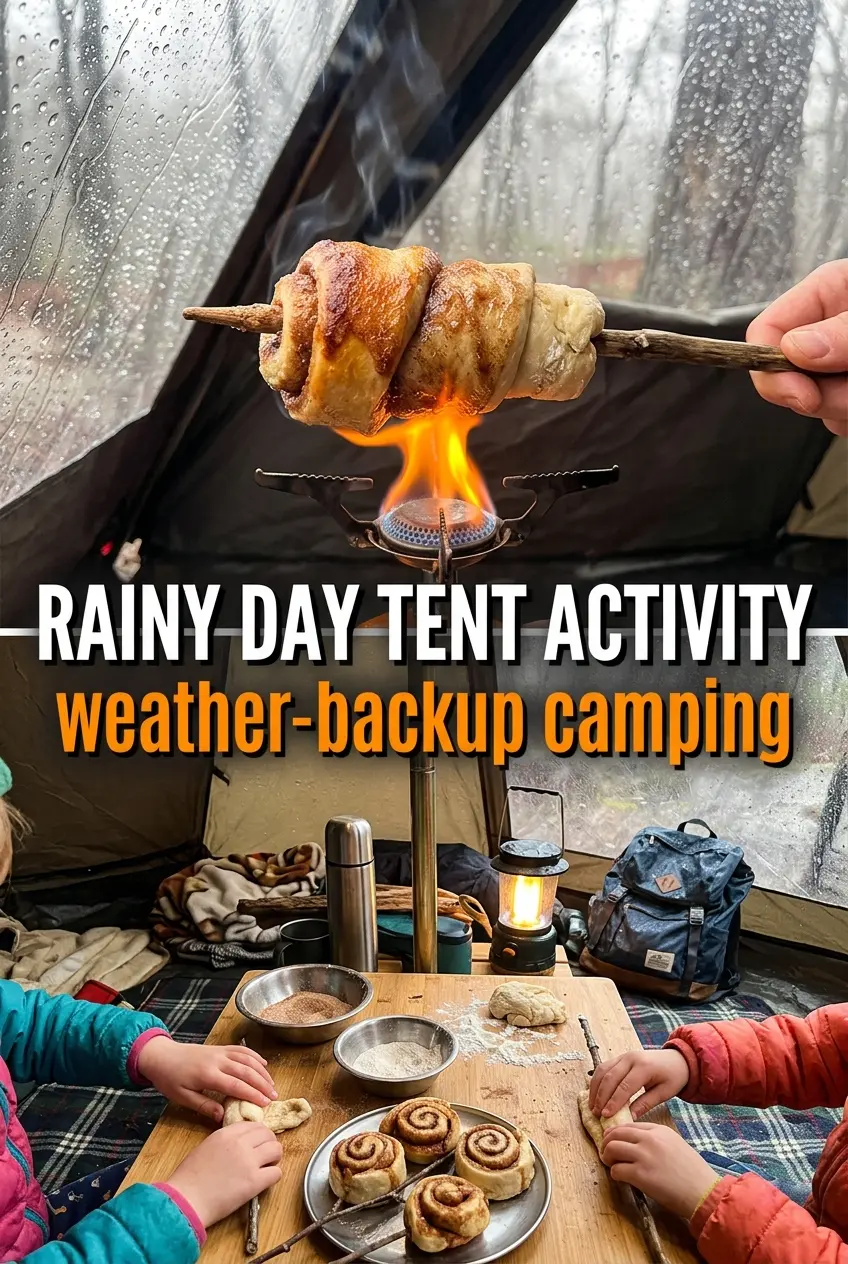
Campfire Cinnamon Roll Ups On A Stick
Ingredients
Method
- Separate the refrigerated breadstick dough into individual pieces.
- Wrap each dough piece around the end of a roasting stick in a tight spiral pattern.
- Brush the wrapped dough all over with melted butter.
- Sprinkle the dough with cinnamon sugar.
- Hold the stick over the campfire flames and rotate constantly for 8-10 minutes, until golden brown and cooked through.
- Slide the roll up off the stick and let it cool for 2 minutes.
- Stir powdered sugar and milk until smooth.
- Drizzle the glaze over the warm roll ups.