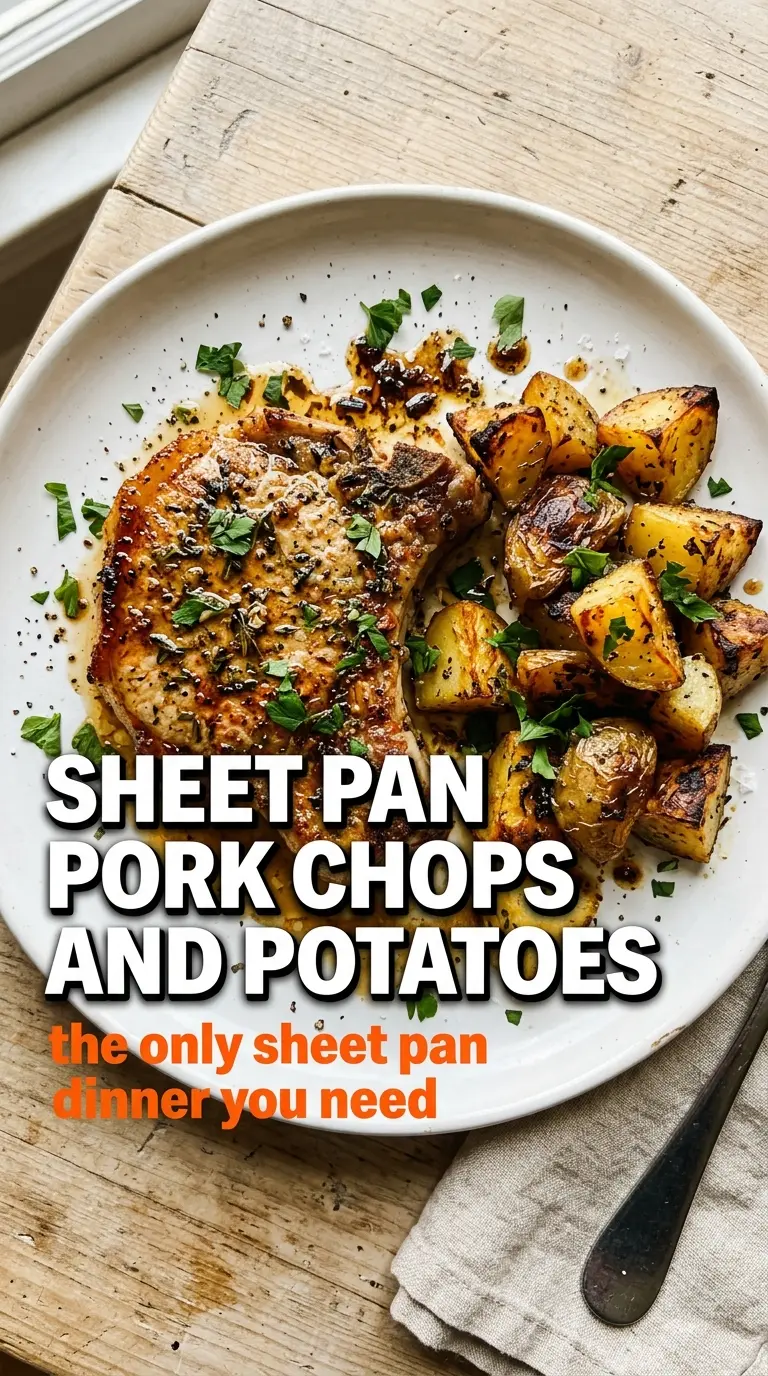
Golden pork chops, crisp-edged potatoes, and roasted green beans all finishing on the same pan is the kind of dinner that earns a permanent place in the weeknight rotation. The chops stay juicy because they cook right alongside the potatoes instead of drying out under a long, separate roast, and the vegetables pick up all the good browned bits from the pan. When everything comes out caramelized and glossy, there’s not much else to do besides add a squeeze of lemon and eat.
The trick here is giving the potatoes a head start. They need that extra time to brown properly, because pork chops and green beans finish at a different pace. I also season the potatoes and pork separately so the garlic and herbs don’t burn before the meat is done. Bone-in chops help a lot here too; they’re more forgiving than boneless and stay tender at the edges while the center comes up to temperature.
Below, I’ll show you how to keep the potatoes crisp instead of soft, how to avoid overcooking the pork, and the small change that makes this sheet pan dinner taste brighter at the end.
The potatoes got those crispy edges I was hoping for, and the pork chops were still juicy at 145°F. My husband kept picking at the green beans straight from the pan because they soaked up all the garlic and paprika.
Save this sheet pan pork chops and potatoes dinner for the nights when you want crispy potatoes, juicy pork, and one pan to wash.
The Part Most Sheet Pan Pork Chops Get Wrong
The biggest mistake with pork chops and potatoes on one pan is trying to make everything start and finish at the same time. Potatoes need a head start because they’re dense and need direct heat to get a real roasted edge. If they go on raw with the chops, they usually end up pale and soft while the pork is already done.
The second issue is crowding. If the pan is packed, the potatoes and green beans steam instead of roast, and the pork chops end up sitting in moisture instead of browning. Spacing matters more than fancy seasoning here. A hot oven and a little room around each piece are what give you that browned, dinner-from-the-oven finish.
- Potatoes — Baby potatoes are the right choice because they hold their shape and roast into creamy centers with crisp cut sides. Halve them so the cut surface can brown.
- Bone-in pork chops — The bone adds a little protection against overcooking and helps the chops stay juicy. Thick, 1-inch chops work best because they can handle the oven time without drying out.
- Green beans — They go in near the end so they stay bright and tender-crisp. If you add them too early, they lose their snap and turn soft before the pork is finished.
- Smoked paprika, rosemary, and thyme — This combination gives the pan a roasted, savory edge without needing a marinade. Dried herbs work well here because they cling to the meat and potatoes and bloom in the oven heat.
What Each Ingredient Is Actually Doing in This Dish
- Olive oil — This is what carries the seasoning and helps the potatoes brown. You need enough to coat, not drown, the ingredients.
- Garlic — Fresh garlic gives the pan its backbone, but it can burn if it sits exposed too long. Tucking half of it with the potatoes and the rest with the pork keeps the flavor strong without turning bitter.
- Smoked paprika — It gives the dish a deeper roasted note and a little color. Regular paprika works in a pinch, but you’ll lose some of that warm, smoky edge.
- Rosemary and thyme — These herbs stand up to the oven and pair naturally with pork. If you only have one, use the rosemary; it’s the stronger flavor and reads more clearly after roasting.
- Lemon wedges — The squeeze at the end matters. After 30 minutes in the oven, the dish needs a little brightness to wake up the salt, garlic, and herbs.
How to Build the Pan So Everything Finishes at the Right Time
Roasting the Potatoes First
Start the potatoes on their own and give them 10 minutes before the pork goes in. That head start is what turns them from soft chunks into browned, roast-worthy potatoes. Spread them in a single layer and leave space between pieces so the cut sides can make contact with the hot pan. If they’re piled up, they’ll steam and stay pale.
Seasoning the Pork Without Burning the Garlic
Rub the pork chops with oil, garlic, rosemary, thyme, salt, and pepper right before they go onto the pan. The oil helps the herbs cling and keeps the surface from drying out. Don’t leave fresh garlic sitting on the pan by itself for long, because it can scorch during the remaining bake. Keeping it on the meat protects it and carries the flavor into the juices.
Adding the Green Beans at the End
The green beans only need the last part of the roast. Add them after the pork goes in so they soften slightly but still keep some bite. You’re looking for blistered spots and a bright green color, not limp beans. If they start to wrinkle badly before the pork hits temperature, the oven is running hot and they’re probably too close to the pan edges.
Knowing When the Pork Is Done
Pull the sheet pan when the pork reaches 145°F in the thickest part. The chops may still look slightly glossy in the center, and that’s fine; carryover heat finishes the job while they rest. If you wait until they look completely firm in the oven, they’ll usually be overcooked by the time they hit the plate. A quick rest for a few minutes keeps the juices where they belong.
Three Ways to Adapt This Sheet Pan Dinner
Dairy-Free and Naturally Gluten-Free
This recipe already fits both of those needs as written. The only thing to watch is any seasoning blend you substitute in place of the herbs and paprika; keep it plain and unseasoned so you control the salt and avoid hidden additives.
Using Boneless Pork Chops
Boneless chops will work, but they cook faster and dry out more easily. Start checking them a few minutes early and pull them as soon as they hit 145°F. They won’t have quite the same juicy cushion as bone-in chops, so the rest time matters even more.
Swapping the Vegetable
Broccoli, Brussels sprouts, or asparagus can take the place of green beans, but they don’t all need the same timing. Broccoli and Brussels sprouts can go in with the pork, while asparagus should be added later so the tips don’t shrivel. Choose a vegetable that can handle roasting without going soft under the pork juices.
Making It Bigger for a Crowd
Use two sheet pans instead of overcrowding one. That gives the potatoes and vegetables enough space to brown, and it keeps the pork from steaming. If you stack everything on a single pan, the texture falls apart before the timing does.
Storage and Reheating
- Refrigerator: Store leftovers in an airtight container for up to 3 days. The potatoes soften a little, but they still reheat well.
- Freezer: The pork chops and potatoes can be frozen, but the potatoes lose some of their roasted texture. Freeze in a tight container for up to 2 months if you’re fine with a softer result.
- Reheating: Warm on a sheet pan in a 350°F oven until heated through. The oven brings the potatoes back better than the microwave, which tends to make the pork rubbery and the beans limp.
Questions I Get Asked About This Recipe
Sheet Pan Pork Chops and Potatoes
Ingredients
Equipment
Method
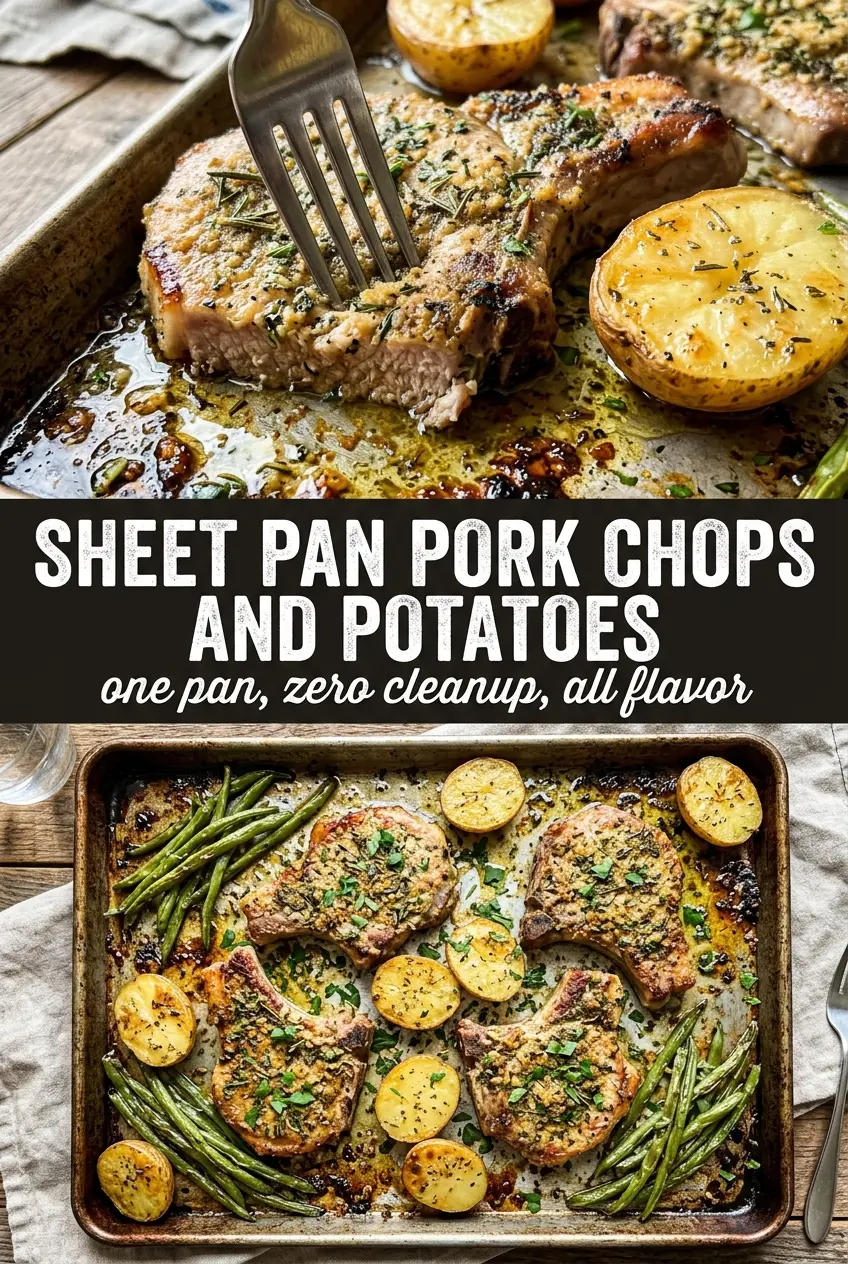
- Preheat oven to 400°F and line a large sheet pan with foil.
- Toss baby potatoes with 1.5 tablespoons olive oil, half the garlic, smoked paprika, salt, and black pepper, then spread on the pan and roast for 10 minutes until the potatoes begin to turn golden at the edges.
- Season bone-in pork chops with remaining garlic, dried rosemary, dried thyme, salt, and black pepper, then brush with the remaining olive oil.
- Push the potatoes to the edges and place the pork chops in the center of the sheet pan.
- Scatter green beans around the pan and roast for 20 minutes, until the pork reaches 145°F and the potatoes are deep golden.
- Serve the sheet pan pork chops and potatoes with lemon wedges.