Rich peanut tomato sauce clings to every bite of beef in this African beef stew, and the best versions have a deep, slow-cooked savoriness that lands somewhere between comforting and bold. The sweet potato softens into the broth, the spinach melts in at the end, and the chopped peanuts on top give every spoonful a little crunch. Served over rice, it eats like a full meal without needing anything else on the table.
The key here is building flavor in layers. Browning the beef first gives the stew a darker, meatier base, while tomato paste cooked with onion, garlic, ginger, and pepper loses its raw edge before the broth goes in. Peanut butter is whisked in after the meat has already had time to simmer, which keeps the sauce smooth instead of greasy or clumpy. That order matters. Rush it and the stew tastes flat; give each stage its time and the broth turns lush and balanced.
Below, I’ve included the small details that keep the sauce silky, the beef tender, and the sweet potato intact instead of dissolving into the pot. There are also a few smart swaps if you need to work around heat, peanuts, or what’s already in your pantry.
The peanut sauce turned out silky and the beef was fall-apart tender after the full simmer. I loved how the sweet potato held its shape instead of disappearing, and the spinach at the end made it feel complete.
Love the rich peanut tomato sauce and tender beef in this African beef stew? Save it to Pinterest for the nights when you want a hearty bowl over rice with almost no cleanup.
The Reason the Peanut Sauce Stays Smooth Instead of Breaking
The sauce in this stew can go grainy or oily if the peanut butter hits the pot too early or over too much heat. By the time the peanut butter goes in, the beef and tomatoes have already simmered long enough to build a balanced base, which gives the sauce something to emulsify into instead of separating on contact. Low heat and steady stirring are what keep it glossy.
The other common mistake is rushing the beef. Chuck needs time for the connective tissue to soften, and that means a real simmer, not a hard boil. If the pot is boiling aggressively, the meat tightens up and the broth turns cloudy before the peanut butter even has a chance to do its job.
What Each Ingredient Is Actually Doing in This Stew

- Beef chuck — This cut has enough connective tissue to turn tender during the long simmer. Leaner beef won’t give you the same silky texture in the broth.
- Tomato paste and crushed tomatoes — The paste adds concentrated depth, while the crushed tomatoes keep the sauce from tasting flat. Cook the paste with the aromatics first so it loses that raw tinny edge.
- Natural peanut butter — Use one with only peanuts, or peanuts and salt, so it melts smoothly into the stew. Sweetened peanut butter will throw the whole pot off balance.
- Sweet potato — It thickens the stew a little as it cooks and gives you a soft, sweet contrast against the savory broth. Cut it into even cubes so it finishes at the same time as the beef.
- Spinach — Stir it in at the very end. Anything earlier turns dull and stringy.
Building the Stew in the Right Order
Brown the Beef First
Season the beef, then brown it in batches in hot oil until the surface is dark and you can see actual fond stuck to the pan. If you crowd the pot, the meat steams and you lose that deeper, roasted flavor. Those brown bits are part of the finished stew, so don’t rush this stage or wipe the pot out.
Cook Down the Aromatics
After the onion softens, add the garlic, ginger, pepper, and tomato paste and cook for about two minutes. The mixture should smell fragrant and look darker and thicker, not wet and raw. This is where the stew starts tasting rounded instead of sharp.
Let the Beef Simmer Until It Yields
Add the tomatoes, broth, cumin, coriander, and beef, then cover and simmer gently. You’re looking for small lazy bubbles, not a boil. After about an hour and a quarter, the meat should be noticeably softer but not quite finished, which gives you room for the sweet potato without overcooking it.
Finish with Peanut Butter, Sweet Potato, and Greens
Whisk in the peanut butter until the broth turns smooth, then add the sweet potato and keep simmering until both the beef and sweet potato are tender. If the peanut butter looks stubborn, lower the heat and keep stirring; high heat is what makes the sauce look separated. Stir in the spinach at the very end so it wilts but keeps its color.
How to Adapt This Stew Without Losing Its Character
Make It Milder Without Losing Depth
Skip the scotch bonnet or habanero, or add only a small piece and remove it early if you just want a gentle background warmth. The stew still has plenty of character from the ginger, cumin, coriander, and peanut butter.
Turn It Into a Dairy-Free, Gluten-Free Dinner
As written, this stew already fits both. Serve it with plain rice or another gluten-free grain, and check your broth if you’re using store-bought; that’s usually where hidden gluten can sneak in.
Swap the Sweet Potato for Something Sturdier
Butternut squash works well if you want a similar sweetness with a slightly firmer bite. Potatoes also work, but they make the stew feel more classic and less silky, so add them in the same stage and watch the simmer closely.
Storage and Reheating
- Refrigerator: Keep it covered for up to 4 days. The sauce thickens as it chills, which is normal.
- Freezer: It freezes well for up to 3 months. Cool it completely first, then freeze in portions so the beef and broth reheat evenly.
- Reheating: Warm it gently on the stove over low heat with a splash of broth or water. Don’t boil it hard or the beef can toughen and the peanut sauce can start to separate.
Answers to the Questions Worth Asking
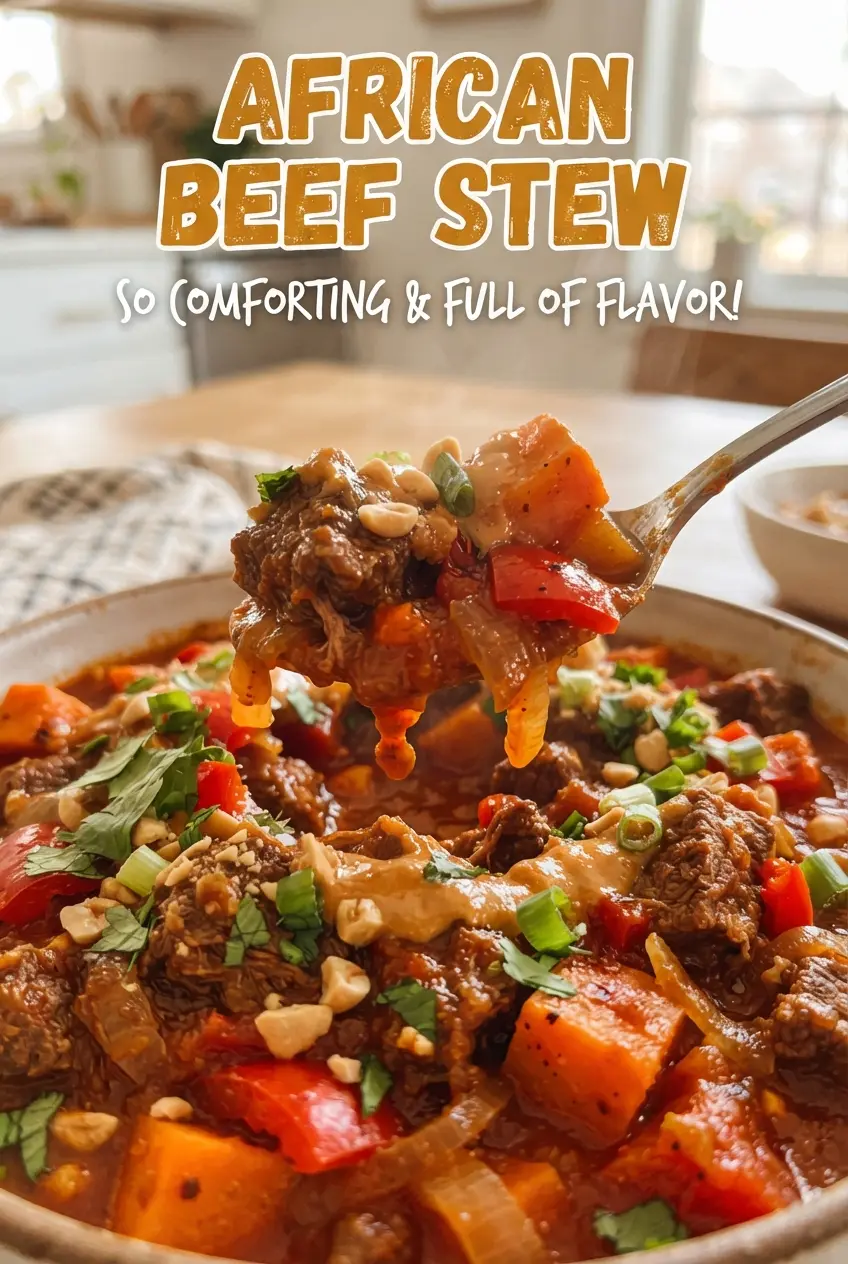
African Beef Stew
Ingredients
Equipment
Method
- Season the beef chuck cubes with salt and black pepper. Heat vegetable oil in a Dutch oven over medium-high heat and brown the beef in batches.
- Brown the beef until deeply seared on the outside, about 3–5 minutes per batch. Transfer browned beef to a plate while you continue with the remaining cubes.
- Reduce heat to medium and cook the diced onion for 4 minutes in the same pot. Add the minced garlic, grated ginger, and scotch bonnet or habanero (optional), then stir in pepper and cook 2 minutes.
- Stir in tomato paste and cook for 2 minutes to darken it slightly. Add crushed tomatoes, beef broth, ground cumin, ground coriander, and return the browned beef to the pot.
- Bring the mixture to a simmer, cover with a lid, and simmer for 1 1/4 hours. Keep the surface at a gentle bubbling level throughout.
- Whisk in natural peanut butter until smooth, then add the cubed sweet potato. Simmer uncovered for 30–35 minutes, stirring occasionally, until the beef and sweet potato are tender.
- Stir in baby spinach and cook until wilted, about 2–3 minutes. Turn off the heat once the spinach is fully soft and bright green.
- Serve the African beef stew over white rice. Top each bowl with chopped roasted peanuts and fresh cilantro.