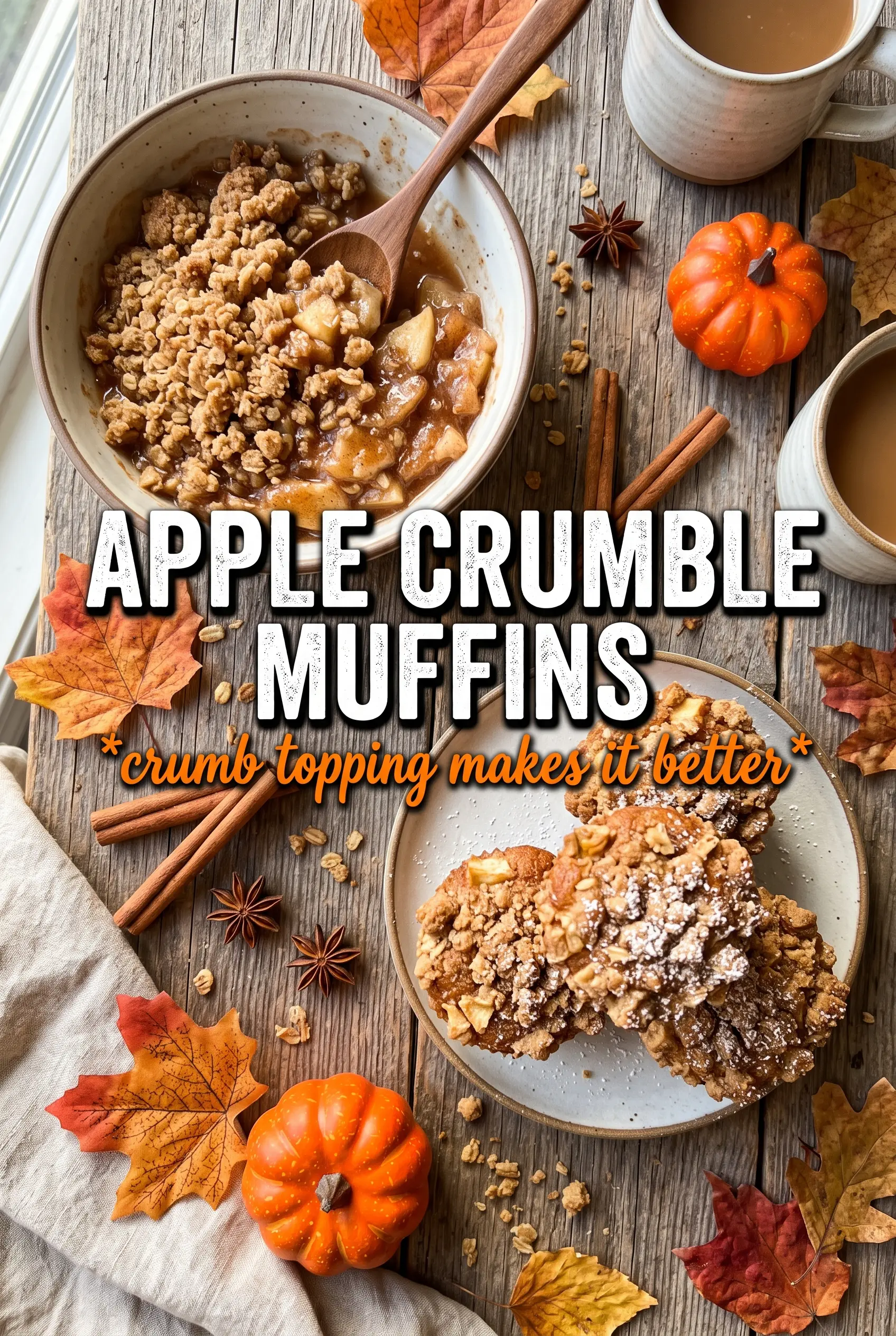
Apple crumble muffins bake up with tall domed tops, a soft crumb, and a buttery oat topping that stays crisp enough to give every bite a little crunch. The apple pieces melt into the batter just enough to keep the centers moist without turning the muffins dense or wet. They’re the kind of breakfast muffin that feels bakery-style, but still easy enough to pull together on a quiet morning.
The trick here is keeping the crumble cold and stopping the batter the moment the flour disappears. Overmixing tightens muffin batter fast, and the apples release enough moisture on their own, so there’s no need to push it further. Greek yogurt or sour cream adds tenderness and a slight tang that keeps the sweetness in check, while brown sugar gives the muffins a deeper, almost caramel note that works well with cinnamon and nutmeg.
Below, I’m walking through the parts that matter most: how to keep the topping clumpy, why finely diced apples bake better here, and the small cues that tell you the muffins are done without drying them out.
The crumble stayed crisp on top, and the apples baked into the muffins without sinking. I used sour cream, and the centers came out super moist even the next day.
Save these Apple Crumble Muffins for the mornings when you want a soft apple-studded muffin with a crisp oat crumble on top.
The Part That Keeps the Crumble Crisp Instead of Sinking In
The topping is what separates a good apple muffin from one that tastes flat. Cold butter is non-negotiable here because it creates little pockets in the oat mixture that melt slowly in the oven, which gives you that craggy, golden topping instead of a paste. If the butter softens too much before baking, the crumble turns into a thin sugary layer and you lose the texture that makes these muffins worth making.
The other thing that matters is how you fill the muffin cups. If the batter is underfilled, the crumble slides off the sides; if it’s overfilled, the centers can dome too fast and leave the middle underbaked. Aim for about three-quarters full, then pile the topping on with a light hand and let the oven do the rest.
What Each Ingredient Is Really Doing Here
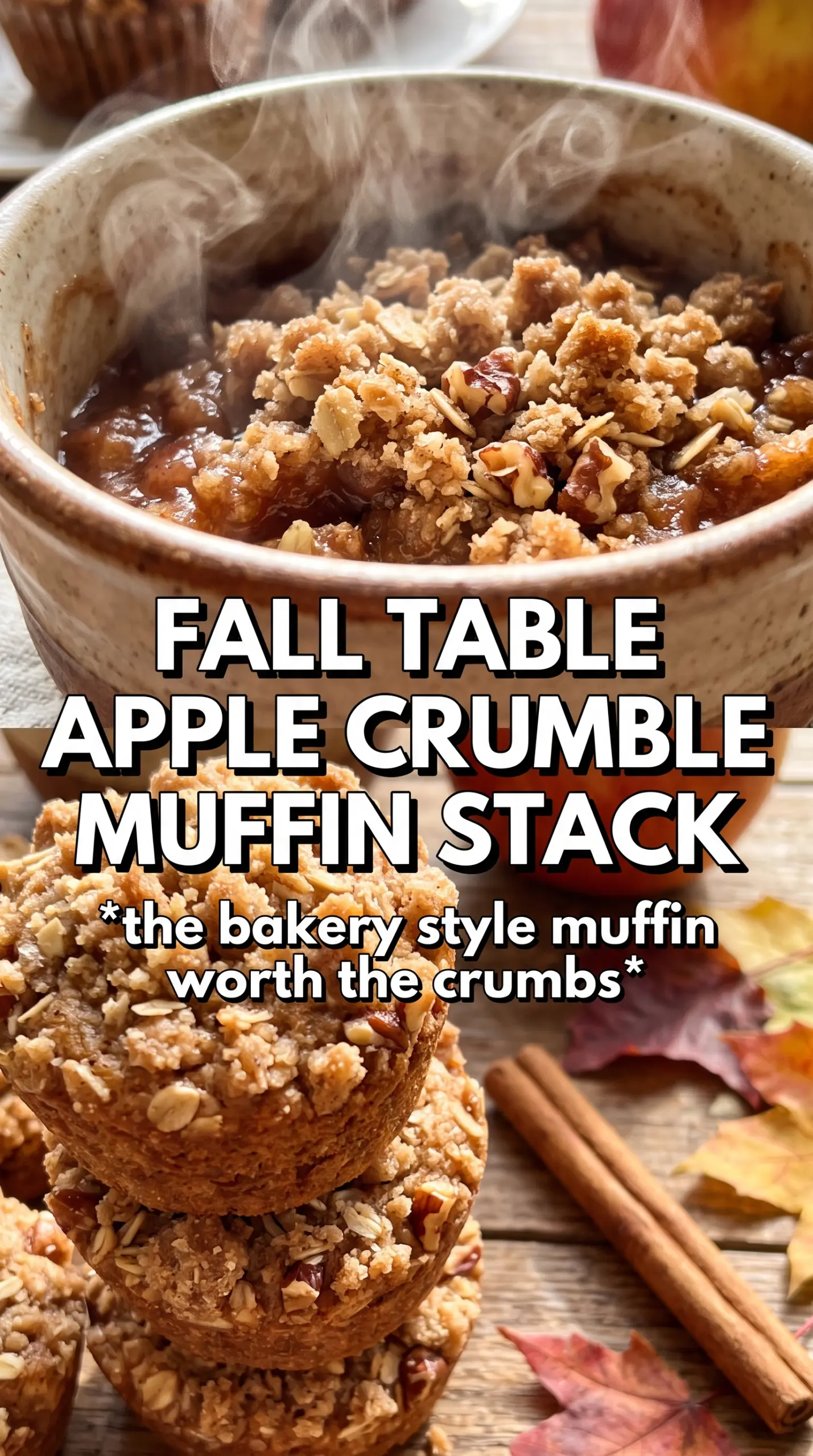
- Rolled oats — These give the crumble its nubby, bakery-style texture. Quick oats will work in a pinch, but they break down faster and make the topping less distinct.
- Brown sugar — Brown sugar deepens the sweetness and keeps the muffins moist. You can use light or dark brown sugar; dark gives a stronger molasses note.
- Cold butter — In the crumble, cold butter is what makes the topping clump. In the muffin batter, melted butter keeps the crumb tender and gives the muffins a softer bite than oil would.
- Greek yogurt or sour cream — Either one adds richness and helps the muffins stay soft for days. Sour cream gives a slightly fuller finish, while Greek yogurt adds a little more tang and works just as well.
- Finely diced apples — Small pieces bake evenly and distribute through the muffin instead of sinking. A firm apple like Honeycrisp, Fuji, or Granny Smith holds its shape best.
- Cinnamon and nutmeg — Cinnamon carries the main warm spice flavor, and nutmeg adds just enough depth to keep the muffins from tasting one-note. Freshly grated nutmeg is nice, but the pre-ground kind is fine here.
Building the Batter Without Toughening It
Start With the Crumble
Mix the oats, flour, brown sugar, and cinnamon first, then cut in the cold butter until the mixture looks clumpy and uneven. You want pieces that hold together when squeezed, not a smooth sandy blend. Chill the topping while you make the batter so the butter stays firm and the crumble bakes up with texture instead of melting flat.
Keep the Wet and Dry Mixtures Separate Until the Last Minute
Whisk the dry ingredients together in one bowl so the baking powder, baking soda, salt, and spices distribute evenly. In the wet bowl, whisk the melted butter, brown sugar, eggs, yogurt, milk, and vanilla until smooth before adding the flour. Once the dry and wet mixtures combine, switch to a spatula and stop as soon as the flour disappears; a few streaks are better than a heavy, overworked muffin.
Fold in the Apples Gently
The diced apples go in after the flour is almost mixed through so they don’t get smashed. Stir just enough to spread them evenly through the batter. If you keep mixing after the apples go in, the batter gets tight and the muffins bake up more like little cakes than soft breakfast muffins.
Bake Until the Tops Spring Back
Spoon the batter into the muffin tin and mound the crumble generously over each cup. Bake until the tops are golden and a toothpick comes out clean or with just a few moist crumbs. If the tops brown too quickly before the centers are set, the oven is likely running hot, so check them a couple of minutes early the next time you bake them.
How to Adjust These Muffins for Different Kitchens and Cravings
Make Them Dairy-Free
Use a neutral dairy-free butter for both the crumble and the muffin batter, then swap the Greek yogurt or sour cream for an unsweetened dairy-free yogurt. The muffins will still be tender, though the topping may be a little less rich than the butter-only version.
Gluten-Free Version
Use a 1:1 gluten-free baking blend in place of the all-purpose flour in the muffins and the crumble. The texture stays close to the original if the blend contains xanthan gum, but don’t overmix it or the muffins can turn gummy.
Extra-Spiced Apple Muffins
Add a pinch of cloves or allspice to the batter if you want a warmer, more spiced muffin. It pushes these closer to apple-cake territory, so use it sparingly or the cinnamon gets buried.
Storage and Reheating
- Refrigerator: Store in an airtight container for up to 4 days. The crumble softens a bit, but the muffins stay moist.
- Freezer: Freeze for up to 2 months, wrapped individually and sealed well. Thaw at room temperature or overnight in the fridge.
- Reheating: Warm in a 300F oven for 5 to 8 minutes, or use short bursts in the microwave if you don’t mind a softer topping. The oven is best if you want the crumble to wake back up.