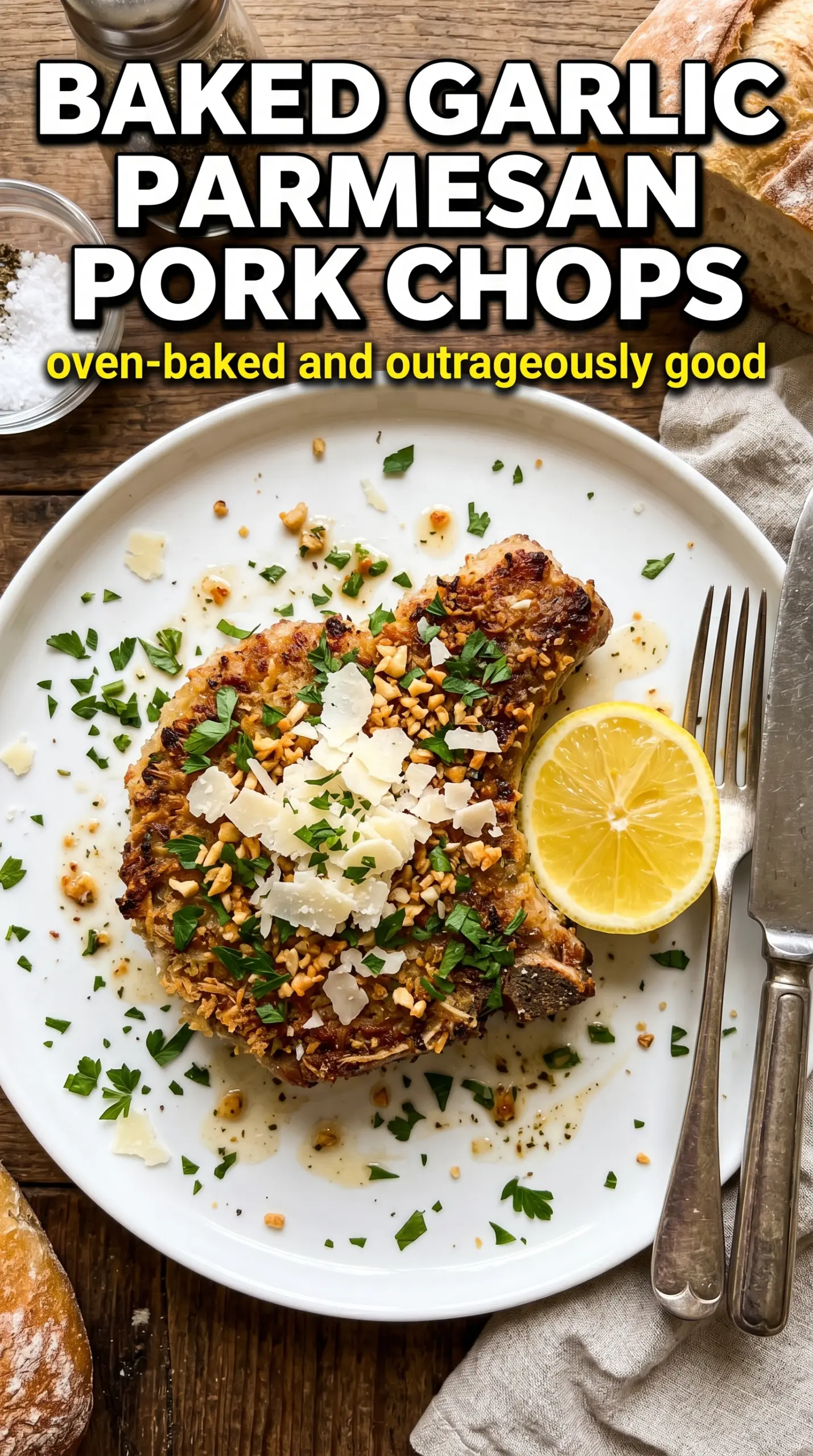
Pork chops under a thick garlic parmesan crust hit that sweet spot between weeknight practical and dinner-table impressive. The outside turns deeply savory and crisp, while the pork stays juicy if you pull it at the right temperature and let it rest for a few minutes before slicing. What sets this version apart is that the coating is pressed on firmly and baked hot enough to brown the cheese instead of steaming it soft.
The mayonnaise and Dijon may sound unusual, but they do the heavy lifting here. Mayo gives the crust a little fat so it browns evenly and clings to the meat, while Dijon adds a sharp backbone that keeps the whole thing from tasting flat. Panko brings the crunch, and the parmesan finishes with that salty, nutty edge you want in every bite.
Below, I walk through the one part that matters most: getting the crust to stay put and turn golden instead of slipping off in the pan. I’ve also included the swaps that work if you need to adjust the coating or make the dish fit what you already have in the kitchen.
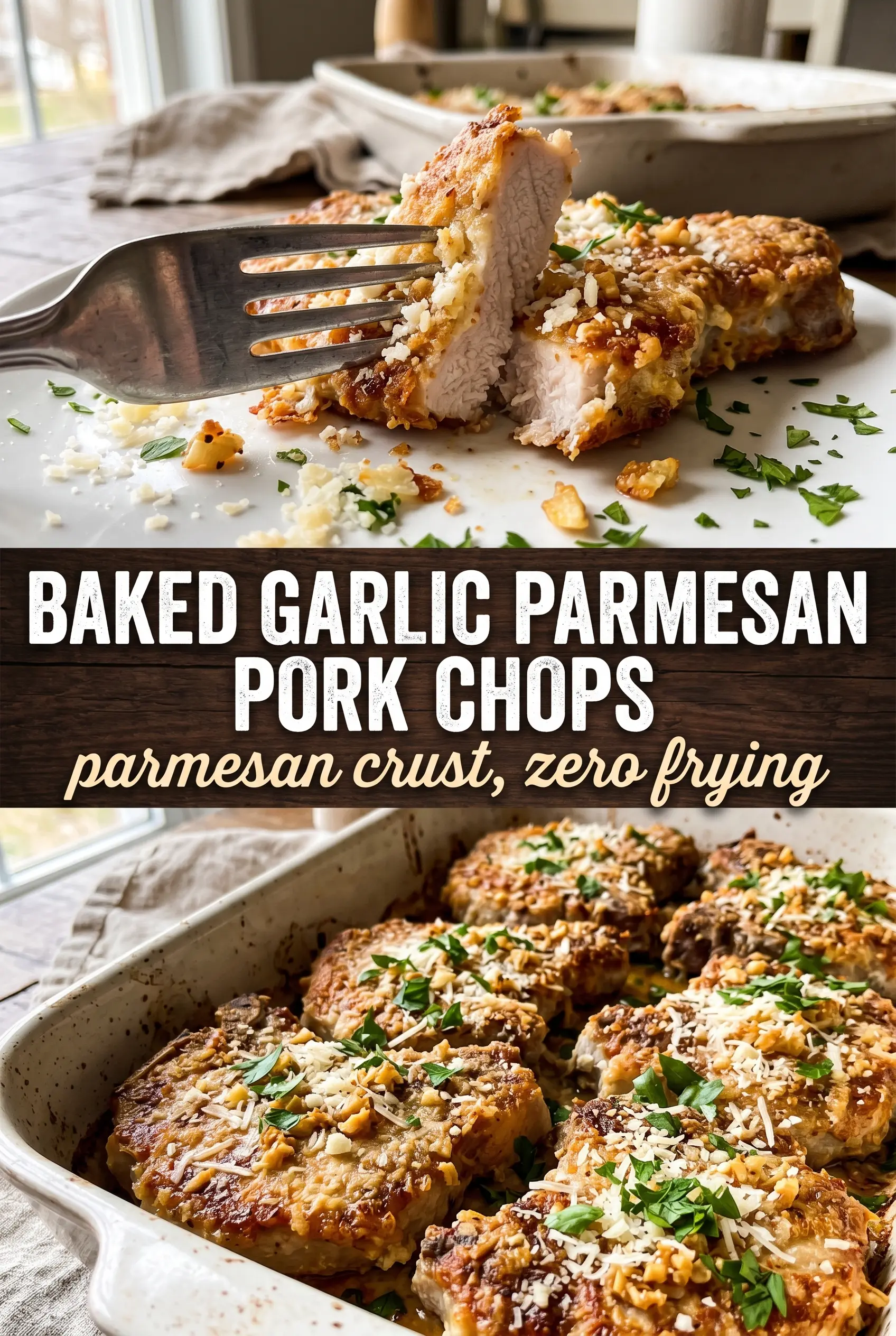
The parmesan crust got so crisp in the oven and stayed on the pork chops instead of falling off. I baked them right at 22 minutes and they were juicy, not dry at all. My husband kept saying the lemon on top made them taste restaurant-worthy.
Save these baked garlic parmesan pork chops for the nights when you want a crisp crust, juicy center, and almost no cleanup.
The Fastest Way to Lose the Crust Before It Ever Browns
The biggest mistake with baked pork chops is treating the coating like a breadcrumb topping instead of a crust. If the mayo mixture is too thin, the parmesan layer slides around and the panko never gets a chance to set. Pressing the coating on firmly matters more than piling it on thick. The goal is a tight layer that sticks to the meat from the moment it hits the oven.
Heat matters here too. A 425°F oven gives the crust enough blast to brown before the pork dries out. If your chops are thinner than 1 inch, they’ll cook faster and can go from juicy to overdone fast, so start checking early. You’re looking for a deep golden crust, not pale crumbs with a few dark spots.
- Pork chops — Boneless chops about 1 inch thick are the sweet spot. Thinner chops cook too fast and can dry out before the crust finishes browning.
- Mayonnaise — This is the glue and the browning aid. It adds fat and helps the coating stick, and plain Greek yogurt can work in a pinch, though the crust will be a little tangier and less rich.
- Dijon mustard — It cuts through the richness and adds a sharp note under the cheese. Yellow mustard can stand in, but it won’t give the same depth.
- Parmesan cheese — Use finely grated parmesan that melts and browns well. The shelf-stable kind can work, but freshly grated gives a better crust and stronger flavor.
- Panko breadcrumbs — They keep the coating light and crisp instead of dense. Regular breadcrumbs work, but the crust will be tighter and less crunchy.
- Garlic — Fresh minced garlic brings real punch, and the garlic powder backs it up so the flavor doesn’t fade in the oven. Don’t skip the fresh garlic if you want the crust to taste bold instead of dusty.
What Each Ingredient Is Actually Doing in This Pork Dish
- Pork (cut properly for method) — Pat dry so it browns instead of steams. Even thickness ensures uniform cooking.
- Oil or butter (the browning medium) — High-heat oil essential for proper searing. Creates pan flavor.
- Seasonings (salt, pepper, spices) — Build flavor boldly. Pork carries the entire profile.
- Aromatics (garlic, onion, herbs) — Cook with fat to bloom flavors. Become the foundation.
- Sauce or braising liquid (if using) — This keeps lean pork from drying. Balance richness with acid.
- Vegetables (if using) — Layer by cooking time. Hard vegetables first so everything finishes together.
- Acid (vinegar, wine, or citrus) — This brightens sauce and prevents heavy flavor. Add near end.
- Proper doneness (145°F with slight pink center) — Pork is safe here and stays juicy. Higher temps dry it out.
Press, Bake, Rest: The Three Moves That Keep the Pork Juicy
Building the Coating
Stir the mayonnaise and Dijon together until the mixture looks smooth and pale. Spread it over both sides of each pork chop in a thin, even layer; too much turns the crust slippery instead of crisp. Combine the parmesan, panko, garlic, Italian seasoning, garlic powder, salt, and pepper in a separate bowl so the crumbs are evenly seasoned. Then press the mixture onto the pork with real pressure so it bonds to the surface.
Baking at High Heat
Place the chops on a parchment-lined baking sheet and bake them in a fully preheated 425°F oven. That high heat is what browns the parmesan and helps the panko turn crisp before the pork dries out. If the top still looks pale near the end, give it another minute or two, but watch closely because the jump from golden to too dark happens fast. The pork is done when the center reaches 145°F and the juices run clear, not cloudy.
The Rest That Protects the Juices
Take the chops out and let them rest for 3 minutes before serving. That short rest lets the juices settle back into the meat instead of spilling onto the pan the second you cut in. Finish with parsley and a squeeze of lemon. The lemon matters here because it wakes up the parmesan and keeps the crust from tasting heavy.
How to Adapt These Garlic Parmesan Pork Chops Without Losing the Crunch
Make It Gluten-Free
Swap the panko for gluten-free breadcrumbs with a light, airy texture. You’ll still get crunch, but the coating may brown a little faster, so start checking near the 18-minute mark.
Use Bone-In Pork Chops
Bone-in chops bring a little extra flavor and stay juicy, but they usually need a few more minutes in the oven. Keep the crusting method the same and use temperature, not time, to decide when they’re done.
Dairy-Light Version
Parmesan carries most of the dairy flavor here, so if you need to reduce it, don’t replace it with a soft cheese. Instead, use a smaller amount of parmesan and lean harder on the garlic, mustard, and herbs so the crust still tastes bold.
Storage and Reheating
- Refrigerator: Store leftovers in an airtight container for up to 3 days. The crust softens a bit, but the flavor holds up well.
- Freezer: Freeze cooked pork chops only if you’re okay with a softer crust after thawing. Wrap tightly and freeze for up to 2 months.
- Reheating: Warm in a 350°F oven or air fryer until heated through. The common mistake is microwaving, which turns the crust soggy and can dry out the pork at the same time.
Answers to the Questions Worth Asking
Baked Garlic Parmesan Pork Chops
Ingredients
Equipment
Method
- Preheat oven to 425°F and line a sheet pan with parchment. The parchment helps the parmesan crust brown without sticking.
- Mix mayonnaise and dijon mustard until smooth. Spread the mixture over both sides of each pork chop so the crust clings.
- Combine parmesan, panko, minced garlic, Italian seasoning, garlic powder, salt, and pepper in a bowl. Stir until the mixture looks evenly speckled.
- Press the parmesan mixture firmly onto both sides of each pork chop. Use firm pressure so you see an even, thick crumbly coating.
- Bake for 18–22 minutes at 425°F until the crust is deep golden and pork reaches 145°F internally. Look for a browned, crisp top with toasted parmesan edges.
- Rest the pork chops for 3 minutes after baking. This helps the juices set and the crust stay attached.
- Garnish with fresh parsley and serve with lemon wedges. Finish with a lemon squeeze right before eating for brightness.