Beef stew with mushrooms earns its place in the rotation because the broth turns deep and savory while the beef goes spoon-tender and the mushrooms keep their own meaty bite. It’s the kind of pot that tastes even better on the second day, with rich gravy clinging to potatoes and carrots instead of sitting thin at the bottom of the bowl.
The key is building flavor in layers. Browning the mushrooms first gives them a head start so they don’t disappear into the stew, and dredging the beef in flour helps thicken the broth naturally as it simmers. A little soy sauce does the same quiet work that a longer simmer would otherwise have to do, adding color and backbone without tasting overtly like soy.
Below, you’ll find the timing that keeps the vegetables from turning mushy, plus a few smart swaps if you want to adjust the wine, mushrooms, or make the dish gluten-free.
The mushrooms stayed browned instead of turning soggy, and the gravy thickened up exactly right after that long simmer. I used the leftover stew over mashed potatoes the next night and it was even better.
Save this beef stew with mushrooms for the kind of dinner that gets richer and more tender after a slow simmer.
The Trick to Keeping the Mushrooms Brown Instead of Watery
Mushrooms release a lot of moisture before they brown, and that’s the point where most stews lose them. If you crowd them into the pot, they steam and soften without ever getting that deep, savory edge that makes them worth adding in the first place. Cooking them first in butter with a little oil pulls out that moisture and gives you mushrooms that still taste like mushrooms after two hours in the pot.
The beef needs the same patience. Tossing it with flour before browning does two jobs at once: it helps the meat develop a crust, and it thickens the stew later without turning the broth pasty. If the beef looks pale when it goes into the simmer, the stew will taste flatter no matter how long it cooks.
What Each Ingredient Is Actually Doing in This Stew

- Beef chuck — This cut has enough fat and connective tissue to turn tender over a long simmer. Lean stew meat can work, but it won’t give you the same silky texture in the broth.
- Cremini mushrooms — They bring the earthy, browned flavor that makes this stew feel deeper than a plain beef-and-potato pot. White button mushrooms will work in a pinch, but they’re milder and less robust.
- Dry red wine — It lifts the fond off the bottom of the pot and adds acidity so the stew doesn’t taste heavy. If you don’t want to use wine, use extra broth with 1 tablespoon of red wine vinegar stirred in at the end.
- Soy sauce — This is the quiet umami booster. It doesn’t make the stew taste Asian; it makes the beef taste beefier.
- Flour — The light coating on the beef thickens the broth as it simmers and helps the exterior brown better. For a gluten-free version, use a 1:1 gluten-free flour blend.
Building the Stew in the Right Order
Brown the mushrooms first
Cook the mushrooms in butter and a little oil until they give off their moisture and the edges turn golden brown. Don’t rush this stage; pale mushrooms taste soft and flat in the finished stew. Set them aside once they’re browned, because they go back in near the end and keep their texture that way.
Get real color on the beef
Season the beef, toss it in flour, and brown it in batches. If the pieces are crowded, they’ll steam and you’ll miss the crust that gives the stew its backbone. The pot will look messy at this stage, and that’s good — those browned bits are what the wine and broth will pull up next.
Use the tomato paste as a bridge
After the onion softens, stir in the garlic and tomato paste and cook for a minute before deglazing. The paste needs that brief hit of heat to lose its raw taste and turn darker, which gives the broth more depth. Add the wine while the pan is still hot so it sizzles and loosens every bit stuck to the bottom.
Finish with the vegetables at the right time
The beef needs the long simmer first, and the potatoes and carrots go in later so they hold their shape. If you add them at the beginning, the potatoes break apart and the carrots go soft before the beef is ready. Stir the mushrooms back in with the vegetables so they absorb the broth without losing all their browning.
Ways to Change the Pot Without Losing the Character
Gluten-free stew
Swap the all-purpose flour for a 1:1 gluten-free flour blend or skip the dredge and thicken the finished stew with a cornstarch slurry. The flavor stays the same, but the broth will be a little less velvety if you leave out the flour coating on the beef.
No wine version
Use more beef broth and add 1 tablespoon of red wine vinegar or balsamic vinegar near the end of cooking. You lose a little complexity from the wine, but the vinegar gives the stew enough lift that the broth still tastes balanced instead of heavy.
Swap the mushrooms
Use a mix of cremini and shiitake for a deeper, woodier flavor, or use button mushrooms if that’s what you have. Shiitakes bring more intensity, while buttons are milder and need the broth to do more of the work.
Make it dairy-free
Replace the butter with more olive oil and brown the mushrooms a little longer to build up that rich edge. You’ll lose a touch of roundness from the butter, but the stew will still be full-bodied and deep.
Storage and Reheating
- Refrigerator: Store for up to 4 days. The broth thickens as it chills, and the flavor gets deeper by the next day.
- Freezer: Freeze for up to 3 months in airtight containers, leaving a little headspace. The potatoes soften slightly after thawing, but the stew still reheats well.
- Reheating: Warm it gently on the stovetop over low heat with a splash of broth if needed. High heat can tighten the beef and make the vegetables fall apart before the center is hot.
Answers to the Questions Worth Asking
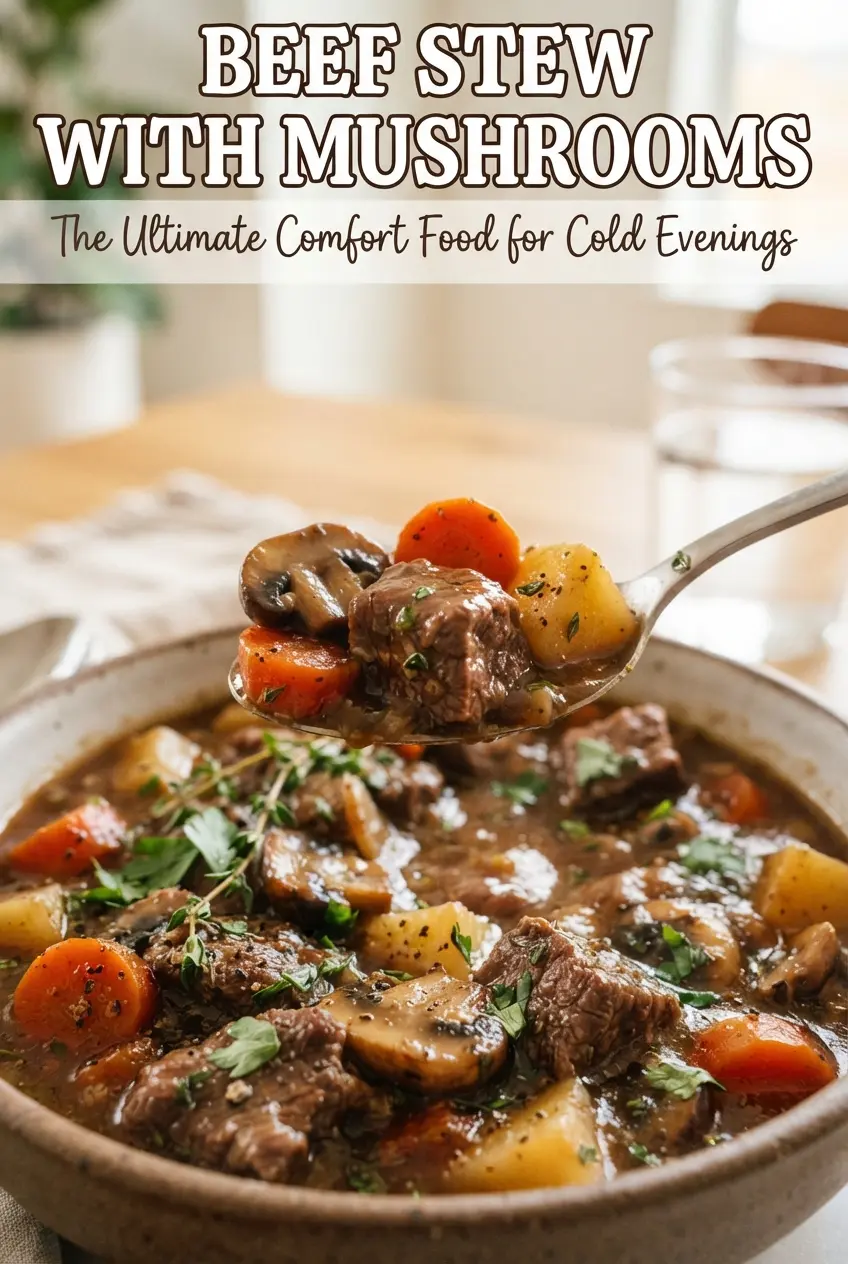
Beef Stew with Mushrooms
Ingredients
Equipment
Method
- Melt the butter with 1 tablespoon of the olive oil in a Dutch oven over medium-high heat, then add the quartered cremini mushrooms in an even layer. Cook for 8 minutes, until golden, then set aside.
- Season the beef chuck cubes with salt and black pepper, then toss them with the flour until evenly coated. Heat the remaining 2 tablespoons olive oil in the Dutch oven and brown the beef in batches so pieces don’t steam, about 2-3 minutes per side.
- Add the diced onion to the Dutch oven and cook for 4 minutes, scraping up browned bits. Stir in the minced garlic and tomato paste and cook for 1 minute, then deglaze with the red wine.
- Add the beef broth, soy sauce, dried thyme, bay leaves, and the browned beef to the pot. Cover and simmer for 1 3/4 hours.
- Add the cubed potatoes, sliced carrots, and the reserved mushrooms. Simmer for 45-60 minutes, until the vegetables are tender and the beef is fork-soft.
- Remove the bay leaves and serve the stew hot from the Dutch oven.