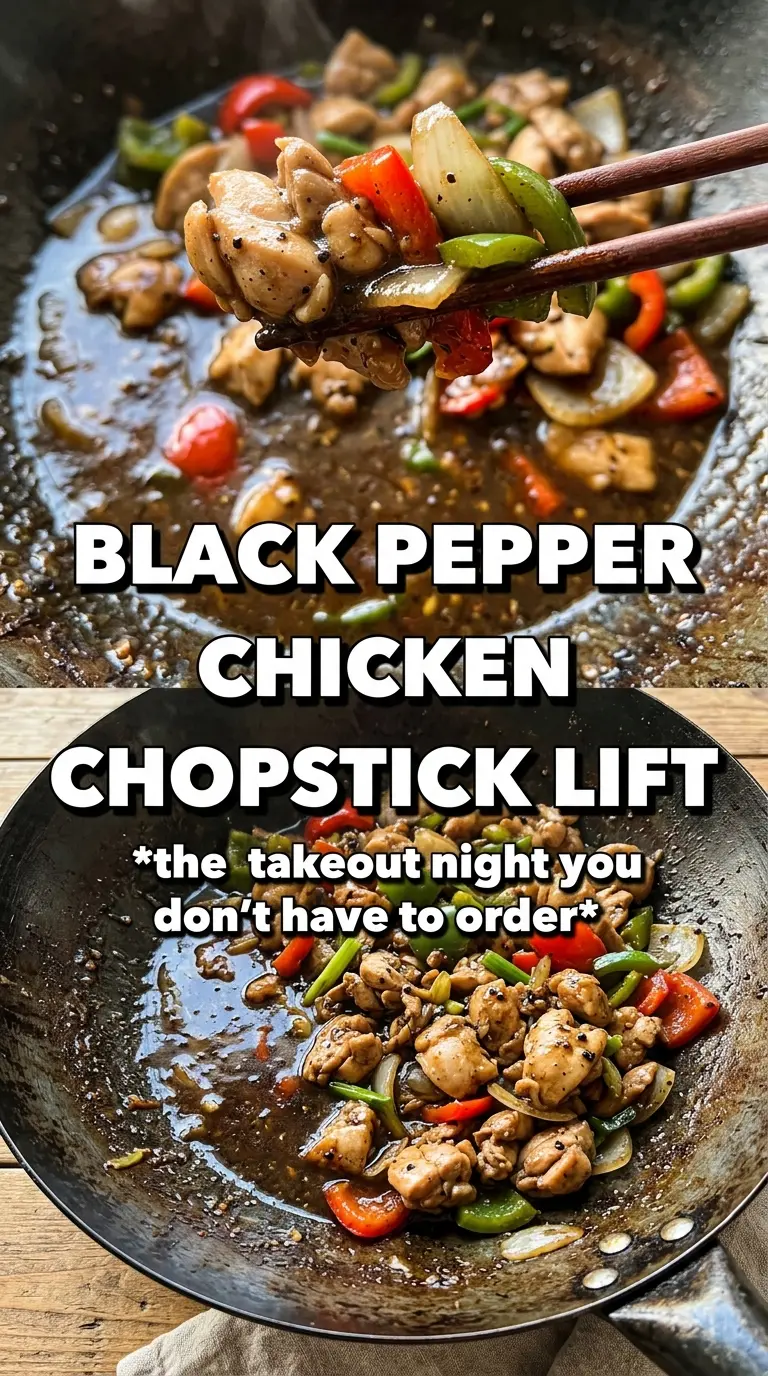
Black pepper chicken hits the table with glossy, savory sauce clinging to tender chicken and crisp-tender peppers, and that sharp peppery finish is what keeps people going back for another bite. The best versions don’t taste muddled or heavy. They taste punchy, balanced, and just thick enough to coat the rice underneath.
This one works because the sauce is built to cling. Soy sauce brings salt and depth, oyster sauce adds body, and a little dark soy gives the color and that deeper edge you notice right away. Freshly cracked black pepper matters here more than a fine grind; it gives the dish its bite without disappearing into the sauce. High heat on the chicken and vegetables keeps everything from turning soggy, so the final toss stays bright and lively instead of stewed.
Below, I’ll show you the small moves that keep the chicken juicy and the sauce glossy. If you’ve ever had black pepper chicken that tasted flat or watery, the details here fix that.
The sauce thickened up right at the end and coated every piece without getting gummy. I used extra cracked pepper like suggested, and it tasted just like my favorite takeout spot.
Save this black pepper chicken for the nights when you want glossy takeout-style sauce, tender chicken, and a bold peppery finish over rice.
The Trick to Keeping the Pepper Sauce Bold, Not Bitter
Black pepper can go from sharp to harsh if it sits too long in hot oil, which is why this recipe keeps the pepper in the sauce and out of the pan until the end. That gives you clean heat instead of a burnt edge. The other thing that matters is the cornstarch slurry: if you dump the starch straight into the sauce, it clumps and leaves you with gritty spots instead of a smooth glaze.
The right texture here is not a thin stir-fry sauce and not a thick gravy. It should cling to the chicken in a glossy layer and pool lightly at the bottom of the bowl. If it gets too thick, the sauce was reduced too far; a splash of water fixes it fast. If it tastes flat, the usual fix is more freshly cracked pepper, not more soy sauce.
What Each Ingredient Is Actually Doing in This Recipe
- Primary ingredient (the star) — Quality matters most. Choose the best you can find.
- Cooking medium (oil, butter, or broth) — This carries flavors and prevents dryness.
- Seasonings (salt, pepper, spices, herbs) — Layer flavors so nothing overpowers. Build depth gradually.
- Aromatics (garlic, onion, herbs) — Cook with fat to bloom flavors. Become the foundation.
- Supporting ingredients — Complement the main ingredient without overpowering it.
- Sauce or liquid (if applicable) — Brings flavors together. Balance richness with acid.
- Acid (lemon, vinegar, wine, or other) — Brightens and prevents flat-tasting results.
- Final finish (garnish, glaze, or sauce) — Prevents one-dimensional taste and adds visual appeal.
What Each Ingredient Is Actually Doing in This Dish
- Chicken breast — Slicing it thin helps it cook fast and stay tender. Breast meat is lean, so high heat and a short cook time matter. If you want a juicier result, boneless chicken thigh works too, but it will taste richer and a little less clean.
- Dark soy sauce — This is what gives the sauce its deep color and a slightly rounder, molasses-like depth. Regular soy sauce alone will taste saltier and lighter. If you don’t have dark soy, add a touch more oyster sauce and accept a paler sauce.
- Oyster sauce — This is the backbone of the glossy finish. It adds body and a savory sweetness that makes the sauce taste finished instead of just salty. There isn’t a perfect substitute, but hoisin works in a pinch; it’s sweeter and changes the flavor more than the texture.
- Freshly cracked black pepper — This is not garnish. It’s the point of the dish. Freshly cracked pepper gives a sharper, more fragrant heat than pre-ground pepper, which can taste dusty once it hits the sauce.
- Cornstarch slurry — This thickens the sauce at the very end so it coats everything evenly. Mix it with water first, then add it while the sauce is bubbling. That keeps it smooth and glossy instead of gluey.
How to Keep the Chicken Juicy and the Sauce Glossy
Whisk the sauce before the pan gets hot
Mix the soy sauce, oyster sauce, dark soy sauce, brown sugar, black pepper, and cornstarch slurry before you start cooking. Once the skillet is hot, things move fast, and you don’t want to be measuring while the chicken is overcooking. The sauce should look smooth and dark, with the pepper evenly suspended.
Sear the chicken in batches
Put the chicken in a single layer and let it sit long enough to pick up color before stirring. If the pan is crowded, the chicken steams and turns pale, which leaves you with soft texture and no good flavor at the edges. You’re looking for golden spots, not deep browning everywhere, because the chicken finishes in the sauce.
Cook the vegetables just until they still have bite
The onion and bell pepper need only a few minutes over high heat. They should soften slightly and pick up a little char at the edges while still holding shape. Add the garlic and ginger at the end of this stage so they perfume the pan without scorching, which would make the whole dish taste harsh.
Finish the sauce in the pan, not beside it
Once the chicken goes back in, pour the sauce over everything and toss constantly. The cornstarch starts working fast, and you’ll see the liquid shift from thin to glossy within a couple of minutes. Pull it off the heat as soon as the chicken is coated; if you keep cooking after that, the sauce tightens too much and turns sticky instead of silky.
How to Adjust This Black Pepper Chicken for Your Kitchen
Make it gluten-free with one careful swap
Use tamari or a certified gluten-free soy sauce, and check that your oyster sauce is gluten-free as well. The sauce will still thicken and coat the same way, but the exact salty-sweet balance may shift a little, so taste at the end before adding any extra soy.
Swap in chicken thighs for a richer result
Boneless chicken thighs stay juicier and give the dish a little more richness. They take about the same cooking time when sliced thin, but they won’t brown quite the same way as breast meat, so don’t chase dark color before moving on to the sauce.
Add more vegetables without thinning the flavor
Snap peas, broccoli florets, or sliced mushrooms all work here. Cook firmer vegetables a little longer before the garlic goes in, and keep the total amount of vegetables in check so the sauce still coats instead of disappearing into the pan.
Storage and Reheating
- Refrigerator: Store leftovers in an airtight container for up to 4 days. The sauce will thicken as it chills, and the peppers will soften a little.
- Freezer: It freezes well for up to 2 months, though the peppers will lose some of their snap after thawing. Freeze in portions and cool completely before packing it up.
- Reheating: Reheat gently in a skillet over medium-low heat with a splash of water to loosen the sauce. The common mistake is blasting it on high heat, which tightens the chicken and makes the sauce separate.
Questions I Get Asked About This Recipe
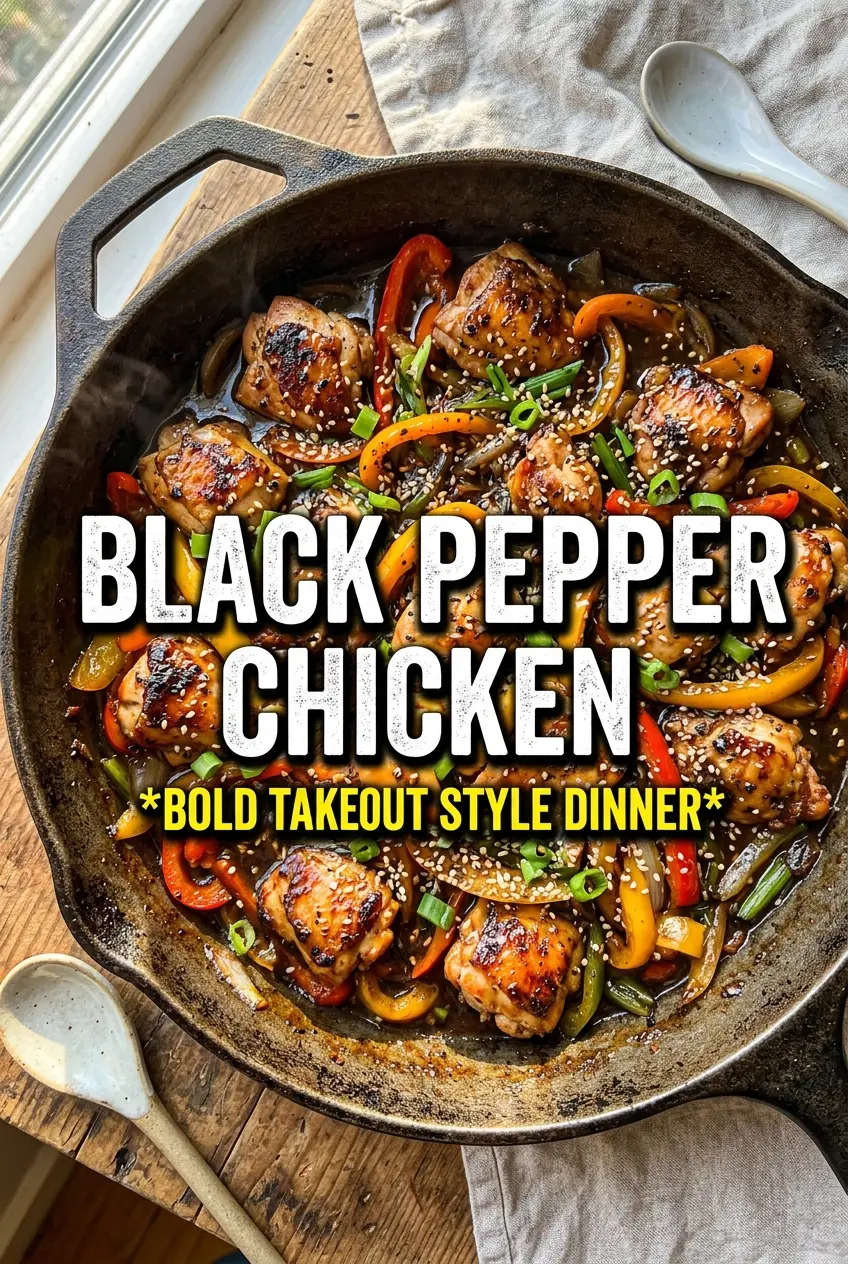
Black Pepper Chicken
Ingredients
Equipment
Method
- Whisk together soy sauce, oyster sauce, dark soy sauce, brown sugar, and freshly cracked black pepper until smooth, then set aside.
- Whisk cornstarch with water until fully dissolved so it won’t form lumps when added.
- Heat vegetable oil in a wok or large skillet over high heat until shimmering.
- Stir-fry the chicken breast in batches until golden, then remove to a plate.
- Stir-fry bell pepper and onion for 3 minutes over high heat.
- Add garlic and ginger and cook for 1 minute, stirring constantly so it doesn’t burn.
- Return the chicken to the pan, then pour the sauce over and toss to coat evenly.
- Add the cornstarch slurry and cook for 2–3 minutes until the sauce thickens and coats everything with a glossy finish, then season with extra cracked black pepper.
- Serve black pepper chicken over steamed rice while hot, with extra cracked black pepper if desired.