Butternut squash casserole lands somewhere between a side dish and a treat, which is exactly why it disappears fast at the table. The squash turns silky and custardy in the oven, then the pecan streusel bakes into a crisp, buttery lid that cracks under a spoon. You get soft, sweet squash underneath and a toasted, crunchy top in the same bite.
This version works because the squash is cooked until it is fully tender before it ever goes into the baking dish. That means it mashes smoothly and bakes evenly instead of staying stringy or watery. The filling gets enough butter, egg, and milk to set into a rich, spoonable base, while the brown sugar and cinnamon pull the natural sweetness forward without making it taste like dessert.
The notes below cover the part that matters most: how to drain the squash well so the casserole stays creamy, not soupy, and how to keep the pecan topping crisp instead of sinking into the filling. If you’ve ever had a squash casserole turn loose in the oven, this version solves that.
The squash baked up creamy instead of watery, and that pecan topping stayed crunchy all the way through dinner. I used it for Sunday supper and there wasn’t a spoonful left.
Save this butternut squash casserole for the creamy-smooth filling and crisp pecan streusel that make it a standout side dish.
The Trick to Keeping Butternut Squash Casserole Creamy Instead of Watery
The biggest mistake with squash casserole happens before it ever hits the oven: too much moisture in the squash. Butternut squash holds a lot of water after boiling, and if you skip a thorough drain, the filling loosens as it bakes and the topping turns soft from steam. You want the squash tender enough to mash easily, then dry enough that the bowl doesn’t look glossy or loose once you stir everything together.
The eggs matter here more than people think. They’re what help the casserole set into slices or neat scoops instead of collapsing into a puddle. Butter adds richness, but it also helps carry the brown sugar and cinnamon through the whole dish, so the casserole tastes rounded instead of one-note sweet. If the mixture looks thinner than mashed potatoes before it goes into the pan, it needs more draining.
What the Butter, Brown Sugar, and Pecans Are Really Doing Here
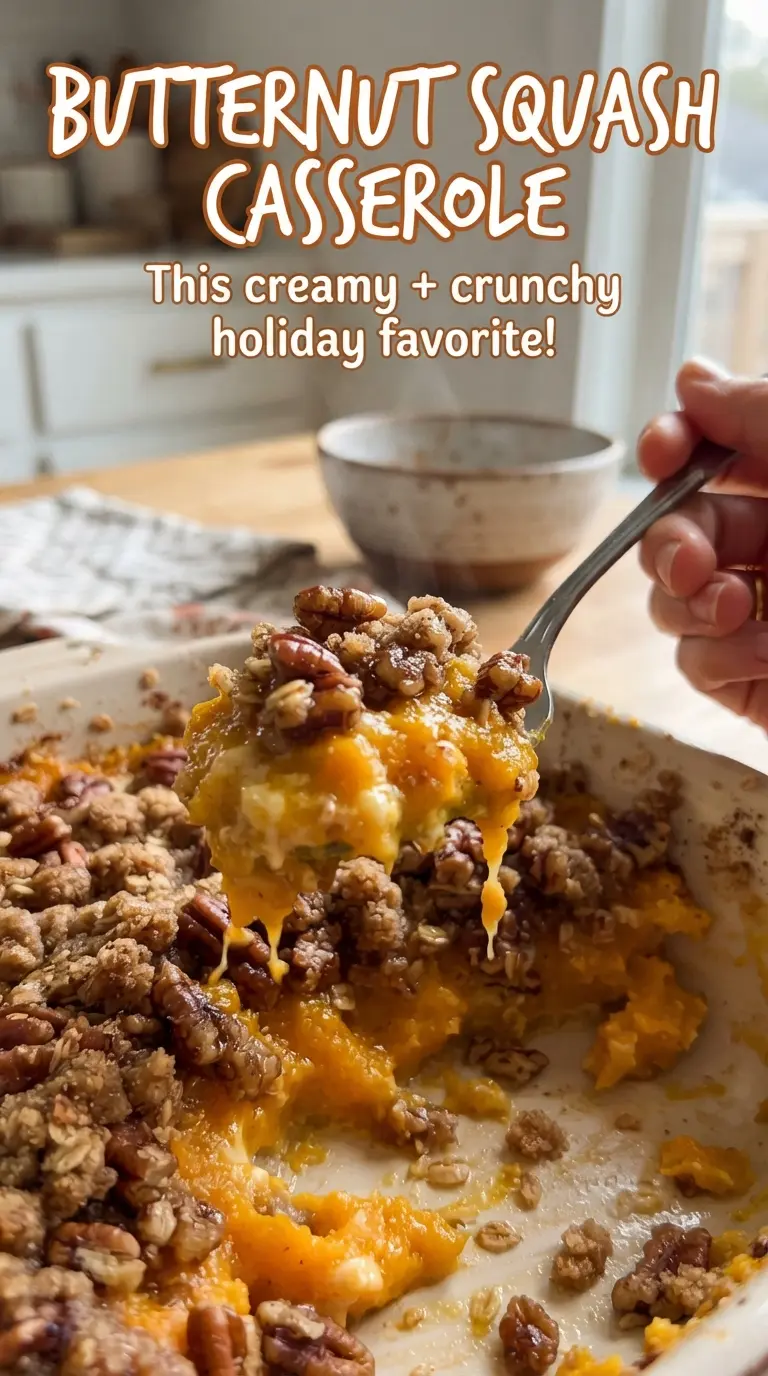
- Butternut squash — This is the backbone of the dish, and it needs to be cooked until completely soft so it mashes smoothly. Fresh squash gives the best texture here; frozen cubes can work, but they often bring extra water, so drain them even more aggressively after cooking.
- Butter — Melted butter makes the filling rich and helps the topping bake into a crumbly, toasted layer. If you cut back too far, the casserole tastes flat and the streusel can dry out instead of browning nicely.
- Brown sugar — This deepens the sweetness and gives the casserole that classic Southern-side-dish taste. Light or dark brown sugar both work, but dark brown sugar will make the topping a little more caramel-like.
- Eggs and milk — The eggs set the filling, and the milk loosens it just enough to keep the texture soft. Use whole milk if you have it; lower-fat milk still works, but the casserole won’t taste as plush.
- Pecans — They bring the crunch this casserole needs. Chop them fairly small so the topping spreads evenly; large chunks can weigh the streusel down and make it patchy.
Building the Casserole So the Topping Stays Crisp
Cooking the Squash Down First
Boil the squash until it collapses easily when pressed with a spoon, then drain it well in a colander. Letting it sit a minute or two after draining helps steam escape, which matters more than people expect. If the squash goes into the bowl dripping wet, the casserole fills with liquid as it bakes and the topping starts to sink.
Mashing the Filling Smooth
Mash the squash with the butter, sugar, eggs, milk, vanilla, cinnamon, and salt until the texture is smooth and even. A few soft lumps are fine, but you don’t want big cubes left behind because they bake at a different rate and make the casserole uneven. The mixture should look thick and spoonable, not pourable.
Making the Streusel Actually Crumble
Work the flour, pecans, remaining butter, and remaining brown sugar together until the mixture forms damp crumbs. If it turns into a paste, the butter was too warm or it was overmixed. Scatter it over the filling in an even layer so the whole top browns at the same pace instead of leaving pale patches.
Baking Until the Edges Bubble
Bake until the top is golden and the edges are bubbling, which tells you the center is hot and the filling has set. If the pecans brown too fast, tent the dish loosely with foil for the last few minutes. Pull it from the oven when the casserole still has a slight jiggle in the middle; it firms as it rests.
How to Adapt This for Different Tables and Dietary Needs
Make It Dairy-Free Without Losing the Richness
Use a good plant-based butter and an unsweetened, full-bodied non-dairy milk like oat milk. The filling will still set because the eggs do the structure work, but the flavor will be a little less round than with dairy butter, so don’t skimp on the cinnamon and vanilla.
Skip the Nuts for a Smooth Topping
Leave out the pecans and replace them with an extra 1/4 cup flour for a plain crumb topping. You’ll lose the toasted crunch, but the top still bakes into a crisp, buttery layer that works well if you’re cooking for someone with a nut allergy.
Use Sweet Potato Instead of Butternut Squash
Cook and mash sweet potatoes the same way if that’s what you have on hand. The texture will be a little denser and the flavor deeper, with less of the clean squash sweetness, but the casserole still bakes up beautifully.
Storage and Reheating
- Refrigerator: Store covered for up to 4 days. The topping softens a bit as it sits, but the filling stays creamy.
- Freezer: Freeze in tightly wrapped portions for up to 2 months. Thaw in the refrigerator overnight; the texture is best when the casserole is frozen after baking, not before.
- Reheating: Warm in a 325°F oven, covered loosely with foil, until heated through. The microwave works for single servings, but it softens the streusel, so the oven is better if you want the top to re-crisp.
Answers to the Questions Worth Asking
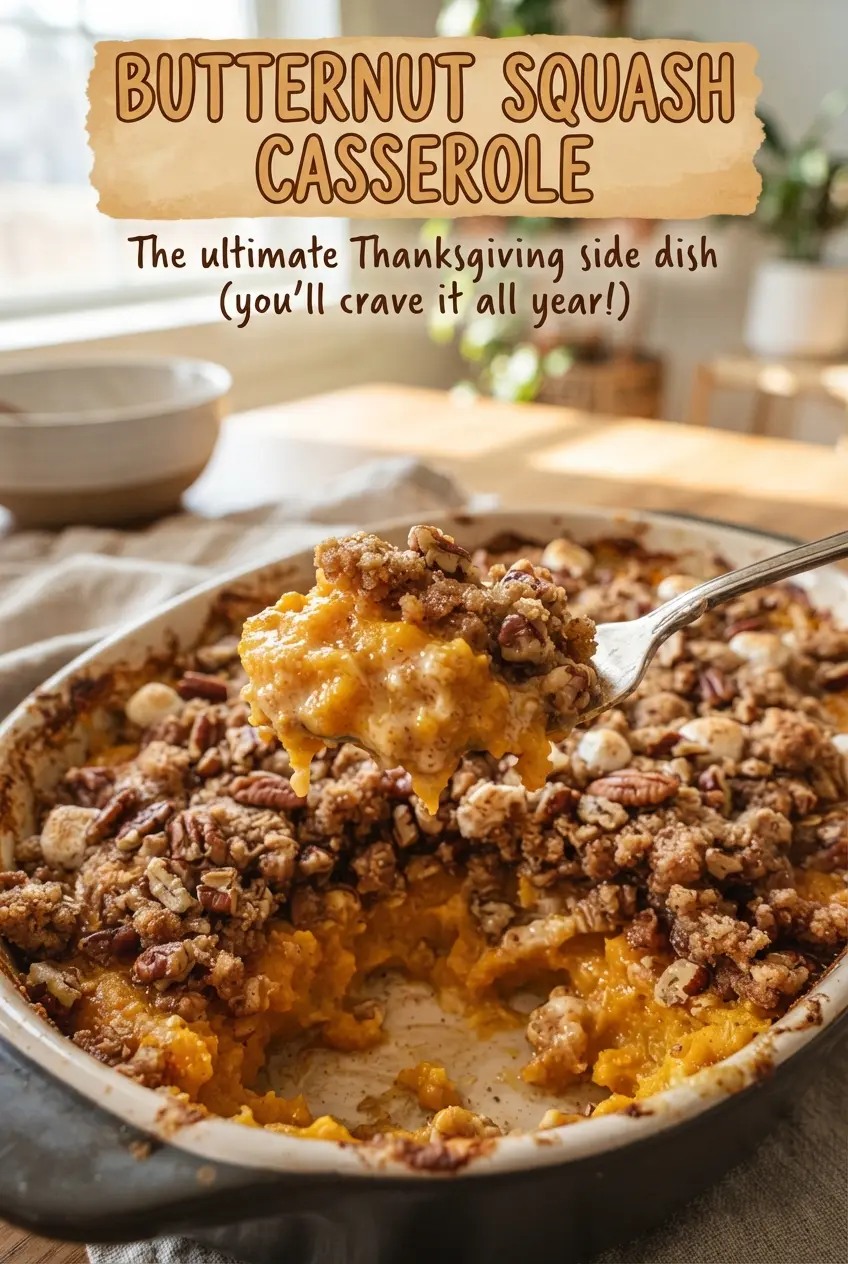
Butternut Squash Casserole
Ingredients
Equipment
Method
- Boil the cubed butternut squash in water for 15 minutes until very tender, then drain well to remove excess moisture.
- Preheat the oven to 350°F and grease a 9x13-inch baking dish.
- Mash the butternut squash with 1/4 cup butter, 1/4 cup brown sugar, eggs, milk, vanilla extract, ground cinnamon, and salt until smooth.
- Spread the smooth mash into the greased baking dish in an even layer.
- Mix the flour, chopped pecans, remaining butter, and remaining brown sugar into a crumbly topping, then sprinkle it evenly over the squash.
- Bake at 350°F for 35-40 minutes until the topping is golden and the edges bubble.