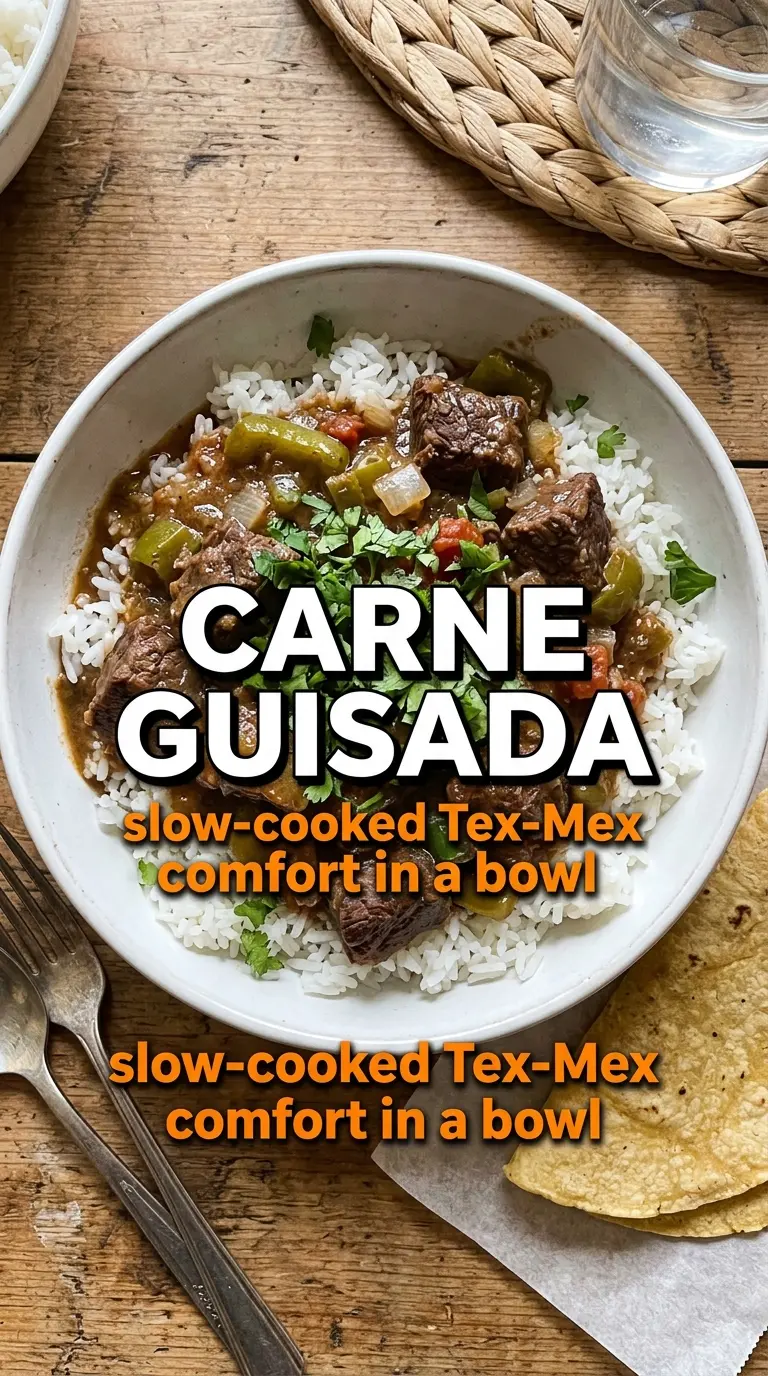
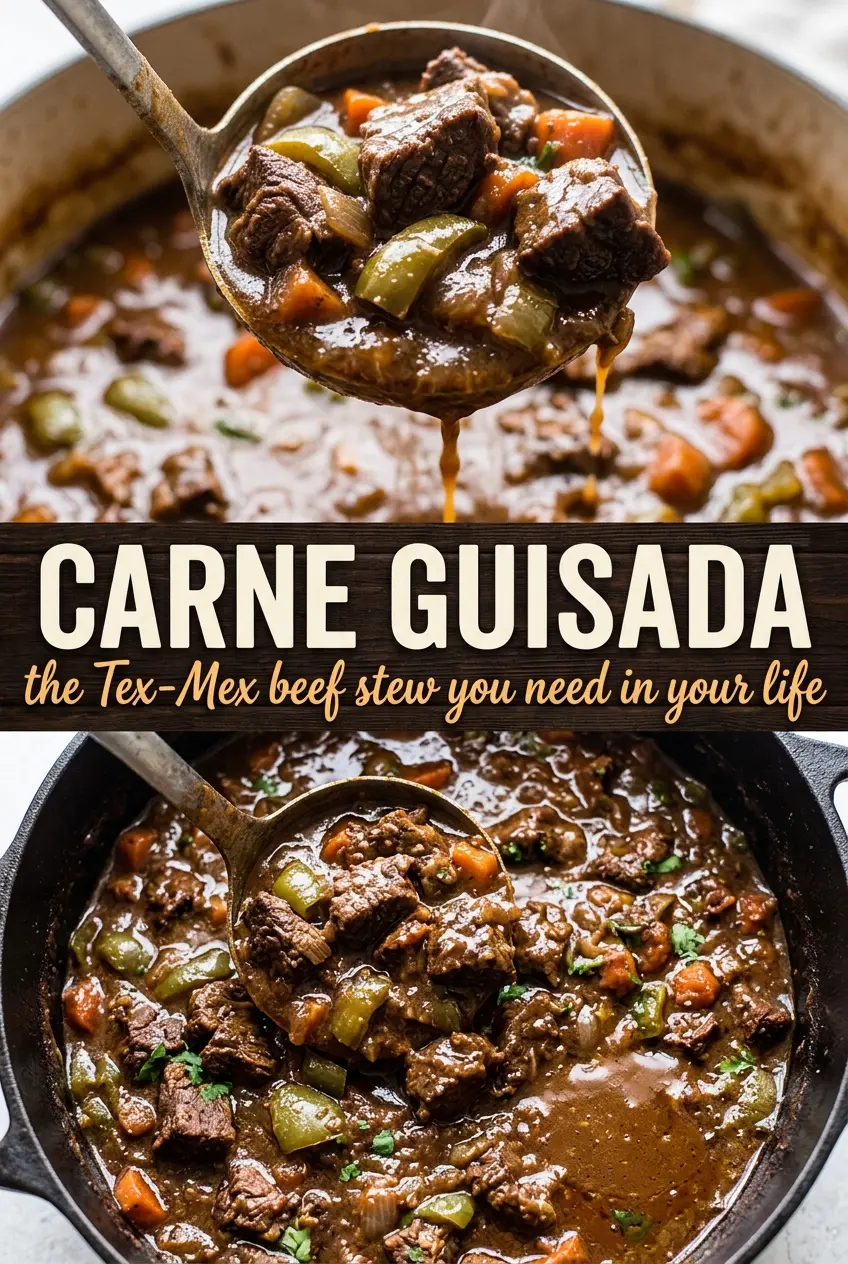
Deep, dark carne guisada is all about tenderness and gravy. The beef should fall apart with just a nudge of a fork, and the sauce should cling to every piece with that rich, chile-spiced thickness that begs for a warm flour tortilla. When it’s done right, it eats like something you’d get from a great Tex-Mex kitchen, but it’s built from a handful of pantry ingredients and a little patience.
The part that matters most is the browning. If the beef goes into the pot crowded, it steams instead of searing, and you lose the base flavor that makes this dish taste slow-cooked and layered. The flour goes in with the vegetables, not at the end, so it has time to cook out and help thicken the gravy without tasting raw. Tomatoes bring body and a little acidity, while cumin and oregano keep the whole pot grounded and savory.
Below, I’ve laid out the one timing detail that keeps the gravy from turning thin, plus a few smart swaps for serving and storage. If you’ve ever had carne guisada that tasted flat or came out tough, the fixes here will help.
The gravy thickened up beautifully and the beef was fork-tender right at the 2-hour mark. I served it with warm tortillas and my husband kept going back for one more spoonful of sauce.
Save this carne guisada for the nights when you want tender beef, rich gravy, and warm tortillas without a lot of fuss.
The Browning Step That Gives Carne Guisada Its Real Depth
The biggest mistake with carne guisada is rushing the beef. If the pot is crowded, the cubes dump off moisture and turn gray before they ever get a chance to brown, and that means the gravy starts with less flavor than it should. Browning in batches takes a few extra minutes, but those dark bits on the bottom are what make the finished sauce taste cooked, not just seasoned.
Once the onions and peppers go in, they should soften and pick up the browned residue without scorching. That flour-coated vegetable base is what gives the gravy its body later. If the flour stays in the pot long enough to lose its raw smell before the broth hits, you get a smoother, cleaner sauce instead of one that tastes pasty.
What Each Ingredient Is Actually Doing in This Carne Guisada
- Beef chuck — This is the cut that earns the long simmer. It has enough connective tissue to turn silky and tender over time, which is exactly what you want here. Leaner stew meat can work, but it dries out faster and doesn’t give the gravy the same richness.
- Vegetable oil — A neutral oil with a high smoke point helps you get a good sear without burning before the beef browns. Use what you have, but don’t swap in butter here; it can scorch before the meat develops color.
- Onion, bell pepper, and garlic — These build the base of the gravy. The onion brings sweetness, the pepper adds that familiar Tex-Mex backbone, and the garlic gets stirred in near the end so it doesn’t turn bitter.
- Flour — The flour is doing more than thickening. It helps the gravy emulsify and cling to the beef, which is why this stew eats like carne guisada instead of a thin braise. If you need a gluten-free version, use a cornstarch slurry at the end, but the texture will be a little glossier and less old-school.
- Beef broth and diced tomatoes — Broth gives the gravy its savory base, while tomatoes add body and a little acidity to keep everything from tasting flat. Canned diced tomatoes are fine here because they cook down completely.
- Cumin, chili powder, garlic powder, and oregano — This is the seasoning set that makes it taste like carne guisada instead of a basic beef stew. The cumin is especially important; if you leave it out, the dish loses that unmistakable Tex-Mex character.
Getting the Pot to the Point Where the Beef Falls Apart
Seasoning and Searing the Beef
Season the beef before it hits the pot so the flavor starts at the surface, not just in the gravy. Brown it in hot oil in batches and leave each piece alone long enough to form a dark crust on at least one side. If the pan looks crowded or the meat starts to sweat, stop and work in smaller batches. The goal is color, not just cooked meat.
Building the Gravy Base
After the beef comes out, the onion and bell pepper should go into the same pot to pick up every browned bit stuck to the bottom. Stir in the garlic just long enough for it to smell fragrant, then add the flour and cook it briefly so it loses its raw edge. When the broth and tomatoes go in, scrape well; that’s where the deepest flavor lives.
The Slow Simmer That Changes the Texture
Return the beef to the pot, add the oregano, and keep the heat low enough that the surface barely trembles. A hard boil tightens the meat before it softens, which is how you end up with beef that feels stubborn even after a long cook. After about 1.5 to 2 hours, the cubes should give way easily and the gravy should coat the back of a spoon.
How to Adapt This Carne Guisada for Your Kitchen
Gluten-Free Gravy That Still Feels Silky
Skip the flour and whisk 1 tablespoon cornstarch with 2 tablespoons cold water, then stir it into the simmering pot during the last 10 minutes. The sauce will thicken, but it won’t have the same slightly rustic body as the flour version. Let it bubble gently so the starch activates instead of staying thin.
A Bigger Batch for Meal Prep
This recipe scales well if you use a wide, heavy pot so the beef still has room to brown. Double everything except the salt at first, then adjust at the end after the gravy has reduced. The flavor gets even better overnight, which makes leftovers one of the best reasons to cook a full pot.
Lower-Spice Version for a Milder Table
Cut the chili powder in half and lean a little harder on the cumin and oregano. You’ll still get that classic carne guisada flavor, but the gravy will stay mellow enough for kids or anyone who likes heat in the background instead of the foreground.
Storage and Reheating
- Refrigerator: Keeps for 4 days. The gravy thickens as it chills, so expect it to look a little tighter the next day.
- Freezer: Freezes well for up to 3 months. Cool it completely, portion it into airtight containers, and leave a little space for expansion.
- Reheating: Warm it slowly on the stove over low heat with a splash of broth or water. High heat can make the beef seize up and can tighten the gravy too much before the center is hot.
Answers to the Questions Worth Asking
Carne Guisada
Ingredients
Equipment
Method
- Season the beef cubes generously with salt, black pepper, cumin, chili powder, and garlic powder.
- Heat vegetable oil in a heavy pot over high heat, brown the beef in batches without crowding, and remove to a plate.
- In the same pot, sauté the onion and green bell pepper for 5 minutes.
- Add the minced garlic and cook for 1 minute, stirring to prevent sticking.
- Sprinkle flour over the vegetables and stir for 1 minute to toast it lightly.
- Add beef broth and diced tomatoes, scraping up the browned bits from the bottom of the pot.
- Return the beef to the pot, add oregano, cover, and simmer on low for 1.5–2 hours until the beef is extremely tender and the gravy has thickened.
- Serve hot with warm flour tortillas, topped with cilantro and fresh lime.