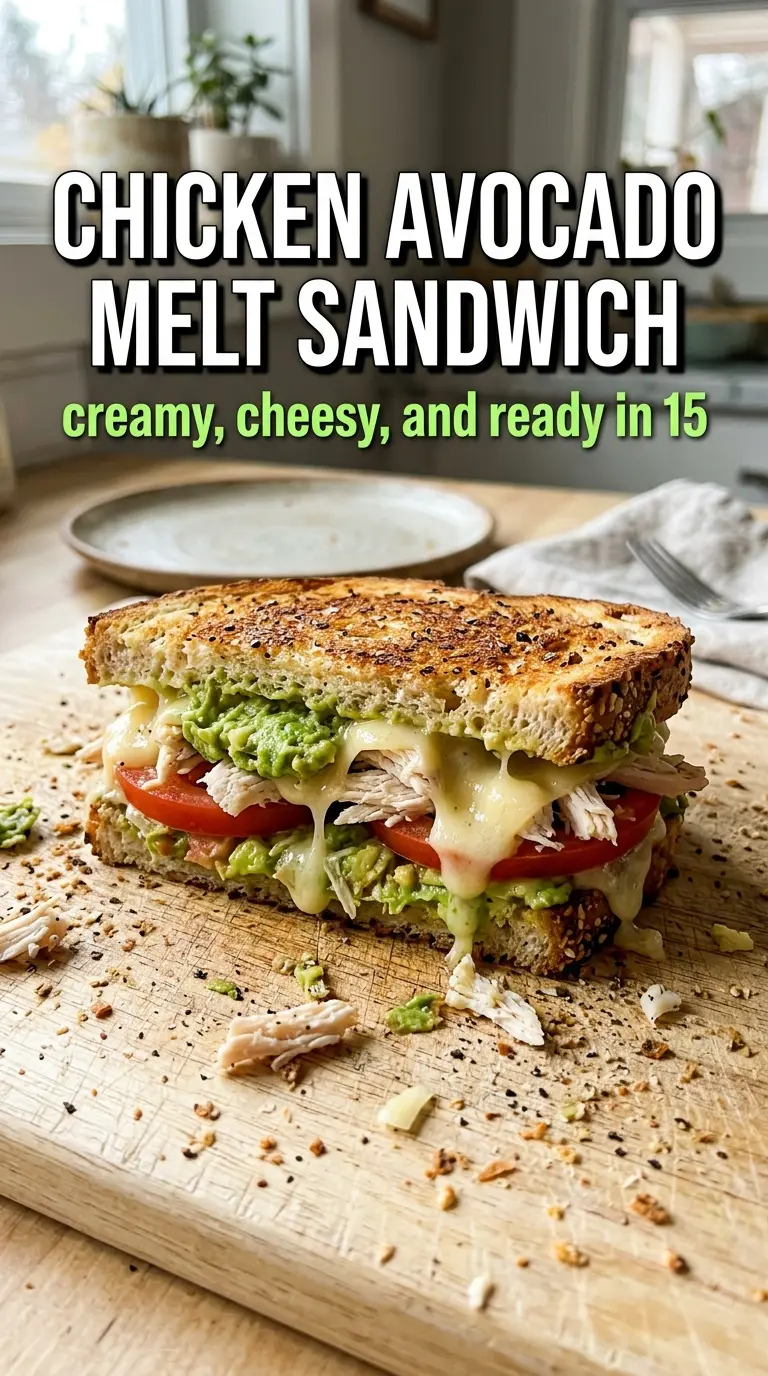
Golden, crisp bread gives way to juicy chicken, creamy avocado, melted Swiss, and smoky bacon in a sandwich that lands squarely in the “make it again” category. The outside gets properly toasted instead of greasy, the cheese seals everything together, and the avocado stays fresh-tasting instead of disappearing into the filling.
What makes this version work is the order. The chicken gets cooked first so it can rest while you build the sandwiches, and the bread is buttered on the outside only so the skillet can do its job without turning the whole thing heavy. Dijon and mayonnaise aren’t just extra spread here; they keep the sandwich from tasting flat and help the layers stick together once the cheese starts melting.
Below, I’ve broken down the parts that matter most: how to keep the bread crisp, how to stack the filling so it doesn’t slide out, and the small swaps that still give you a proper melt instead of a soggy chicken sandwich.
The bread got deeply golden without burning, and the Swiss melted right into the chicken and avocado. I used sourdough and the sandwich held together perfectly instead of falling apart like most melts do.
Pin this chicken avocado melt sandwich for a crisp, cheesy lunch with smoky bacon and a clean avocado finish.
The Reason This Sandwich Stays Crisp Instead of Turning Heavy
Most melt sandwiches lose their structure because the filling gets too warm before the bread has time to toast. That’s what gives you limp bread and a greasy skillet. Here, the chicken is fully cooked ahead of assembly, and the avocado goes in sliced, not mashed, so the center stays layered instead of collapsing into a paste.
The other thing that matters is the cheese placement. Swiss goes both against the chicken and near the bread, which gives you two chances to get a proper melt and helps anchor the filling. If your sandwich has ever fallen apart halfway through the pan, it usually means the filling was stacked too loosely or the heat was too high before the bread had a chance to crisp.
- Chicken breasts: Pounding them thin keeps the cooking time short and the texture even. Thick chicken cooks slower than the bread wants to toast, which is how you end up with one part done and another part dry.
- Swiss cheese: Swiss melts smoothly and has enough flavor to stand up to avocado and bacon without overpowering them. Mild provolone works in a pinch, but you lose some of that nutty, savory edge.
- Sourdough or ciabatta: Use bread with a sturdy crust and enough body to hold the filling. Soft sandwich bread won’t survive this skillet treatment without squashing down and getting soggy at the edges.
- Dijon and mayonnaise: Dijon brings sharpness, and mayonnaise adds moisture and helps the bread brown. If you only use one, the sandwich still works, but it tastes flatter and feels less balanced.
What Each Ingredient Is Actually Doing in This Chicken Dish
- Chicken (pat dry for browning) — Room temperature cooks more evenly. Even thickness ensures uniform cooking.
- Oil or butter (the browning medium) — High-heat oil essential. Creates pan flavor through browning.
- Seasonings (salt, pepper, spices) — Apply generously. Chicken carries the entire flavor profile.
- Aromatics (garlic, ginger, or herbs) — Cook with fat to bloom flavors. Become the foundation.
- Sauce or braising liquid (if using) — This keeps chicken moist. Balance richness with acid.
- Vegetables (if using) — Layer by cooking time. Hard vegetables first, soft vegetables last.
- Acid (vinegar, wine, lime, or pineapple) — This brightens and prevents one-dimensional flavor.
- Proper doneness (165°F internal temperature) — Use thermometer for accuracy. Overcooked is dry and flavorless.
How to Build the Melt So the Bread Browns Before the Filling Falls Out
Cooking the Chicken First
Season the chicken evenly with garlic powder, salt, and black pepper, then cook it in olive oil over medium-high heat until the exterior is lightly browned and the center is no longer pink. Thin cutlets cook fast, so don’t walk away; they can dry out in a minute or two past done. Let them rest while you prep the bread so the juices settle instead of running into the sandwich.
Setting Up the Bread for a Clean Toast
Butter the outside of every slice before you add any filling. That outside layer is what gives you the golden crust, not the mayo or mustard inside. If the butter is too cold to spread, soften it first so you don’t tear the bread and leave bare spots that brown unevenly.
Stacking the Filling in the Right Order
Spread Dijon on one half and mayonnaise on the other, then layer cheese first, followed by chicken, avocado, bacon, and the remaining cheese if needed to help seal the top. Cheese near the bread acts like glue once it melts. If you pile the avocado directly against the bread, the moisture can soften the crust before the center is hot.
Finishing in the Skillet
Toast the sandwich over medium heat, not high heat. High heat burns the bread before the cheese gets soft enough to hold everything together. Press lightly with a spatula for the first minute, then let it sit undisturbed until the bottom is deeply golden and the cheese is visibly melting at the edges, then flip and finish the second side.
How to Adapt This Chicken Avocado Melt for Different Kitchens and Appetites
Make it gluten-free with sturdy sandwich bread
Use a gluten-free bread that’s meant for toasting, not a soft, airy loaf. The filling stays the same, but the bread choice matters more here because the skillet needs structure. Expect a slightly more delicate crust, and toast a little lower and slower so the slices don’t break when you flip them.
Skip the bacon without losing the smoky note
Leave out the bacon and add a little extra black pepper plus a pinch of smoked paprika to the chicken. You won’t get the same salty crunch, but the sandwich still tastes full and layered instead of flat. This is the cleanest swap if you want a lighter lunch.
Use turkey or rotisserie chicken for a faster shortcut
Cooked turkey or shredded rotisserie chicken can replace the pan-cooked chicken breast, especially when you want to move fast. Warm the meat briefly before assembling so the sandwich finishes evenly in the skillet. The texture changes a bit — less juicy, more deli-style — but it still gives you a satisfying melt.
Storage and Reheating
- Refrigerator: Store cooked components separately for up to 3 days. The avocado browns a little, so sliced avocado is best assembled fresh.
- Freezer: The assembled sandwich doesn’t freeze well because avocado and toasted bread both suffer in texture. Freeze only the cooked chicken if you want to prep ahead.
- Reheating: Reheat the chicken in a skillet or microwave until hot, then assemble and toast fresh. If you try to re-crisp a fully built sandwich in the microwave, the bread softens and the cheese turns oily instead of melty.
Questions I Get Asked About This Recipe

Chicken Avocado Melt Sandwich
Ingredients
Equipment
Method
- Pound the boneless chicken breasts thin, then season them with garlic powder, salt, and black pepper.
- Heat olive oil in a cast iron skillet over medium-high heat, then cook the chicken for 5–6 minutes per side until cooked through with no pink in the center.
- Butter the outside of all bread slices so the crust toasts evenly.
- Spread Dijon mustard on the unbuttered side of half the bread slices and mayonnaise on the unbuttered side of the remaining bread slices.
- On the Dijon side, layer Swiss cheese, the cooked chicken, avocado slices, and crispy bacon, then close each sandwich with the buttered-side out.
- Toast in the cast iron skillet over medium heat for 3–4 minutes per side, until the bread is golden and the Swiss cheese is fully melted.
- Slice each sandwich diagonally and serve immediately while the cheese is still pulling.