Chicken enchilada rice casserole lands in that sweet spot where a weeknight dinner feels organized, hearty, and worth repeating. The rice soaks up the enchilada sauce, the beans add body, and the cheese on top turns into a browned lid that holds everything together when you scoop it out. You get the comfort of a baked casserole without the heavy, soupy mess that happens when the fillings are too wet.
What makes this version work is balance. Cooked rice keeps the texture light enough to bake through without turning gummy, while shredded chicken and black beans give the casserole enough substance to eat like a full meal. The green chiles and cumin sharpen the sauce so it tastes layered instead of flat, and baking it uncovered gives the cheese a chance to form those crisp, golden edges everyone fights over.
Below, I’ll walk through the part that matters most: how to keep the casserole from turning mushy, how to layer the flavor so it tastes like enchiladas without the extra work, and a few smart variations if you want to change up the protein or make it fit what’s already in your kitchen.
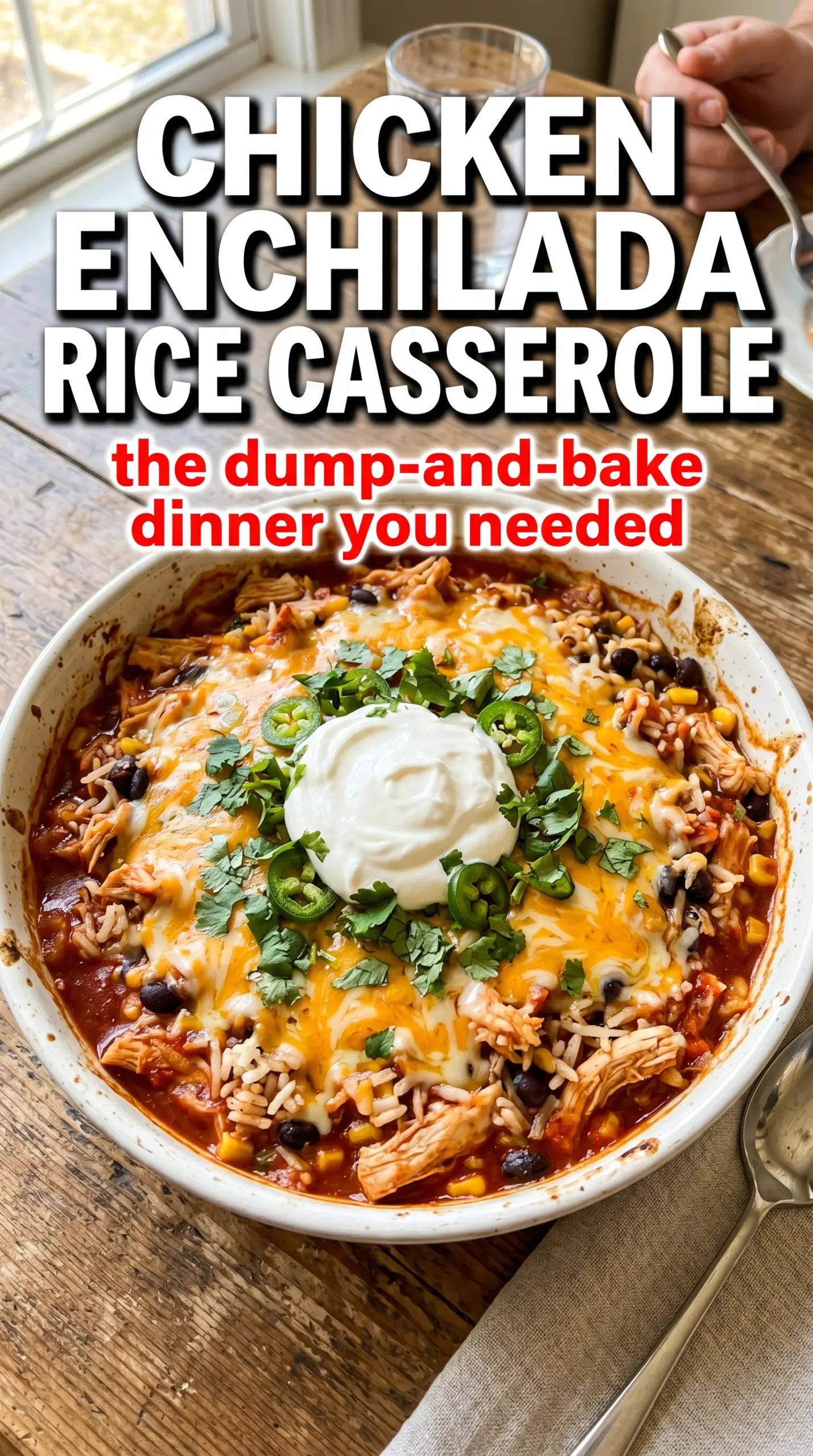
The rice stayed fluffy, the sauce soaked in without getting soggy, and the cheese baked into that perfect golden top. I topped it with sour cream and cilantro like suggested and my husband went back for seconds before I even sat down.
Golden cheesy chicken enchilada rice casserole that bakes up bubbly, hearty, and perfect for a simple Tex-Mex dinner.
The Rice Needs to Be Cooked Before It Hits the Oven
The biggest mistake with a casserole like this is starting with undercooked rice and hoping the oven will fix it. It won’t. By the time the cheese is browned, the rice should already be tender, because the enchilada sauce adds moisture, not enough steam to fully cook raw grains without throwing off the texture.
Cooked rice also gives you control. White rice stays fluffy, and Mexican rice adds a little more seasoning and color, but both need to be fully cooled enough to mix without breaking down. If the rice is still steaming hot, it can make the cheese clump and the filling turn dense before it even goes into the oven.
- Cooked chicken — Rotisserie chicken works well here because it shreds easily and carries the sauce without drying out. Leftover roasted chicken is just as good. If you poach chicken breasts, shred them while they’re still warm so they stay tender.
- Rice — This is the backbone of the casserole, so use rice that’s cooked through but not wet. Freshly cooked rice is fine if it’s fluffed and slightly cooled. Day-old rice is even better because it mixes cleanly and bakes up less sticky.
- Enchilada sauce — This gives the dish its main seasoning and moisture. A good canned sauce is enough, but if yours tastes thin or sharp straight from the can, add the cumin and chili powder as written. That extra seasoning keeps the casserole from tasting flat.
- Mexican cheese blend — This melts into the top layer and gives you that stretchy, browned finish. Pre-shredded cheese is convenient, though it melts a little less smoothly than block cheese. If you grate your own, you’ll get a better crust.
- Green chiles — They don’t make the casserole spicy; they add a gentle pepper flavor that makes the filling taste more complete. Drain them well so you don’t add extra liquid to the dish.
What Each Ingredient Is Actually Doing in This Chicken Dish
- Chicken (pat dry for browning) — Room temperature cooks more evenly. Even thickness ensures uniform cooking.
- Oil or butter (the browning medium) — High-heat oil essential. Creates pan flavor through browning.
- Seasonings (salt, pepper, spices) — Apply generously. Chicken carries the entire flavor profile.
- Aromatics (garlic, ginger, or herbs) — Cook with fat to bloom flavors. Become the foundation.
- Sauce or braising liquid (if using) — This keeps chicken moist. Balance richness with acid.
- Vegetables (if using) — Layer by cooking time. Hard vegetables first, soft vegetables last.
- Acid (vinegar, wine, lime, or pineapple) — This brightens and prevents one-dimensional flavor.
- Proper doneness (165°F internal temperature) — Use thermometer for accuracy. Overcooked is dry and flavorless.
How to Keep the Casserole Thick, Bubbly, and Never Watery
Mix the Filling Until the Sauce Coats Everything
Stir the chicken, rice, beans, corn, chiles, enchilada sauce, cumin, and chili powder until every grain of rice looks tinted and the beans are evenly distributed. You want the mixture cohesive, not soupy. If there’s a puddle of sauce at the bottom of the bowl, the casserole will bake up loose and the rice on top will taste underseasoned.
Press It Into the Dish, Don’t Pack It Down
Spread the mixture into the greased baking dish in an even layer, then stop there. A light level surface helps the cheese brown evenly and lets the edges bubble at the same rate as the center. If you compact it hard with a spoon, the casserole turns dense and loses that scoopable texture that makes it work.
Let the Cheese Finish the Job
Cover the top completely with shredded cheese and bake uncovered until it turns golden in spots and you can see the edges actively bubbling. That bubbling tells you the filling has heated through and the sauce has tightened. If the top browns before the center is hot, your oven is running hot, so move the dish to a lower rack for the last few minutes.
Make It Spicier Without Changing the Texture
Add diced jalapeños to the filling or swap part of the mild enchilada sauce for a hotter version. That changes the heat without changing the balance of the casserole, because the rice and beans still absorb the same amount of liquid. If you want extra heat at the table, sliced jalapeños on top give you more control than stirring them into the whole dish.
How to Make It Gluten-Free
This casserole is naturally gluten-free as long as your enchilada sauce is certified gluten-free. That label matters more than people expect, since some sauces use flour as a thickener. The rest of the ingredients stay the same, and the texture doesn’t change at all.
Use Black Beans and Corn as the Main Meatless Base
Skip the chicken and add an extra can of black beans or some sautéed peppers and onions to keep the casserole filling. You’ll lose the savory shred of chicken, so a little extra cheese on top helps the dish feel complete. The method stays the same, but the result lands more squarely in vegetarian dinner territory.
Storage and Reheating
- Refrigerator: Store covered for up to 4 days. The rice will firm up a bit, but the flavors deepen overnight.
- Freezer: It freezes well in portions or as a whole baked casserole. Wrap tightly and freeze for up to 2 months, then thaw in the refrigerator before reheating.
- Reheating: Warm covered in a 350°F oven until hot in the center, or reheat single portions in the microwave with a damp paper towel on top. If you heat it uncovered, the rice dries out before the middle gets warm.
Questions I Get Asked About This Recipe
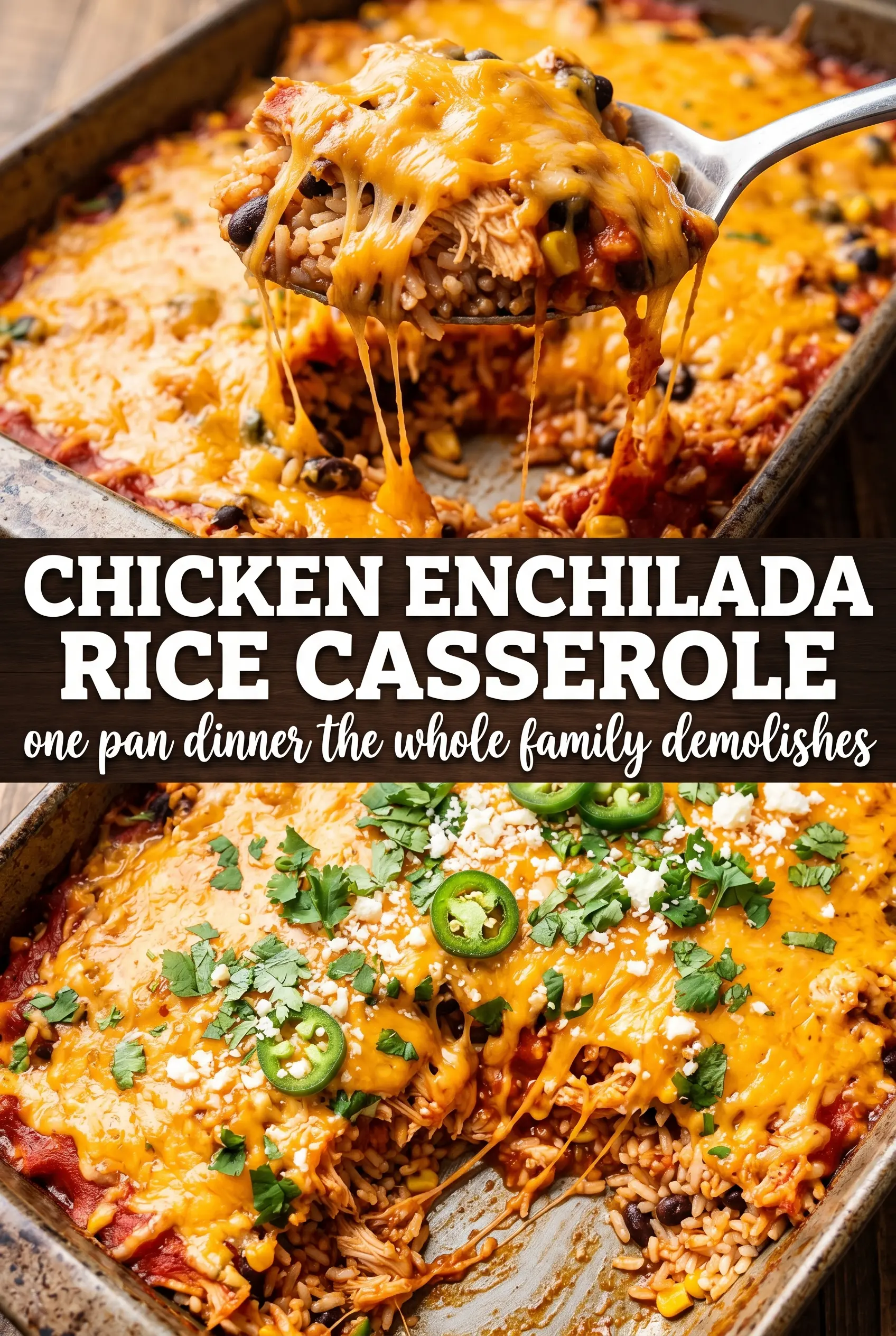
Chicken Enchilada Rice Casserole
Ingredients
Equipment
Method
- Preheat the oven to 375°F and grease a 9x13 baking dish.
- In a large bowl, combine shredded chicken, rice, black beans, red enchilada sauce, corn, diced green chiles, cumin, and chili powder, then mix thoroughly to coat evenly.
- Transfer the mixture to the prepared baking dish and spread it evenly into an even layer.
- Cover the top completely with shredded Mexican cheese blend.
- Bake uncovered for 25–30 minutes at 375°F, until the cheese is golden and the edges are bubbling (visual cue: browned cheese spots and active bubbling around the perimeter).
- Let the casserole cool briefly, then serve topped with sour cream, fresh cilantro, and sliced jalapeños.