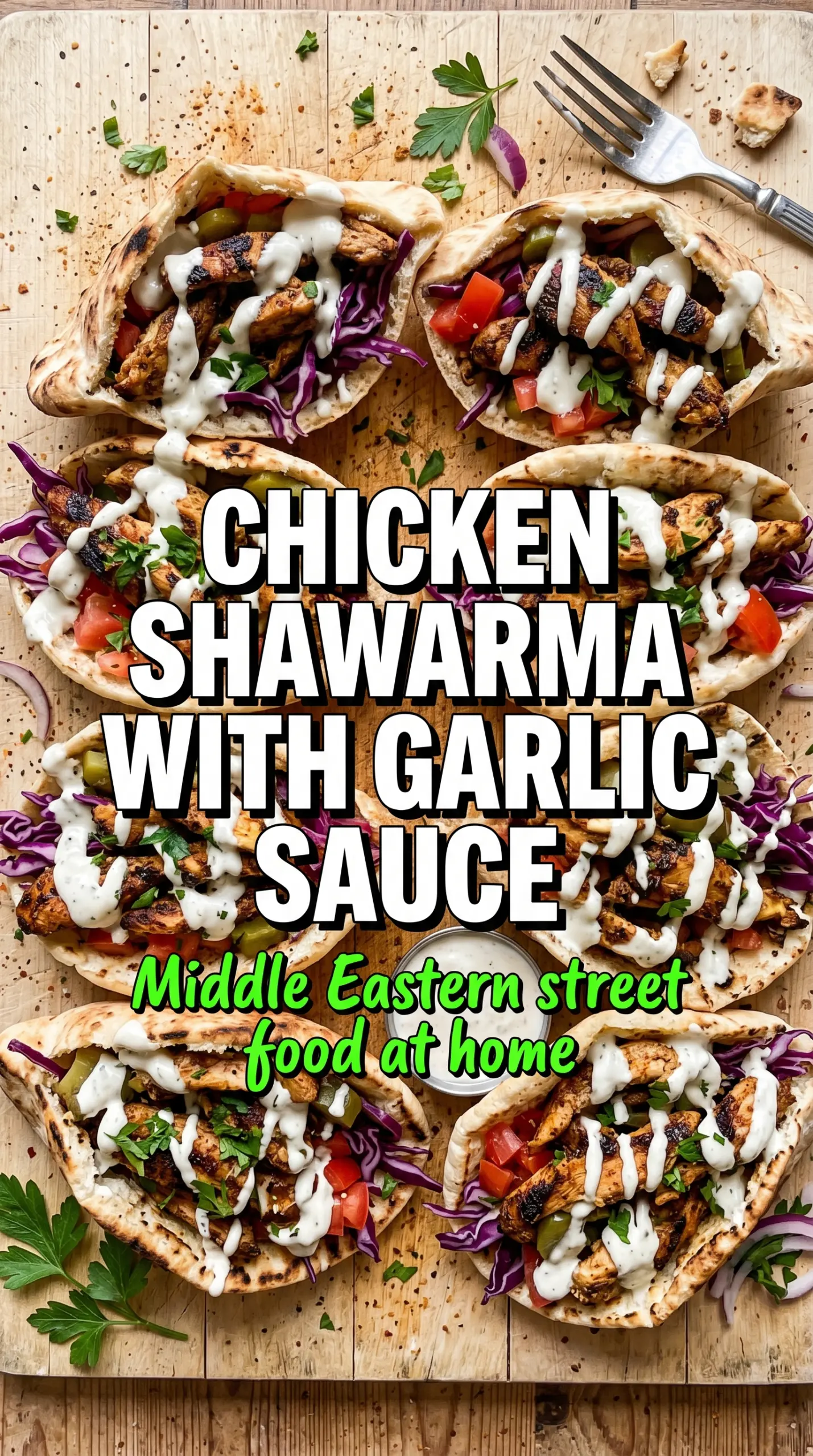
Deeply spiced chicken shawarma hits the pan with a sizzling edge, then turns tender and juicy under that warm mix of cumin, coriander, paprika, garlic, and lemon. The real payoff comes when the slices are piled into pita with cool garlic sauce and crunchy vegetables. You get contrast in every bite: charred, creamy, tangy, fresh.
What makes this version work is the marinade balance. Olive oil carries the spices, lemon brightens the chicken, and the cinnamon and turmeric stay in the background instead of taking over. Chicken thighs are the right cut here because they stay moist through a hot skillet sear, which is what gives shawarma its deep golden color without drying out.
Below, I’ve broken down the part that matters most: how to get that shawarma crust without steaming the chicken, what the garlic sauce needs to taste sharp but not harsh, and the few swaps that still keep the whole thing tasting like proper shawarma.
The chicken got those crispy edges I always want in shawarma, and the garlic sauce was thick enough to stay in the pita instead of running everywhere. I marinated it overnight and the flavor went all the way through.
Save this chicken shawarma with garlic sauce for the nights when you want bold spice, juicy thighs, and a wrap that eats like takeout.
The Difference Between Shawarma Flavor and Shawarma Texture
The seasoning mix gives you the familiar shawarma warmth, but the texture is what makes this feel right. If the chicken goes into a lukewarm pan, it sweats before it browns and you end up with soft edges instead of those dark, caramelized spots that make each slice taste deeper.
The other mistake is slicing too early. Chicken thighs need a short rest after cooking so the juices settle back into the meat. Cut them straight from the skillet and the juices run out onto the board instead of staying where they belong.
- Chicken thighs — This cut stays juicy under high heat and gives you the best shawarma texture. Breasts can work, but they dry out faster and need a shorter cook time.
- Olive oil — It helps the spices cling and encourages browning. You don’t need a fancy oil here, just one with a clean taste.
- Cumin, coriander, paprika, turmeric, cinnamon, cayenne — This is the backbone of the flavor. The cinnamon should whisper, not dominate, and the cayenne is where you control the heat.
- Mayonnaise or Greek yogurt — Mayo gives a richer, smoother garlic sauce; Greek yogurt gives a sharper, lighter finish. Either one works, but yogurt will be thinner and a little tangier.
- Garlic — Fresh garlic matters here because the sauce is uncooked. Jarred garlic tastes flat and can turn bitter in a raw sauce.
What Each Ingredient Is Actually Doing in This Chicken Dish
- Chicken (pat dry for browning) — Room temperature cooks more evenly. Even thickness ensures uniform cooking.
- Oil or butter (the browning medium) — High-heat oil essential. Creates pan flavor through browning.
- Seasonings (salt, pepper, spices) — Apply generously. Chicken carries the entire flavor profile.
- Aromatics (garlic, ginger, or herbs) — Cook with fat to bloom flavors. Become the foundation.
- Sauce or braising liquid (if using) — This keeps chicken moist. Balance richness with acid.
- Vegetables (if using) — Layer by cooking time. Hard vegetables first, soft vegetables last.
- Acid (vinegar, wine, lime, or pineapple) — This brightens and prevents one-dimensional flavor.
- Proper doneness (165°F internal temperature) — Use thermometer for accuracy. Overcooked is dry and flavorless.
Getting the Shawarma Sear Before the Sauce Goes On
Marinating for Depth
Coat the chicken evenly and give it at least 2 hours in the fridge, longer if you can. The lemon and spices need time to move past the surface, and that resting time also helps the meat cook more evenly. If you rush it, the outside tastes seasoned but the center tastes plain.
Building the Crust in the Pan
Heat the skillet until it’s hot enough that the chicken sizzles the second it hits the surface. Don’t crowd the pan, or the thighs will steam and pale instead of browning. Leave them alone for the first few minutes on each side so a crust can form before you turn them.
Slicing for the Best Bite
Let the chicken rest for 5 minutes before slicing it thin. You want clean slices with visible browned edges and juicy centers, not shredded meat or a pile of dry bits. A sharp knife makes a difference here because it keeps the slices neat and helps the chicken hold onto the garlic sauce in the wrap.
Mixing the Garlic Sauce
Stir the garlic sauce until it tastes bright, creamy, and slightly sharp. If the raw garlic feels aggressive, let the sauce sit for 10 minutes before serving so it mellows a little. Too much lemon makes it thin and harsh, so add it gradually and stop when the sauce still coats a spoon.
How to Adapt This for Different Pitas, Proteins, and Diets
Greek Yogurt Garlic Sauce for a Tangier Wrap
Use Greek yogurt instead of mayonnaise if you want a lighter sauce with more tang. It clings well, but it won’t taste as rich, so the wrap comes across fresher and a little sharper.
Gluten-Free Shawarma Plates
Skip the pita and serve the chicken over rice, chopped salad, or roasted potatoes. The flavor stays the same, and you still get the best part of the dish: the spiced chicken with cool garlic sauce and crunchy vegetables.
Using Chicken Breasts Instead of Thighs
Chicken breasts work, but they need a shorter cooking time and more attention because they dry out faster. Slice them thinner before marinating so the spice mix gets in faster, then pull them as soon as the center reaches doneness.
Dairy-Free and Egg-Free Notes
This recipe already works without dairy if you use mayonnaise for the sauce. If you need an egg-free version, use a dairy-free mayo with the same amount of garlic and lemon so the sauce still has body.
Storage and Reheating
- Refrigerator: Store the chicken and sauce separately for up to 4 days. The chicken holds up well, but the sauce may loosen a bit after chilling.
- Freezer: The cooked chicken freezes well for up to 2 months. Freeze it in slices or whole thighs, then thaw in the fridge before reheating. The garlic sauce is better made fresh.
- Reheating: Warm the chicken in a skillet over medium-low heat with a splash of water or oil so it doesn’t dry out. Microwaving works in a pinch, but it softens the browned edges that make shawarma taste like shawarma.
Questions I Get Asked About This Recipe
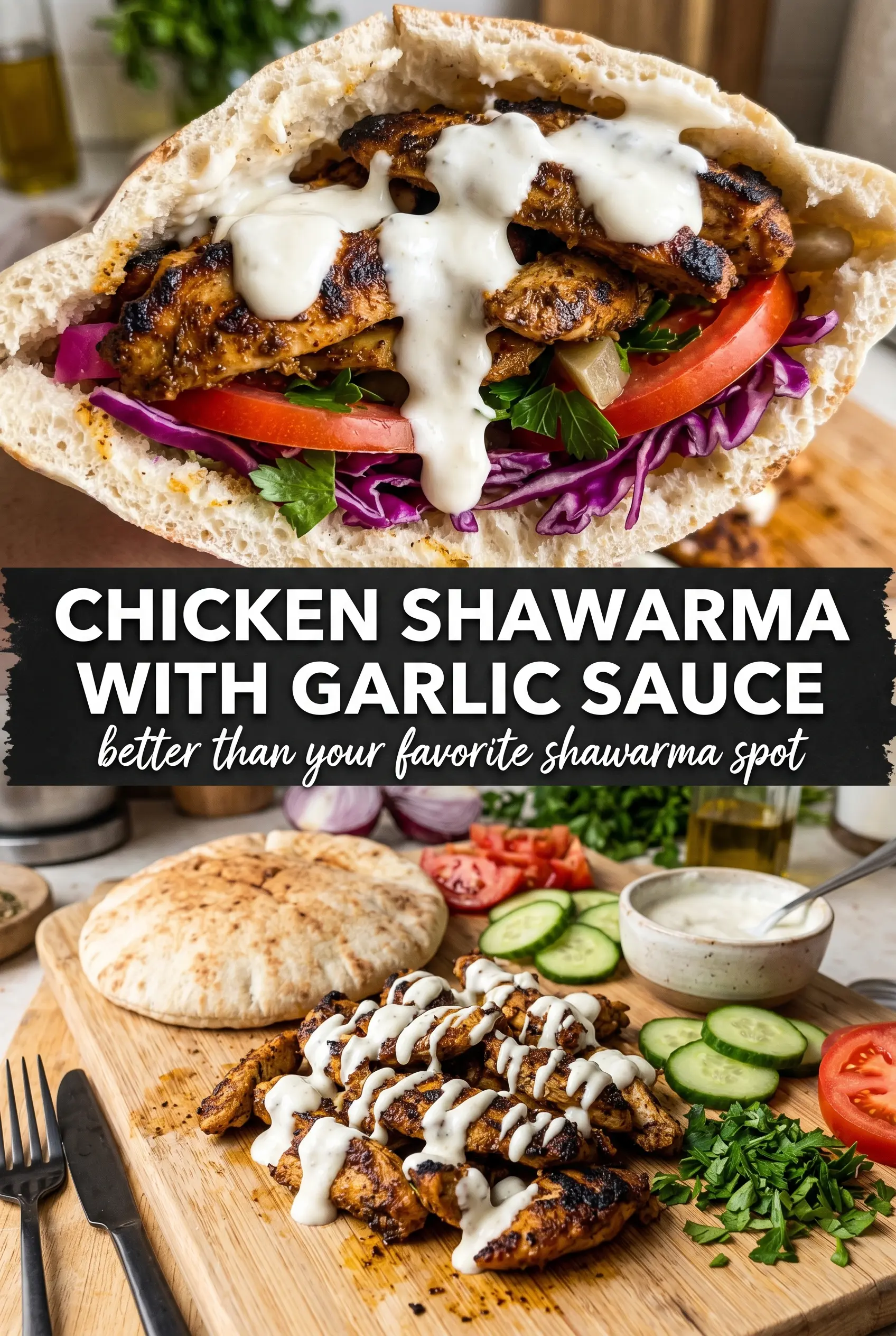
Chicken Shawarma with Garlic Sauce
Ingredients
Equipment
Method
- Mix cumin, coriander, smoked paprika, turmeric, cinnamon, cayenne, minced garlic, lemon juice, salt, and black pepper with olive oil until well combined, then coat the chicken thighs thoroughly.
- Cover and marinate the chicken for at least 2 hours or overnight so the spices soak in.
- Heat a cast iron skillet over medium-high heat until hot, then add the marinated chicken thighs and cook 6–7 minutes per side until deeply golden and cooked through.
- Transfer the chicken to a plate, rest for 5 minutes to keep juices in, then slice thinly.
- Stir mayonnaise (or Greek yogurt), minced garlic, lemon juice, and salt until smooth, then adjust seasoning to taste.
- Serve the sliced shawarma chicken in warm pitas with garlic sauce, tomato, cucumber, and pickled onions.