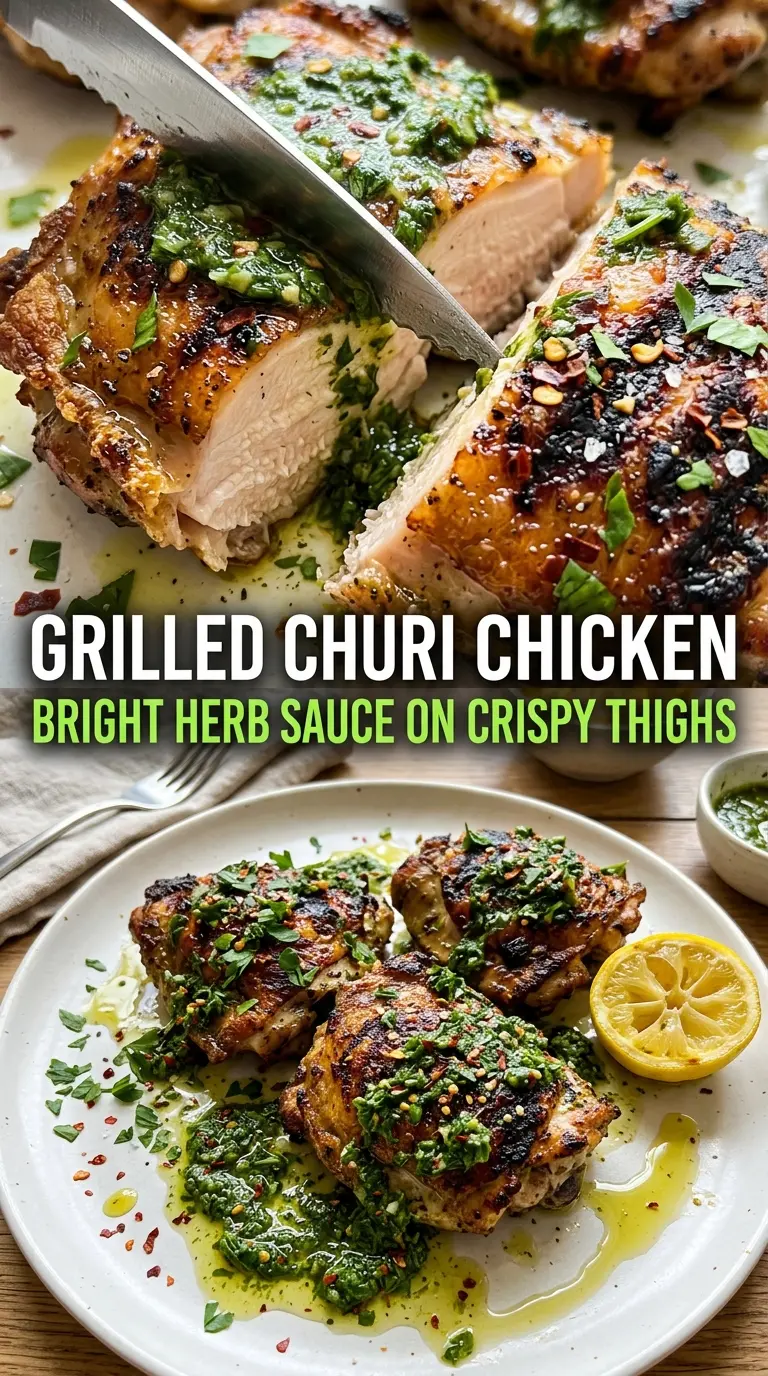
Golden, charred chicken thighs and a sharp, herby chimichurri are one of those combinations that never gets old. The skin crisps up on the grill, the meat stays juicy, and the sauce brings enough garlic, vinegar, and fresh parsley to cut right through the richness. Spoon it over the chicken while it’s still warm and it runs into the crisp edges instead of sitting on top like an afterthought.
What makes this version work is the balance between a quick marinade and a bold finishing sauce. Half the chimichurri goes on the chicken before grilling, which seasons the meat and helps the surface take on flavor, but the other half stays fresh and uncooked so it keeps that bright, punchy bite. That split matters. If you use the same sauce for everything, the herbs dull out and the whole dish tastes flatter.
Below, I’ve laid out the little details that keep the skin crisp, the sauce textured, and the chicken from drying out. The variations section also covers the easiest way to adapt this for the oven or for boneless thighs when that’s what you’ve got.
The skin came out crackly and the chimichurri was bright without being harsh. I loved that half the sauce got brushed on early and the rest stayed fresh for serving — it tasted like it came from a restaurant grill.
Save these chimichurri chicken thighs for the nights when you want crispy skin, a fast grill, and a sauce that wakes up every bite.
The Real Trick Is Keeping the Chimichurri Divided
Most chimichurri chicken recipes run into the same problem: the sauce gets used two ways at once, and one of those ways ruins the other. If you dump all the chimichurri onto the chicken before grilling, the herbs scorch, the garlic turns bitter, and you lose the fresh, green finish that makes the dish worth making. The fix is simple. Use one portion to season the chicken, then keep the rest untouched for serving.
That split also solves the texture problem. Chimichurri should be loose, glossy, and a little rough from the herbs, not a purée. If it’s blended until completely smooth, it turns muddy instead of bright. Leaving it slightly textured gives you little bits of parsley and garlic that cling to the skin and still taste lively when they hit the warm chicken.
- Chicken thighs — Bone-in, skin-on thighs hold up on the grill better than breasts. The fat under the skin renders as they cook, which is what gives you that crisp, bronzed top without drying out the meat.
- Fresh parsley — Flat-leaf parsley is the backbone here. Curly parsley works in a pinch, but the flavor is less clean and the sauce won’t have the same deep green color.
- Cilantro — This adds a softer, almost citrusy note that rounds out the parsley. If you hate cilantro, replace it with more parsley, but the sauce will taste flatter and less layered.
- Red wine vinegar — This is what keeps the sauce sharp enough to cut through the chicken skin. Lemon juice can work, but it changes the flavor toward brighter and less savory.
- Olive oil — Use a good everyday olive oil, not your most expensive bottle. The sauce needs enough richness to coat the chicken, but the herbs and vinegar are doing most of the work.
- Smoked paprika — This isn’t traditional in every chimichurri, but it gives the chicken a deeper grill-side flavor and helps the skin pick up that warm, reddish color.
What Each Ingredient Is Actually Doing in This Chicken Dish
- Chicken (pat dry for browning) — Room temperature cooks more evenly. Even thickness ensures uniform cooking.
- Oil or butter (the browning medium) — High-heat oil essential. Creates pan flavor through browning.
- Seasonings (salt, pepper, spices) — Apply generously. Chicken carries the entire flavor profile.
- Aromatics (garlic, ginger, or herbs) — Cook with fat to bloom flavors. Become the foundation.
- Sauce or braising liquid (if using) — This keeps chicken moist. Balance richness with acid.
- Vegetables (if using) — Layer by cooking time. Hard vegetables first, soft vegetables last.
- Acid (vinegar, wine, lime, or pineapple) — This brightens and prevents one-dimensional flavor.
- Proper doneness (165°F internal temperature) — Use thermometer for accuracy. Overcooked is dry and flavorless.
How to Build Crisp Skin Without Burning the Herbs
Blend the Sauce Just Enough
Pulse the parsley, cilantro, garlic, olive oil, vinegar, oregano, and red pepper flakes until the sauce is mostly smooth but still has texture. Stop before it becomes a paste. You want visible flecks of herbs and tiny bits of garlic, because that texture clings better to the chicken and tastes fresher when you spoon it on at the end.
Marinate Without Soaking the Skin
Season the chicken thighs with salt, pepper, garlic powder, and smoked paprika, then brush on half the chimichurri and let it sit for 30 minutes. That short rest gives the seasoning time to settle in without breaking down the skin. If you leave wet sauce sitting on the skin too long, it slows browning on the grill.
Grill Skin-Side Down First
Start the thighs skin-side down over medium-high heat on oiled grates and don’t move them for 7 to 8 minutes. You’re listening for a steady sizzle and looking for skin that turns deep golden with dark grill marks, not pale or gray. If the skin sticks, it usually means the grill wasn’t hot enough or the chicken wasn’t given time to release on its own.
Finish Over Gentler Heat
Flip the thighs and cook until the internal temperature reaches 165°F, usually 12 to 15 more minutes. The goal is cooked through chicken with crisp skin still intact, so avoid pressing the thighs down or chasing extra char at the expense of moisture. Let them rest for 5 minutes before slicing so the juices stay in the meat instead of running onto the cutting board.
Three Ways to Make These Chimichurri Chicken Thighs Work for Your Table
Oven-Baked Chicken Thighs
If you don’t want to grill, sear the thighs skin-side down in an oven-safe skillet until the skin is deeply browned, then finish them in a 425°F oven. You won’t get the same open-flame flavor, but you’ll keep the crisp skin and the chicken stays just as juicy. Spoon the reserved chimichurri over the top after baking so the herbs stay bright.
Dairy-Free, Naturally
This recipe already fits a dairy-free menu, which is one reason it’s such a useful weeknight main. Don’t add butter at the end or the sauce loses its sharp edge and starts to feel heavier than it should. The olive oil carries the herbs just fine on its own.
Make It With Boneless Thighs
Boneless thighs cook faster and are easier to serve, but they don’t protect themselves the way bone-in thighs do. Cut the grill time down and start checking early so they don’t dry out. You’ll still get plenty of flavor, though the skin won’t be quite as crisp or dramatic.
Storage and Reheating
- Refrigerator: Store the chicken and chimichurri separately for up to 4 days. The sauce will darken a bit, but the flavor holds up well.
- Freezer: The cooked chicken freezes well for up to 2 months. Chimichurri doesn’t freeze as nicely because the herbs lose their fresh texture, so make that part fresh if you can.
- Reheating: Reheat the chicken in a 350°F oven until warmed through. Don’t microwave it if you want the skin to stay crisp; that’s the fastest way to turn it rubbery. Add the reserved chimichurri after reheating, not before.
Answers to the Questions Worth Asking
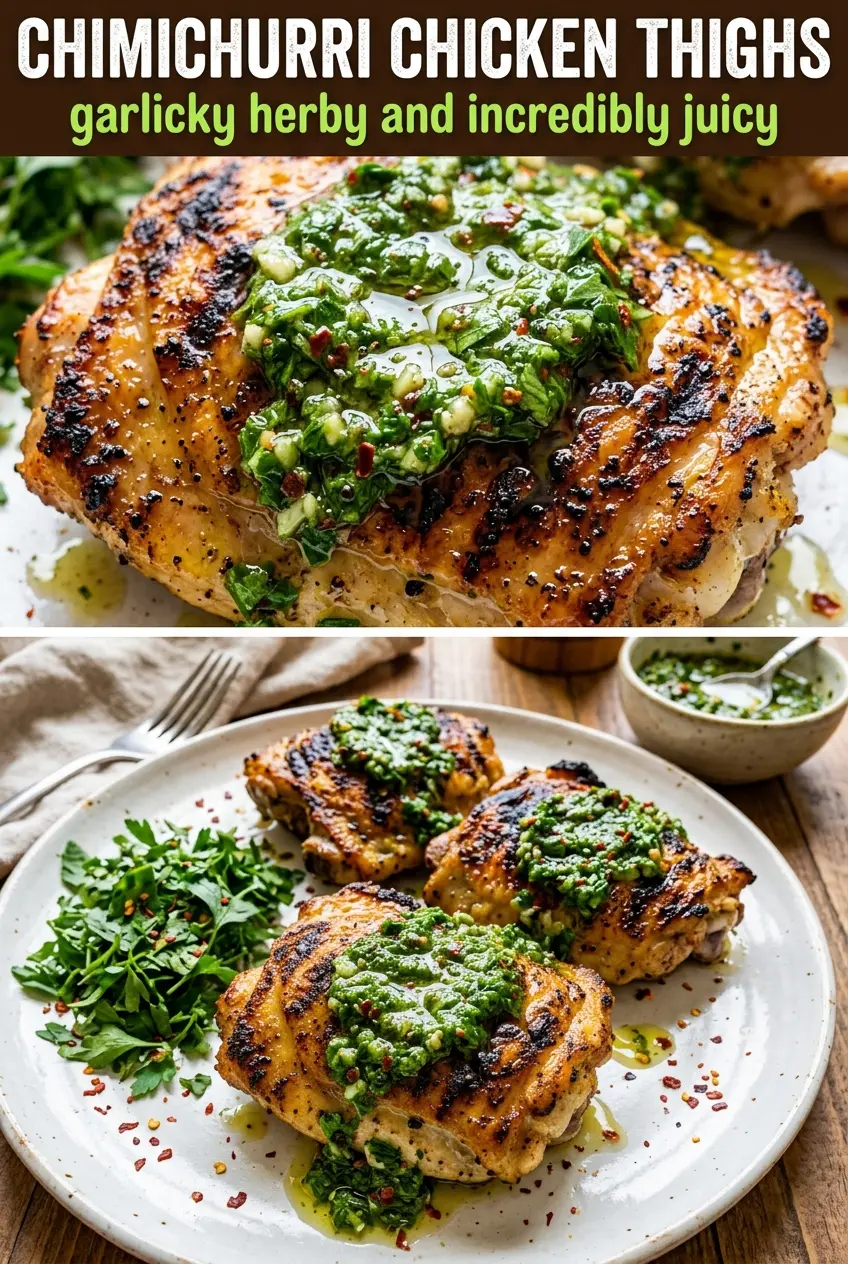
Chimichurri Chicken Thighs
Ingredients
Equipment
Method
- Blend parsley, cilantro, garlic, olive oil, red wine vinegar, dried oregano, and red pepper flakes in a food processor until mostly smooth but still textured. Season with salt and pepper, then divide into two portions.
- Season the chicken thighs with salt, pepper, garlic powder, and smoked paprika. Brush with half the chimichurri and marinate for 30 minutes.
- Preheat the grill to medium-high and oil the grates. Grill chicken skin-side down for 7-8 minutes until the skin is crispy and golden.
- Flip the thighs and continue grilling for 12-15 minutes until the internal temperature reaches 165°F. The surface should stay deep golden with visible char marks.
- Rest the chicken for 5 minutes before plating. Drizzle the reserved chimichurri generously over the top and let it pool around the base.
- Serve with extra chimichurri on the side for dipping and additional coating. Keep a bit of sauce available so each bite gets herbs and acidity.