Classic German goulash lands in that perfect place between comfort food and proper Sunday dinner: deep paprika gravy, tender beef that yields without shredding apart, and onions cooked down until they practically disappear into the sauce. The broth turns dark and glossy, not from a long list of tricks, but from patient browning and onions that do the heavy lifting in the pot.
What makes this version work is restraint. Sweet paprika brings warmth and color, hot paprika adds just enough edge, and the caraway keeps the whole pot tasting unmistakably German. The vinegar looks small on the ingredient list, but it sharpens the sauce at the end and keeps the richness from feeling flat. If your goulash has ever tasted muddy or thin, the fix is usually right here: enough onion, enough browning, and enough time.
Below, you’ll find the part that matters most for getting the beef tender without drying it out, plus a few swaps and storage notes for the nights when you want to stretch one pot into more than one meal.
The onions cooked down into this silky gravy and the beef was fork-tender right at the two-hour mark. I served it over spaetzle and the sauce clung to every bite.
Save this classic German goulash for the kind of dinner that needs tender beef, paprika-rich gravy, and buttered spaetzle on the plate.
The Reason the Onions Matter More Than the Beef Here
German goulash doesn’t rely on a thickener-heavy gravy or a flashy spice list. The onions are the backbone. Once they soften and take on color, they melt into the broth and create that dark, velvety sauce that tastes slow-cooked even before the beef is fully tender. If the onions stay pale, the finished pot tastes flat and the paprika can come across dusty instead of round.
The browning step matters for the same reason. You’re building fond in the bottom of the pot, and that browned surface gives the broth depth. Crowding the pan is the fastest way to lose it, so brown the beef in batches and let each piece get real color before turning. The goal isn’t just cooked meat; it’s the base flavor that carries the whole stew.
What the Paprika, Caraway, and Vinegar Are Actually Doing
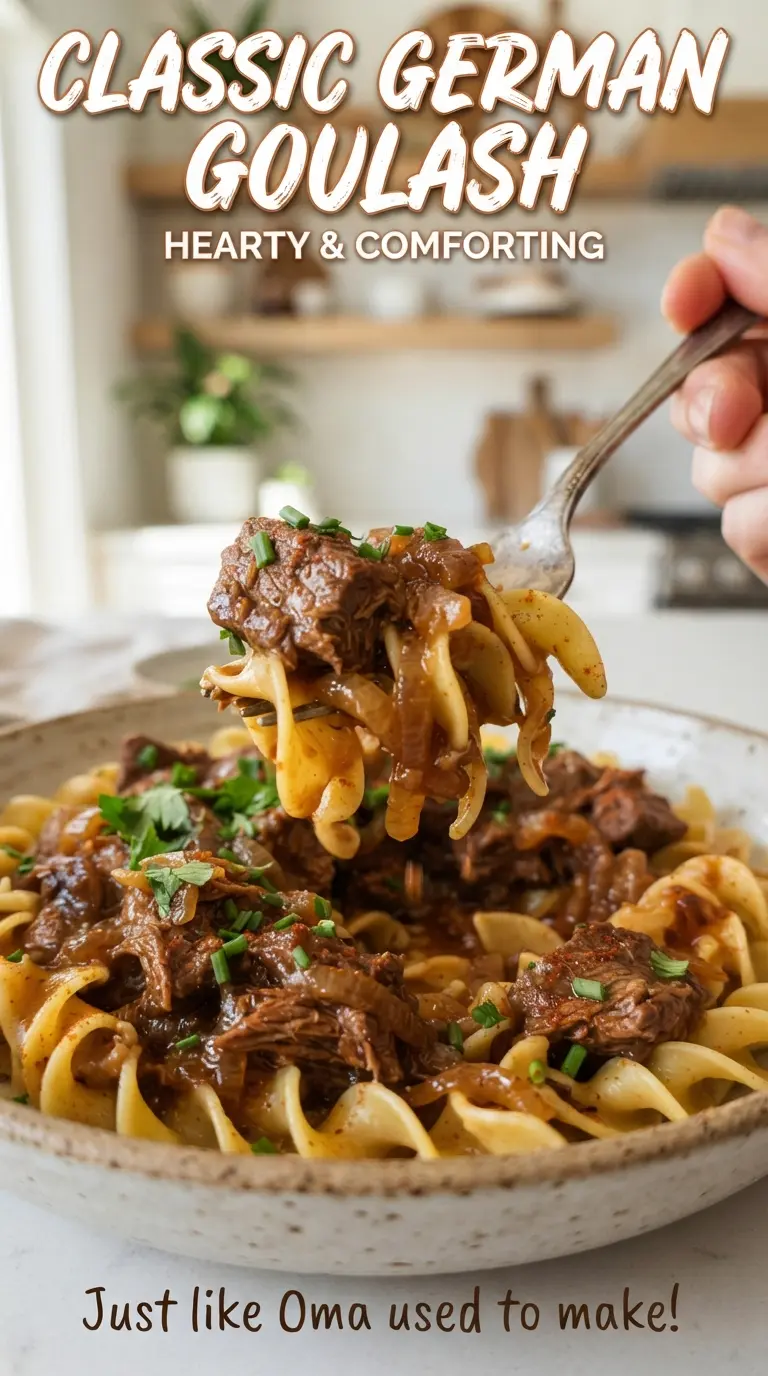
- Sweet paprika — This is the main flavor and the color source. Use a fresh jar if you can; old paprika goes dull fast and the stew will taste flatter than it should.
- Hot paprika — It doesn’t make the goulash spicy in a hot-sauce sense. It just gives the gravy a little lift. If you only have sweet paprika, add a pinch of cayenne instead of reaching for more sweet paprika.
- Caraway seeds — They give the stew its unmistakable German edge. Lightly toasting them in the fat with the paprika wakes them up; if you skip that step, they can taste blunt.
- Red wine vinegar — This is the balancing note. It brightens the onion-paprika gravy and keeps the stew from tasting heavy after two hours of simmering.
- Beef chuck — This cut is worth buying for goulash because it has enough connective tissue to turn tender over a long simmer. Lean stew meat can end up dry before the sauce has the depth you want.
Building the Stew So the Beef Stays Tender
Browning the Beef in Real Batches
Heat the oil until it shimmers, then brown the beef in a single layer with room around each piece. If the pot looks crowded, split it into more batches. You want deep brown edges, not gray sides, because that browned crust is what gives the broth its savory base. Salt the beef before it hits the pan, but don’t salt so heavily that moisture floods out and steams the surface.
Cooking the Onions Until They Collapse
After the beef comes out, the onions go in and they need time. Stir them often and let them soften, then deepen in color until they look glossy and jammy. If the pot starts to catch, a splash of broth loosens the browned bits without washing away flavor. Garlic only needs a minute at the end; any longer and it can turn bitter under the paprika.
Waking Up the Paprika and Spices
Stir in the sweet paprika, hot paprika, caraway, and tomato paste for just a minute before adding liquid. This is a short, hot stage, and it matters because paprika blooms in fat. If you leave it on the heat too long before the broth goes in, it can scorch and turn harsh. The mixture should smell warm and deep, not burnt or sharp.
The Slow Simmer That Finishes the Pot
Add the vinegar, broth, marjoram, bay leaves, and beef, then cover and simmer gently until the meat gives easily to a fork. Keep the heat low enough that the surface only breaks with small, lazy bubbles. A hard boil tightens beef chuck and can make the gravy greasy. When the flour slurry goes in, simmer long enough for the raw flour taste to cook out and the sauce to thicken into a spoon-coating gravy.
How to Adapt This Goulash Without Losing the Character of the Dish
Gluten-Free Version
Skip the flour slurry and thicken the finished stew with a cornstarch slurry instead, using 1 tablespoon cornstarch mixed with 2 tablespoons cold water. Add it near the end and simmer just until the gravy turns glossy. The texture stays clean and silky, but you won’t get the faint wheat note that flour adds.
Lower-Spice, Family-Friendly Pot
Use all sweet paprika and leave out the hot paprika if you want a gentler stew. The dish will still taste fully like goulash because the onions, caraway, and marjoram carry the flavor. You lose the little edge at the back of the spoon, but the sauce stays deep and balanced.
Make-Ahead for Better Flavor
This stew tastes even better the next day because the paprika and onion gravy settles down overnight. Cook it fully, chill it, then reheat it slowly before serving over fresh spaetzle or noodles. The beef stays tender, and the sauce thickens a little more in the fridge, which helps it cling to the pasta.
Storage and Reheating
- Refrigerator: Store in an airtight container for up to 4 days. The sauce will thicken as it chills.
- Freezer: This freezes well for up to 3 months. Cool it completely first, then freeze in portions for easier reheating.
- Reheating: Warm it slowly over low heat with a splash of broth if needed. Don’t boil it hard or the beef can tighten and the gravy can separate a bit at the edges.
Answers to the Questions Worth Asking
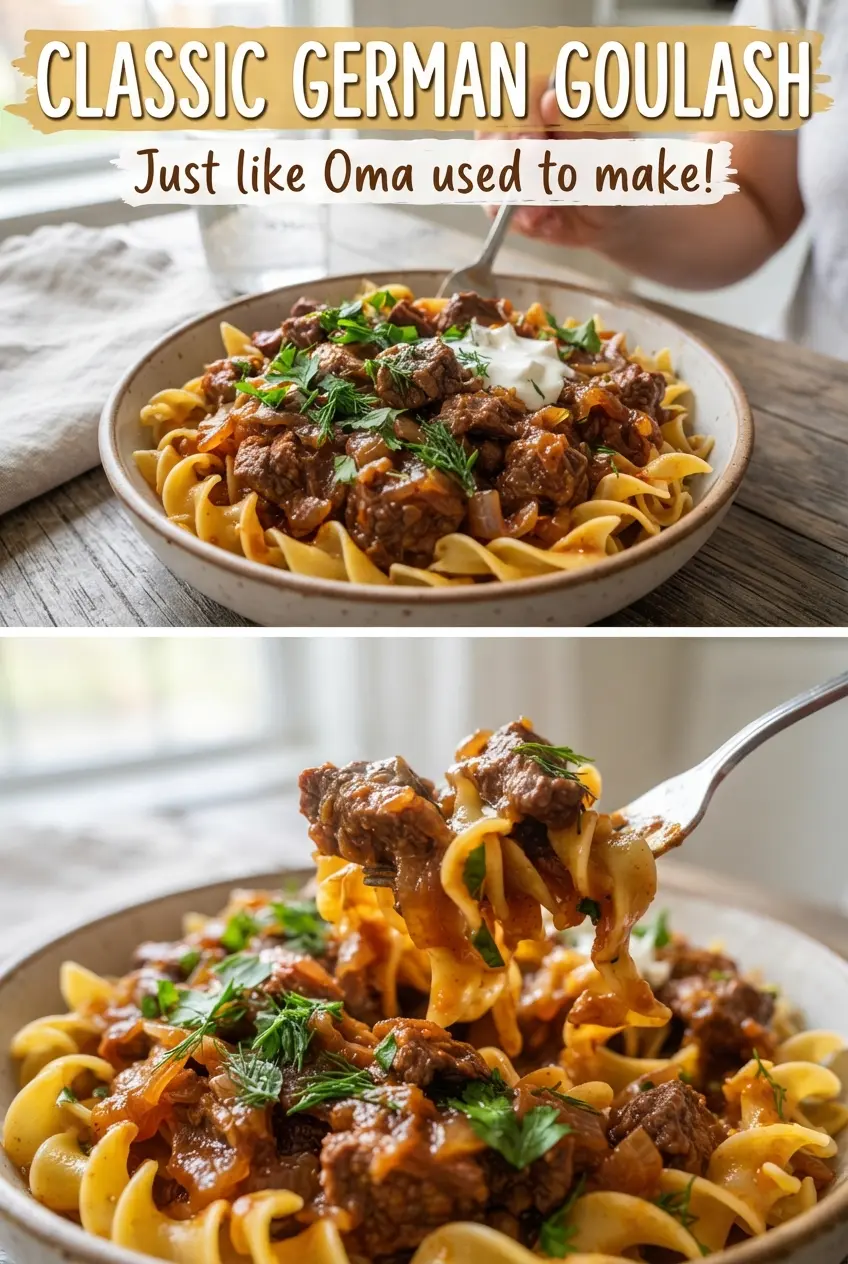
Classic German Goulash
Ingredients
Equipment
Method
- Season the beef chuck cubes with salt and black pepper, then heat the vegetable oil in a Dutch oven over medium-high heat until shimmering. Brown the beef in batches, turning as needed, until well-browned on all sides, about 5-8 minutes total per batch, and set aside.
- In the same Dutch oven, add the sliced onions and cook over medium heat until soft and golden, 15-20 minutes. Stir in the minced garlic and cook for 1 minute, just until fragrant, and keep the onions from scorching by reducing heat if needed.
- Stir in the sweet paprika, hot paprika, caraway seeds, and tomato paste, and cook for 1 minute. Keep stirring so the paprika toasts lightly without burning, and the paste looks slightly darkened and fragrant.
- Stir in the red wine vinegar, beef broth, dried marjoram, and bay leaves, then return the browned beef to the pot. Cover and simmer at 180-205°F (82-96°C) for 2 hours, stirring once halfway through so the beef stays submerged and tender.
- Remove the bay leaves, then stir the flour slurry (all-purpose flour mixed with water) into the simmering goulash. Simmer uncovered at 180-205°F (82-96°C) for 10 minutes until the gravy thickens to a spoon-coating consistency.
- Ladle the classic German goulash over buttered spaetzle or egg noodles. Garnish with parsley if desired and serve hot, with extra gravy on the side for soaking.