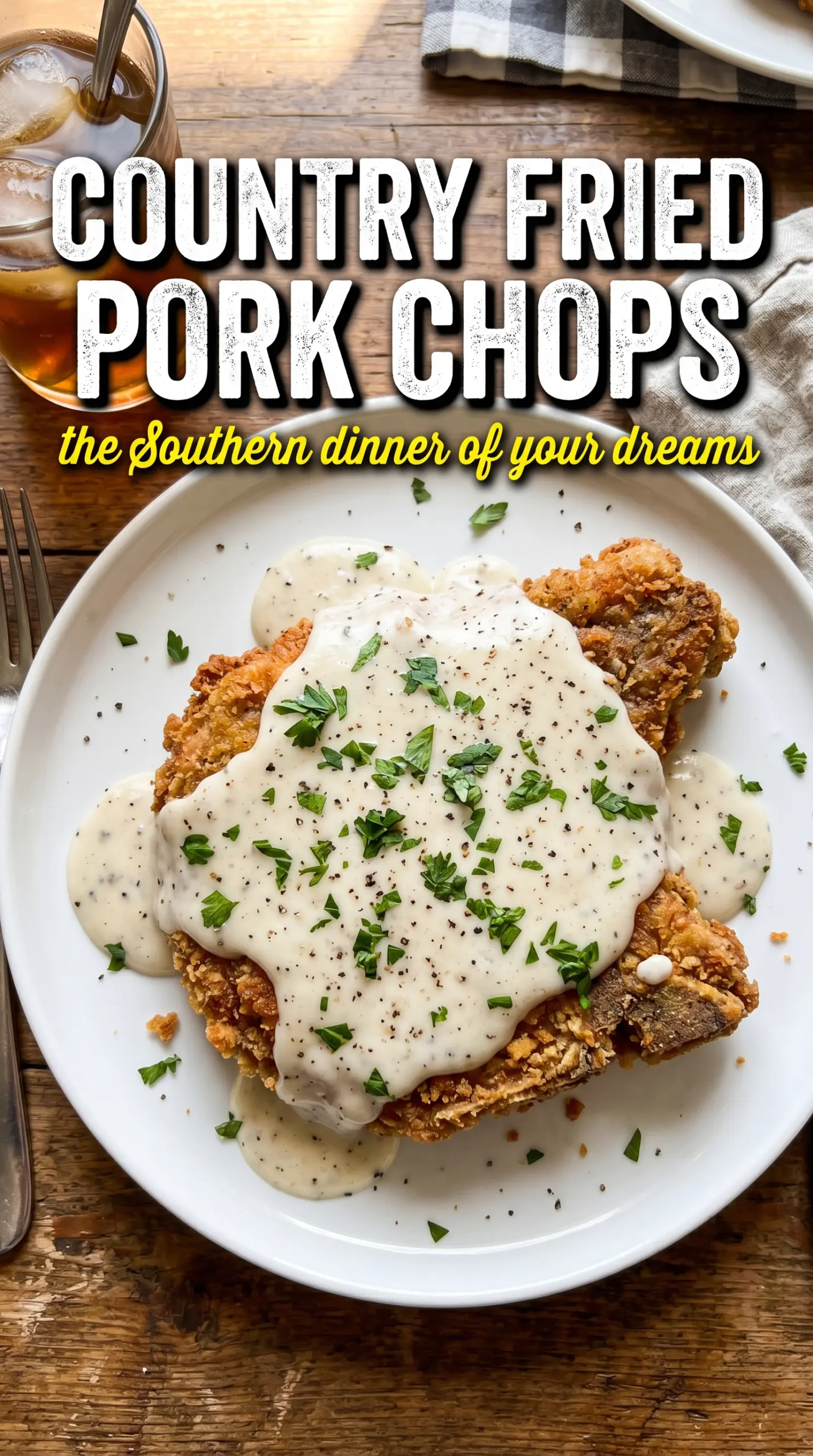
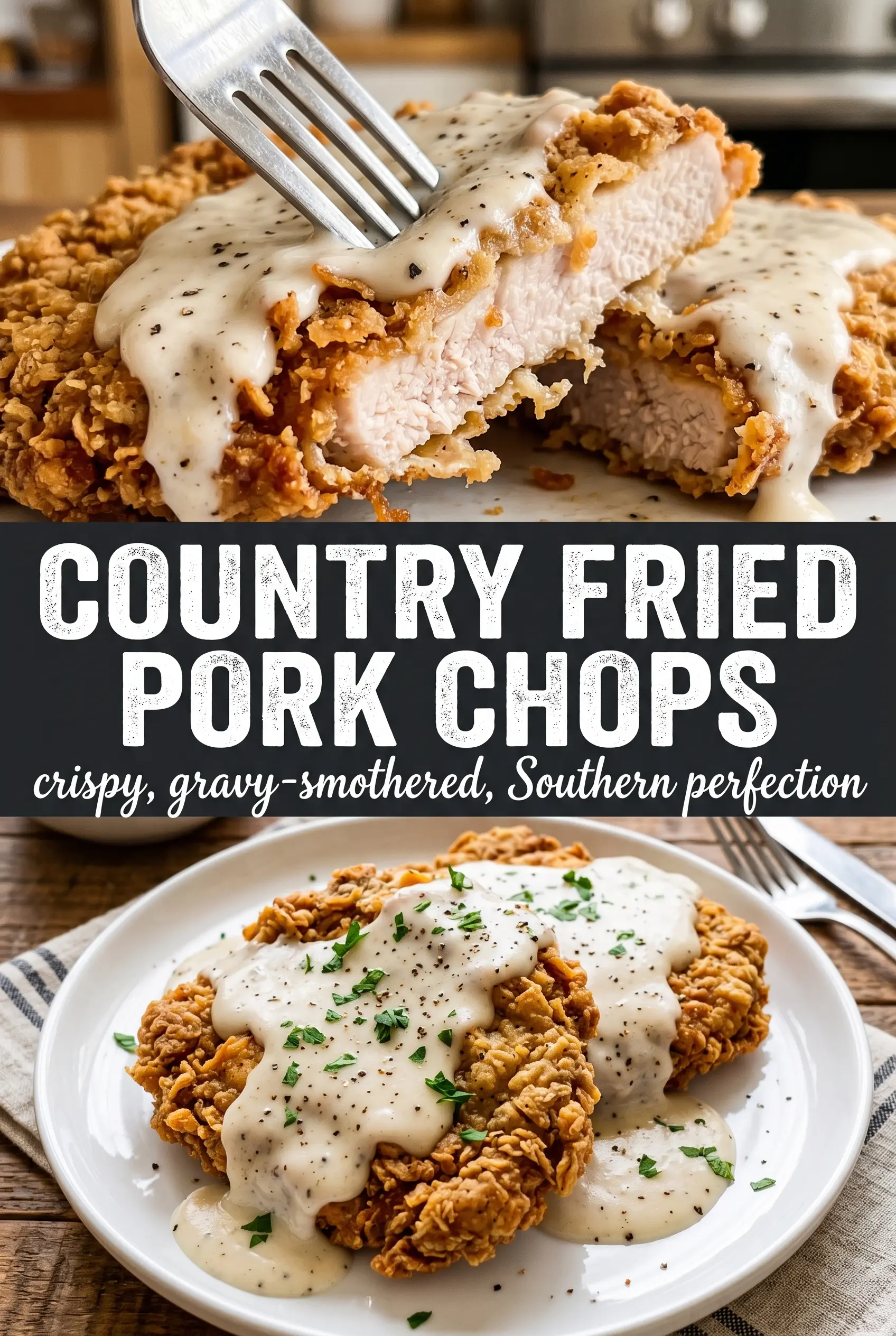
Golden country fried pork chops have a way of disappearing fast: the crust goes crackly at the edges, the pork stays juicy, and the white gravy ties the whole plate together without making the breading soggy. The best version isn’t heavy or greasy. It has a thin, well-seasoned shell that clings to the meat and turns deeply crisp the moment it hits the pan.
This version uses a little cornmeal with the flour, which gives the breading a finer crunch than plain flour alone. The buttermilk and egg mixture helps the coating stick, but the real trick is pressing that flour coating on firmly before frying so it sets into a proper crust instead of flaking off in the skillet. Thin-cut chops also matter here; they cook through before the breading has a chance to overbrown.
Below, I’m walking through the part that matters most: how to keep the crust crisp, how to judge the oil temperature, and how to turn the drippings into gravy that tastes like it belongs on the plate.
The cornmeal in the breading made the crust extra crisp, and the chops stayed juicy all the way through. The gravy thickened perfectly with the drippings, and my husband kept going back for more.
Love these crispy country fried pork chops and that peppery white gravy? Save them to Pinterest for the nights when you want a Southern-style dinner with a crunchy crust and no guesswork.
The Cornmeal Coating Is What Keeps These Chops From Tasting Flat
A lot of fried pork chops end up with breading that tastes like it came from the pantry and not the skillet. Cornmeal fixes that. It brings a light, gritty crunch that keeps the crust interesting even after the gravy hits the plate, and it helps the coating look rugged and crisp instead of pale and dusty.
The other thing people get wrong is the thickness of the chops. Thin-cut pork chops cook fast, which matters because a thick chop can leave you with dark breading before the center is done. If your chops are thicker than 1/2 inch, pound them down a little so they cook at the same pace as the crust browns. And when you press the flour mixture onto the egg-coated pork, press hard. That’s what gives you those craggy bits that fry up crunchy.
- Thin-cut pork chops — These cook quickly and stay tender if you don’t overcrowd the pan. If your chops are thick, slice them in half horizontally or pound them to an even 1/2 inch so the coating doesn’t overcook before the meat is ready.
- Cornmeal — This is the ingredient that gives the crust its extra snap. Fine cornmeal works best here; coarse cornmeal can feel sandy instead of crisp.
- Buttermilk — The slight tang helps the breading cling and gives the pork a little insurance against drying out. If you don’t have buttermilk, stir 1 teaspoon vinegar into 1/4 cup milk and let it sit for 5 minutes.
- Drippings for the gravy — Those browned bits and rendered fat are what make the white gravy taste like it belongs with the chops. If you don’t have enough drippings, top off with butter until you have 3 tablespoons.
What Each Ingredient Is Actually Doing in This Pork Dish
- Pork (cut properly for method) — Pat dry so it browns instead of steams. Even thickness ensures uniform cooking.
- Oil or butter (the browning medium) — High-heat oil essential for proper searing. Creates pan flavor.
- Seasonings (salt, pepper, spices) — Build flavor boldly. Pork carries the entire profile.
- Aromatics (garlic, onion, herbs) — Cook with fat to bloom flavors. Become the foundation.
- Sauce or braising liquid (if using) — This keeps lean pork from drying. Balance richness with acid.
- Vegetables (if using) — Layer by cooking time. Hard vegetables first so everything finishes together.
- Acid (vinegar, wine, or citrus) — This brightens sauce and prevents heavy flavor. Add near end.
- Proper doneness (145°F with slight pink center) — Pork is safe here and stays juicy. Higher temps dry it out.
Frying the Chops Until the Crust Sets Before It Burns
Build the Dredge First
Mix the flour, cornmeal, spices, salt, and pepper in a shallow dish so the seasoning is evenly distributed through every layer of breading. In a second dish, whisk the eggs and buttermilk until they look fully blended and a little frothy. If the egg mixture is streaky, the coating goes on unevenly and you get bald spots after frying.
Press the Coating On Like You Mean It
Dip each chop into the egg mixture, let the excess drip off, then lay it in the flour mixture and press firmly on both sides. Don’t just dust the surface; press so the flour actually grabs onto the wet layer. Set the coated chops aside for a few minutes while the oil heats. That short rest helps the breading hydrate and cling better in the skillet.
Fry in Hot Oil, Not Smoking Oil
Heat about 1/2 inch of oil over medium-high heat until it shimmers and a pinch of flour sizzles on contact. If the oil is too cool, the crust drinks it up and turns greasy. If it’s too hot, the breading darkens before the pork cooks through. Fry the chops 3 to 4 minutes per side until they’re deep golden and the juices run clear when you cut into the thickest part.
Use the Drippings for the Gravy Right Away
Move the fried chops to paper towels, then measure out 3 tablespoons of drippings while the skillet is still warm. Whisk the flour into the fat for about a minute so it loses that raw taste, then slowly whisk in the milk. The gravy should go from thin to spoon-coating as it simmers; if it turns lumpy, the milk went in too fast or the heat was too high.
How to Adapt These Country Fried Pork Chops Without Losing the Crunch
Gluten-Free Country Fried Pork Chops
Swap the all-purpose flour for a 1:1 gluten-free baking blend and keep the cornmeal. The coating won’t be quite as shattery as wheat flour, but it will still fry up crisp if you press it on firmly and let the breaded chops rest before frying.
Dairy-Free Version
Use unsweetened plain non-dairy milk mixed with 1 teaspoon vinegar in place of the buttermilk, and make the gravy with more drippings and dairy-free milk if needed. The pork still gets a good crust, but the gravy will be a little lighter and less rich than the classic version.
Extra-Seasoned Southern Style
Add a pinch of cayenne or a little black pepper to the flour mix if you want more bite. This doesn’t change the technique at all, but it gives the crust more edge and makes the gravy taste even better against the salty, peppery coating.
Storage and Reheating
- Refrigerator: Store the chops and gravy separately for up to 3 days. The crust softens a bit in the fridge, but it still reheats well.
- Freezer: The pork chops freeze better than the gravy. Freeze the fried chops on a sheet pan, then transfer to a bag or container for up to 2 months. Freeze the gravy separately only if you’re fine whisking it smooth again after thawing.
- Reheating: Reheat chops on a wire rack in a 375°F oven until hot and crisp, about 12 to 15 minutes. Skip the microwave if you want the coating to stay crunchy. Warm the gravy slowly on the stove with a splash of milk, whisking as it heats.
Answers to the Questions Worth Asking
Country Fried Pork Chops
Ingredients
Equipment
Method
- Mix the all-purpose flour, cornmeal, garlic powder, smoked paprika, onion powder, salt, and pepper in a shallow dish until evenly combined.
- Whisk the eggs with the buttermilk in a second shallow dish until smooth.
- Dip each pork chop in the egg-and-butttermilk mixture, then coat thoroughly in the seasoned flour mixture.
- Press the coating firmly so it adheres, and set the coated chops on a plate while you heat the oil.
- Heat about 1/2 inch of oil in a skillet over medium-high heat until shimmering.
- Fry the pork chops 3–4 minutes per side, until deep golden and cooked through.
- Drain on paper towels and reserve 3 tablespoons of drippings for the gravy.
- Whisk the flour into the drippings over medium heat for 1 minute to form a roux.
- Slowly whisk in the whole milk, then simmer until thick and coats the back of a spoon.
- Season the white gravy with salt and pepper, then serve over the crispy pork chops.