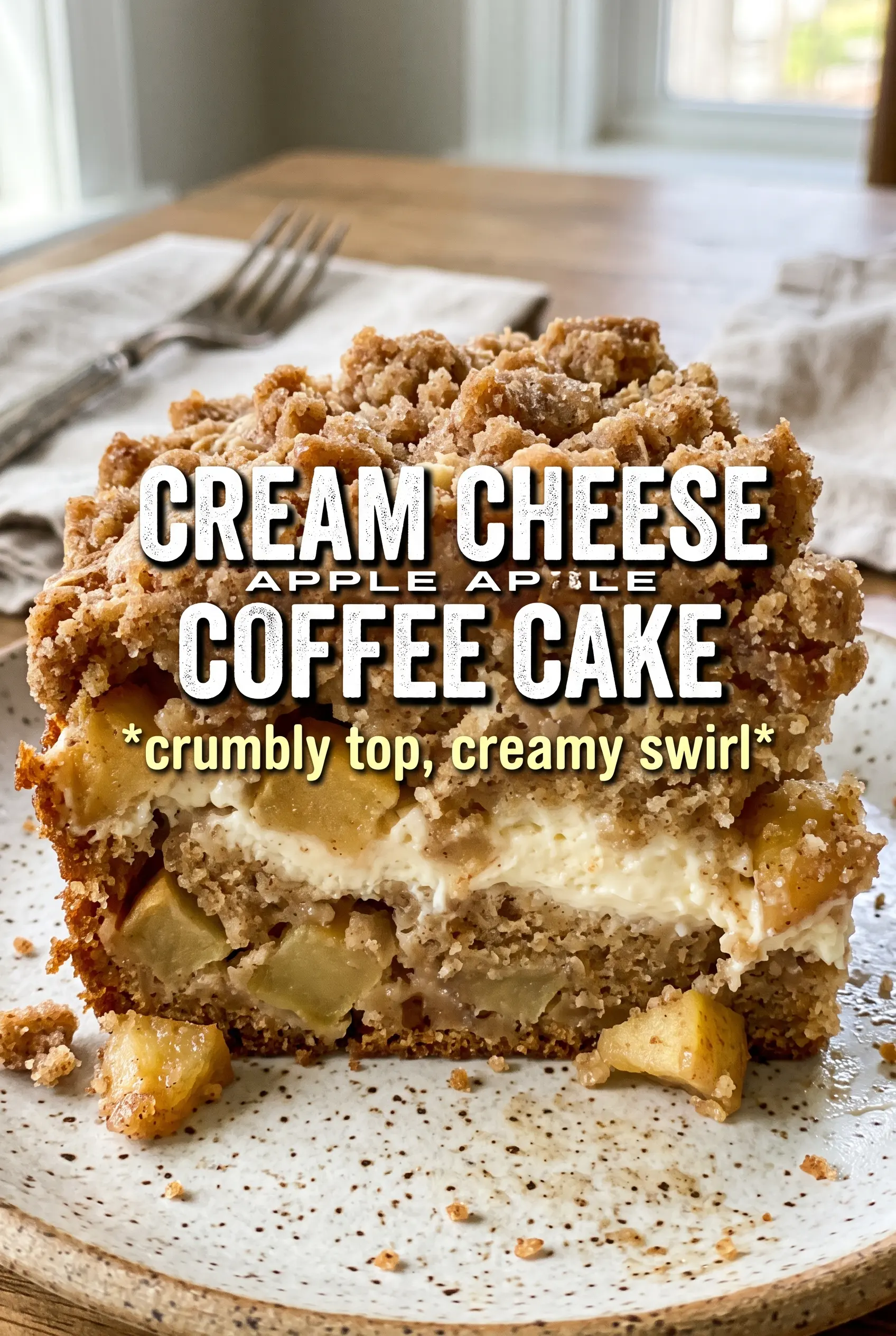
Golden streusel, tender cake, and a ribbon of cream cheese running through the middle make this coffee cake the kind of breakfast bake people remember after one slice. The apples soften just enough in the oven to turn jammy at the edges while still keeping some bite, and the cinnamon in the topping pulls everything together without drowning out the fruit. It’s the sort of pan that disappears faster than you expect, especially when it comes out warm and the cream cheese layer is still soft.
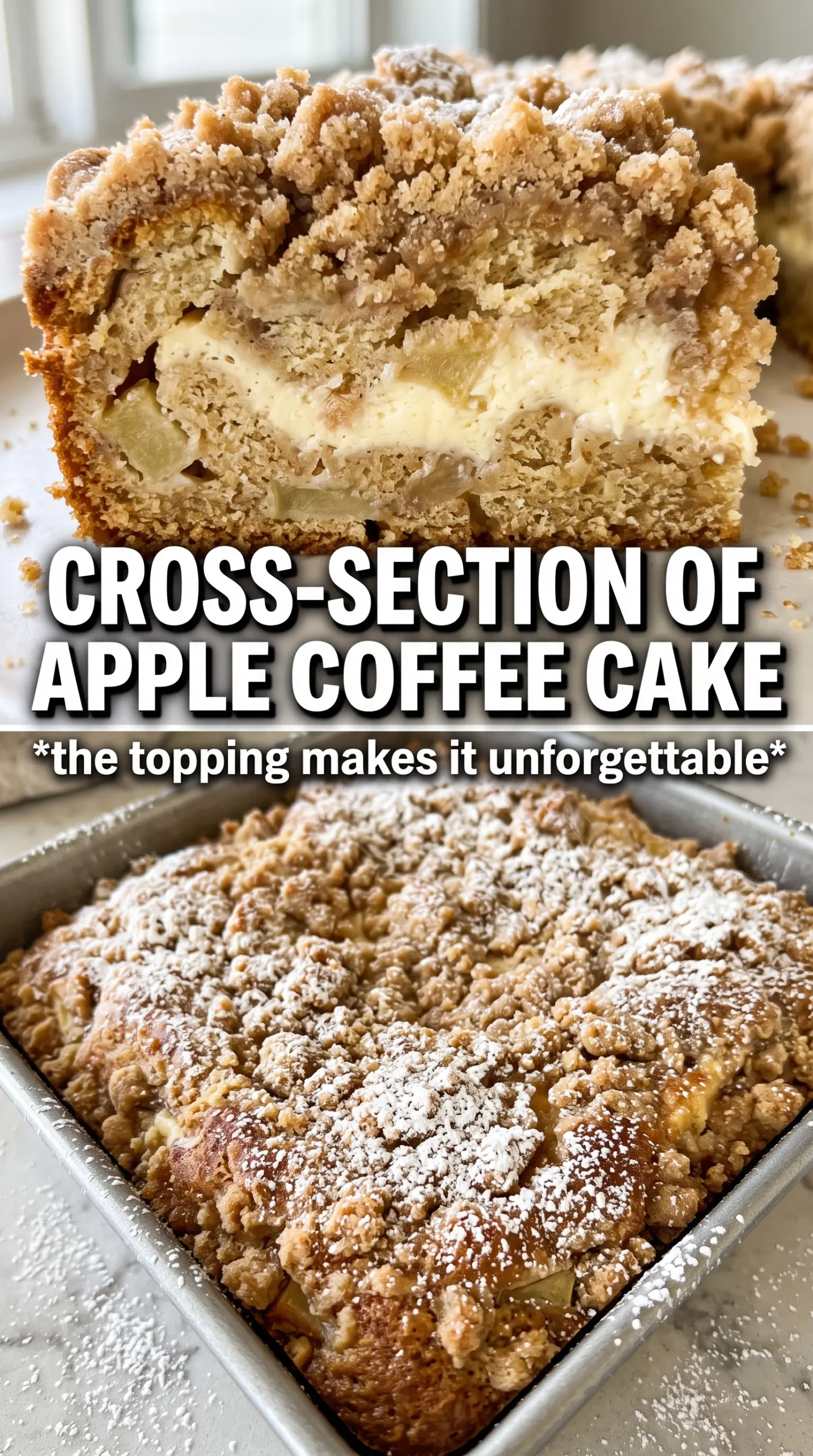
What makes this version work is the layering. The batter stays sturdy enough to hold the cream cheese and apples, but the sour cream keeps it from baking up dry or heavy. The streusel goes on last, and because the butter is cold when it’s cut in, it bakes into those crisp little clusters instead of melting into the top. That contrast is what gives every slice its best texture.
Below, I’ll walk through the parts that matter most: how to keep the cream cheese layer smooth, how to keep the apples from turning watery, and what to change if you want to adapt the cake for a different pan or a different fruit.
The cream cheese layer stayed perfectly creamy and didn’t sink, and the apples baked up soft without making the middle soggy. My husband went back for a second square before dinner.
Save this cream cheese apple coffee cake for the mornings when you want a soft center, crisp streusel, and a baked-in apple filling.
The Trick to Keeping the Cream Cheese Layer from Sinking
The cream cheese layer needs to be soft enough to spread, but not loose enough to melt into the batter before it hits the oven. That’s the line that decides whether you get a clean middle layer or a puddled swirl. Beat it until smooth, then stop. If you whip in a lot of air, it can puff, crack, and drift downward as the cake bakes.
The batter underneath also matters. It should be thick enough to support the topping when you dollop it on. Spread the base in an even layer, then add the cream cheese in spoonfuls and gently nudge it toward the edges instead of stirring it in. You want defined layers here, not a marbled batter.
- Sour cream — This keeps the crumb plush and gives the cake enough body to hold the filling. Plain Greek yogurt works in a pinch, but the cake will taste a little tangier and bake up slightly tighter.
- Apples — Use a firm baking apple so the pieces stay recognizable after 50 minutes in the oven. Softer apples can turn mushy and disappear into the middle.
- Cold butter for the streusel — Cold butter is what gives you crumbs instead of paste. Once it softens too much, the topping melts into the cake and loses that crisp finish.
What Each Layer Is Doing in the Pan
- All-purpose flour — Gives the cake its structure. Cake flour can work, but the crumb will be softer and less able to hold the cream cheese layer cleanly.
- Butter and sugar — Creaming these together creates the base of the cake’s lift. Don’t rush this stage; pale, fluffy butter is what gives the finished cake a lighter texture.
- Eggs — The eggs stabilize both the batter and the cream cheese layer. Room-temperature eggs blend more smoothly and help the batter emulsify instead of turning lumpy.
- Brown sugar in the streusel — It brings a deeper caramel note and helps the topping bake into crisp clusters. White sugar will make the topping sweeter and drier, but it won’t give the same richness.
Building the Layers So the Cake Bakes Evenly
Make the crumb topping first
Mix the flour, brown sugar, and cinnamon, then cut in the cold butter until you have uneven crumbs that hold when pressed. If the mixture starts looking greasy or pasty, the butter got too warm. Pop it in the fridge for a few minutes before you move on.
Mix the fillings before the batter
Beat the cream cheese layer until it’s smooth and glossy, then toss the diced apples with sugar and cinnamon. Doing these two bowls first keeps the batter from waiting around while the pan is prepped. The apples should look lightly coated, not wet; if they sit too long, they’ll release more juice and can weigh down the center.
Finish with the cake batter
Cream the butter and sugar until the mixture looks pale and a little fluffy, then add the eggs and vanilla. Alternate the flour mixture with the sour cream so the batter stays smooth and thick. If you dump everything in at once, the batter can break and bake unevenly, which makes the cake dense in the middle.
Layer without overworking the top
Spread the batter into the pan, then spoon the cream cheese layer over it and gently smooth it just enough to cover. Add the apples, then scatter the streusel over the top in a loose, even layer. Don’t press the topping down; it needs air around it so it can bake into a crisp lid instead of sinking into the filling.
Make it with pears instead of apples
Firm pears work well here if you want a softer, more floral filling. Use the same amount, but pick fruit that still has some bite so it doesn’t collapse into the cream cheese layer. The cake will taste gentler and a little more delicate.
Gluten-free version with a 1:1 baking blend
A good gluten-free flour blend can replace the all-purpose flour without changing the layering method. The crumb may be a little more tender, so let the cake cool fully before slicing or the center can look underbaked when it’s not.
Lighter cream cheese filling
Use Neufchâtel if you want a slightly lighter filling with the same tang and spreadability. It bakes up a touch softer, so keep the layer even and don’t overmix it or it can become loose in the center.
Storage and Reheating
- Refrigerator: Store covered for up to 4 days. The cream cheese layer firms up as it chills, but the flavor holds nicely.
- Freezer: This freezes well in slices. Wrap tightly, then freeze for up to 2 months. Thaw overnight in the refrigerator so the filling doesn’t turn watery.
- Reheating: Warm individual slices in the microwave for 15 to 20 seconds or in a 300F oven until just heated through. Don’t blast it on high heat or the cream cheese layer can separate and the streusel will lose its crunch.
The Questions That Come Up Once You Slice Into It
Cream Cheese Apple Coffee Cake
Ingredients
Equipment
Method
- Preheat oven to 350°F and grease a 9x13 dish. Make sure the pan is fully coated so the coffee cake releases cleanly.
- Combine flour, brown sugar, and cinnamon, then cut in cold butter until crumbly with no large butter lumps. The mixture should look like coarse sand and hold together when pinched.
- Beat cream cheese layer ingredients until smooth. Stop and scrape the bowl so the cream cheese stays lump-free.
- Toss apples, sugar, and cinnamon for the apple layer until evenly coated. You should see the apples glisten with the cinnamon-sugar mixture.
- Beat butter and sugar until fluffy. The batter should lighten in color and look airy.
- Add eggs and vanilla, mixing until smooth. Stop when no streaks of egg remain.
- Alternate adding the flour mixture and sour cream to the batter. Mix just until combined so the crumb stays tender.
- Spread batter in the prepared pan and dollop the cream cheese over the top, then spread gently. Leave some small cream cheese streaks for a layered look.
- Top with cinnamon apples and scatter streusel over everything. Cover the surface so every bite gets a crisp, golden topping.
- Bake at 350°F for 45-50 minutes until a toothpick comes out clean. Look for a set center and caramelized, golden edges on the streusel.