Silky butternut squash cream sauce clings to every pillowy gnocchi, with savory sausage, crisp sage, and parmesan turning the whole bowl into something that eats like comfort food but still feels balanced. The sauce stays lush without getting heavy, and the sage brings just enough edge to keep the sweetness of the squash in check.
The trick here is building the flavor in layers. Browning the sausage first gives you fat and browned bits for the sauce, then the sage fries in that same butter until it goes crisp and fragrant. Butternut squash puree needs a few minutes in the pan to lose its raw edge before the cream and parmesan go in, and that short simmer is what keeps the sauce smooth instead of thin or grainy.
Below, you’ll find the small details that keep the sauce velvety, plus a few swaps that still preserve the balance of sweet squash, salty sausage, and fried sage.
The sauce turned out thick and glossy, and the fried sage stayed crisp all the way through dinner. I was worried the gnocchi would get mushy, but tossing them straight into the sauce for just a minute kept them tender and perfect.
Save this creamy butternut squash gnocchi with sausage and sage for a weeknight skillet dinner with a silky orange sauce and crispy fried sage.
The Trick to Keeping the Sauce Creamy, Not Heavy
Butternut squash sauce can go one of two ways: glossy and velvety, or dull and pasty. The difference is heat management. If the cream and parmesan hit a hard simmer too soon, the sauce tightens up and the cheese can turn grainy. This version keeps the pan at a gentle simmer after the puree goes in, which gives the squash time to soften into the cream instead of sitting on top of it.
The gnocchi matters too. Potato gnocchi cooks fast and gets soft fast, so it should go into the sauce only after the sauce has already finished its base. That way the dumplings absorb a little flavor without overcooking and falling apart. The sausage goes back in at the end so it stays juicy instead of drying out while the sauce reduces.
What Each Ingredient Is Actually Doing In This Dish

- Butternut squash puree — This is the body of the sauce, and roasted puree gives a deeper, sweeter flavor than plain steamed squash. If you use canned squash, the dish still works, but the flavor will be flatter and a little less nutty. Roast and blend it yourself if you want the best result.
- Italian sausage — It brings salt, fat, and enough seasoning to anchor the sweetness of the squash. Mild or hot both work; hot sausage gives the dish more lift. If you use turkey sausage, add a little extra butter or the sauce can taste lean.
- Fresh sage — Fried sage is more than garnish here. It adds a crisp texture and a woodsy note that cuts through the cream. Don’t swap in dried sage for the topping; save that only for the sauce if you have no fresh leaves.
- Parmesan — Freshly grated parmesan melts into the sauce much better than the shelf-stable grated kind. Pre-grated cheese can stay sandy or clump when it hits cream. Grate it yourself for the smoothest finish.
- Heavy cream — This keeps the sauce stable and plush. Half-and-half will work in a pinch, but the sauce will be thinner and more likely to separate if it simmers too hard.
Building the Skillet in the Right Order
Brown the Sausage First
Cook the sausage in a large skillet until it loses its pink color and picks up browned bits at the edges. That browning is the flavor foundation for the whole dish. If the pan looks crowded, the sausage will steam instead of brown, so break it up and give it room. Drain off extra grease, but leave a thin film in the pan so the next step has something to work with.
Crisp the Sage in Butter
Add the butter and sage leaves and fry them just until they darken slightly and the edges curl. They go from fragrant to burned fast, so keep the heat medium and pull them as soon as they look crisp. The leaves will keep crisping as they cool on a plate. Use the same butter in the pan for the sauce base.
Let the Squash and Cream Melt Together
Stir in the garlic for about a minute, just until it smells sweet, then add the squash puree and cream. At first the mixture may look a little streaky, but it comes together as the squash loosens and the cream warms through. Keep the heat gentle. A rolling boil is what makes a cream sauce separate or taste flat.
Finish With Cheese, Gnocchi, and Sausage
Stir in the parmesan, nutmeg, and red pepper flakes, then let the sauce simmer until it looks smooth and lightly thickened. Add the cooked gnocchi and the sausage, then toss just long enough to coat everything. If the sauce seems too thick, loosen it with a splash of pasta water. If it seems thin, give it another minute on low before serving. Top with the crispy sage and extra parmesan while the skillet is still hot.
Three Ways to Adjust the Skillet Without Losing the Balance
Make It Dairy-Free
Use full-fat coconut cream or an unsweetened cashew cream in place of the heavy cream, and swap the parmesan for a dairy-free hard cheese alternative if you like. The sauce will be a little less sharp and more mellow, but the squash still gives it enough body. Keep the heat low so the alternative cream stays smooth.
Make It Gluten-Free
Use gluten-free gnocchi and check the sausage label for fillers. The sauce itself is naturally gluten-free, so the main job is protecting the texture of the gnocchi. Cook it just until it floats and then move it straight into the skillet so it doesn’t go gummy.
Make It Meatless
Swap the sausage for sautéed mushrooms or a plant-based Italian sausage. Mushrooms give you savory depth and a little chew, while plant-based sausage keeps the familiar shape of the dish. Add a touch more salt and a pinch more red pepper flakes so the sauce doesn’t taste soft or one-note.
Storage and Reheating
- Refrigerator: Store leftovers in an airtight container for up to 3 days. The sauce will thicken as it chills.
- Freezer: I don’t recommend freezing this one. Cream sauces and gnocchi both change texture after thawing, and the sauce can separate.
- Reheating: Reheat gently on the stove over low heat with a splash of cream or water, stirring often. Microwaving on high can make the gnocchi rubbery and the sauce break.
Answers to the Questions Worth Asking
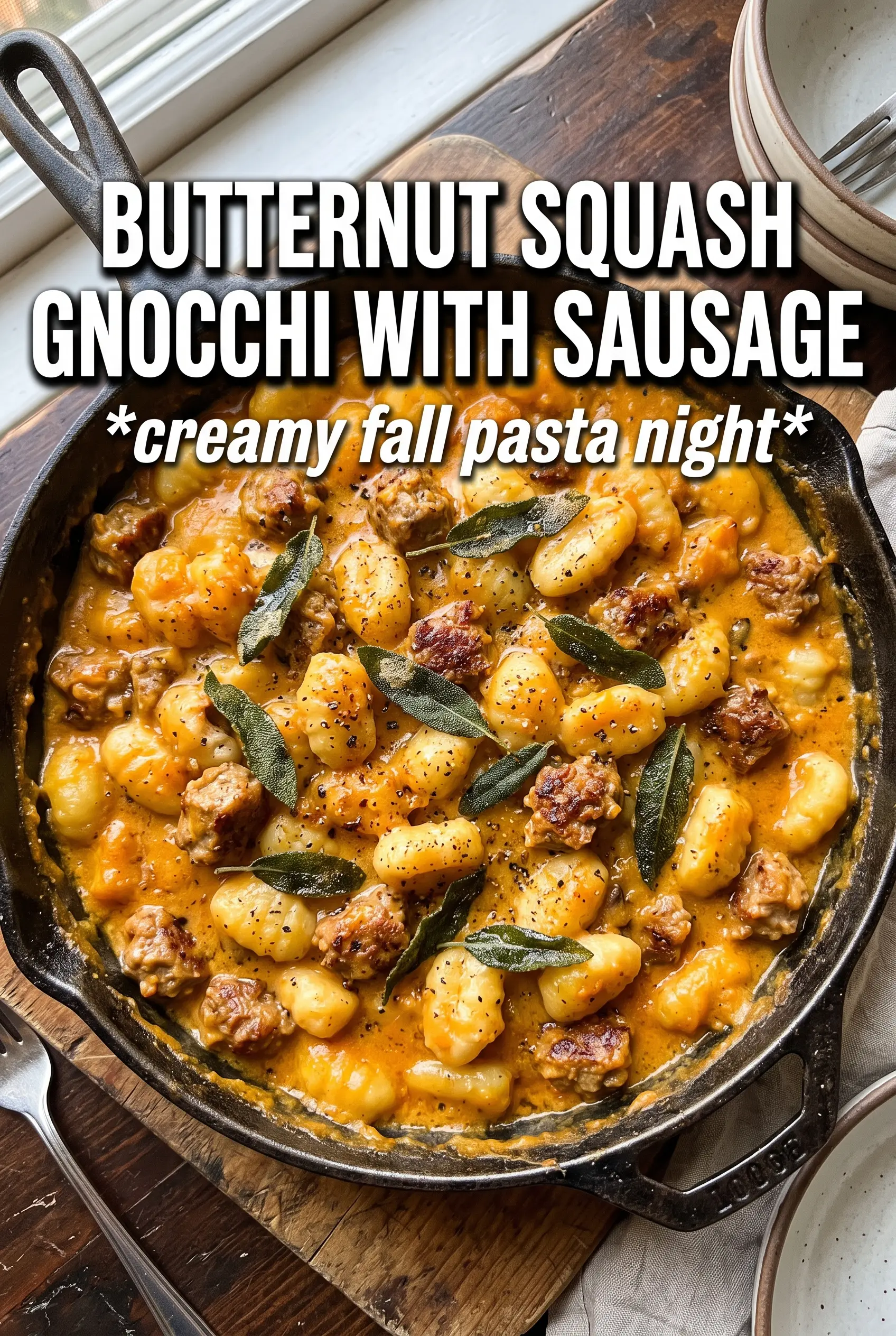
Creamy Butternut Squash Gnocchi With Sausage And Sage
Ingredients
Equipment
Method
- Brown Italian sausage in a large skillet over medium-high heat until cooked through, then drain excess fat and set sausage aside.
- Fry sage leaves in butter over medium heat until crisped and slightly dark at the edges, then remove and set aside.
- Sauté garlic in the same butter for 1 minute, stirring until fragrant but not browned.
- Add butternut squash puree and heavy cream, then stir to combine and warm the mixture.
- Stir in parmesan, nutmeg, and red pepper flakes, then simmer for 5 minutes until the sauce turns smooth and coats the back of a spoon.
- Cook potato gnocchi according to package instructions, then add the gnocchi directly into the simmering sauce.
- Return browned sausage to the skillet and toss everything together until the gnocchi is evenly coated.
- Season with salt and pepper to taste, then top with crispy sage leaves and extra parmesan before serving.