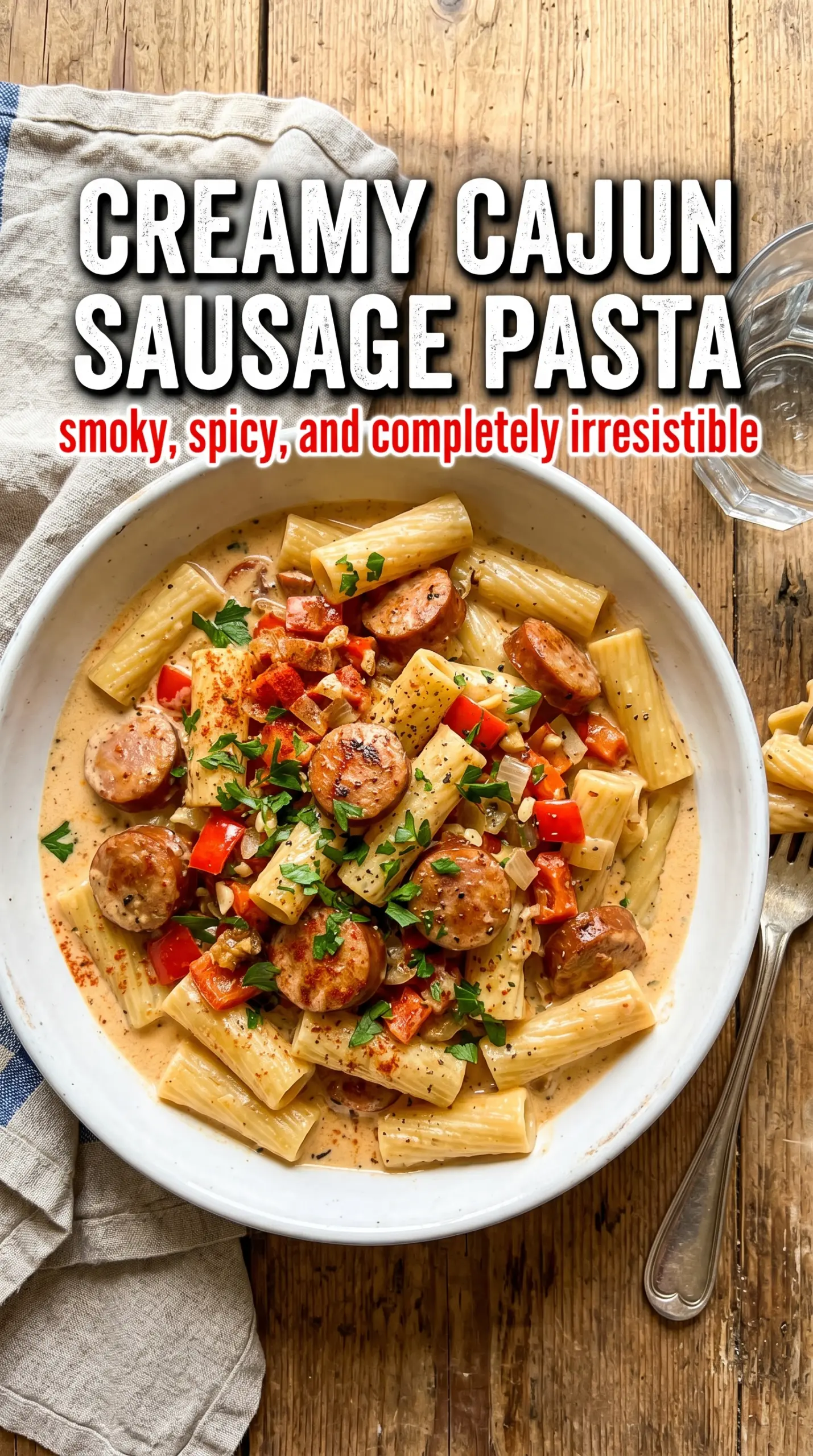
Penne coated in a smoky Cajun cream sauce has a way of disappearing fast, especially when the sausage is browned first and the peppers still have a little bite. This version leans into that contrast: spicy and savory from the andouille, rich without feeling heavy, and just loose enough to cling to every piece of pasta. It eats like a restaurant bowl, but it comes together in the time it takes to boil the noodles.
The part that makes this work is building the sauce in the same skillet you used for the sausage. Those browned bits on the bottom are packed with flavor, and the cream picks them right up once the broth goes in. A little pasta water at the end gives you control, which matters here because Cajun cream sauce can go from glossy to gluey fast if you let it reduce too far.
Below, I’ve included the exact point where the sauce should thicken, what to do if it feels too sharp or too thick, and a few smart variations for making this dish work with what you’ve got on hand.
The sauce thickened up perfectly and the sausage stayed browned instead of getting lost in the cream. I added a splash of pasta water at the end and it coated the penne like it was supposed to.
Save this creamy Cajun sausage pasta for nights when you want smoky sausage, penne, and a brick-red cream sauce in one pan.
The Reason the Sauce Stays Creamy Instead of Turning Heavy
The biggest mistake with Cajun cream pasta is pushing the heat too high once the dairy goes in. Heavy cream doesn’t need a hard boil to thicken. It needs a gentle simmer long enough for the broth to reduce a bit and the parmesan to melt into the sauce. If the pan is raging, the sauce tightens up too fast and starts tasting dull or grainy.
That same rule matters after the pasta goes in. Penne keeps absorbing liquid as it sits, which is why a splash of reserved pasta water is useful here. It loosens the sauce just enough to keep it silky without thinning the seasoning out. If your sauce looks thin right before serving, give it another minute with the pasta in the pan rather than dumping in more cream.
- Andouille or smoked sausage — This is the backbone of the dish. Andouille brings smoke, spice, and enough fat to leave a seasoned film in the pan. If you use regular smoked sausage, the pasta will still work, but it will be a little milder and less peppery.
- Cajun seasoning — This does more than add heat; it seasons the sauce itself. Different brands vary a lot, so taste before adding extra salt. If yours is very salty, start with less and build up after the parmesan goes in.
- Heavy cream — This is what gives the sauce its body. Half-and-half can work in a pinch, but the sauce will be thinner and more likely to split if it boils. Keep the simmer gentle so the cream stays smooth.
- Parmesan — Use finely grated parmesan, not a coarse shred that takes forever to melt. Pre-grated cheese can work, but it often melts less cleanly because of anti-caking agents. Add it off the highest heat so it blends into the sauce instead of clumping.
- Pasta water — This is the built-in insurance policy. The starch helps the sauce cling to the noodles and softens the texture if it gets a little too thick. Reserve more than you think you’ll need; a few tablespoons can change the whole pan.
What Each Ingredient Is Actually Doing in This Pasta Dish
- Pasta (cooked to al dente) — Reserve cooking water for sauce. Thick, starchy water is essential.
- Sauce or oil (the vehicle) — This carries flavors and coats pasta. Quality ingredients shine.
- Aromatics (garlic, onion, herbs) — Cook with oil first to bloom. They become the foundation.
- Protein (if using) — Cook until done but not overdone. Integrate with sauce smoothly.
- Vegetables (if using) — Cut uniformly so they cook evenly. Add by cooking time.
- Cheese (if using, like feta or parmesan) — Add off heat so it melts smoothly. Prevents clumping.
- Acid (vinegar, wine, or lemon) — This prevents heavy sauce and balances richness.
- Final emulsification (toss gently with starchy water) — This creates silky sauce that clings to pasta.
Building the Cajun Base in the Right Order
Browning the Sausage First
Cook the sausage in a hot skillet until the edges are dark and a little crisp. That browning is where the flavor starts, and it also leaves enough fat in the pan to cook the vegetables without adding extra oil. If the sausage only warms through and never colors, the sauce loses a big part of its smoky backbone. Pull it out once it looks deeply browned so it doesn’t overcook while you build the sauce.
Softening the Vegetables Without Losing Them
Butter goes into the same pan, followed by onion and bell pepper. Cook them until the onion turns translucent and the peppers soften just enough to lose their raw bite, but don’t let them collapse into mush. The garlic and Cajun seasoning go in near the end so they bloom in the fat instead of burning. If the garlic starts to brown, lower the heat right away because burnt garlic will carry through the whole sauce.
Reducing the Cream to the Right Finish
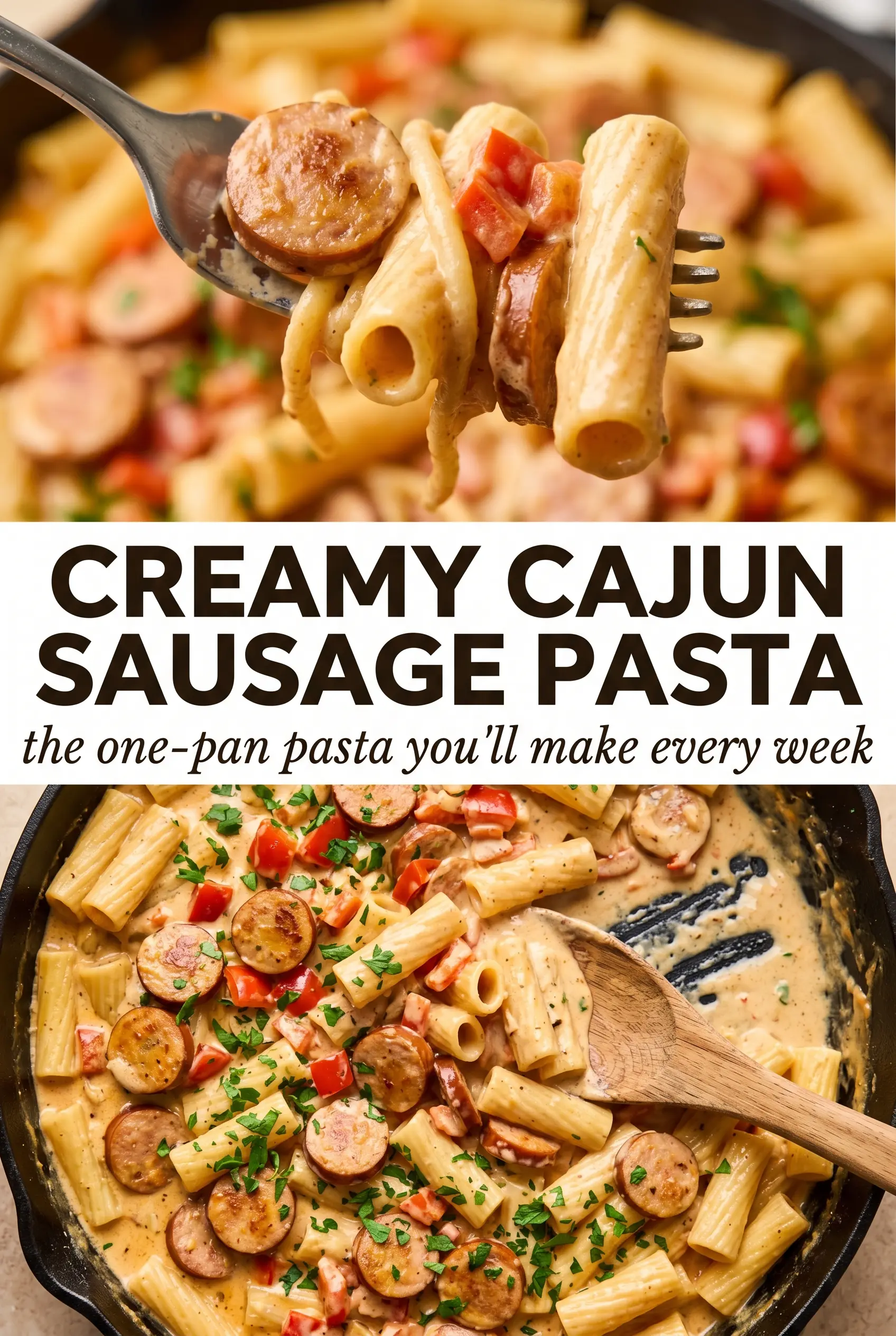
Pour in the broth and cream, then let the sauce simmer until it looks slightly thickened and coats the back of a spoon. You’re not looking for a heavy Alfredo texture. It should still move in the pan, just a little slower than it did at the start. Stir in the parmesan, return the sausage, and toss in the pasta until every tube is painted brick red. If the sauce grabs too tightly, loosen it with a splash of pasta water and toss again.
Three Useful Ways to Adjust This Pasta
Make It Dairy-Free Without Losing the Body
Use full-fat coconut milk or an unsweetened cashew cream in place of the heavy cream, then skip the parmesan or use a dairy-free parmesan alternative. The sauce will be slightly less rich and a little softer in flavor, but it still clings well if you keep the simmer gentle and let it reduce before adding the pasta.
Swap the Pasta for a Gluten-Free Version
Use a sturdy gluten-free penne and cook it just to al dente, since it softens fast once it hits the sauce. Save extra pasta water if your brand releases less starch, or use a little of the cooking liquid plus a splash of broth to loosen the pan at the end.
Turn It Into a Lighter Veggie-Heavy Dinner
Cut the sausage back to 8 ounces and add mushrooms or extra bell peppers with the onions. You’ll still get the smoky Cajun base, but the dish eats a little lighter and stretches farther without feeling skimpy. The mushrooms also pick up the browned bits in the pan nicely, which helps make up for the smaller amount of sausage.
Storage and Reheating
- Refrigerator: Store leftovers in an airtight container for up to 4 days. The pasta will absorb some of the sauce as it sits, so expect a thicker texture the next day.
- Freezer: It freezes, but the cream sauce can separate a bit when thawed. If you do freeze it, cool it completely, portion it tightly, and thaw overnight in the fridge.
- Reheating: Warm it slowly in a skillet over low heat with a splash of broth, cream, or water. High heat is the fastest way to break the sauce and dry out the pasta, so stir often and stop as soon as it turns creamy again.
The Questions People Ask Before Making Cajun Sausage Pasta
Creamy Cajun Sausage Pasta
Ingredients
Equipment
Method
- Bring a large pot of salted water to a boil and cook the penne until al dente, about 10 minutes. Reserve 1/2 cup pasta water, then drain the pasta.
- Heat a large skillet over medium-high heat and cook the sliced sausage until browned on both sides, about 3–4 minutes. Remove the sausage to a plate and set aside.
- In the same pan, melt the butter over medium heat and cook the diced onion and bell pepper for 4 minutes. Add the minced garlic and Cajun seasoning and cook 1 more minute, stirring until fragrant.
- Pour in the chicken broth and heavy cream, then simmer for 4–5 minutes until slightly thickened. Stir in the parmesan until melted and smooth.
- Add the drained penne and the reserved sausage back to the skillet and toss to coat. Add reserved pasta water as needed to loosen the sauce, then serve topped with fresh parsley.