Tender rotini coated in a thick, tangy dressing is what makes a pasta salad worth going back for. This one doesn’t drape lightly over the noodles and leave the rest of the bowl dry; it clings to every ridge, so each bite gets the same creamy, salty, crunchy balance. The cheddar, olives, and peppers keep it from tasting flat, and the chilled finish gives it that classic picnic-style texture people expect from a good pasta salad.
The key here is cooking the pasta just past al dente and rinsing it well so it stops cooking and cools fast. That matters because warm pasta keeps drinking up dressing, and if you skip the rinse, the salad can turn gummy before it ever hits the table. The dressing also leans on both mayonnaise and sour cream, which gives it body without tasting heavy, while apple cider vinegar and mustard keep the whole bowl bright enough to stand up to a barbecue plate.
Below, I’ve included the little details that keep this salad creamy after chilling, plus a few practical swaps if you need to work with what’s already in the fridge.
The dressing thickened up exactly right after chilling, and the extra mayo before serving brought it back to that creamy texture without making it soupy. My husband kept sneaking forkfuls straight from the bowl.
Creamy Pasta Salad with the tangy dressing and chilled texture that make every bite taste like the best part of a cookout spread.
The Secret to Creamy Pasta Salad That Stays Creamy After Chilling
The mistake that ruins most pasta salad is assuming the dressing can handle the fridge without help. It can’t, not if you want the bowl to stay luscious instead of stiff and dry. Pasta keeps soaking up moisture as it sits, which is why a salad that tastes perfect at the sink can look sad an hour later.
This version works because the dressing starts thicker than you think it needs to be. Mayo gives it body, sour cream softens the richness, and vinegar keeps it from tasting heavy. Then the extra stir of mayonnaise right before serving restores that just-made texture after the pasta has absorbed the first round of dressing.
- Cook the pasta slightly past al dente — It should still hold its shape, but the center should be fully tender. Under-cooked pasta firms up as it chills and turns the salad chewy.
- Rinse until completely cool — That stops the cooking fast and washes away surface starch, which is what makes the dressing slide instead of clump.
- Dress a cold bowl of pasta — If the pasta is even a little warm, it drinks up the dressing too quickly and leaves the salad looking dry the next day.
What Each Ingredient Is Actually Doing in This Pasta Salad
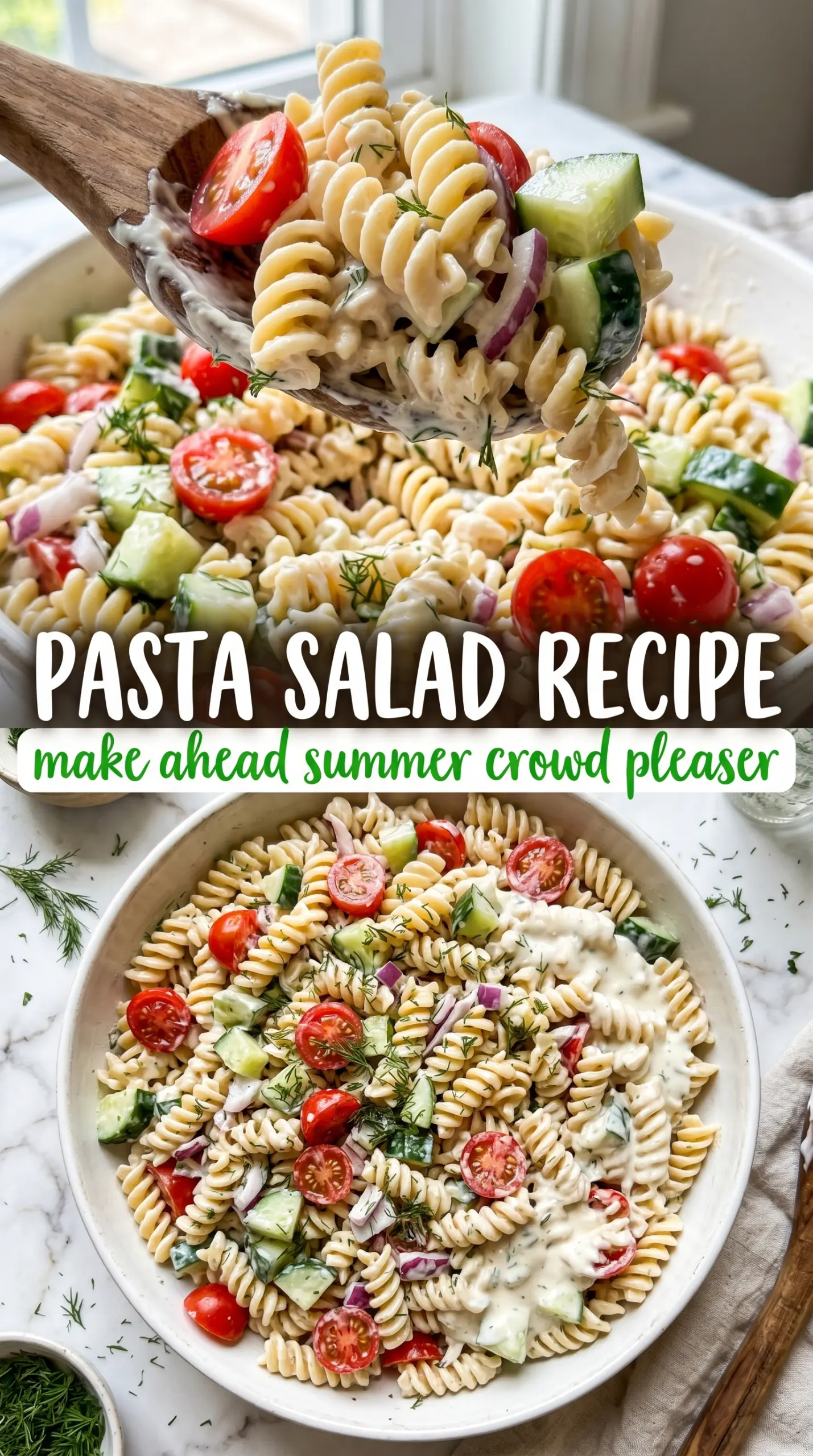
Mayonnaise is the backbone of the dressing. Use a brand you like straight from the jar, because its flavor comes through plainly here. If you swap in a lower-fat version, expect a looser dressing and a less plush finish.
Sour cream adds tang and keeps the mayo from tasting one-note. Plain Greek yogurt works in a pinch, but it gives the salad a sharper edge and a slightly thinner coating.
Apple cider vinegar and yellow mustard are what keep the salad awake. The vinegar cuts through the richness, and the mustard gives the dressing that familiar picnic-salad bite. Don’t skip either one unless you want a flatter, sweeter bowl.
Rotini or elbow macaroni both hold dressing well, but rotini gives you more surface area and catches the little bits of pepper, onion, and cheese in the curves. If you only have macaroni, it still works; just be a little more generous with the dressing.
Cheddar, celery, bell peppers, olives, and red onion give the salad its crunch and color. Dice everything small so every forkful has a little of each. Large chunks make the salad feel scattered instead of cohesive.
Building the Bowl So the Dressing Clings to Every Piece
Cooking the Pasta Past the Bare Minimum
Boil the pasta in well-salted water until it’s just beyond al dente, then drain it immediately. You want it tender enough to eat cold, not firm in the center. Once it’s drained, rinse it under cold water until it’s no longer warm anywhere; if you leave even a little heat in the pasta, it keeps softening and the dressing won’t sit on top the way it should.
Whisking the Dressing Until It’s Smooth
Combine the mayonnaise, sour cream, vinegar, mustard, sugar, garlic powder, onion powder, salt, and pepper in a large bowl and whisk until there are no streaks. The sugar won’t make this sweet; it rounds out the vinegar and sharp mustard so the dressing tastes balanced instead of harsh. If the dressing looks broken or grainy, the ingredients were too cold and needed a few more seconds of whisking before the pasta went in.
Tossing and Chilling for the Right Texture
Add the cooled pasta, vegetables, olives, and cheddar, then fold everything until every piece is coated. The salad should look a little too glossy at this stage, because the pasta will absorb some dressing as it chills. Refrigerate it for at least an hour, then stir again before serving; if it looks dry, loosen it with 2 to 3 tablespoons of mayonnaise and a small pinch of salt.
How to Adapt This for Different Tables and Pantry Situations
Dairy-Free Version That Still Tastes Creamy
Use a dairy-free mayonnaise and replace the sour cream with an unsweetened dairy-free yogurt or more mayo plus a little extra vinegar. You’ll lose a touch of the tangy dairy flavor, but the salad still lands in the same creamy, spoonable place.
Make It Gluten-Free Without Changing the Structure
Use a sturdy gluten-free pasta shape that holds its texture when chilled, then rinse it well and cool it completely before mixing. Some gluten-free pastas soften faster after sitting, so dress it a little more lightly at first and refresh it right before serving.
Swap the Cheddar for a Brighter Finish
If you want a sharper bite, use diced pepper jack or cubed Swiss instead of shredded cheddar. Pepper jack adds heat and keeps the salad from feeling too mellow, while Swiss gives a cleaner, less salty finish.
Storage and Reheating
- Refrigerator: Store covered for up to 4 days. The pasta will absorb some dressing, so the salad gets a little thicker by day two.
- Freezer: Don’t freeze it. The mayonnaise and sour cream separate when thawed, and the vegetables lose their crisp bite.
- Reheating: Serve this cold. If it’s been in the fridge for a while, let it sit at room temperature for 10 to 15 minutes and stir in a spoonful of mayo if the dressing has tightened up too much.
Answers to the Questions Worth Asking
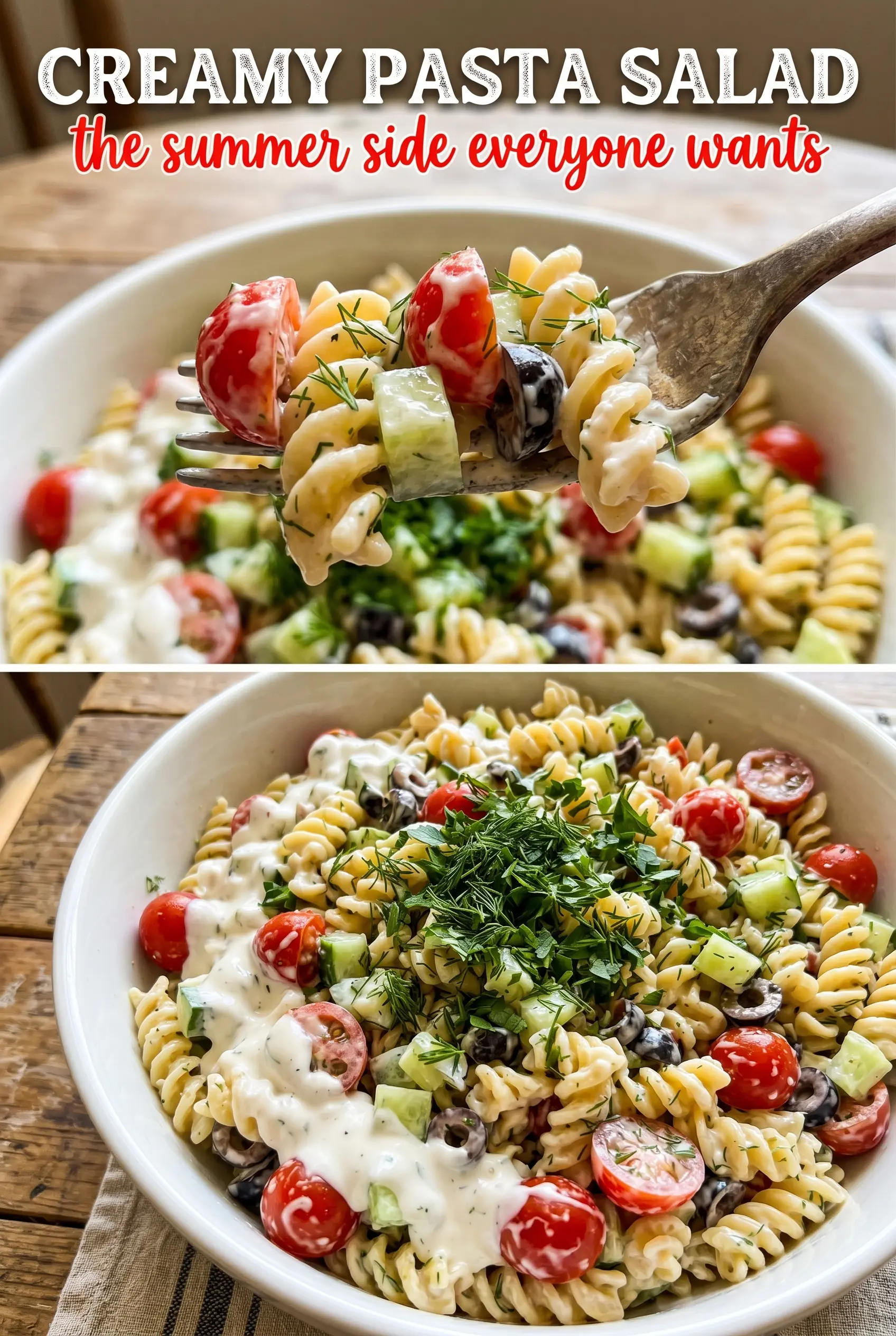
Creamy Pasta Salad
Ingredients
Equipment
Method
- Cook the rotini in well-salted boiling water until just past al dente, then drain.
- Rinse the drained pasta with cold water until completely cooled, then drain well.
- Whisk together mayonnaise, sour cream, apple cider vinegar, mustard, sugar, garlic powder, onion powder, salt, and pepper until smooth.
- Combine the cooled pasta with red bell pepper, green bell pepper, black olives, red onion, celery, and cheddar in a large bowl.
- Pour the dressing over the pasta and toss until everything is evenly coated.
- Refrigerate for at least 1 hour so the pasta absorbs the dressing.
- If the pasta looks dry after chilling, stir in 2–3 tablespoons extra mayonnaise before serving.
- Dust with paprika just before serving for a bright top note.