Velvety queso rice topped with seared steak strips is the kind of dinner that disappears fast because every bite hits creamy, smoky, and savory at once. The rice turns rich without getting soupy, and the steak brings the sharp contrast it needs: browned edges, tender slices, and just enough spice to keep each forkful interesting.
What makes this version work is timing. The rice cooks with onion, garlic, and Rotel so the base already has depth before the cheese goes in, and the steak gets its own hard sear in a separate pan so it stays juicy instead of steaming in the skillet. Velveeta gives the rice that smooth melt people expect from queso, while cheddar adds a little more bite and sour cream rounds everything out.
You’ll find the small things that matter below, like how to keep the rice creamy instead of gluey, how to slice the steak so it stays tender, and what to swap if you need a lighter or gluten-free version.
The rice stayed creamy all the way through and the steak sliced up tender after a quick rest. I loved how the Rotel and queso cheese made the bowl taste like a restaurant meal without needing a bunch of extra steps.
Save this creamy queso rice with steak strips for the nights when you want a Tex-Mex bowl with melty rice, smoky steak, and almost no cleanup.
The Rice Goes Creamy Only If You Add the Cheese at the Right Moment
The mistake most people make with queso rice is boiling the cheese hard or stirring it in before the rice is fully tender. That’s when you get a grainy sauce or a pan that looks creamy for thirty seconds and then tightens up. The rice needs to finish cooking first, with the lid on and the heat low enough that the liquid stays calm instead of sloshing around.
Once the rice is tender, pull the pan off the heat before adding the Velveeta, cheddar, and sour cream. Residual heat melts everything without breaking the sauce, and that gentler finish is what gives you a bowl that stays silky instead of greasy. If it looks a little loose at first, give it a minute. Rice keeps absorbing as it sits.
What Each Ingredient Is Doing in the Bowl

- Flank or skirt steak — Either cut works because both sear fast and slice beautifully against the grain. Skirt is a little richer and more dramatic in texture, while flank is a touch leaner and easier to portion. Don’t overcook either one; medium-rare to medium keeps the strips tender.
- Long-grain white rice — This matters more than it sounds like it should. Long-grain stays separate enough to absorb the queso without turning pasty, which is exactly what you want in a bowl like this. Short-grain rice goes too sticky here.
- Rotel — The tomatoes and green chiles season the rice from the inside out. Using it undrained gives the pan the moisture it needs and keeps the dish from tasting flat. If you need a milder version, use mild Rotel or canned diced tomatoes with a few spoonfuls of mild green chiles.
- Velveeta, cheddar, and sour cream — Velveeta gives you the smooth melt, cheddar adds a sharper cheese note, and sour cream keeps the finish creamy instead of heavy. If you swap out the processed cheese for all cheddar, expect a thicker, less silky sauce that can turn grainy if overheated.
Building the Bowl in Two Pans So Nothing Gets Tough
Seasoning the Steak First
Coat the steak with salt, pepper, cumin, smoked paprika, and garlic powder, then let it sit while you start the rice. That short rest gives the seasoning time to cling and helps the meat lose its cold edge, which matters when you hit a hot skillet. If the steak goes in ice-cold, it tends to steam before it sears.
Cooking the Rice Base
Sauté the onion until it turns translucent and sweet, then add the garlic for just a minute so it doesn’t burn. Toasting the rice in the pan before the broth goes in gives it a faint nutty edge and helps the grains stay separate. Once the liquid is added, bring it up to a boil, then drop it low and cover it. If you keep it bubbling, the bottom can scorch before the top layer cooks through.
Melting the Queso Cleanly
When the rice is tender and the liquid is absorbed, stir in the cheeses and sour cream off the heat. The mixture should turn glossy and creamy within a minute or two. If the rice seems tight, add a splash of warm broth rather than cranking the heat, because high heat is what makes cheese sauce break.
Searing and Slicing the Steak
Use a hot cast iron skillet and don’t crowd the pan. You want a deep brown crust, not gray meat sitting in its own juices, so give each side 3 to 4 minutes depending on thickness. Rest the steak for 5 minutes before slicing, then cut thinly against the grain. If the strips chew too hard, they were sliced with the grain or cooked too far past medium.
How to Adapt This Bowl Without Losing the Creamy Finish
Make it gluten-free without changing the texture
This recipe is naturally close to gluten-free as written, but the labels on broth and processed cheese matter. Use a certified gluten-free broth and check the cheese packaging if cross-contact is a concern. The texture stays the same because the creaminess comes from the cheese and sour cream, not flour.
Swap the steak for chicken or shrimp
Thin-sliced chicken breast or thighs work well if you want a lighter bowl, and shrimp cooks even faster. The tradeoff is that neither one gives you the same beefy sear, so you’ll want to lean a little harder on the cumin and smoked paprika. Shrimp should be cooked just until opaque or it turns rubbery fast.
Make it spicier without drowning out the queso
Add sliced jalapeños to the onion while it cooks, or stir in a pinch of cayenne with the steak seasoning. That builds heat into the whole bowl instead of dumping raw spice on top at the end. If you want more heat without more burn, keep the seeds out and serve extra jalapeños at the table.
Use a dairy-free shortcut when needed
Dairy-free cheese alternatives can work, but they won’t melt as smoothly as Velveeta, so expect a looser, less glossy sauce. Use a plain unsweetened dairy-free sour cream and add it off the heat at the end. The bowl still works, but it loses some of that classic queso silkiness.
Storage and Reheating
- Refrigerator: Store the rice and steak separately in airtight containers for up to 3 days. The rice will thicken as it chills, which is normal.
- Freezer: The steak freezes well, but the queso rice loses some of its creamy texture after thawing. If you freeze it, do it in portions and expect to stir in a splash of broth when reheating.
- Reheating: Warm the rice gently on the stove or in the microwave with a spoonful of broth or water to loosen it. Reheat the steak separately just until warmed through so it doesn’t turn dry and chewy.
Questions I Get Asked About This Recipe
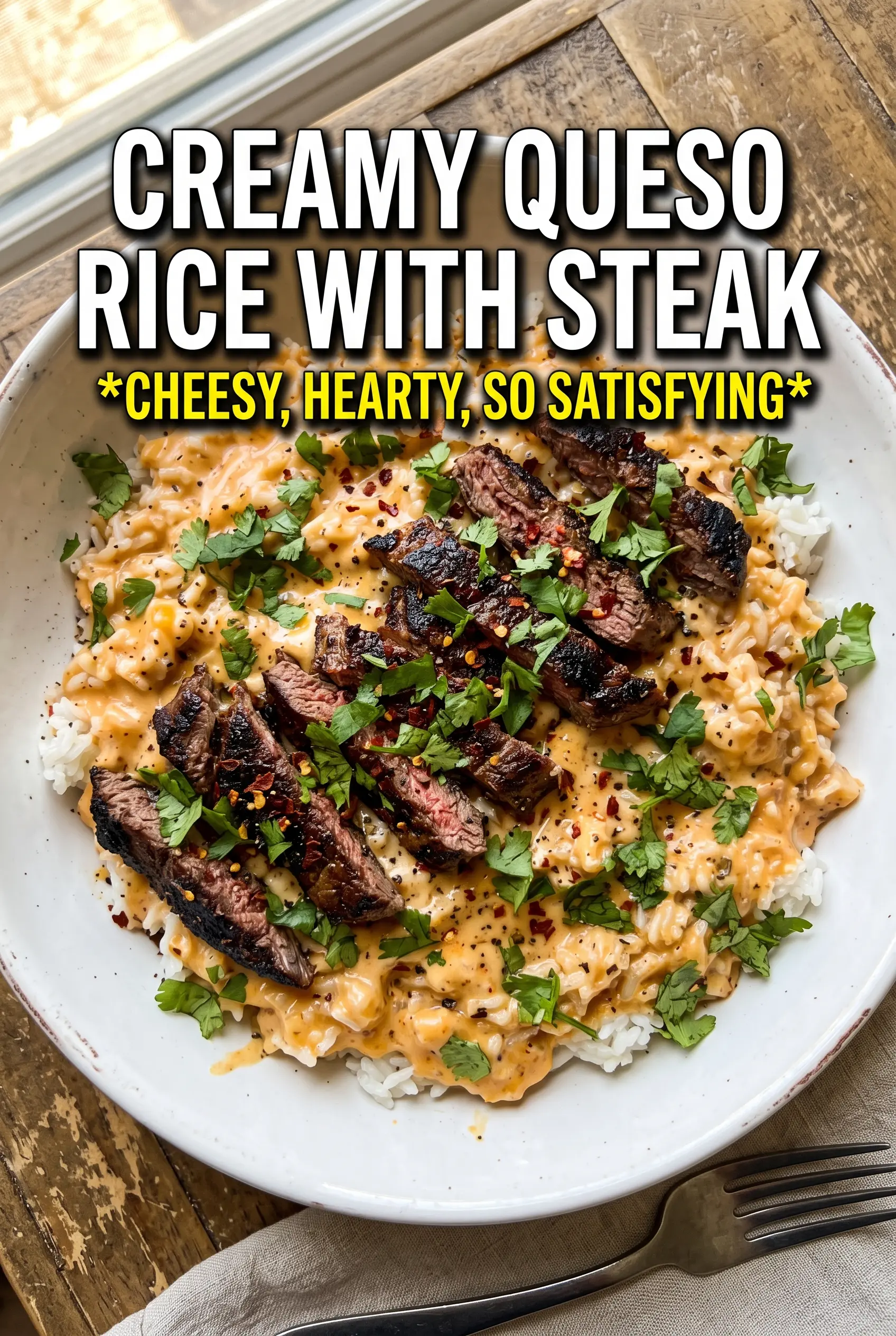
Creamy Queso Rice with Steak Strips
Ingredients
Equipment
Method
- Season the steak with salt, pepper, cumin, smoked paprika, and garlic powder, then let it rest at room temperature for 15 minutes.
- Pat off any excess seasoning crumbs so the steak can sear evenly.
- Heat olive oil in a large saucepan over medium heat and sauté diced onion for 3 minutes, until softened.
- Add the minced garlic and cook for 1 minute, stirring, until fragrant.
- Stir in the uncooked long-grain white rice and toast for 2 minutes, until the grains look slightly opaque.
- Add chicken broth and the undrained Rotel, then bring to a boil.
- Reduce heat to low, cover, and simmer for 18-20 minutes until the rice is tender and the liquid is absorbed.
- Stir Velveeta, shredded cheddar, and sour cream into the hot rice until fully melted and creamy.
- Sear the steak in a hot cast iron skillet over high heat for 3-4 minutes per side for medium-rare.
- Rest the steak for 5 minutes, then slice thin against the grain.
- Serve the creamy queso rice in bowls and top with steak strips, sliced jalapeño, cilantro, and lime wedges.