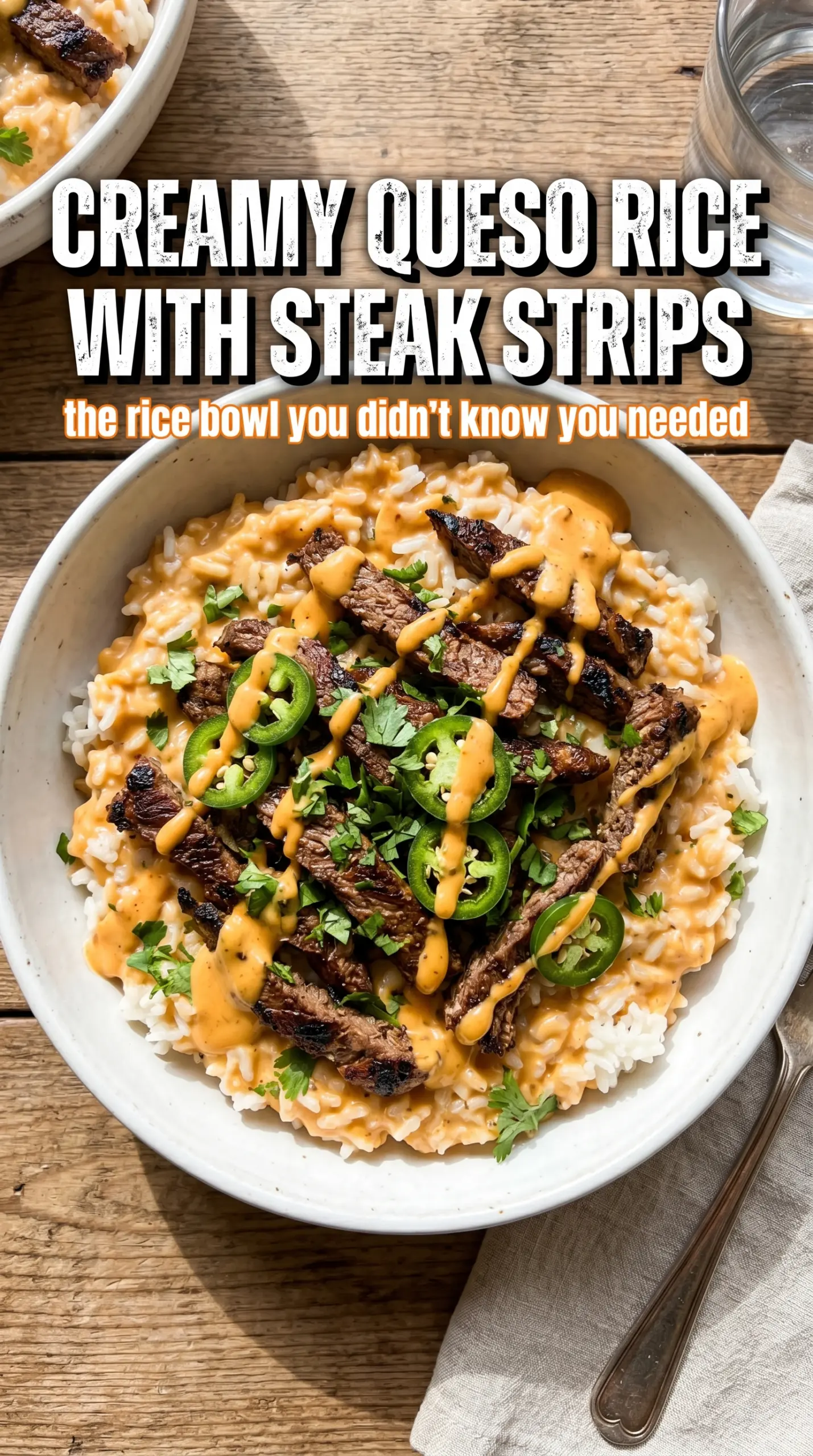
Creamy queso rice with steak strips hits that sweet spot between comfort food and restaurant-style bowl dinner. The rice turns velvety and rich without going heavy, and the seared steak gives every bite a little char and bite back. Then the pico de gallo and jalapeños cut through the cheese so the bowl stays bright instead of muddy.
What makes this version work is the order. The steak gets a fast high-heat sear first, then the queso comes together on the side so it stays smooth. The rice gets tossed while the sauce is hot and loose enough to coat every grain, which matters more than people think. If the rice sits too long before serving, it grabs onto the sauce and can turn pasty instead of creamy.
Below, I’ve included the small details that keep the queso smooth, plus a few smart swaps if you want to use a different cut of beef or lighten the bowl a little. This is one of those dinners that looks like it took more effort than it did, which is exactly why it gets repeated in my kitchen.
The queso stayed smooth and coated the rice instead of clumping up, and the steak strips came out with a nice crust in just a few minutes. My husband kept going back for “just one more spoonful” until the bowl was empty.
Creamy queso rice with steak strips belongs in your dinner rotation for nights when you want a bowl that’s bold, cheesy, and fast.
The Sear and Sauce Have to Stay Separate Until the Last Minute
Steak strips go wrong when they’re crowded or held too long after cooking. Thin slices need a ripping-hot pan and a short window in the skillet so they brown before they overcook. If you leave them in the pan while you build the queso, the meat keeps going and ends up dry by the time the bowls hit the table.
The same logic applies to the rice. The queso should be smooth and loose when it meets the rice, because the grains will absorb some of it as soon as they’re tossed together. If the sauce looks thick in the saucepan, it’s already too thick for this dish and will cling instead of coat. Pull it off the heat while it still pours in a slow ribbon.
What Each Ingredient Is Actually Doing in This Bowl
- Sirloin steak — This cut stays tender enough for quick searing and still gives you enough beef flavor to stand up to the queso. Flank or skirt steak also works if you slice it thin against the grain. If you use a tougher cut, the short cook time won’t soften it.
- Long-grain white rice — Long-grain rice holds its shape better than short-grain rice, so the bowl stays fluffy under the sauce instead of turning dense. Day-old rice works fine and even helps if you want a drier, less sticky finish. Just warm it before tossing so the queso spreads evenly.
- Velveeta or processed cheese — This is what keeps the queso smooth. Real shredded cheese can work, but it’s much easier to break if the heat runs too high. If you swap it, add it off the heat and stir constantly, but expect a less silky result.
- Rotel tomatoes with green chiles — These bring salt, acidity, and just enough heat to keep the cheese from tasting flat. Drain them lightly if you want a thicker queso, but don’t rinse them or you’ll lose the flavor that cuts through all the richness.
- Whole milk — The fat content helps the sauce stay creamy. Lower-fat milk can work in a pinch, but the sauce will be thinner and less forgiving. If that’s what you have, reduce the milk slightly and keep the heat gentle.
- Cumin and chili powder — These season the steak before it hits the pan, so the spice flavor clings to the meat instead of getting lost in the bowl. They don’t need long marinating time. Five minutes while the skillet heats is enough.
Building the Bowl Without Breaking the Queso
Seasoning the Steak First
Toss the steak strips with cumin, chili powder, salt, and black pepper until every piece looks lightly coated. The spices should cling to the meat, not sit in a dry pile at the bottom of the bowl. If the steak is wet, pat it dry first so it sears instead of steaming. This is the difference between a browned edge and gray meat.
Getting a Real Sear
Heat the olive oil in a cast iron skillet over high heat until it shimmers, then lay the steak in a single layer. You should hear an immediate sizzle. Leave the strips alone long enough to pick up color, then flip or stir just once or twice. If the pan is crowded, cook in batches; otherwise the steak releases juice and loses the crust you’re after.
Making the Queso Smooth
Melt the butter in a saucepan over medium heat, add the garlic, and cook until fragrant but not browned. Pour in the milk and bring it to a gentle simmer, then lower the heat before adding the cheese. Stir constantly as the Velveeta melts, then add the Rotel and keep stirring until the sauce looks glossy and even. High heat is what makes cheese tighten up or separate, so keep the simmer gentle.
Tossing the Rice at the Right Time
Add the cooked rice to the queso while the sauce is still loose enough to flow. Stir until every grain is coated and the bowl looks creamy instead of soupy. If the rice seems a little stiff, let it sit in the sauce for a minute off the heat before serving. That brief pause helps the rice absorb just enough of the queso without turning heavy.
Finishing the Bowls
Spoon the queso rice into bowls and top with the steak strips, pico de gallo, cilantro, and jalapeños. The cold toppings matter because they give the bowl lift and texture. If you skip them, the dish tastes one-note. Add an extra drizzle of queso only after the toppings go on so the whole bowl stays visible and inviting.
How to Adapt This for Different Kitchens and Different Appetites
Gluten-Free Without Changing the Bowl
This recipe is naturally gluten-free as long as your processed cheese and Rotel are certified or labeled gluten-free. The texture and flavor stay the same, so this is one of the easier dinners to keep family-friendly without changing a thing.
Make It Spicier Without Ruining the Cheese
Use hot Rotel, add sliced jalapeños to the queso, or finish the bowls with a little hot sauce. Add heat in layers instead of dumping in a lot at the end, because too much can make the cheese taste sharp instead of rich.
Swap the Steak for Chicken or Shrimp
Thin chicken cutlets or peeled shrimp work well if you want a different protein. Chicken needs a few extra minutes to cook through, while shrimp should go in a hot pan and come off as soon as they turn opaque. The bowl still works, but you’ll lose a little of the beefy contrast against the queso.
Storage and Reheating
- Refrigerator: Store the rice and steak separately in airtight containers for up to 3 days. The queso will thicken as it chills.
- Freezer: The steak and rice can be frozen, but the queso doesn’t freeze well because it can turn grainy when thawed. Freeze the components without the sauce if you want to plan ahead.
- Reheating: Warm the rice and steak gently in the microwave or in a skillet with a splash of milk, then make fresh queso if possible. If reheating leftover queso, use low heat and stir often; high heat is what causes it to break.
Questions I Get Asked About This Recipe
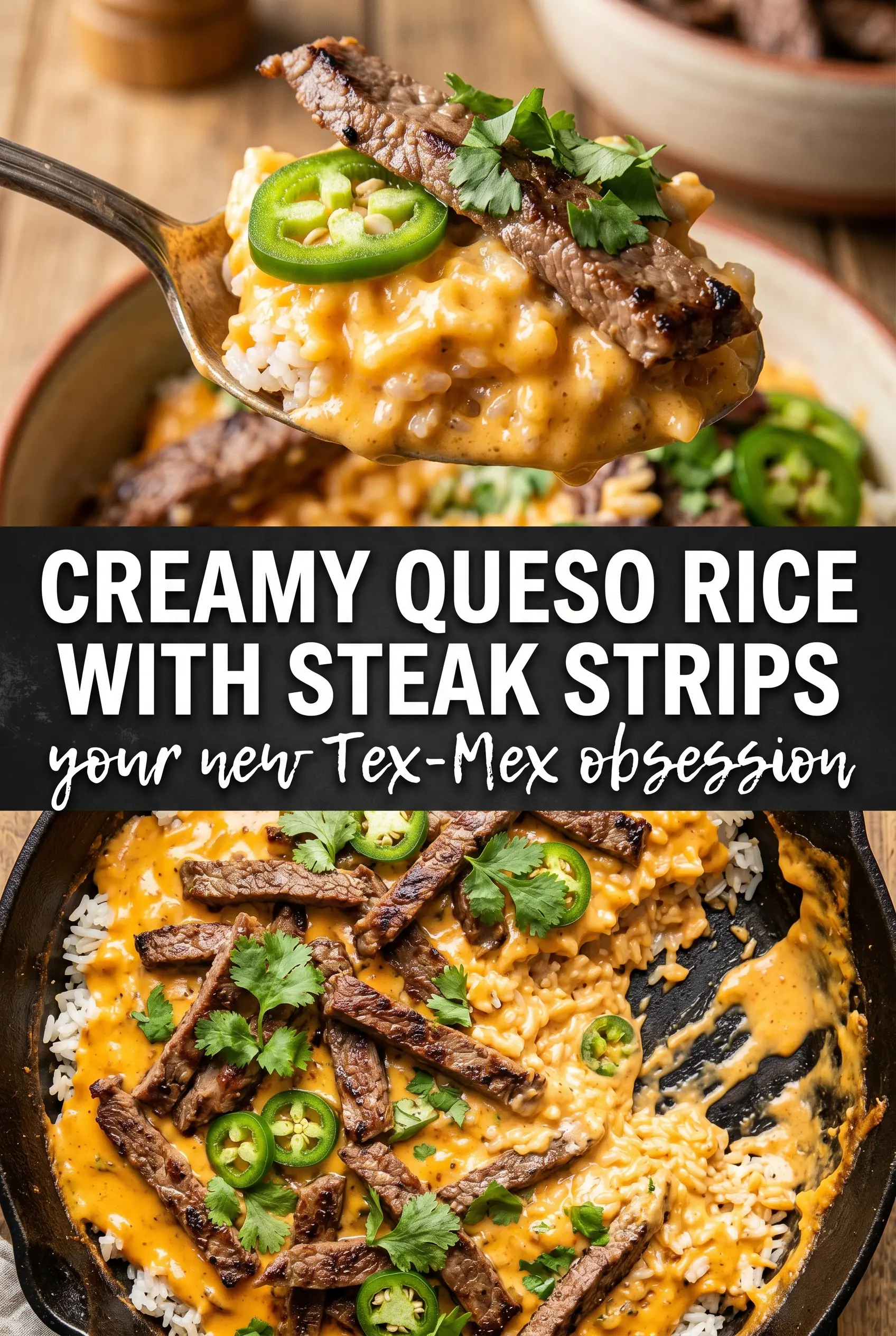
Creamy Queso Rice with Steak Strips
Ingredients
Equipment
Method
- Season the steak strips with cumin, chili powder, salt, and black pepper.
- Heat olive oil in a cast iron skillet over high heat, then sear the steak strips for 2–3 minutes until browned and cooked to your desired doneness; set aside.
- Melt butter in a saucepan over medium heat, add minced garlic, and cook for 1 minute, until fragrant.
- Add whole milk and bring it to a gentle simmer, then keep the heat at a steady low simmer.
- Add cubed Velveeta and Rotel and stir constantly until the cheese is fully melted and the queso is smooth.
- Toss the cooked rice with the queso sauce until evenly coated and creamy, with glossy queso clinging to the grains.
- Divide queso rice into bowls and top with seared steak strips, pico de gallo, cilantro, and jalapeños.