Crispy baked pork chops hit that sweet spot where the crust crackles when you cut in, but the meat underneath stays juicy and tender. The panko coating bakes up shatteringly crisp, and a quick blast of olive oil on the outside gives you the kind of golden finish people usually think only comes from frying.
What makes this version work is the wire rack. It keeps the chops lifted so the bottom never steams against the pan, which is the fastest way to lose that crunchy coating. The other key is pressing the panko on firmly enough that it actually stays put through baking instead of falling off the first time you move the pan.
Below, I’ve laid out the small details that matter here: how to keep the breading from sliding, which chop thickness gives the best texture, and what to do if you want the crunch even deeper. Those little things make the difference between decent baked pork chops and the kind you’ll want to make again next week.
The panko stayed on beautifully and the chops came out crisp all over, even on the bottom. I checked them at 18 minutes and they were juicy with a deep golden crust, not dried out at all.
Save these crispy baked pork chops for the nights when you want a shatteringly crunchy crust without frying.
The Reason the Coating Stays Crunchy Instead of Going Soft
The biggest mistake with baked breaded pork chops is letting them sit directly on a pan. As the chops cook, the underside traps steam, and that steam softens the breading before it has a chance to crisp. A wire rack fixes that by letting hot air move all around the pork, which is exactly what gives you an even, dry crunch instead of a soggy bottom.
The second piece is the sequence of the coating. Flour gives the egg something to cling to, egg gives the panko a sticky surface, and the panko is what turns into that crisp shell in the oven. If the chops look patchy after breading, press the crumbs on again with your palm before they go into the oven. That little bit of pressure matters more than people think.
What the Panko, Seasonings, and Pork Chops Are Each Doing

- Boneless pork chops — A 3/4-inch chop is the sweet spot here. Thin chops dry out before the crust gets deeply golden, and much thicker chops need longer in the oven, which can overcook the coating before the center is done. If your chops are thicker, use a thermometer and bake a little longer rather than guessing.
- Panko breadcrumbs — Panko is what gives you the light, jagged crunch. Regular breadcrumbs turn denser and finer, so the crust won’t shatter the same way. If you need gluten-free, use gluten-free panko and keep everything else the same.
- Flour and egg — This is the glue system. Skipping the flour layer often leads to bald spots where the breading slips off, especially when you move the chops to the rack. Season the flour well so the flavor gets all the way down to the meat, not just the crust.
- Garlic powder, smoked paprika, and Italian seasoning — These season the coating from the inside out. Garlic powder gives depth without burning, smoked paprika adds color and a little warmth, and Italian seasoning keeps the crust from tasting flat. Fresh herbs don’t work as well here because they can scorch in the oven.
- Olive oil spray — This helps the panko brown and crisp instead of looking dry and pale. A light, even coating is enough; if you soak the crumbs, they can get heavy. Spray both sides so the crust colors evenly.
Building the Crust So It Stays Put in the Oven
Season the flour first
Start with the flour seasoned with salt and pepper, because that’s the first layer the pork touches. It should taste seasoned on its own, not bland, or the finished crust will only taste like crumbs on the outside. Shake off the excess flour after dredging; too much flour turns gummy once the egg hits it.
Press the panko on with intention
After the egg, press each chop into the panko mixture and use your fingers to pack the crumbs onto the surface. You want a full, even coat with no wet spots showing through. If the crumbs look loose, they’ll fall off in the oven, especially around the edges, so give the chops one last firm press before moving them to the rack.
Bake hot, then check early
Put the chops into a hot 425°F oven so the coating starts crisping right away. At 18 minutes, check the internal temperature in the thickest part; 145°F is the target for juicy pork. If the crust is already deep golden and the pork is there, pull them immediately, because overbaking is what turns a good chop dry.
Serve while the crust is at its peak
These need to hit the table right away. The crust is at its best in the first few minutes after baking, while it’s still crackly and crisp. A squeeze of lemon brightens the seasoning and cuts through the richness without softening the breading.
How to Adapt These Pork Chops Without Losing the Crunch
Gluten-Free Crunch
Swap in gluten-free flour and gluten-free panko. The texture stays close to the original as long as you still use a fine coating of flour under the egg and press the crumbs on firmly. Rice-based panko usually gives the best crisp finish.
Extra-Herby Coating
Add a little grated Parmesan and a pinch of dried thyme to the panko if you want a more savory crust. Parmesan browns fast, so keep an eye on the last few minutes in the oven. The result is a saltier, richer crust that still keeps the same crisp structure.
Using Bone-In Chops
Bone-in chops work, but they usually need a few more minutes in the oven and sometimes a slightly lower heat if the coating is browning too fast. The bone helps the meat stay juicy, but the chop may cook unevenly if it’s much thicker than 3/4 inch. Start checking temperature early and pull them as soon as they hit 145°F.
Storage and Reheating
- Refrigerator: Store leftovers in an airtight container for up to 3 days. The crust softens in the fridge, but it can crisp back up in the oven.
- Freezer: You can freeze the cooked chops, but the coating won’t be as crisp after thawing. Freeze on a sheet pan first, then wrap tightly and store for up to 2 months.
- Reheating: Reheat on a wire rack in a 375°F oven until hot and re-crisped. Don’t use the microwave if you want the crust to stay crunchy, because it steams the breading and turns it soft fast.
Questions I Get Asked About This Recipe
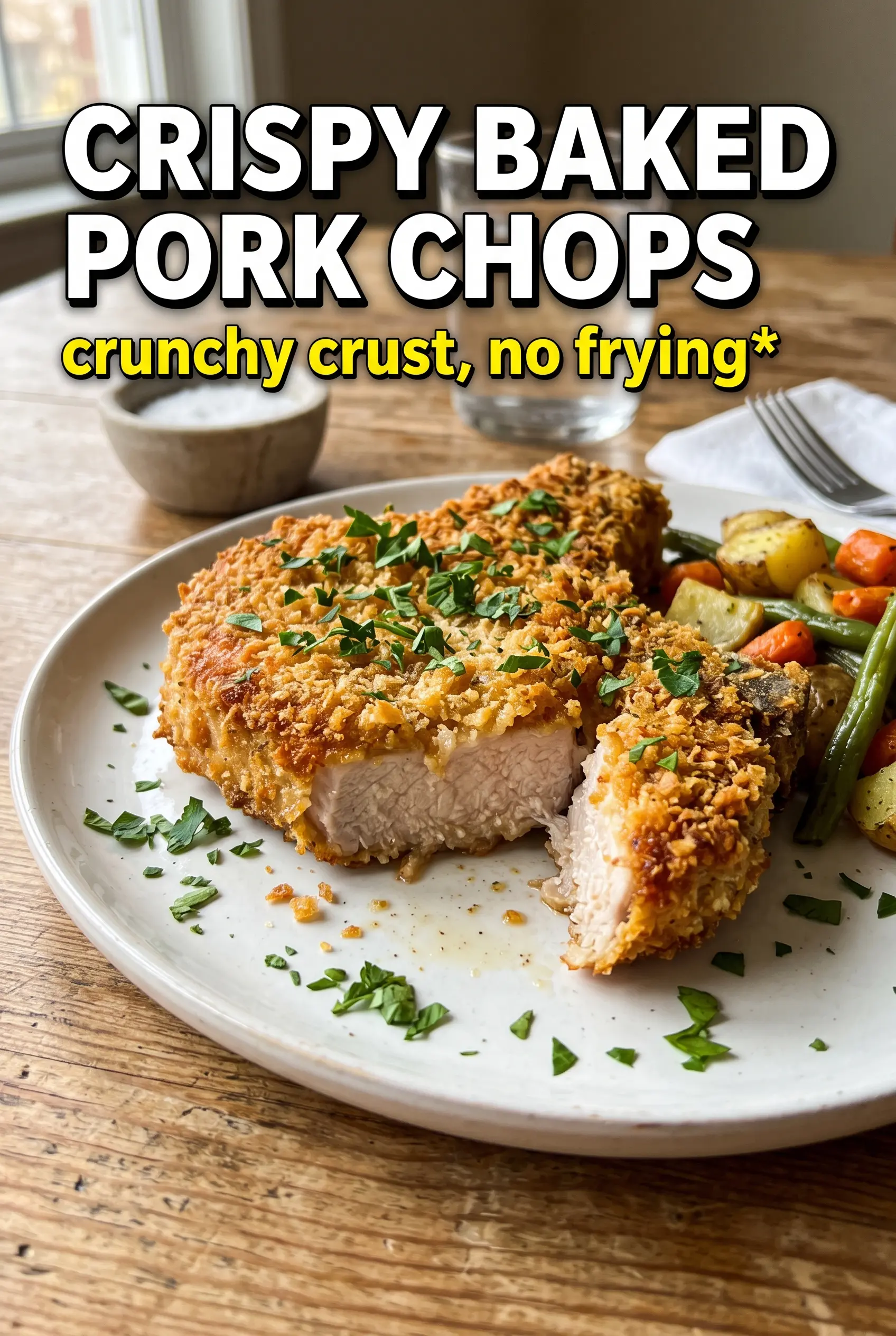
Crispy Baked Pork Chops
Crispy baked pork chops with a panko coating that turns shatteringly golden in the oven—no frying required. Oven-fried style breaded baked pork chops stay crunchy thanks to a wire-rack bake and a firm panko press.
Ingredients
Equipment
Method
Preheat and set up- Preheat the oven to 425°F and place a wire rack over a baking sheet, so air can circulate under the pork.
- Set up three dishes: one with flour seasoned with salt and pepper, one with beaten eggs, and one with panko mixed with garlic powder, smoked paprika, and Italian seasoning.
Bread the pork chops- Coat each pork chop in the seasoned flour, shaking off any excess so the egg layer stays even.
- Dip each floured pork chop into the beaten eggs, letting excess drip back into the dish.
- Press the panko mixture firmly onto both sides of each chop so the coating adheres and bakes into a crisp crust.
Bake until deeply golden- Place the breaded pork chops on the wire rack and spray generously with olive oil on both sides for better browning.
- Bake for 18–20 minutes at 425°F until the crust is deep golden brown and the pork reaches 145°F, with the rack helping keep it crunchy.
Serve- Serve immediately with lemon wedges for brightness against the crunchy panko crust.
Notes
For maximum crunch, press the panko firmly and bake on the wire rack rather than directly on the pan. Refrigerate leftovers in a sealed container for up to 3 days; re-crisp in a 425°F oven for 5–8 minutes. Freezing is not recommended because the coating texture softens after thawing. For a gluten-free option, swap the flour and panko with gluten-free versions (use certified gluten-free breadcrumbs).
Crispy Baked Pork Chops
Ingredients
Equipment
Method
- Preheat the oven to 425°F and place a wire rack over a baking sheet, so air can circulate under the pork.
- Set up three dishes: one with flour seasoned with salt and pepper, one with beaten eggs, and one with panko mixed with garlic powder, smoked paprika, and Italian seasoning.
- Coat each pork chop in the seasoned flour, shaking off any excess so the egg layer stays even.
- Dip each floured pork chop into the beaten eggs, letting excess drip back into the dish.
- Press the panko mixture firmly onto both sides of each chop so the coating adheres and bakes into a crisp crust.
- Place the breaded pork chops on the wire rack and spray generously with olive oil on both sides for better browning.
- Bake for 18–20 minutes at 425°F until the crust is deep golden brown and the pork reaches 145°F, with the rack helping keep it crunchy.
- Serve immediately with lemon wedges for brightness against the crunchy panko crust.