Golden roasted potatoes tossed in a spicy-sweet gochujang dressing have a way of disappearing before they ever reach the table. The potatoes stay crisp at the edges, the dressing clings instead of puddling, and the whole bowl lands somewhere between comforting and punchy in the best possible way. It works as a side dish for grilled meat, a potluck bowl that holds up on the buffet, or a make-ahead lunch that doesn’t turn soggy by noon.
The key is giving the potatoes a full roast before they meet the dressing. That dry, high-heat finish builds real texture, and the cooling time matters just as much because warm potatoes soak up the sauce differently than hot ones. The dressing itself is a little smart about balance: mayonnaise softens the heat, rice vinegar keeps it bright, and honey rounds out the edges without making it sweet in a dessert-like way.
Below you’ll find the timing that keeps the potatoes crisp, the ingredient swaps that still preserve the character of the dish, and a few practical answers for making it ahead without losing the contrast that makes it special.
The potatoes stayed crisp even after I tossed them in the sauce, and the gochujang-mayo dressing had just enough heat without overpowering the sesame and scallions.
Like this crispy gochujang potato salad? Save it to Pinterest for the side dish that brings crunch, heat, and sesame-scallion brightness to the table.
The Trick Is Roasting for Texture Before the Dressing Goes On
The mistake most potato salads make is starting with soft potatoes and expecting the sauce to carry the dish. That works for a creamy picnic salad, but not here. This version depends on contrast, so the potatoes need enough time in a hot oven to turn deeply golden and a little wrinkled at the edges. If they’re pale, the dressing slides off and the whole bowl tastes flat.
Spacing matters too. Crowded potatoes steam, and steaming is the enemy of crispness. Use a large sheet pan and turn them once halfway through so more sides touch the heat. The other piece people skip is cooling: warm potatoes absorb the dressing too aggressively and lose their edge, while fully cooled potatoes keep their shape and stay coated instead of soggy.
What Each Ingredient Is Doing in the Bowl
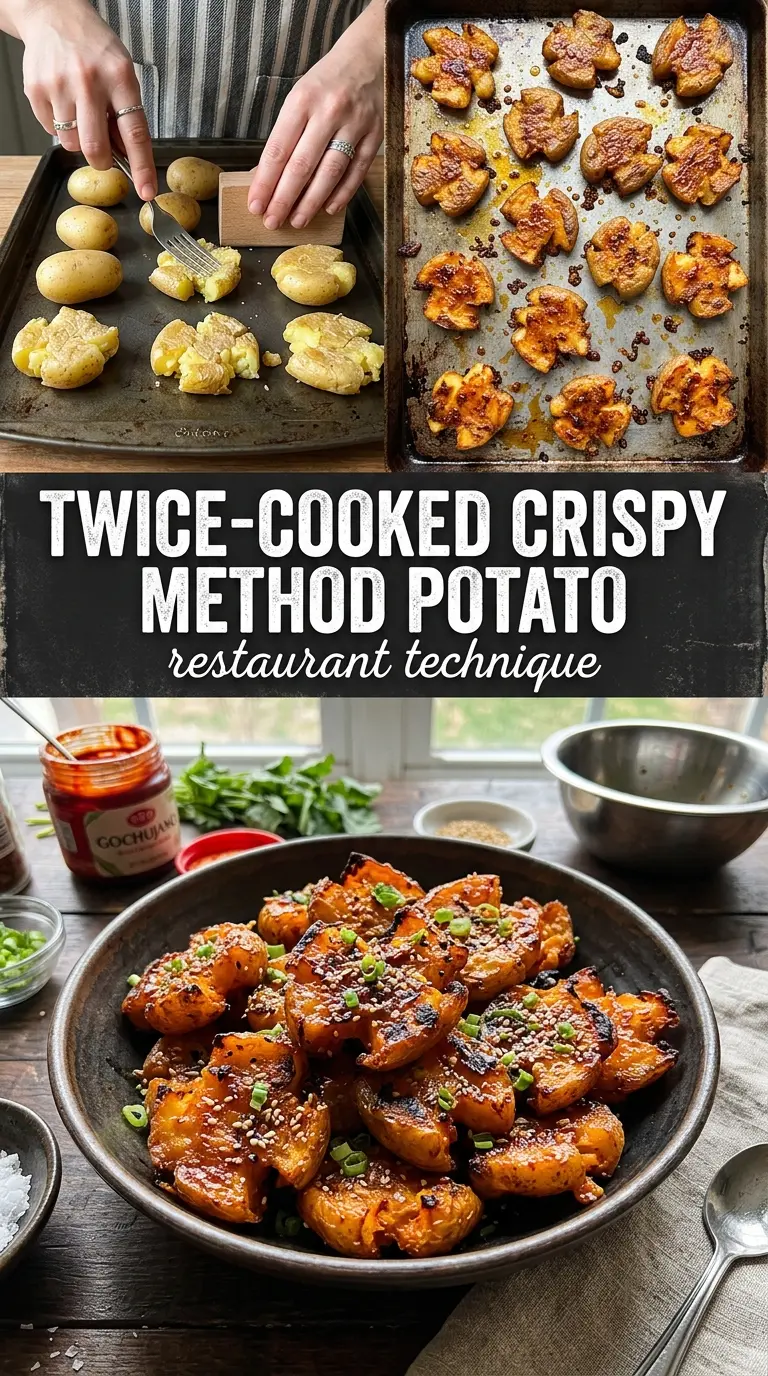
- Baby potatoes — Their thin skins crisp up well in a hot oven, and the halved cut gives you more surface area for browning. Waxy potatoes hold their shape better than starchy ones here, so don’t swap in russets unless you want a softer, more broken-up salad.
- Gochujang — This is the backbone of the dressing. It brings heat, fermented depth, and a little sweetness all at once, which is why a tiny amount goes a long way. There isn’t a clean substitute that tastes the same, but in a pinch you can blend miso with chili paste and a touch of honey for a similar savory-sweet effect.
- Mayonnaise — It softens the spice and gives the dressing the body it needs to cling to the potatoes. Greek yogurt can work if you want a tangier, lighter finish, but the sauce will be a little thinner and less glossy.
- Rice vinegar and honey — These two keep the dressing balanced. Vinegar sharpens the whole bowl, while honey rounds out the gochujang without making the salad sugary.
- Sesame oil, sesame seeds, and green onions — Sesame oil adds the nutty aroma that makes the dish read Korean-fusion instead of just spicy potato salad. The seeds add crunch, and the green onions bring freshness right at the end, so don’t bury them into the dressing too early.
Building the Roast-and-Toss So the Potatoes Stay Crisp
Season the potatoes before they hit the oven
Toss the halved potatoes with olive oil, salt, and pepper until every cut surface looks lightly coated. That thin film of oil is what helps the edges blister and brown instead of drying out. If the potatoes look damp or crowded together in a bowl, they’ll steam before they ever get a chance to crisp.
Roast until the edges are deeply colored
Slide the potatoes into a 425°F oven and roast them until the undersides are golden and the corners look crisp, usually 30 to 35 minutes. Halfway through, turn them so the same sides don’t stay pinned to the pan. If they come out blond, keep going; pale potatoes taste cooked, but they don’t give you the crunchy bite this salad needs.
Let them cool before mixing
This is the quiet step that changes everything. Let the potatoes cool for about 30 minutes so they’re warm, not hot, when the dressing goes on. Hot potatoes can turn the sauce greasy and overly absorbed, while cooled potatoes catch the coating and keep their structure.
Stir the dressing until it’s smooth
Whisk the gochujang, mayonnaise, rice vinegar, honey, and sesame oil until the mixture turns glossy and uniform. If it looks streaky, keep mixing before it touches the potatoes. A smooth dressing coats the potatoes evenly, while a clumpy one lands in pockets and tastes uneven.
Toss gently and finish at the table
Add the dressing to the cooled potatoes and fold until everything is evenly coated. Use a spatula or large spoon instead of rough stirring so the potatoes don’t break apart. Finish with sesame seeds and sliced green onions right before serving so the top stays bright and the texture stays lively.
How to Adapt This for a Milder Bowl, a Dairy-Free Plate, or a Bigger Crowd
Make it milder without losing the gochujang character
Use a smaller amount of gochujang and add a bit more mayonnaise and honey to soften the heat. You’ll keep the savory-fermented note, but the salad will read creamier and less sharp. This is the best move if you want the flavor to stay recognizable without the burn.
Swap in a dairy-free or egg-free dressing
Use a plant-based mayo and keep the rest of the dressing the same. The result is still rich enough to coat the potatoes, and the sesame oil carries most of the aroma anyway. Just taste before tossing, since some vegan mayos are a little saltier than regular ones.
Turn it into a fuller meal salad
Add chopped cucumber, shredded cabbage, or a jammy egg on top right before serving. Those extras bring freshness and balance without fighting the roasted potatoes. If you go this direction, hold the dressing back until the last minute so the vegetables stay crisp.
Storage and Reheating
- Refrigerator: Store leftovers in an airtight container for up to 3 days. The potatoes will soften, but the flavor stays bold.
- Freezer: This doesn’t freeze well. The potatoes turn mealy and the dressing separates once thawed.
- Reheating: Eat it cold or bring it close to room temperature. If you want to warm it, do it gently in a skillet for just a few minutes; microwaving too long will make the potatoes mushy and dull the dressing.
Answers to the Questions Worth Asking
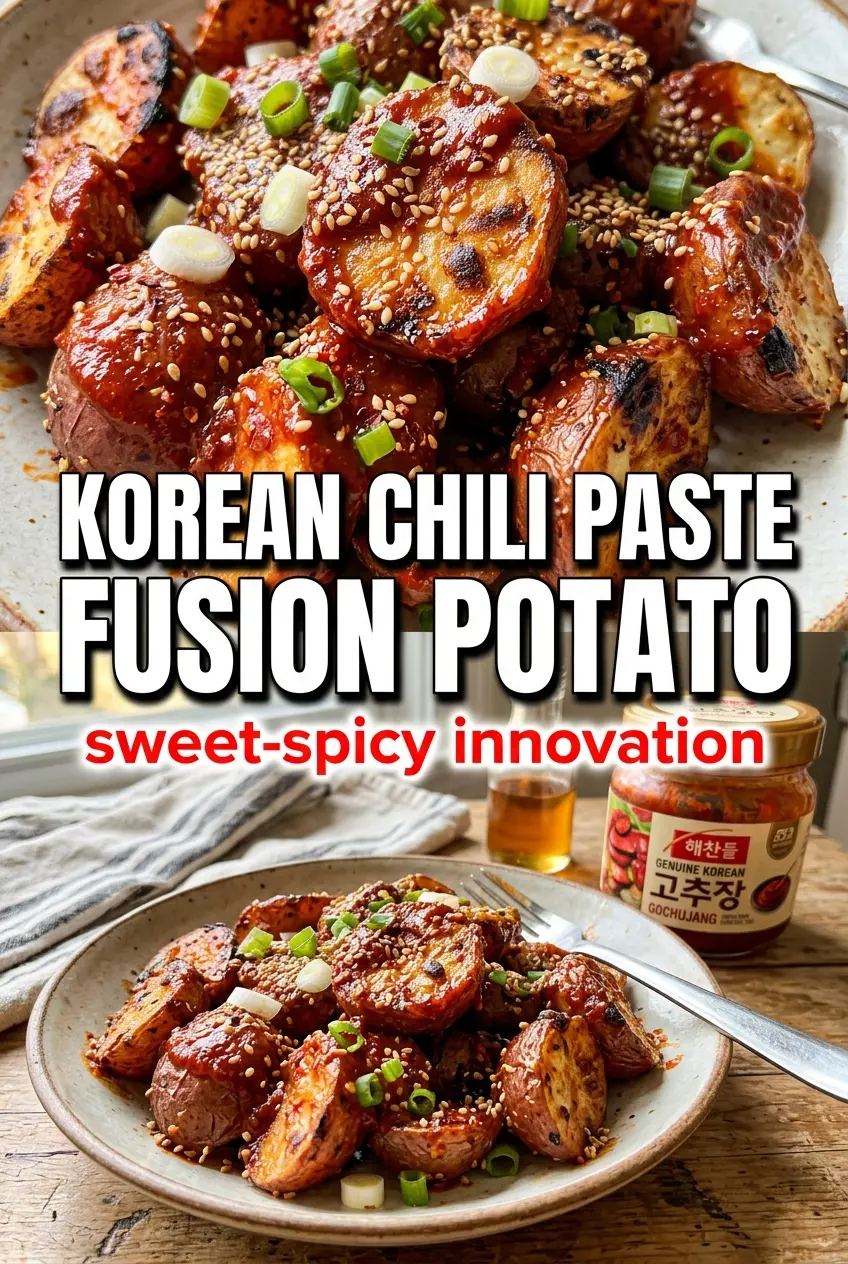
Crispy Gochujang Potato Salad
Ingredients
Equipment
Method
- Preheat the oven to 425°F and place a sheet pan inside to heat while you prep. This helps the potatoes start crisping right away.
- Toss the halved baby potatoes with olive oil, salt, and pepper until evenly coated. Spread them in a single layer on the hot sheet pan.
- Roast for 30-35 minutes at 425°F, turning once halfway, until golden and crispy at the edges. Watch for deep browning for maximum crunch.
- Let the roasted potatoes cool for 30 minutes. This cooling step keeps the salad from turning soggy when you add the dressing.
- In a bowl, mix gochujang, mayonnaise, rice vinegar, honey, and sesame oil until smooth and glossy. Whisk until no streaks remain.
- Toss the cooled potatoes with the gochujang dressing until evenly coated. Fold gently so the crispy surfaces stay intact.
- Top with sesame seeds and sliced green onions. Serve at room temperature for the best texture balance.