Fork-tender pork roast and rich, dark gravy are exactly what a slow cooker does best when the flavors are built the right way from the start. This Crock Pot Pork Roast and Gravy comes out with meat that slices cleanly at first, then pulls apart with almost no pressure from a fork, while the gravy turns savory and deep instead of thin and one-note. It tastes like a long-cooked Sunday dinner, but the slow cooker does most of the work.
The difference here is the sear and the layered gravy base. Browning the roast first gives the finished dish a deeper, meatier flavor, and the onion soup mix, Worcestershire, and cream of mushroom soup create a gravy that already has body before you even thicken it. The onions and garlic at the bottom keep the roast from sitting flat on the insert and add another layer of flavor as everything cooks together.
Below, I’m walking through the small details that matter most: which cut gives you the most forgiving texture, when to thicken the gravy, and how to keep the pork juicy instead of stringy. If you’ve ever had slow cooker pork turn bland or dry, this version fixes both problems.
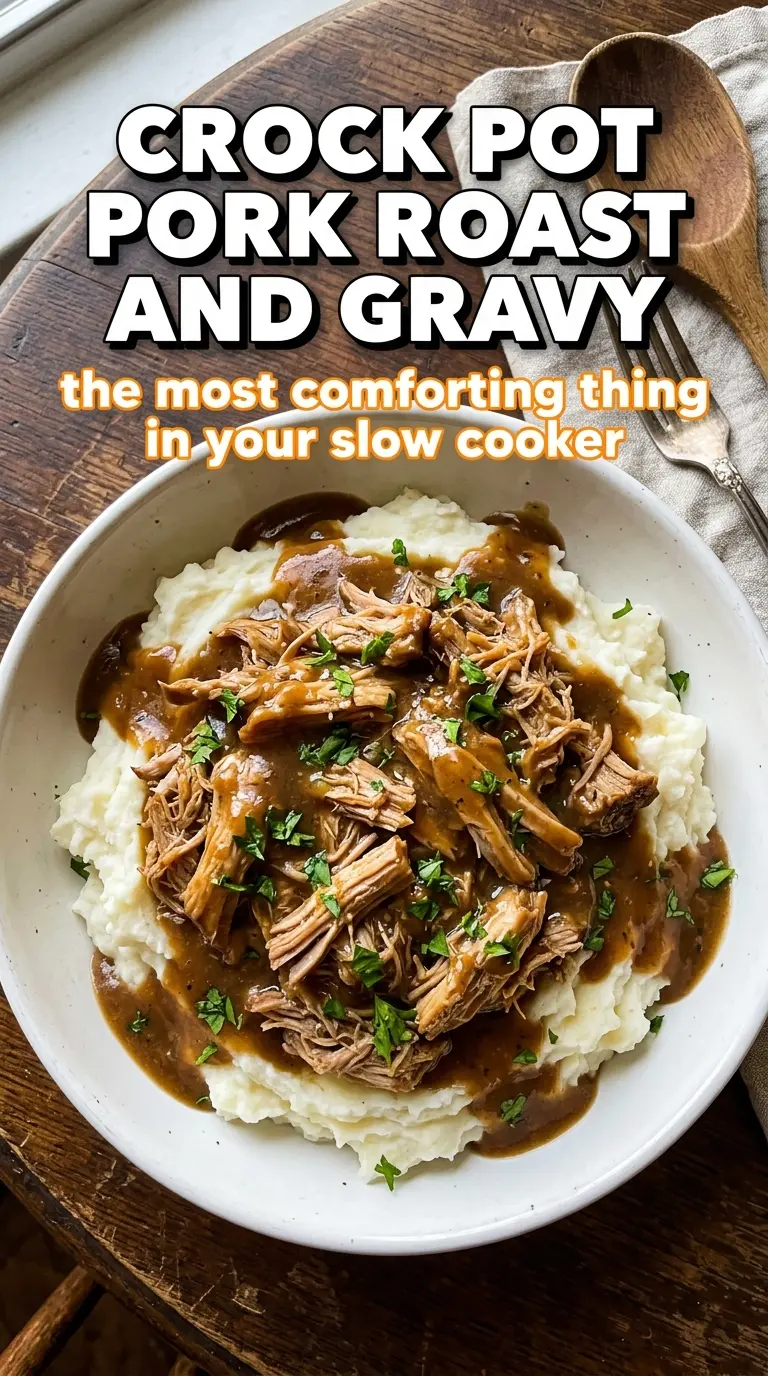
The gravy thickened up beautifully and the pork was fall-apart tender after 8 hours on low. I served it over mashed potatoes and my husband went back for seconds before I even sat down.
Save this Crock Pot Pork Roast and Gravy for the nights when you want fork-tender pork and a deep, savory gravy with almost no hands-on time.
The Sear Is What Keeps This Pork Roast from Tasting Flat
A slow cooker can make pork tender, but it won’t build flavor on its own. That comes from browning the roast first. Once the surface turns deep golden, you’ve created the savory base that keeps the gravy from tasting like diluted soup at the end of the day.
The other mistake is skipping the onions and garlic under the meat. Those aromatics don’t just add flavor; they lift the roast slightly and keep it out of the direct liquid at the bottom, which helps the texture stay better as it cooks. If the pork is crowded into a puddle of liquid from the start, it can end up soft in the wrong way instead of succulent and sliceable.
What Each Ingredient Is Actually Doing in This Gravy
Pork loin roast or shoulder — Pork shoulder gives you the richest, most forgiving texture because of the extra fat and connective tissue. Pork loin works too, but it leans leaner, so don’t overcook it past the point where it’s just tender enough to slice. If you use loin, start checking earlier.
Cream of mushroom soup — This is the quiet thickener in the gravy. It adds body and a little earthy depth that plain broth can’t give you. You can swap in cream of chicken if mushroom isn’t your thing, but the gravy will be a little lighter and less savory.
Worcestershire sauce and onion soup mix — These two do the heavy lifting for the gravy flavor. Worcestershire brings salt, acid, and that long-cooked beefy note, while the soup mix adds onion depth and extra seasoning without you needing to build it from scratch. There isn’t a perfect substitute that tastes exactly the same, so if you swap either one, expect a flatter gravy.
Beef broth — Beef broth gives the sauce a darker, meatier finish than chicken broth would. If all you have is chicken broth, it still works, but the gravy will taste a little lighter. Use low-sodium broth if possible, since the soup mix already adds plenty of salt.
Cornstarch slurry — This is optional, but it’s the cleanest way to thicken the gravy at the end if you want it spoon-coating instead of pourable. Add it only after the pork comes out and the liquid is hot, then let it simmer on High until it turns glossy. If you add it too early, the gravy can thin back out during the long cook.
The Slow Cooker Timing That Gives You Tender Pork, Not Mush
Browning the Roast First
Season the pork generously before it hits the skillet. You want a hard, sizzling sear on every side, not a pale coating that barely changes color. The surface should look deeply golden with browned edges, and you should see fond stuck to the pan; that’s the flavor you’re carrying into the slow cooker. If the pan is crowded or too cool, the meat will steam instead of brown, and the finished gravy will taste less rich.
Building the Gravy Base
Stir the soup, broth, Worcestershire, and onion soup mix until the mixture looks smooth and evenly combined. Pour it over the pork after the onions and garlic are already in the slow cooker. The liquid should come partway up the roast, not fully bury it. If you drown the meat, the roast will still cook, but the gravy often comes out thinner and the pork loses some of that concentrated roast flavor.
Cooking Until the Meat Yields Easily
Cook on Low for 8 to 9 hours if you want the most dependable texture. The roast is ready when a fork twists into it without resistance and the meat starts separating at the edges. If you use High, check it sooner; some roasts go from tender to dry faster than you expect, especially if they’re leaner. Pull it as soon as it shreds or slices easily, not after it has turned stringy.
Finishing the Gravy
Move the pork to a plate before you thicken the sauce. Whisk in the cornstarch slurry a little at a time while the liquid is hot, then let it cook until the gravy turns shiny and lightly thickened. If it looks lumpy, keep whisking and give it another minute or two. The gravy should coat the back of a spoon, not turn into paste.
Three Ways to Adjust This Pork Roast Without Losing the Good Part
Make It Dairy-Free Without Changing the Texture
Use a dairy-free cream soup substitute or make a quick roux-based gravy base with broth and a non-dairy cream alternative. The goal is to keep the body in the sauce, since the original soup is doing more than adding flavor. The finished gravy will be a little less earthy, but it still coats the pork nicely.
Use Pork Shoulder for Shreddable Comfort Food
Pork shoulder gives you the most fall-apart result and handles the full 8-hour cook with ease. It has more fat and connective tissue, so it turns luscious instead of dry. If you want to serve this over mashed potatoes or noodles and spoon the gravy right over the top, shoulder is the cut I’d pick first.
Go Gluten-Free with One Label Check
Use a gluten-free cream of mushroom soup and a gluten-free onion soup mix, then the rest of the recipe stays the same. The cornstarch slurry is naturally gluten-free, so that part doesn’t need changing. The texture and richness stay close to the original as long as the soup substitute has enough body.
Make the Gravy Thicker for Serving Over Rice
Use the full cornstarch slurry and let the gravy cook a minute or two longer after the pork comes out. This gives you a spoonable sauce that clings to rice, potatoes, or egg noodles instead of pooling at the bottom of the bowl. If it gets too thick, thin it with a splash of broth.
Storage and Reheating
- Refrigerator: Store the pork and gravy in an airtight container for up to 4 days. The gravy thickens as it chills, so it may look heavier the next day.
- Freezer: This freezes well for up to 3 months. Freeze the pork with plenty of gravy so it stays moist when thawed, and let it cool completely before packing it up.
- Reheating: Reheat gently on the stove or in the microwave with a splash of broth to loosen the gravy. Don’t blast it on high heat, or the pork can dry out and the gravy can separate at the edges.
Questions I Get Asked About This Pork Roast

Crock Pot Pork Roast and Gravy
Ingredients
Equipment
Method
- Season the pork roast generously with salt, pepper, garlic powder, and onion powder until fully coated.
- Heat oil in a skillet over medium-high heat and sear the pork roast on all sides until golden, about 3–5 minutes per side.
- Add the diced onion and minced garlic to the bottom of the slow cooker and spread into an even layer.
- Mix cream of mushroom soup, beef broth, Worcestershire sauce, and onion soup mix until smooth, then pour the mixture over the pork.
- Cook on Low for 8–9 hours, or High for 4–5 hours, until the pork is tender and pulls apart easily.
- Remove the pork and, if desired, thicken the gravy on High by stirring in the cornstarch slurry (cornstarch mixed with water) until smooth.
- Slice or shred the pork and serve smothered in the thickened gravy.