Slow-cooked beef short ribs earn their place at the table when the meat turns spoon-tender and the braising liquid cooks down into something dark, savory, and glossy enough to coat mashed potatoes. The slow cooker does the long, patient work here, but the flavor starts with a hard sear and a well-balanced liquid that tastes rich instead of flat.
What makes this version work is the combination of browned ribs, tomato paste, red wine, and Worcestershire sauce. The sear builds those deep beefy notes, and the wine gives the sauce body without making it taste sharp once it has cooked for hours. The vegetables underneath do more than bulk up the pot; they help keep the ribs lifted and add sweetness to the sauce as they break down.
Below, I’ll walk through the part that matters most: getting enough color on the meat before it goes in the Crockpot, thickening the sauce without making it pasty, and what to change if you want to skip the wine or make the dish ahead.
The ribs came out fall-apart tender and the sauce thickened up beautifully after the cornstarch slurry. I served them over mashed potatoes and my husband kept going back for more of the gravy.
Pin these Crockpot beef short ribs for a low-and-slow dinner with rich wine gravy and mashed potatoes.
The Trick to Tender Short Ribs Is Not Letting the Sauce Rush
Short ribs go from tough to luxurious only after time has done its job. The mistake people make is expecting the slow cooker to fix a weak start. It won’t. If you skip the sear, the ribs will still get tender, but the sauce tastes one-note instead of deep and braised.
That initial browning matters because short ribs carry a lot of surface fat and connective tissue. When you get real color on all sides, you’re building the base flavor that the long cook can’t create on its own. The low, steady heat of the Crockpot then softens the meat gradually, which is what keeps the ribs from drying out before the connective tissue breaks down.
- Searing first gives the sauce its backbone. Pale meat in the slow cooker leads to pale-tasting broth.
- Cooking on low keeps the fat from tightening up too fast, which is what helps the ribs turn silky instead of stringy.
- Keeping the vegetables under the meat keeps the ribs from sitting in the hottest part of the pot and helps the sauce stay balanced.
What Each Ingredient Is Doing in the Pot
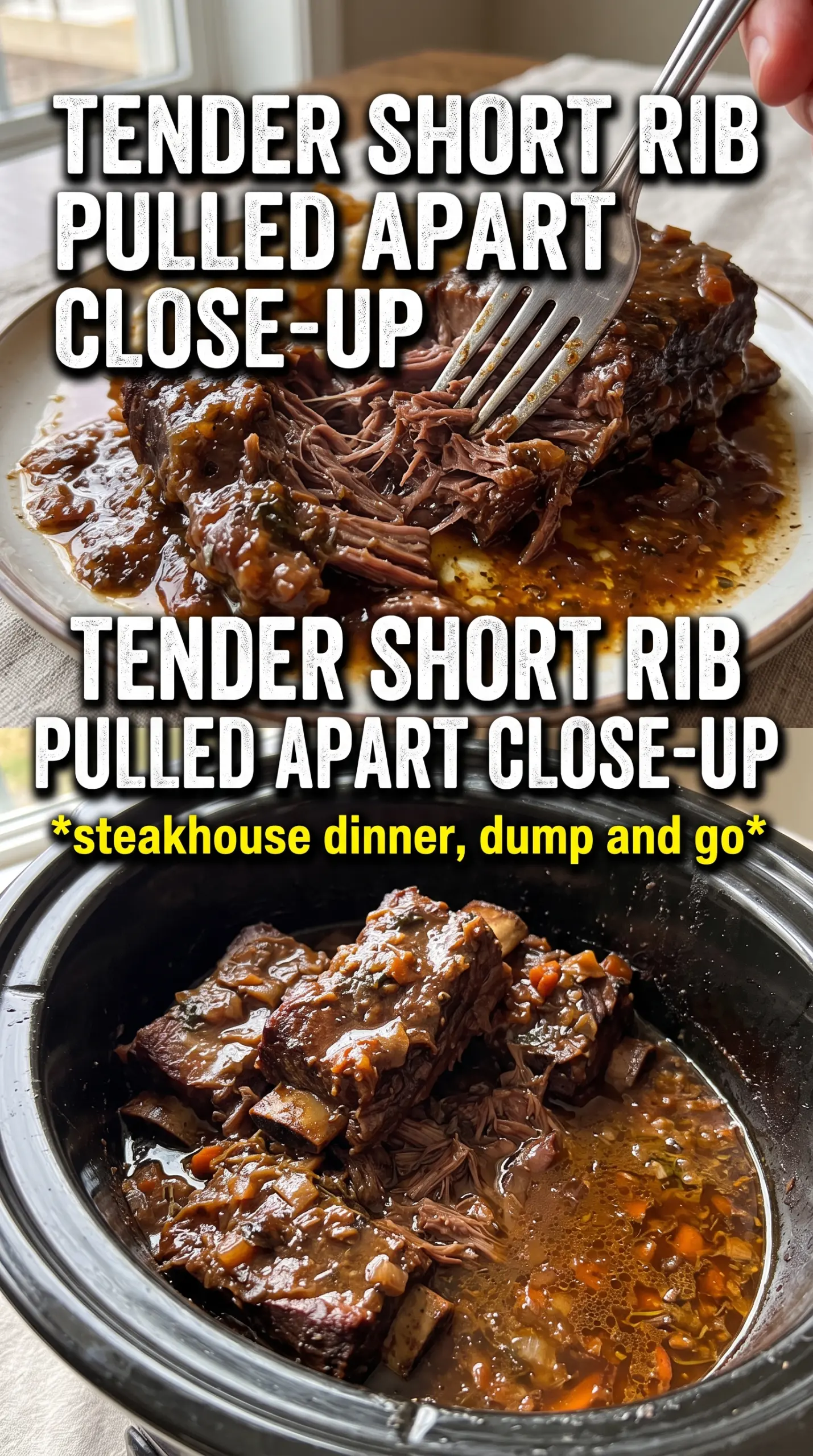
- Bone-in beef short ribs bring the richest flavor and the best braising texture. Boneless ribs work in a pinch, but they don’t give you the same deep beefy sauce.
- Red wine adds acidity and body that make the sauce taste braised instead of just beefy. Use a dry wine you’d drink; cooking won’t hide a harsh bottle.
- Tomato paste is the quiet workhorse here. It adds color and concentrated savory depth, and browning it briefly with the liquid helps remove that raw tomato edge.
- Worcestershire sauce gives you the salty, fermented note that makes the broth taste finished. There isn’t a perfect substitute, but a little soy sauce plus a splash of vinegar can stand in if that’s what you have.
- Carrots, celery, onion, and garlic build the braising base and soften into the sauce over the long cook. Dice them evenly so they melt at the same pace.
- Cornstarch thickens the liquid at the end without muddying the flavor. Add it as a slurry only after the ribs are done, or the sauce can turn gluey.
Building the Braise So the Sauce Stays Rich
Getting a real sear on the ribs
Pat the short ribs dry, season them generously, and brown them in hot oil until each side has a deep mahogany crust. Crowding the pan is the fastest way to steam them, so work in batches if needed. If the pan looks crowded or the ribs are sweating instead of sizzling, pull a few out and give the rest room.
Layering the Crockpot the right way
Scatter the onions, garlic, carrots, and celery in the bottom of the slow cooker, then set the seared ribs on top. That vegetable layer keeps the meat from sitting directly on the base, where it can cook unevenly. Pour the broth mixture over everything, but don’t drown the ribs completely; the slow cooker does better with a braise than a boil.
Finishing with a sauce that coats
When the meat falls apart easily, lift the ribs out carefully and skim off as much fat as you can from the braising liquid. If you skip that step, the sauce can taste greasy no matter how good the flavor underneath is. Stir in the cornstarch slurry on High for about 15 minutes until the liquid turns glossy and lightly thickened, then serve right away over mashed potatoes.
Skip the Wine and Use More Broth
Replace the red wine with an equal amount of beef broth if you don’t cook with alcohol. The sauce will be a little rounder and less sharp, so add an extra teaspoon of tomato paste or a small splash of balsamic vinegar to keep the braise from tasting flat.
Make It Gluten-Free Without Losing Body
This recipe is already close, but check that your Worcestershire sauce is gluten-free and use cornstarch to thicken the sauce instead of flour. Cornstarch gives you a clean finish without changing the flavor or making the braising liquid cloudy.
Make It Ahead for Easier Serving
Cook the ribs a day in advance, chill them in the sauce, and lift off the solidified fat before reheating. The flavor gets even deeper overnight, and the ribs hold their shape better when you’re serving a crowd.
Use a Different Braise Base
If you don’t have celery or carrots, use parsnips or extra onion instead. You’ll lose a little sweetness and aromatic depth, but the short ribs will still braise beautifully as long as you keep the liquid ratio the same.
Storage and Reheating
- Refrigerator: Store the ribs and sauce in an airtight container for up to 4 days. The sauce will thicken as it chills, and the fat will rise to the top.
- Freezer: These freeze well for up to 3 months. Cool completely, pack with some sauce, and thaw overnight in the refrigerator before reheating.
- Reheating: Warm gently on the stovetop or in a covered dish in the oven until hot. Don’t blast them over high heat, or the meat can tighten up and the sauce can separate.
Questions I Get Asked About This Recipe
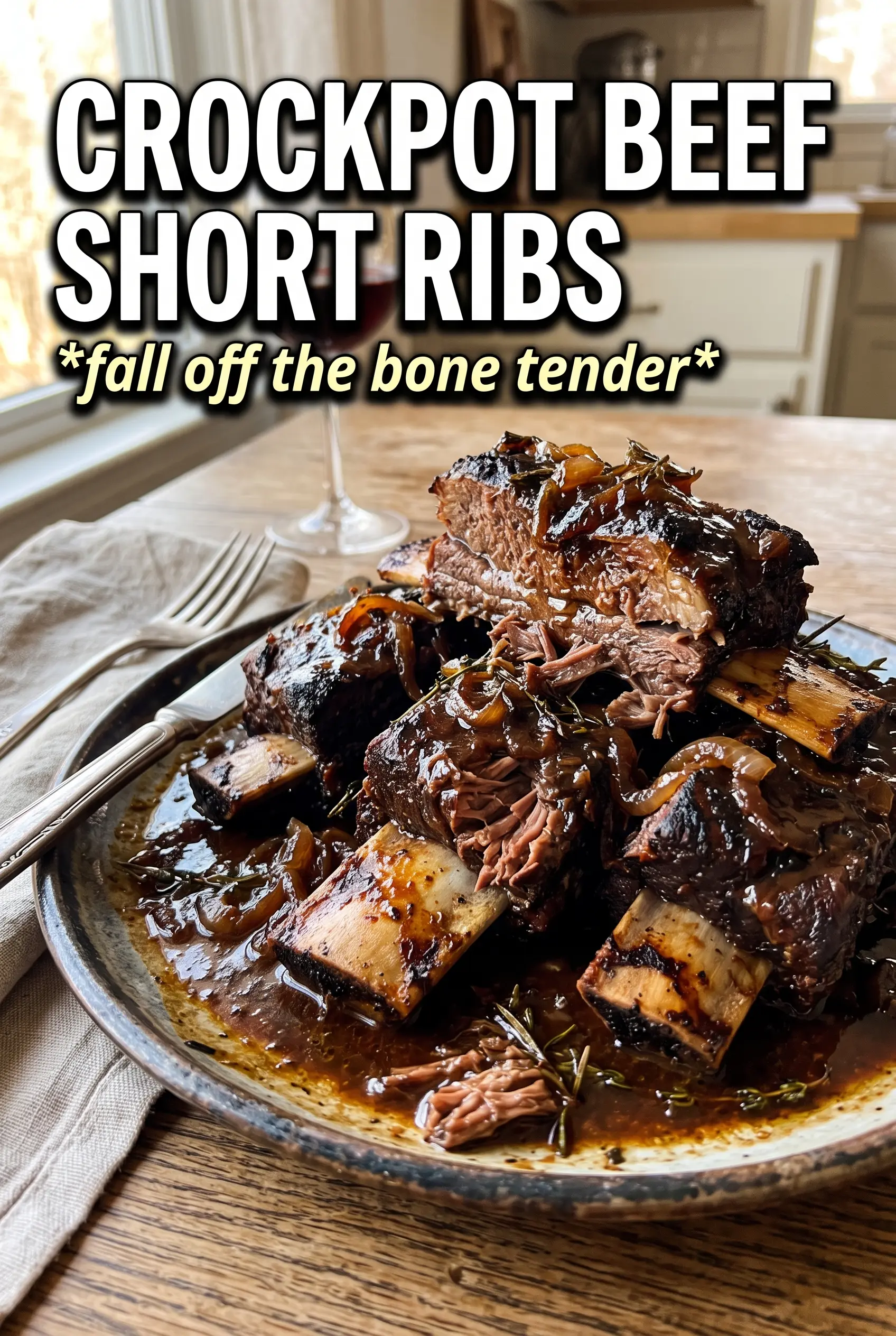
Crockpot Beef Short Ribs
Ingredients
Equipment
Method
- Season the short ribs generously with salt and pepper, then pat lightly so seasoning sticks.
- Heat olive oil in a hot skillet over high heat until shimmering, then sear the short ribs until deeply browned on all sides, turning as needed for even color.
- Place the onion, garlic, carrots, and celery into the crockpot, spreading them into an even layer.
- Nestle the seared ribs on top of the vegetables in the crockpot.
- Whisk the beef broth, red wine, tomato paste, and Worcestershire sauce until smooth, then pour over the ribs so the liquid reaches at least halfway up the meat.
- Add the thyme, rosemary, and bay leaves to the crockpot, then cook on Low for 7-8 hours until the meat is falling off the bone.
- Remove the ribs and bay leaves, then skim fat from the braising liquid to keep the sauce cleaner.
- Whisk cornstarch into a slurry with a small splash of braising liquid, then stir it into the crockpot.
- Cook on High for 15 minutes to thicken the braising sauce to a glossy consistency.
- Serve the short ribs over mashed potatoes and spoon the thickened braising sauce on top.