Cold potato salad only works when the potatoes stay intact, the dressing clings, and the dill stays bright instead of fading into the background. This version gets all three right. The buttermilk dressing brings a clean tang that keeps the salad from feeling heavy, while the Dijon and sour cream give it enough body to coat every piece without turning gluey.
Red potatoes are the right choice here because they hold their shape after boiling and give you tender cubes with a little bite at the edges. I like to dress the potatoes after they’ve cooled just enough to stop steaming, because hot potatoes soak up flavor too aggressively and can make the dressing thin out. A full chill in the fridge gives the onion time to soften and lets the herbs settle into the salad so every bite tastes balanced.
Below, I’ll walk through the small details that keep the potatoes from getting mushy, how to adjust the dressing if you like it sharper or creamier, and the make-ahead window that makes this such a useful side dish for a crowd.
The dressing thickened up beautifully after the chill, and the dill stayed fresh instead of getting lost. I used red potatoes like you suggested and they held their shape perfectly.
Love the tangy mustard buttermilk dressing and fresh dill? Save this potato salad for the next barbecue or potluck.
The Trick to Keeping the Potatoes Tender, Not Watery
The biggest mistake in potato salad is overcooking the potatoes until the edges start breaking apart before the dressing even touches them. Red potatoes should be cooked until a knife slips in with just a little resistance, then drained right away so they stop softening in the hot pot. If they sit in the cooking water too long, they soak up excess moisture and the salad turns loose instead of creamy.
Cooling matters too. Let the potatoes shed steam before you add the dressing, because a hot bowl will thin the buttermilk mixture and make the mayonnaise separate at the edges. You want warm, not scorching, so the potatoes can absorb flavor without collapsing.
What the Buttermilk, Dijon, and Herbs Are Each Doing Here
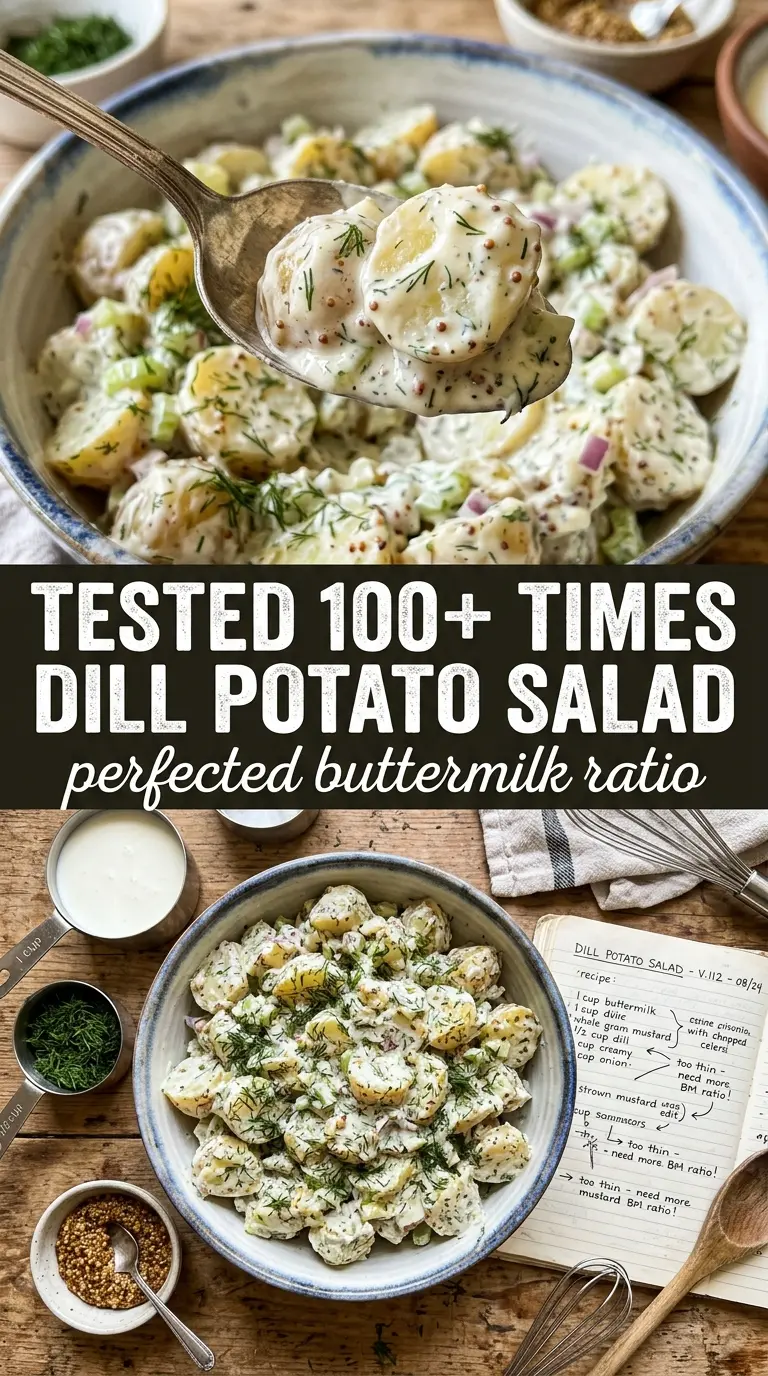
- Buttermilk — This is what gives the dressing its clean tang and lighter feel. Regular milk won’t give you the same sharpness or the same subtle thickness. If you don’t have buttermilk, stir 1 tablespoon of lemon juice or white vinegar into 1/2 cup milk and let it sit for 5 minutes, but expect a slightly flatter finish.
- Mayonnaise — A little mayo gives the dressing body so it clings to the potatoes instead of puddling at the bottom of the bowl. Use a good standard mayo here; the flavor won’t dominate, but a bland one will leave the salad thin and one-note.
- Sour cream — This adds creaminess and a soft tang that rounds out the dressing. It keeps the salad from tasting too sharp. Full-fat works best because lower-fat versions can get loose once they chill.
- Dijon mustard — Dijon sharpens the dressing and helps it emulsify, which is why the sauce holds together instead of tasting split. Whole-grain mustard will work if that’s what you have, but the texture will be a little rougher.
- Fresh dill and chives — These herbs are not garnish here; they’re part of the main flavor. Fresh dill gives the salad its bright green, grassy note, while chives soften the onion edge. Dried dill won’t give the same lift, so this is one place where fresh really matters.
- Red onion — The fine dice is important. Large pieces stay sharp and can overpower the salad after chilling, while small pieces mellow and blend into the dressing. If raw onion bites hard for you, soak the diced onion in cold water for 10 minutes, then drain well before mixing.
Building the Salad So the Dressing Stays Creamy
Boil the Potatoes Until Just Tender
Start the potatoes in cold salted water and bring them up together so they cook evenly from the outside in. Once they’re tender, drain them immediately and let the steam escape. If you overcook them by even a few minutes, the cubes will split when you toss them and the salad will look rough before it even chills.
Mix the Dressing Before the Potatoes Go In
Stir the buttermilk, mayonnaise, sour cream, Dijon, salt, and pepper together in a separate bowl until smooth. That gives you a balanced dressing before it hits the potatoes, which matters because the warm cubes can otherwise absorb one ingredient more than another. The dressing should look loose but creamy, not stiff.
Toss Gently, Then Let Time Do the Rest
Add the dill, chives, and red onion to the cooled potatoes first, then pour the dressing over and fold everything together with a broad spoon. Use a light hand so the cubes stay whole. After that, chill the salad for at least 2 hours; that rest is what turns it from dressed potatoes into actual potato salad, with the flavors settling and the texture tightening up.
Make It a Little Sharper
Add another teaspoon of Dijon or a splash of extra buttermilk if you want a brighter, tangier salad. This version tastes more punchy and less creamy, which works well beside rich grilled meats or fried chicken.
Dairy-Free Version
Use a plain unsweetened dairy-free yogurt in place of the sour cream and a plant-based mayo with a splash of lemon juice in place of the buttermilk. The salad still comes through creamy and tangy, but the finish will be a little less lush than the original.
Use Yellow Potatoes for a Softer Bite
Yukon Golds make a silkier, more buttery salad, but they’re softer than red potatoes and need gentler handling. They’re a good swap if you like a creamier texture, though they won’t hold their cubes quite as neatly after chilling.
Storage and Reheating
- Refrigerator: Keeps for 3 to 4 days in a covered container. The dill softens a little, but the flavor stays good.
- Freezer: I don’t recommend freezing this one. The creamy dressing separates and the potatoes turn grainy after thawing.
- Reheating: Serve it cold or let it sit at room temperature for 15 to 20 minutes. If it seems a little tight after chilling, stir in a spoonful of buttermilk to loosen it instead of trying to warm it up.
Answers to the Questions Worth Asking

Dill Potato Salad with Mustard Buttermilk Dressing
Ingredients
Equipment
Method
- Bring a pot of water to a boil over high heat, then add the cubed red potatoes and cook until tender, 10-15 minutes with a steady simmer. Visual cue: a fork should pierce the cubes easily.
- Drain the potatoes in a colander, then cool until no longer hot, 10-15 minutes. Visual cue: the surface looks matte rather than steamy.
- In a mixing container, whisk together the buttermilk, mayonnaise, sour cream, Dijon mustard, salt, and pepper until smooth, 1-2 minutes. Visual cue: the dressing looks creamy and uniform with no mustard streaks.
- Add the cooled potatoes to the dressing, then fold in the chopped fresh dill, chopped chives, and finely diced red onion. Visual cue: herbs are evenly speckled throughout.
- Pour any remaining dressing over the potato mixture and toss gently until coated, 1-2 minutes. Visual cue: the potatoes look lightly glossy rather than dry.
- Cover and refrigerate the potato salad until flavors meld, 2 hours. Visual cue: the salad firms slightly and the dill color looks brighter.
- Serve cold. Visual cue: a spoon leaves clean trails through the potatoes without watery pooling.