Fork-tender beef, potatoes that hold their shape, and a glossy broth that tastes like it simmered all day make Dutch oven beef stew worth keeping in regular rotation. The best bowls have depth without feeling heavy, and this version gets there with a good sear, a spoonful of tomato paste, and enough time in the oven for the meat to relax into the liquid instead of fighting it.
Flouring the beef before browning does two jobs at once: it helps the meat get a better crust and gives the stew just enough body as it cooks. The red wine matters too, not because the stew tastes like wine, but because it loosens the browned bits from the pan and brings a roundness that plain broth can’t quite match. Keep the potatoes and carrots out until the last hour so they stay intact instead of turning to mush.
Below, I’ll walk through the part that makes the biggest difference — building flavor in the pot before the long bake — plus a few smart swaps and storage notes for the days when you want stew waiting in the fridge.
The beef got melt-in-your-mouth tender and the broth thickened up just enough without needing extra cornstarch. I made it on Sunday and the flavor was even better the next night.
Save this Dutch oven beef stew for a rich, fork-tender dinner with a glossy broth and perfectly intact potatoes.
The Browning Step That Gives This Stew Its Real Flavor
The stew starts tasting deep and beefy long before the liquid goes in. If the meat goes into the pot crowded or damp, it steams instead of browns, and that leaves you with pale beef and a thinner-tasting broth. Work in batches and let each side build a dark crust before moving on. Those browned bits on the bottom are what turn the wine and broth into something worth eating with a spoon.
The other place people lose flavor is right after the onions go in. They should soften and pick up the fond without turning sugary and brown themselves. Tomato paste goes in for just a minute so it can darken a little and lose its raw edge. That small step gives the stew a fuller, more savory base.
What Each Ingredient Is Doing in the Pot
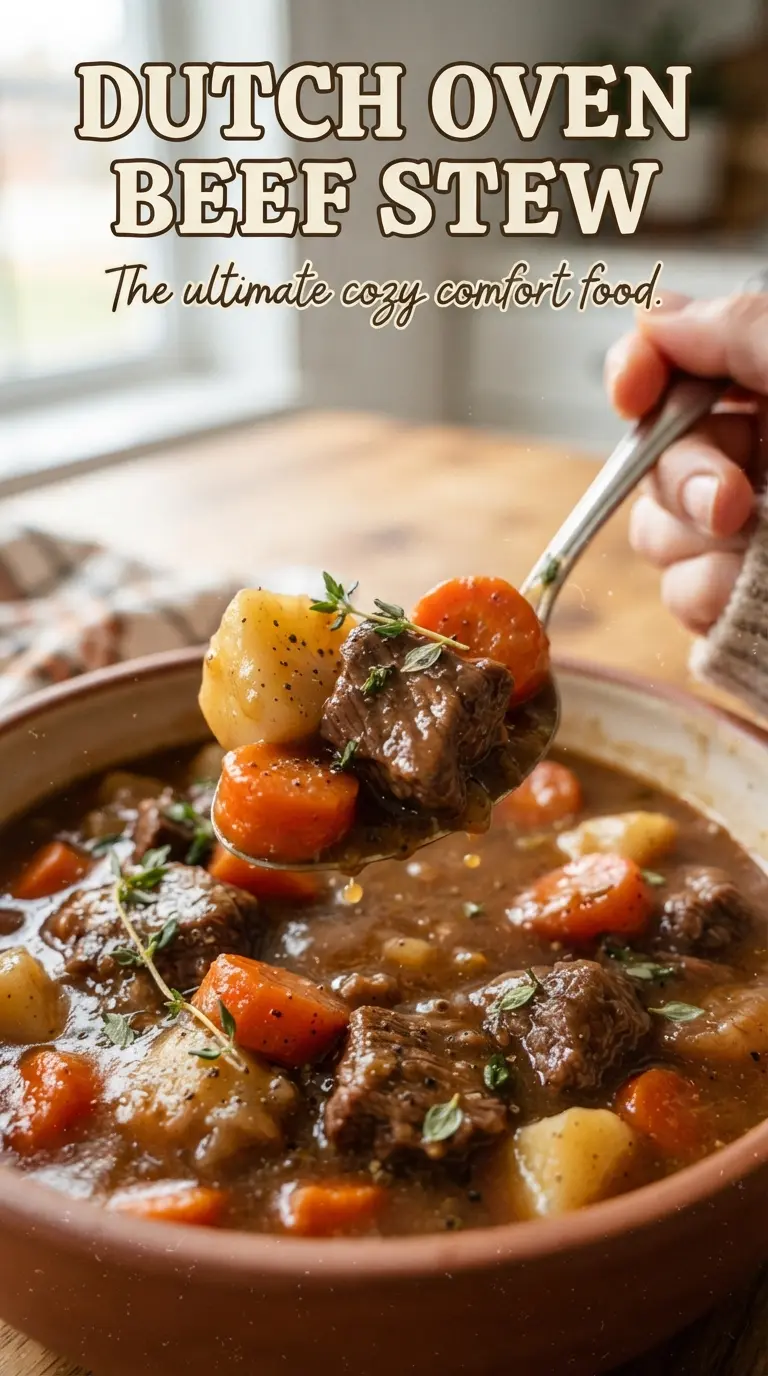
- Beef chuck — This is the cut that earns its keep here. It has enough connective tissue to turn silky over the long bake, while leaner cuts can dry out or go stringy. If you swap it, choose another braising cut like brisket or bottom round and expect a slightly different texture.
- Red wine — This is not there for fancy reasons. It lifts the browned bits off the pan and adds a little edge to balance the beef and potatoes. If you don’t cook with wine, use extra beef broth plus a teaspoon of red wine vinegar at the end.
- Tomato paste — It quietly deepens the broth and gives the stew that cooked-all-day color. Let it cook for a minute with the onions and garlic so it loses its raw sharpness.
- Baby potatoes and carrots — Adding them later keeps their shape and keeps the stew from turning muddy. Baby potatoes hold up better than russets here, and cutting the carrots into even pieces helps them finish at the same time.
- Fresh rosemary and thyme — Fresh herbs make a big difference because they perfume the broth without getting lost under the beef. Dried herbs work in a pinch, but use less and remove them carefully so you don’t end up with little woody bits in the bowl.
Building the Braise So the Beef Turns Fork-Tender
Seasoning and Browning the Beef
Coat the beef with salt, pepper, and flour, then brown it in batches in a hot Dutch oven. The flour should look dusty, not clumpy, and the meat should release easily once a crust forms. If the pot starts filling with liquid, it’s too crowded, and you need to pull some pieces out and keep going in smaller rounds. You’re looking for deep brown edges, not gray cubes.
Softening the Aromatics
Once the beef is out, cook the onion until it turns translucent and picks up the flavor left in the pot. Stir in the garlic and tomato paste and keep them moving for about a minute so they don’t scorch. If the tomato paste darkens a shade and smells sweet and concentrated, you’re in the right place. That’s the point where the bottom of the pot starts working for you instead of against you.
Deglazing and Braising
Pour in the wine and scrape every browned speck from the bottom, then let it bubble for a couple of minutes before adding the broth, Worcestershire, herbs, bay leaves, and beef. The liquid should come up around the meat, not bury it completely. Cover the pot and bake until the beef starts yielding when you press it with a spoon. That first long stretch is where the meat transforms, so don’t rush it.
Adding the Vegetables at the End
Stir in the potatoes and carrots after the beef has had two hours to soften. They need less time than the meat, and putting them in too early is how you get broken potatoes and mushy carrots. After the final hour, the potatoes should be tender all the way through and the carrots should still have shape. Pull the herbs and bay leaves before serving so the broth stays clean and focused.
How to Adapt This Stew When You Need to Work Around the Pantry
Make It Without Wine
Use an extra cup of beef broth and add 1 teaspoon red wine vinegar or balsamic at the end. You’ll lose a little of the wine’s roundness, but the stew still gets the acid it needs to keep the broth from tasting flat.
Gluten-Free Version
Skip the all-purpose flour and brown the beef without it, then thicken the finished stew with a cornstarch slurry if you want more body. You’ll get a slightly lighter broth, but the flavor stays the same and the braise still works.
Swap the Beef Chuck
Brisket or bottom round can stand in if that’s what you have. Chuck is still the most forgiving choice, but the stew will stay hearty either way as long as you give it the full braise time.
Storage and Reheating
- Refrigerator: Keeps for 4 days. The broth thickens as it chills, which is exactly what you want.
- Freezer: Freezes well for up to 3 months. Cool it completely first and leave a little headspace in the container so the liquid can expand.
- Reheating: Warm it gently on the stove over medium-low heat with a splash of broth if needed. Boiling it hard can break down the potatoes and make the beef stringy.
Answers to the Questions Worth Asking
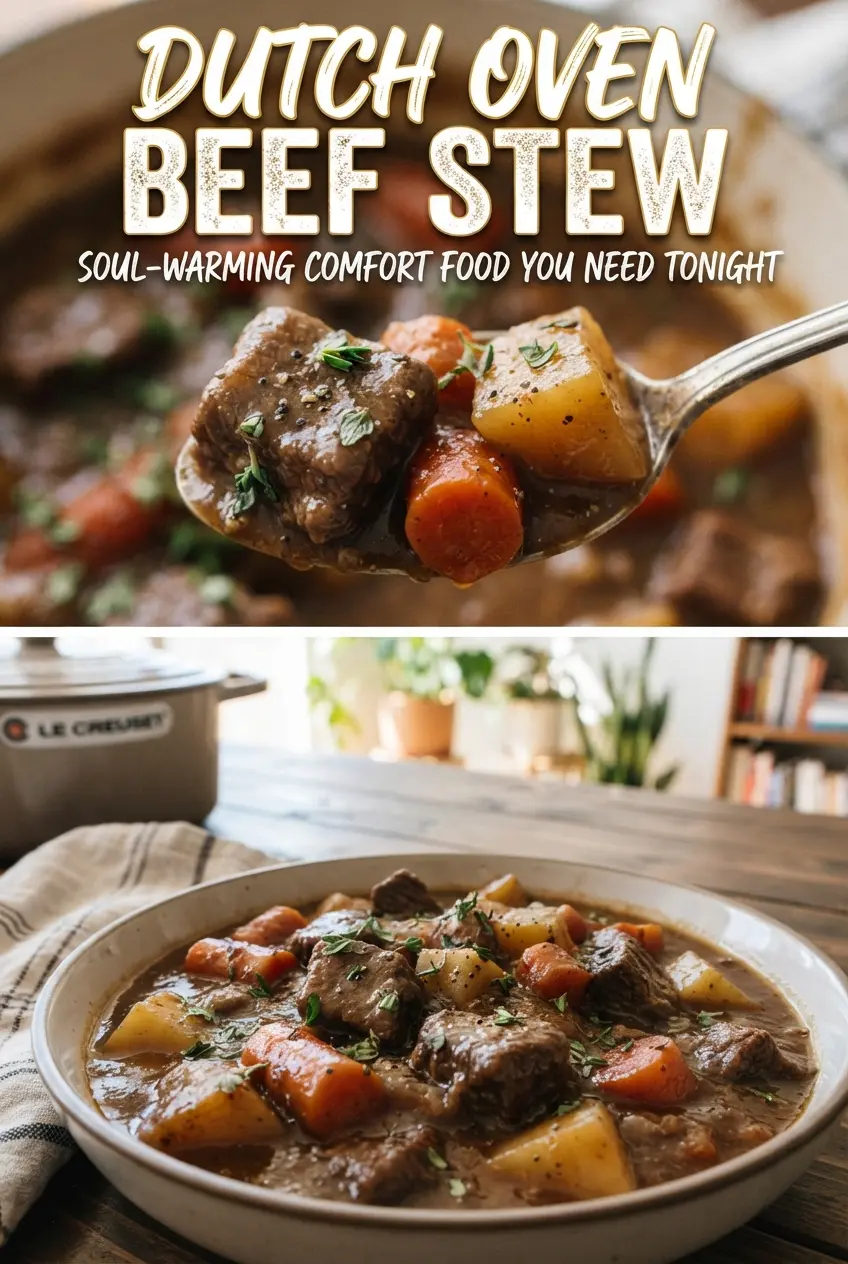
Dutch Oven Beef Stew
Ingredients
Equipment
Method
- Preheat oven to 325F. Season the beef cubes with salt and black pepper, toss with flour, then brown in batches in the Dutch oven using the olive oil until well coated.
- Cook the diced onion for 5 minutes. Add the minced garlic and tomato paste and cook for 1 minute, stirring to prevent sticking.
- Pour in the dry red wine and scrape the bottom of the Dutch oven. Simmer for 2 minutes to reduce slightly, then stir.
- Add the beef broth, Worcestershire sauce, rosemary sprigs, thyme sprigs, and bay leaves along with the browned beef. Cover the Dutch oven and bake at 325F for 2 hours until the beef is starting to tenderize.
- Stir in the halved baby potatoes and cut carrots. Cover and bake at 325F for 1 hour more, until potatoes and carrots are fork-tender.
- Remove the herb stems and bay leaves. Taste and serve the stew hot with thick, glossy sauce coating the beef and vegetables.