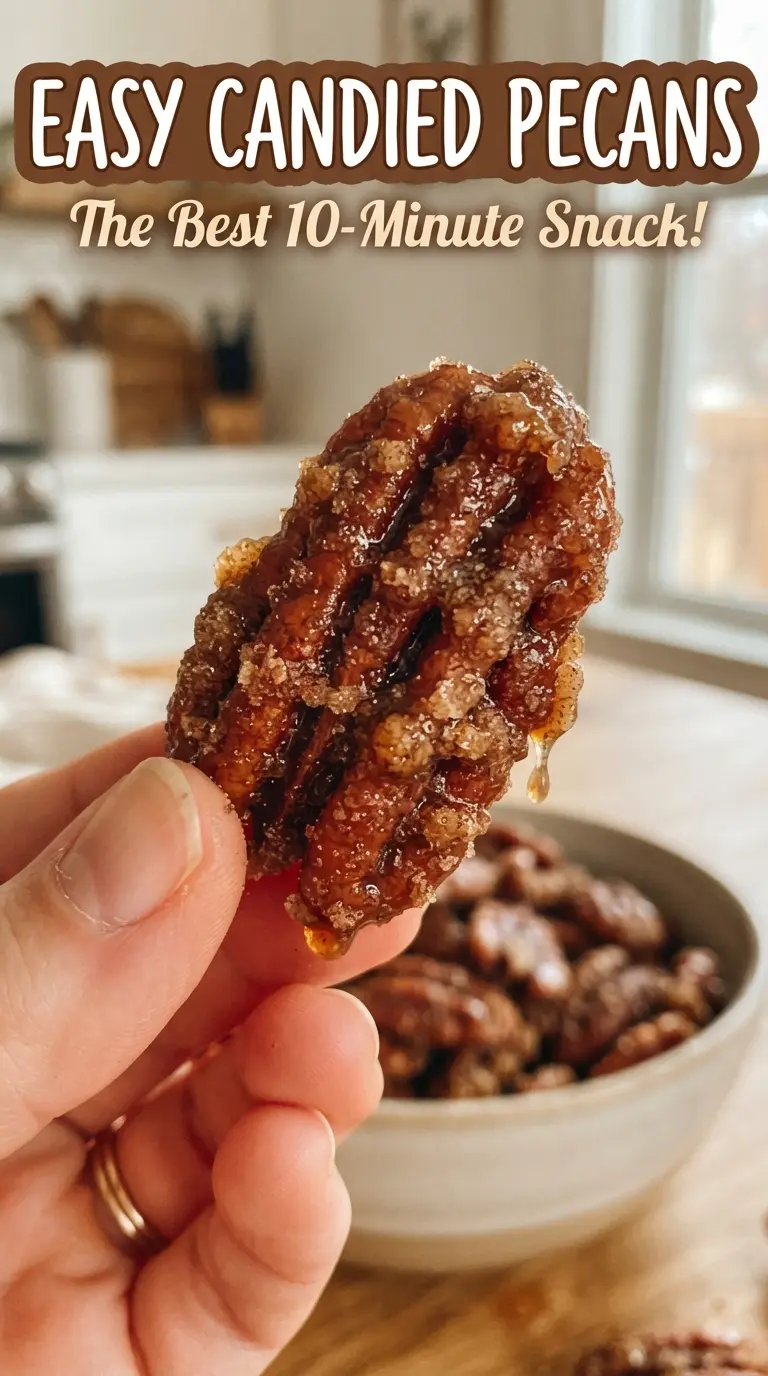
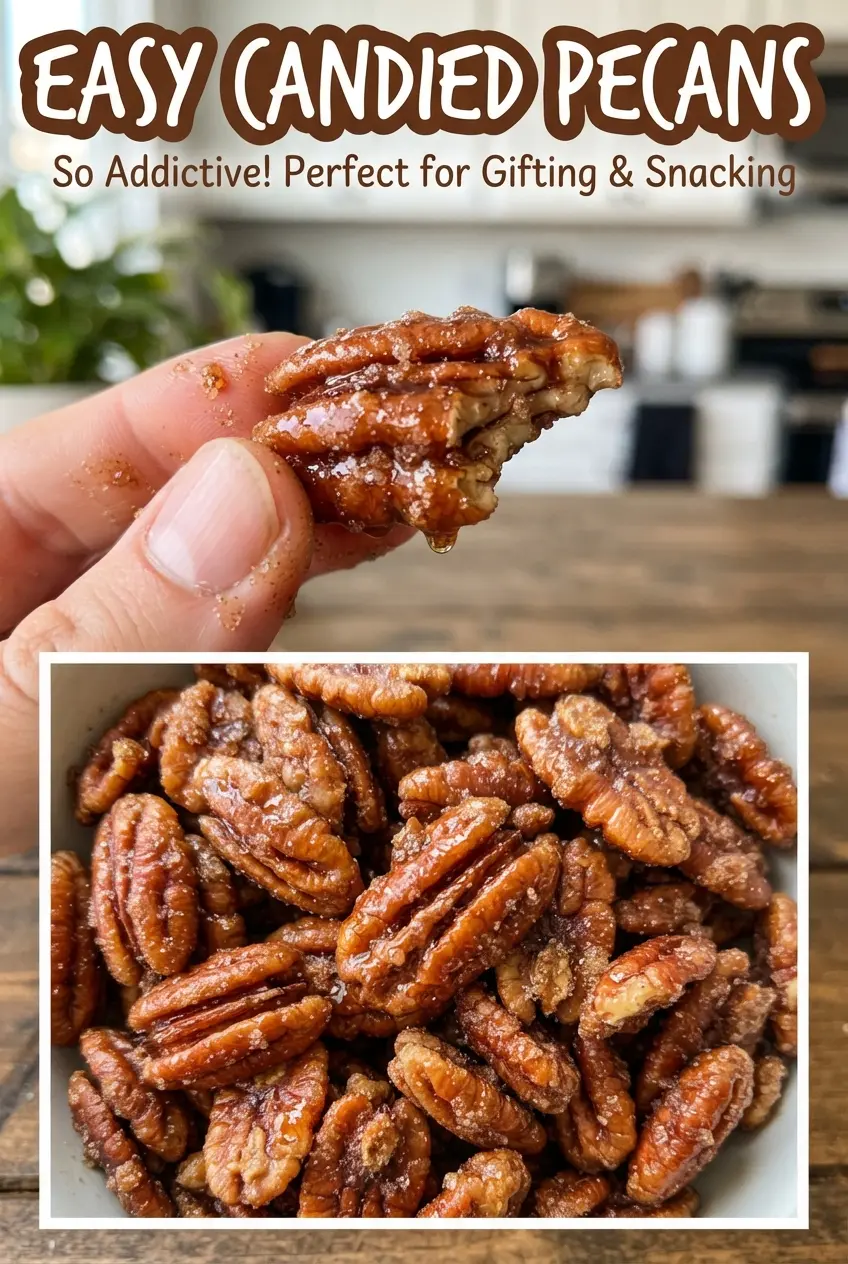
Glossy, crisp, and deeply cinnamon-sweet, these candied pecans bake up with that snappy shell that cracks the second you bite into it. The coating clings in thin layers instead of puddling on the pan, and the nuts stay crunchy all the way through once they cool. They’re the kind of snack that disappears from the counter before they ever make it to a serving bowl.
The trick is the frothy egg white. It gives the sugar something to grab onto without making the pecans heavy or sticky, and the low oven gives the coating time to dry out as it bakes. Stirring every 15 minutes matters here too, because it keeps the sugar from clumping in one spot and helps the nuts dry evenly instead of turning brittle on the edges and soft in the middle.
Below you’ll find the cue that tells you they’re done, why they need to cool completely before you touch them, and a few easy ways to change the flavor without losing that crackly finish.
The coating dried into that perfect crackly shell, and the pecans stayed crunchy for days in a jar on the counter.
Save these candied pecans for a crackly cinnamon-sugar snack that stays crisp after cooling.
The Reason the Coating Stays Crisp Instead of Going Sticky
The oven temperature is low on purpose. At 250°F, the sugar has time to dry onto the nuts instead of melting into a hard shell that turns wet again as it cools. If the oven runs too hot, the sugar can scorch before the pecans finish roasting, and you end up with a bitter edge instead of a clean cinnamon finish.
The other thing that matters is the egg white. It’s not there for fluff; it acts like glue and helps the sugar form that thin, even crust. Whisk it until frothy, not foamy and stiff. You want it loose enough to coat every pecan, because thick egg white clumps make patches that bake up dull and lumpy.
- Pecan halves — Halves toast more evenly than chopped pecans and give you those big crackly pieces people reach for first. Pieces work in a pinch, but they brown faster and lose some of that clean snap.
- Egg white — This is the coating that makes the sugar stick without turning the nuts greasy. There isn’t a true substitute that behaves the same way, but aquafaba can work for an egg-free version; whip it just until foamy and expect a slightly lighter, less glossy shell.
- Vanilla — Stir it into the egg white so it spreads through the coating instead of landing in one sweet spot. Use pure vanilla if you can; imitation vanilla gets lost once the cinnamon and sugar bake.
- Cinnamon — Fresh cinnamon gives the coating warmth instead of flat sweetness. If yours has been sitting in the cabinet for years, the pecans will still work, but the flavor will be softer and less defined.
What Each Ingredient Is Actually Doing in This Recipe
- Primary ingredient (the star) — Quality matters most. Choose the best you can find.
- Cooking medium (oil, butter, or broth) — This carries flavors and prevents dryness.
- Seasonings (salt, pepper, spices, herbs) — Layer flavors so nothing overpowers. Build depth gradually.
- Aromatics (garlic, onion, herbs) — Cook with fat to bloom flavors. Become the foundation.
- Supporting ingredients — Complement the main ingredient without overpowering it.
- Sauce or liquid (if applicable) — Brings flavors together. Balance richness with acid.
- Acid (lemon, vinegar, wine, or other) — Brightens and prevents flat-tasting results.
- Final finish (garnish, glaze, or sauce) — Prevents one-dimensional taste and adds visual appeal.
Stirring at the Right Intervals Is What Keeps These From Clumping
Build the Frothy Binder
Whisk the egg white, water, and vanilla until the mixture looks pale and frothy, with bubbles across the surface. That texture matters because it helps the sugar cling in a thin coat. If the egg white stays slippery and clear, the sugar slides off and collects on the pan instead of coating the nuts.
Coat the Pecans Evenly
Toss the pecans in the egg white until every piece looks lightly damp, then add the sugar mixture and keep tossing until the surface turns sandy and fully covered. The goal is not a wet batter. If you see puddles, the coating is too heavy and will bake into sticky spots instead of a dry shell.
Dry Them Down Slowly
Spread the nuts in a single layer on parchment and stir every 15 minutes. That keeps the sugar from setting in a thick layer on the bottom and helps the nuts dry evenly all around. By the end of the hour, the coating should look dry and slightly dull in the oven, not glossy and wet.
Cool Before Breaking Apart
Take the pan out and leave the pecans alone until they’re completely cool. They finish crisping as they sit, and if you move them too soon, the coating can bend instead of snap. Once they’re cool, break apart any clusters with your hands and store them airtight so they stay crunchy.
How to Change the Flavor Without Losing the Crunch
Cayenne for a Sweet-Spicy Finish
Add a small pinch of cayenne to the sugar mixture if you want heat behind the cinnamon. The sugar still bakes into the same crisp shell, but the finish lands warmer and less dessert-like. Keep the amount modest or the spice will crowd out the caramelized sweetness.
Maple-Scented Pecans
Swap half the vanilla for maple extract if you want a deeper, more autumn-style flavor. Don’t use maple syrup here; it adds moisture and makes the coating softer. The extract gives you the aroma without changing the drying time.
Egg-Free Version
Use aquafaba in place of the egg white if you need a vegan variation. Whisk it until foamy, then coat and bake the same way, though the finish will be a little lighter and less glassy than the original. It still dries into a good crunchy shell if you give it the full cooling time.
Storage and Reheating
- Refrigerator: Store in an airtight container at room temperature for up to 2 weeks. The fridge isn’t needed and can add moisture that softens the coating.
- Freezer: They freeze well for up to 3 months in a sealed freezer bag or container. Thaw uncovered at room temperature so condensation doesn’t blur the sugar shell.
- Reheating: These don’t need reheating. If they soften, spread them on a parchment-lined pan and warm at 250°F for 5 to 8 minutes, then cool completely again before storing.
Answers to the Questions Worth Asking
Easy Candied Pecans
Ingredients
Equipment
Method
- Preheat the oven to 250°F, then line a sheet pan with parchment for easy cleanup and even baking.
- Whisk the egg white, water, and vanilla extract until frothy, using a light, airy look as your visual cue that it will cling to the nuts.
- Toss the pecan halves with the egg-white mixture until evenly coated, so every nut looks lightly glossy rather than dry spots showing.
- Mix the sugar, ground cinnamon, and salt, then toss with the pecans until the nuts are fully coated and speckled all over.
- Spread the coated pecans in a single layer and bake for 1 hour, stirring every 15 minutes so the coating crackles and browns evenly.
- Cool the candied pecans completely on the pan until crunchy, then break them apart and store airtight for best snap.