Firecracker hot dogs bring the kind of grill-side energy that gets people circling back for seconds before they’ve even finished the first one. The hot dogs char and split open at the scored edges, the buns turn lightly crisp at the seams, and the toppings hit in layers: tangy jalapeño relish, sharp mustard, a little heat from sriracha, and that crunchy finish from fried onions. It’s the kind of cookout food that feels familiar at first glance, then surprises you with how much more alive it tastes than a plain hot dog.
The scoring matters here. Those diagonal cuts give the dogs more surface area, so the grill can kiss every ridge with smoke and char while the casings split just enough to hold on to the toppings without getting slippery. Buttering and toasting the buns keeps them from collapsing under the relish and sauce, which is a small step that makes a big difference once everything starts dripping.
Below, I’ve laid out the part that matters most: how to get the char without drying out the dogs, plus the swaps that still keep this recipe bold when you need to work with what’s already in the fridge.
The spiral cuts were the best part — the hot dogs got crisp at the edges and held onto the sriracha and jalapeños without everything sliding off the bun. My husband kept going back for “just one more” until the tray was empty.
Like this jalapeño-loaded firecracker hot dog? Save it to Pinterest for the next cookout when you want grilled hot dogs with real heat and crunchy toppings.
The Scoring Trick That Keeps These Hot Dogs From Tasting Flat
Most grilled hot dogs get heat on the outside and not much else. Scoring changes that. The cuts open as the sausage cooks, which gives you those browned edges people actually notice, and it also gives the toppings tiny ridges to cling to instead of sliding off the first time you bite in. If you skip the scoring, the hot dogs still cook fine, but they won’t pick up the same charred, craggy texture.
Keep the grill at medium-high, not screaming hot. Hot dogs are already cooked; you’re warming them through and building texture, not trying to cook them from raw. If the grill is too aggressive, the outside blisters before the inside is hot and the casing splits in a messy way instead of opening in those neat charred lines you want.
What Each Topping Is Actually Doing Here
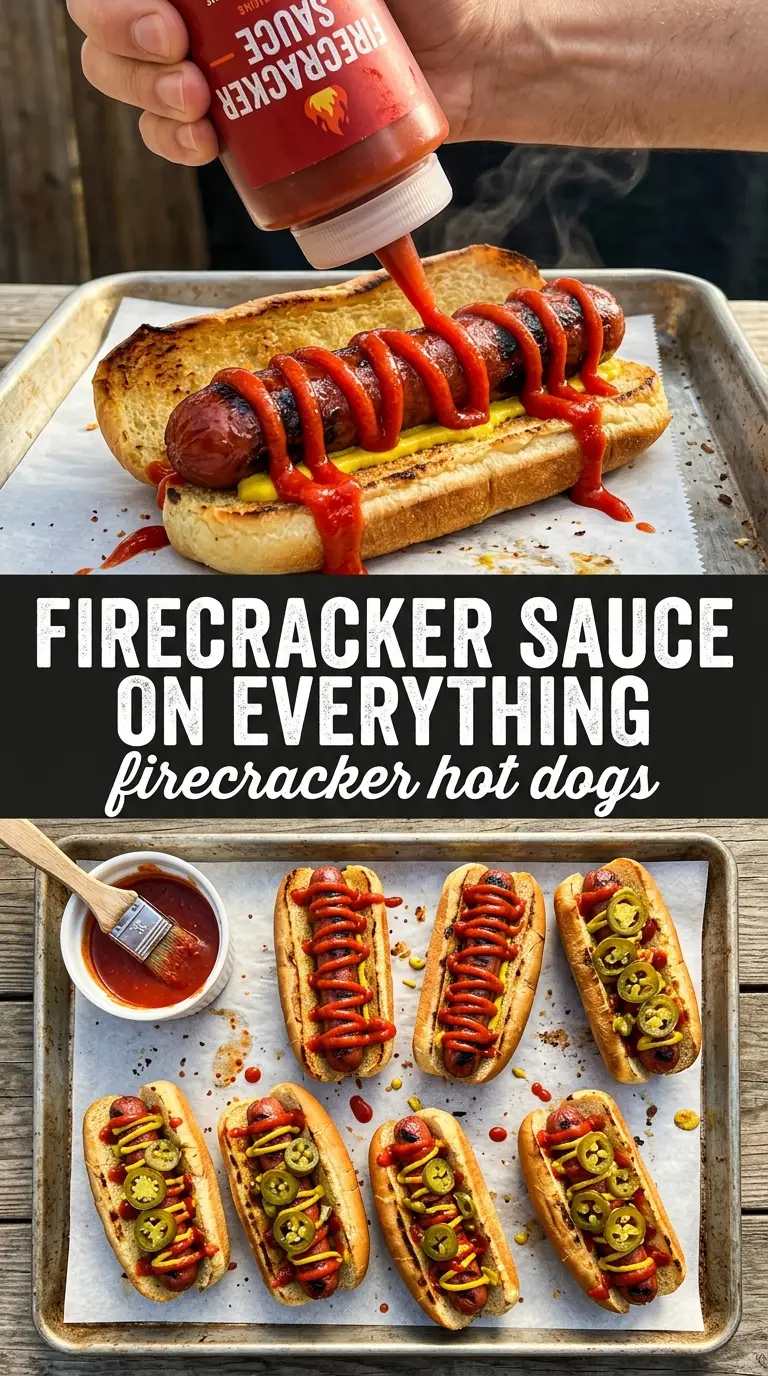
- Beef hot dogs — Beef gives you a firmer bite and a deeper savory flavor that stands up to mustard, jalapeños, and sriracha. Chicken or turkey dogs will work in a pinch, but they usually taste milder and can dry out faster on the grill.
- Jalapeño relish or chopped pickled jalapeños — This is the bright, tangy punch that makes the whole dog taste awake. Relish is the easiest option because it spreads evenly; chopped pickled jalapeños bring more texture and a sharper bite.
- Yellow mustard — It cuts through the richness and keeps the heat from tasting one-note. Use the classic bright yellow kind here; a fancy mustard can get lost once the sriracha and onions go on.
- Sriracha — This adds heat with a little garlic and sweetness, which plays well with the smoky grill flavor. If you want a milder finish, use less than written and lean harder on the mustard.
- Crispy fried onions — Don’t skip these if you want the full firecracker effect. They give you crunch against the soft bun and juicy dog, and that contrast is what makes these feel like more than a dressed-up hot dog.
- Butter — Buttering the buns before toasting keeps them supple inside and lightly crisp outside. Plain toasted buns work, but they don’t hold up as well once the sauces start soaking in.
How to Build the Grill, Toast, and Finish Without Losing the Crunch
Score the Dogs First
Cut shallow diagonal slashes across each hot dog, or make a light spiral cut if you want extra char all the way around. Don’t cut too deep or they’ll split apart before they’ve had a chance to pick up color. The goal is to open the surface, not butcher the casing. Once they hit the grill, those cuts curl slightly and give you the craggy edges that hold sauce.
Char Them Over Medium-High Heat
Set the hot dogs on the grill and turn them often for 8 to 10 minutes. You’re looking for blistered spots, dark grill marks, and edges that begin to crack open. If they start burning before they’re heated through, the fire is too hot. Move them to a cooler spot and keep turning; the best texture comes from steady browning, not a blast of flame.
Toast the Buns While the Dogs Finish
Spread softened butter on the cut sides of the buns and place them cut-side down on the grill for 1 to 2 minutes. Watch for pale gold color and a light crispness at the edges. If you leave them too long, they go from toasted to brittle fast, and brittle buns fall apart under all the toppings. Pull them as soon as they smell nutty and look lightly sealed on the inside.
Load and Serve Right Away
Set each hot dog into a toasted bun, then top with jalapeño relish, mustard, and a drizzle of sriracha. Finish with crispy fried onions last so they stay crunchy. These don’t sit well once assembled, because the sauces soften the bun and the onions lose their texture. Get them on the table as soon as they’re built.
How to Adapt These Firecracker Hot Dogs for Different Crowds
Dairy-Free Without Losing the Finish
Use a dairy-free butter substitute or a little neutral oil to toast the buns. You’ll still get the crisp edges and the toasted flavor, which is what matters most here. The rest of the recipe is already naturally dairy-free as written.
Make It Milder for Mixed Heat Tolerance
Cut the sriracha in half and use pickled jalapeños instead of a hotter relish if you want the tang without the burn. The dog will still taste bold, just less fiery, and the mustard will carry more of the flavor load.
Swap in Turkey or Chicken Dogs
Turkey or chicken dogs work if that’s what you have, but they need a little more attention on the grill because they dry out faster than beef. Pull them as soon as they’re hot and lightly charred, then keep the toppings generous so the final bite still feels satisfying.
Gluten-Free Hot Dog Night
Use gluten-free buns and check that your crispy fried onions are certified gluten-free if that matters for your kitchen. The grilling method doesn’t change at all, and the toppings still give you the same spicy, crunchy finish.
Storage and Reheating
- Refrigerator: Store leftover cooked hot dogs and buns separately for up to 3 days. The buns soften, and the onions lose crunch once assembled.
- Freezer: The cooked hot dogs can be frozen for up to 2 months, but the buns and toppings don’t freeze well. Wrap the dogs tightly, then thaw in the fridge before reheating.
- Reheating: Warm the hot dogs in a skillet, grill pan, or on the grill over medium heat until hot through. Don’t microwave them if you want to keep the texture; it makes the casing rubbery and the bun soggy. Toast fresh buns and add the toppings after reheating.
Questions I Get Asked About This Recipe
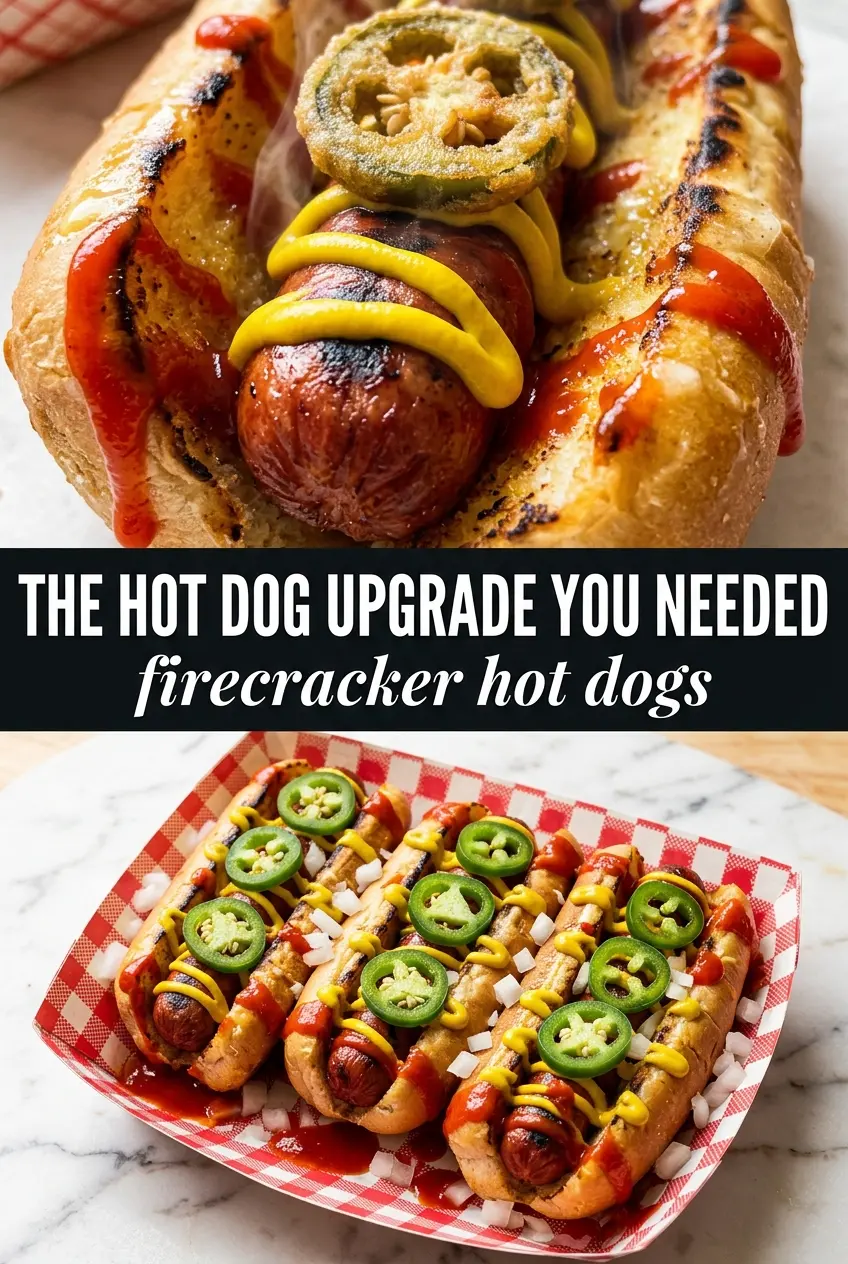
Firecracker Hot Dogs
Ingredients
Equipment
Method
- Score each beef hot dog with diagonal cuts or a spiral cut to help them char and open on the grill. Keep the cuts shallow enough to avoid separating the dog completely.
- Preheat the grill pan to medium-high heat, then cook the hot dogs for 8–10 minutes, turning frequently, until charred and split open slightly. The surface should show dark grill marks and the center should open along your cuts.
- Butter the inside of each hot dog bun and toast on the grill for 1–2 minutes until golden. Flip as needed so both sides develop color without burning.
- Place a hot dog in each toasted bun and top with jalapeño relish, a squeeze of yellow mustard, and a drizzle of sriracha. Aim for a layered look with relish at the core and sauce running over the top.
- Finish each firecracker hot dog with crispy fried onions and serve immediately with ketchup on the side. Add the ketchup last so the buns stay crisp.