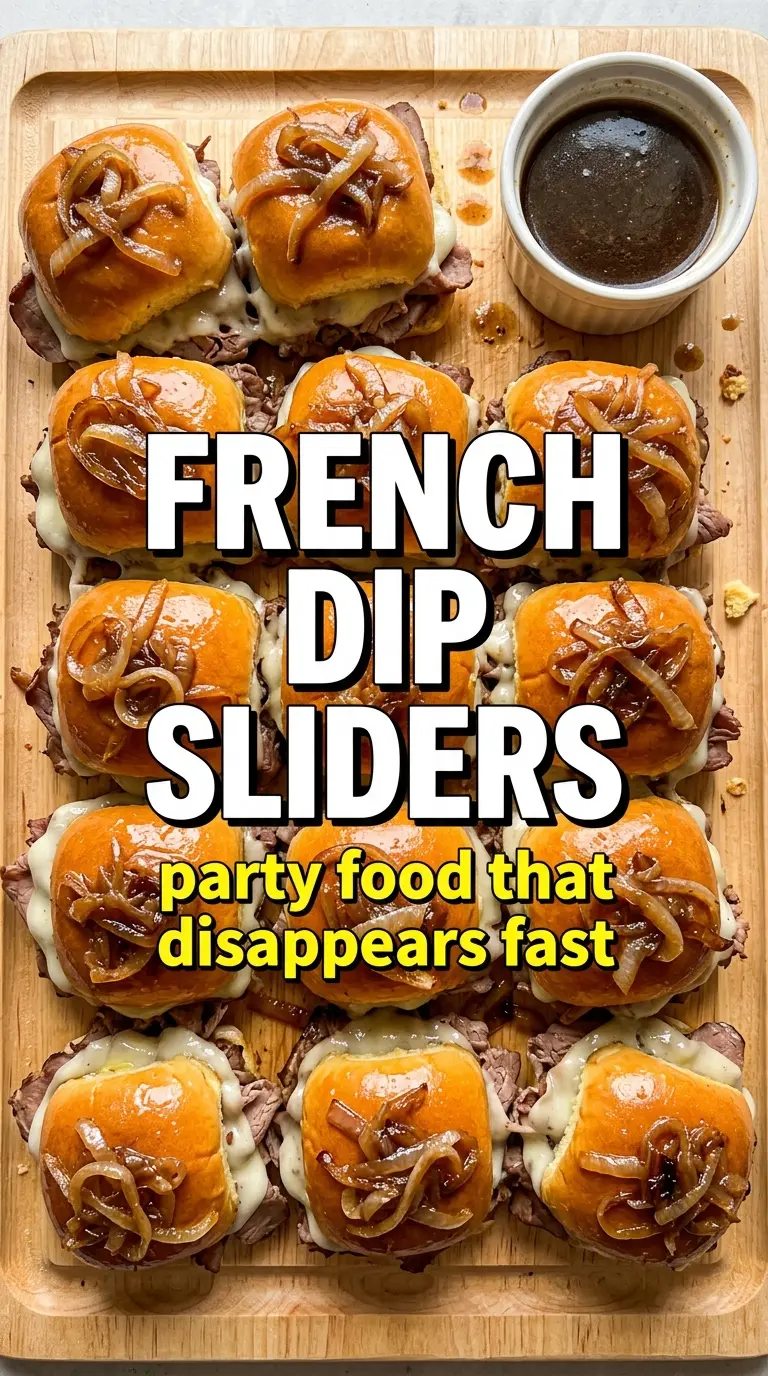
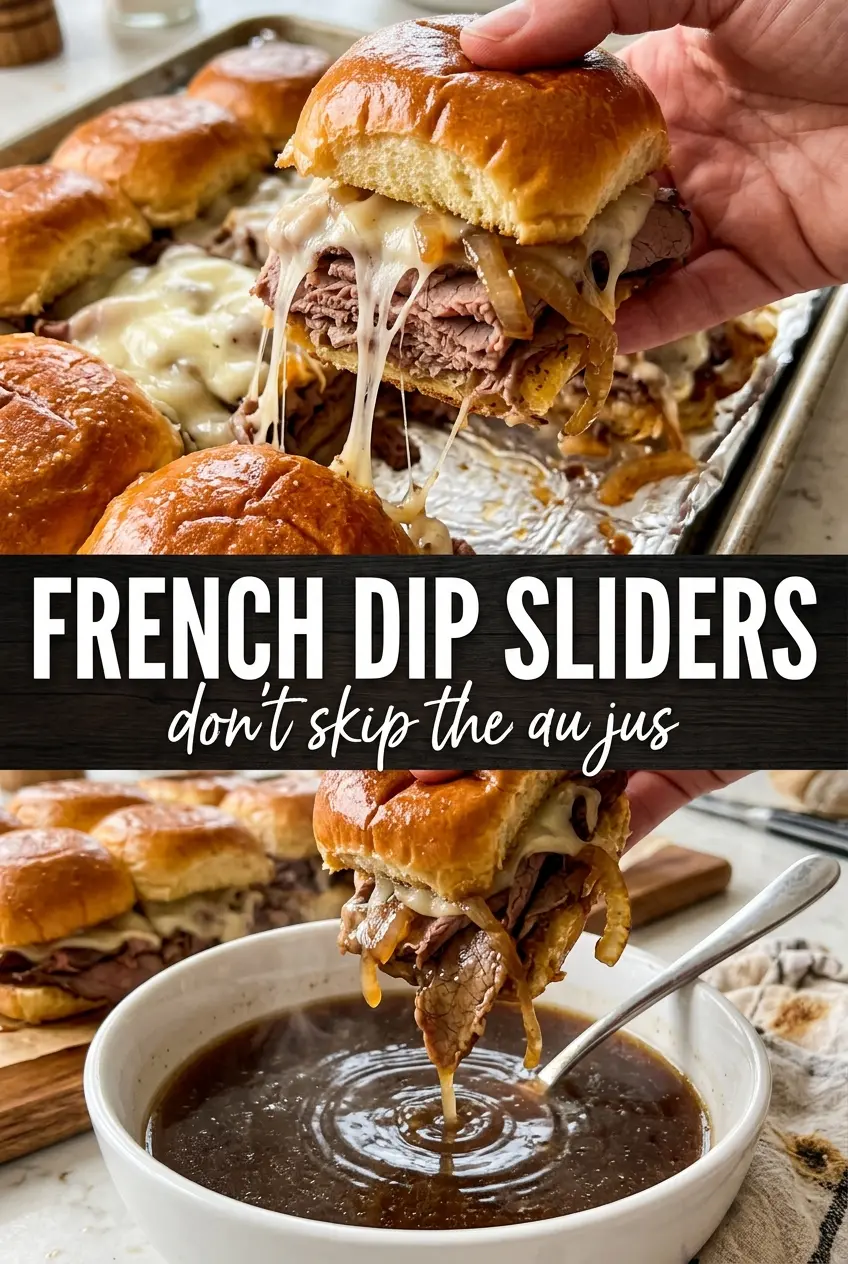
Golden-topped French dip sliders hit that sweet spot between party food and real dinner. The rolls turn buttery and crisp on top while staying soft underneath, the roast beef warms through without drying out, and the provolone melts into the beef so every pull gives you a little cheese stretch and a little juice-soaked mess in the best way. The au jus on the side seals the deal; it turns a simple slider pan into something people hover over until the tray is gone.
What makes this version work is the balance. Hawaiian rolls bring a little sweetness that plays well with the savory beef, but the real flavor comes from the butter topping and the quick au jus. The Worcestershire, garlic powder, and onion powder do a lot of heavy lifting with almost no effort, and brushing the topping over the whole pan before baking helps the tops brown evenly instead of going dry or bland.
Below, I’ll show you the small details that keep the sliders from getting soggy, how to get the best melt on the cheese, and a few smart swaps if you need to work with what’s already in your kitchen.
The tops baked up golden and the bottoms stayed soft, not soggy. I also loved that the au jus came together fast and tasted rich enough to make the sliders feel like restaurant food.
These French dip sliders are the kind of pull-apart party pan you want next to a bowl of hot au jus.
The Trick to Keeping Slider Rolls Soft Underneath and Crisp on Top
The biggest mistake with baked sliders is treating them like a casserole and burying everything under too much moisture. Roast beef brings its own juices, the butter topping adds more fat, and the rolls can go from tender to soggy if the pan is overloaded. This version avoids that by baking covered first, which melts the cheese and warms the beef gently, then uncovering at the end so the tops can brown without steaming.
Foil matters here. It traps the heat long enough to melt the cheese into the meat, but it also keeps the tops from over-browning before the center is hot. If your rolls get too soft on the bottom, the pan was probably overfilled or the sliders sat too long before baking. Assemble them close to bake time and keep the layer of beef even, not piled high in the middle.
- Hawaiian sweet rolls — These bring the slight sweetness that makes French dip sliders taste complete. Any soft slider roll works, but plain dinner rolls lose that contrast with the beef and au jus.
- Deli roast beef — Thinly sliced roast beef heats quickly and stays tender. If the slices are thick, chop or shred them a bit so they don’t pull out in long cold strips.
- Provolone — Provolone melts cleanly and gives you that classic deli-style stretch. Swiss works too, but it brings a sharper note; mozzarella melts well but tastes milder.
- Butter topping — The melted butter, Worcestershire, garlic powder, onion powder, and parsley turn the tops into the best part of the pan. Don’t skip brushing the edges; that’s where the best browning happens.
- Beef broth for the au jus — Use a broth you’d actually sip. A weak broth makes a weak dip, and the few minutes of simmering are what pull the Worcestershire and soy sauce together into something worth serving.
What Each Ingredient Is Actually Doing in This Recipe
- Primary ingredient (the star) — Quality matters most. Choose the best you can find.
- Cooking medium (oil, butter, or broth) — This carries flavors and prevents dryness.
- Seasonings (salt, pepper, spices, herbs) — Layer flavors so nothing overpowers. Build depth gradually.
- Aromatics (garlic, onion, herbs) — Cook with fat to bloom flavors. Become the foundation.
- Supporting ingredients — Complement the main ingredient without overpowering it.
- Sauce or liquid (if applicable) — Brings flavors together. Balance richness with acid.
- Acid (lemon, vinegar, wine, or other) — Brightens and prevents flat-tasting results.
- Final finish (garnish, glaze, or sauce) — Prevents one-dimensional taste and adds visual appeal.
Building the Pan So the Cheese Melts Before the Rolls Dry Out
Layer the base evenly
Set the bottom halves of the rolls into the greased baking dish and spread the roast beef in an even layer across the whole surface. If you leave gaps, the cheese melts into empty pockets and the sliders slice apart unevenly. A steady, even layer gives you clean pulls when you lift a slider from the pan.
Cover the meat with cheese, not the other way around
Lay the provolone directly over the roast beef so it can melt into the meat instead of just sitting on the bread. That contact matters. If the cheese is only touching the roll, it can melt into a sticky layer that doesn’t bind the filling together as well.
Brush, cover, then finish uncovered
After you place the tops on, brush the butter mixture over the entire surface, letting it drip into the seams a little. Cover the pan with foil and bake until the cheese is melted and the sliders are hot in the center, then uncover for the last few minutes so the tops turn deep golden. If the tops darken too fast, the oven is running hot; pull the pan early and let the residual heat finish the job.
Simmer the au jus at the end
The dip takes only a few minutes and should taste savory, salty, and concentrated, not watery. Bring the broth mixture to a gentle simmer until it smells beefy and a little sharp from the Worcestershire. If it tastes flat, it needed more reduction, not more salt.
Three Ways to Adjust French Dip Sliders Without Losing the Point
Use Swiss instead of provolone for a sharper sandwich
Swiss gives the sliders a more classic deli flavor and a little nuttier edge. It melts well, but it won’t stretch quite as much as provolone, so the bite feels a touch cleaner and less creamy.
Make them gluten-free with sturdy gluten-free slider rolls
Use gluten-free rolls that can hold up to butter and dipping without collapsing. The texture will be a little less pillowy than Hawaiian rolls, so serve them hot and don’t let the finished sliders sit around too long before eating.
Turn them into a bigger game-day pan
Double the roast beef and cheese if you want a fuller, more substantial slider tray. Keep the layer even instead of mounding the center, or the middle rolls will steam while the outer rolls brown faster.
Storage and Reheating
- Refrigerator: Store leftovers covered for up to 3 days. The rolls soften a little as they sit, but the flavor holds up well.
- Freezer: These freeze best unbaked. Assemble the sliders without the butter topping, wrap tightly, and freeze for up to 1 month. Add the butter topping just before baking.
- Reheating: Warm in a 325°F oven, covered with foil, until hot through. Microwaving works in a pinch, but it makes the bread rubbery and the cheese uneven.
Answers to the Questions Worth Asking
French Dip Sliders
Ingredients
Equipment
Method
- Preheat the oven to 350°F and grease a 9x13 baking dish so the rolls don’t stick.
- Slice the Hawaiian rolls in half horizontally without separating the individual rolls, then place the bottoms in the greased dish.
- Layer the roast beef and provolone cheese evenly over the roll bottoms, then place the roll tops on.
- Whisk the melted butter with Worcestershire sauce, garlic powder, onion powder, and chopped parsley, then brush generously over the roll tops.
- Cover with foil and bake at 350°F for 15 minutes, using the foil to keep the cheese melting evenly.
- Uncover and bake at 350°F for 5 more minutes until the tops are golden and lightly browned.
- Simmer the beef broth with Worcestershire sauce, soy sauce, and garlic powder for 5 minutes to make the au jus.
- Serve the sliders hot with au jus in a ramekin for dipping.