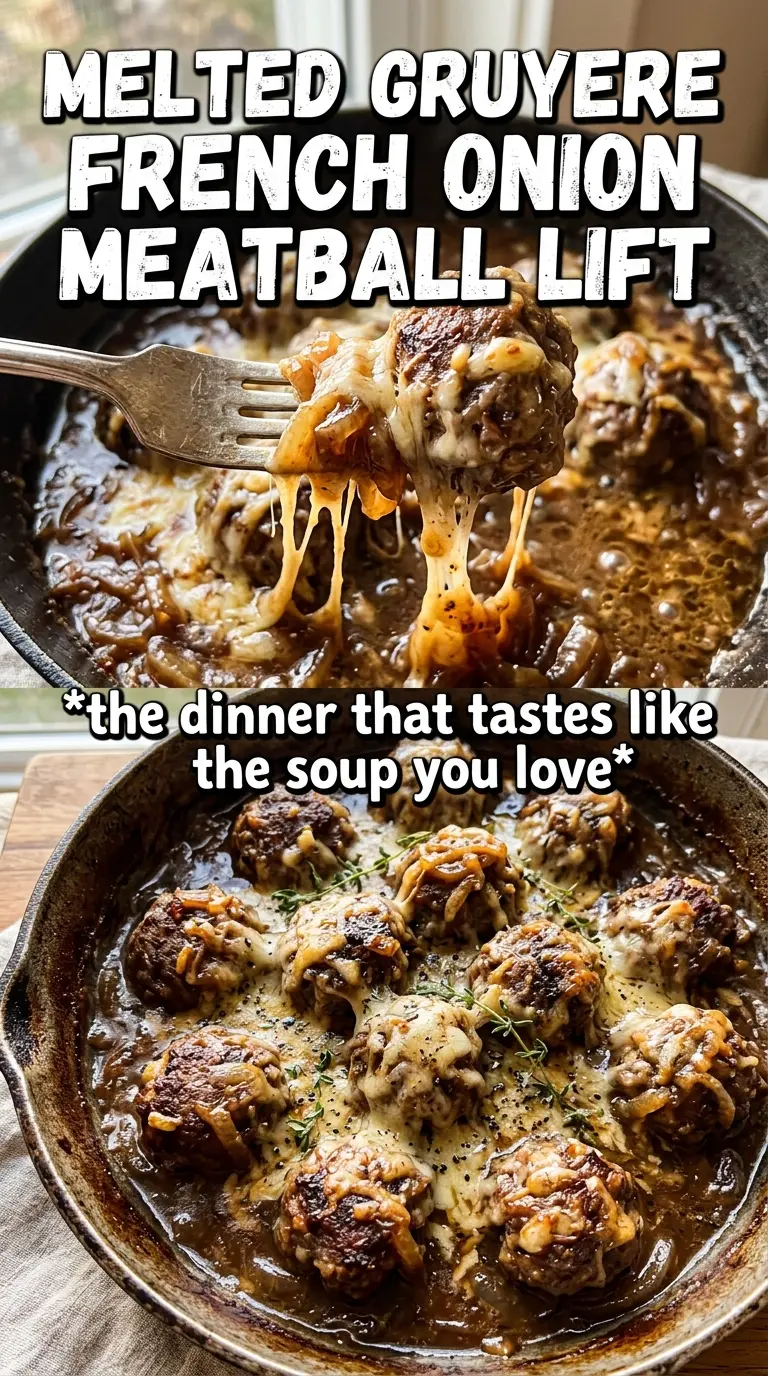
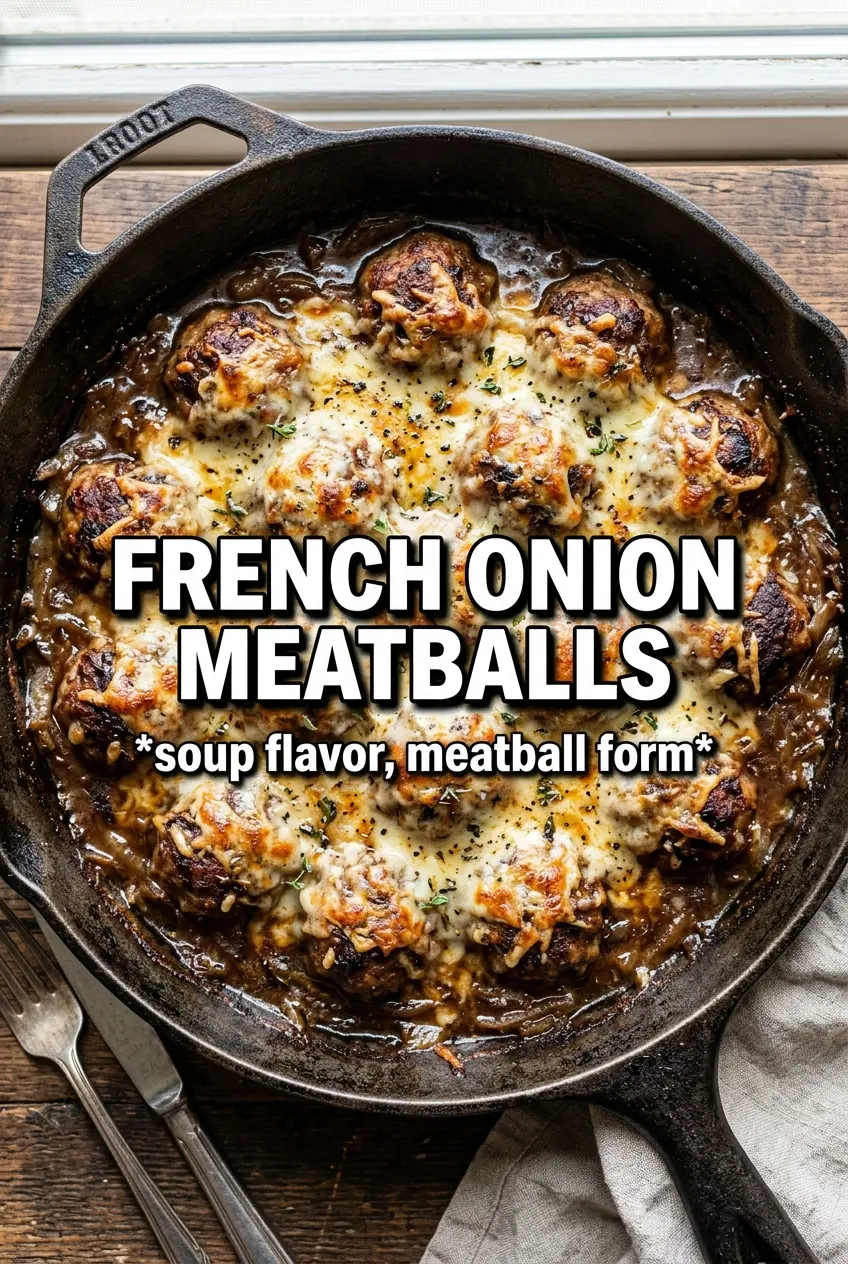
French onion meatballs bring the comfort of a slow-cooked onion soup into a dinner that eats like a full meal. You get browned, tender meatballs tucked into a deep oniony broth, then finished under a blanket of melted Gruyere or provolone that turns golden and a little crispy at the edges. It’s rich without feeling heavy, and the whole dish lands with that classic sweet-savory balance that keeps people going back for one more meatball.
The key is patience with the onions. They need enough time over medium-low heat to turn soft, sweet, and deeply caramelized before the broth goes in; rush that part and the sauce tastes flat instead of layered. Browning the meatballs first matters too, because those crusty bits in the pan become the base of the sauce once the wine or broth loosens them up. I also like using a mix of Worcestershire and thyme here, since both echo the savory depth you expect from French onion soup without making the sauce muddy.
Below, you’ll find the timing that keeps the meatballs tender, the onion stage that gives this dish its depth, and a few smart swaps if you need to change the cheese or make it gluten-free.
The onions cooked down into this glossy, sweet sauce and the cheese browned beautifully under the broiler. My husband kept stealing meatballs from the baking dish before I even got it to the table.
Like French onion meatballs? Save this one for the nights when you want caramelized onions, bubbling cheese, and a skillet sauce that feels a lot fancier than the effort it takes.
The Onion Stage That Keeps This From Tasting Flat
The mistake most people make with French onion-style dishes is stopping the onions too early. Pale onions taste sharp and watery; what you want is a deep golden-brown color and a soft, jammy texture that has lost most of its raw edge. That transformation is where the flavor lives, and it can’t be rushed with higher heat without burning the sugars on the bottom of the pan.
Once the onions are properly caramelized, the deglazing step does the rest of the work. The wine or broth lifts every browned bit from the skillet, and those bits are what give the sauce its backbone. If the pan looks dry while the onions are still cooking, add a splash of water and keep going rather than cranking the heat and risking scorched onions.
What Each Ingredient Is Actually Doing in These Meatballs
- Ground beef — Use a beef blend with enough fat to stay juicy after browning and simmering. Very lean beef can turn dry once it goes under the broiler and sits in the sauce.
- Breadcrumbs and egg — These hold the meatballs together and keep the texture tender instead of dense. If you need a gluten-free version, use gluten-free breadcrumbs in the same amount.
- Worcestershire — This is one of the small ingredients that carries a lot of weight here. It adds savory depth to both the meatballs and the sauce, and there isn’t a perfect substitute, but a splash of soy sauce can cover part of the same ground if needed.
- Onions — Three large onions may look excessive at the start, but they cook down dramatically. Yellow onions give the best sweet-savory balance, while white onions work in a pinch but taste a little sharper.
- Gruyere or provolone — Gruyere gives you that classic nutty French onion soup finish, while provolone melts smoothly and is easier to find. Use the better cheese if you can; this topping is the last big flavor cue in the dish.
How to Build the Sauce Without Overcooking the Meatballs
Brown the Meatballs First
Roll the beef mixture into 1.5-inch balls and brown them in butter until you get a real crust on two or three sides. They do not need to cook through at this point; the goal is flavor and structure. If the pan is crowded, the meatballs steam instead of browning, so work in batches and give them space. Set them aside once they’re deeply browned so they can finish gently in the sauce later.
Caramelize the Onions Slowly
Keep the heat at medium-low and stir often enough to prevent sticking, but not so often that the onions can’t sit and brown. You’re looking for a deep amber color and a soft, silky texture, which usually takes 30 to 35 minutes. If the onions start to catch before they’ve turned sweet, lower the heat and add a spoonful of water or broth to loosen the fond from the pan.
Simmer, Then Broil
After deglazing with wine or broth, add the beef broth, Worcestershire, and thyme, then return the meatballs to the skillet. Let them simmer in the sauce for about 15 minutes so they finish cooking without drying out. If your skillet isn’t oven-safe, transfer everything to a baking dish before topping with cheese. Broil just until the cheese bubbles and turns golden in spots; walk away from the oven and you’ll miss the line between melted and scorched in seconds.
How to Adapt These Meatballs for Your Pantry
Make It Gluten-Free
Swap in gluten-free breadcrumbs and use a gluten-free beef broth and Worcestershire sauce. The meatballs still hold together well, and the sauce keeps the same rich, oniony character.
Use Provolone for a Milder Finish
Provolone melts into a softer, less nutty topping than Gruyere, which makes the whole dish a little gentler and more kid-friendly. It won’t have quite the same French onion soup edge, but it browns beautifully under the broiler.
Go Leaner, But Expect a Firmer Bite
You can use leaner ground beef, but the meatballs will be a little firmer and less juicy after simmering. If you go that route, don’t overbake under the broiler, and keep the simmer gentle so the meat stays tender.
Storage and Reheating
- Refrigerator: Store leftovers in an airtight container for up to 4 days. The sauce thickens as it chills, which is normal.
- Freezer: Freeze the meatballs and sauce without the cheese topping for up to 2 months. Thaw overnight in the fridge before reheating and adding fresh cheese.
- Reheating: Warm gently on the stovetop over low heat or in a covered baking dish at 325°F until hot. High heat can tighten the meatballs and make the cheese greasy, so go slow.
Questions I Get Asked About This Recipe
French Onion Meatballs
Ingredients
Equipment
Method
- Mix ground beef, breadcrumbs, egg, Worcestershire, garlic powder, onion powder, and salt and pepper into 1.5-inch balls, then brown them in butter in a skillet and set aside.
- Keep the meatballs warm and set aside while you caramelize the onions in the same skillet, using the remaining browned bits for flavor.
- Caramelize thinly sliced large onions in butter over medium-low heat for 30-35 minutes, stirring occasionally, until deep golden and softened.
- Deglaze with dry white wine or beef broth, then add beef broth, Worcestershire, and fresh thyme and bring to a gentle simmer.
- Return the browned meatballs to the caramelized onion sauce and simmer for 15 minutes until cooked through and coated.
- Transfer to a baking dish if needed, scatter Gruyere or provolone over the top, and broil for 3-4 minutes until golden and bubbly.