Warm potatoes soaked in a sharp white wine vinaigrette turn into something far more interesting than the usual mayo-heavy picnic side. This French potato salad stays light, glossy, and full of flavor, with tender fingerlings that hold their shape and soak up the dressing while they’re still warm enough to drink it in.
The trick is timing. The potatoes need to be drained and sliced while they’re still hot so the mustardy vinaigrette can cling to every edge instead of sliding off. A little dry white wine in the dressing softens the bite of the vinegar and gives the whole bowl that clean, restrained French finish that feels elegant without trying too hard.
Below, I’ll show you how to keep the potatoes from turning watery, why warm dressing matters here, and how to adjust the herbs if you want a slightly different finish.
The vinaigrette coated the potatoes perfectly, and after an hour on the counter the flavors had soaked all the way through without getting oily or heavy.
Save this French potato salad for a light side with glossy potatoes and a bright white wine vinaigrette.
The Reason This Salad Stays Glossy Instead of Dense
The biggest mistake with potato salad is waiting until the potatoes are cold before dressing them. Cold potatoes don’t absorb vinaigrette well, and you end up with flavor on the outside and bland centers underneath. Warm potatoes, especially fingerlings cut while they’re still steaming, open up just enough to take in the vinaigrette without falling apart.
White wine vinegar and Dijon do the heavy lifting here, but the olive oil matters too. If the oil is too aggressive or low quality, the salad can taste flat or greasy instead of clean and balanced. The potatoes should be tender but still intact; if you overboil them, they’ll break down when you toss them and the salad will turn pasty instead of silky.
What Each Ingredient Is Actually Doing in the Bowl
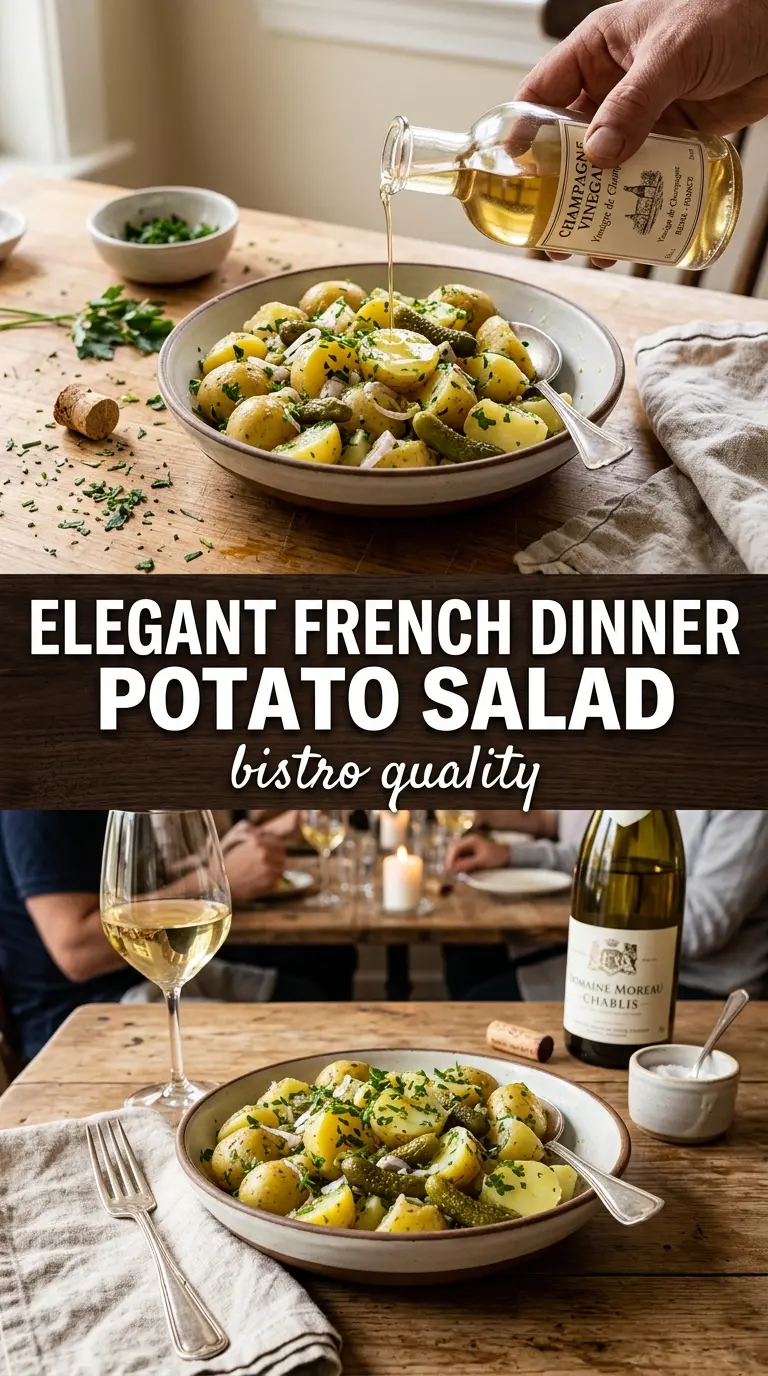
- Fingerling potatoes — Their waxy texture holds up after boiling and tossing, so you get defined slices instead of crumbles. Yukon Golds can work in a pinch, but they’re softer, so handle them a little more gently.
- Dry white wine — This gives the dressing a softer, rounder acidity than vinegar alone. Pick something you’d drink; a harsh cooking wine will show up in the finished salad.
- Dijon mustard — It emulsifies the dressing and helps it cling to the potatoes. Grainy mustard won’t break the recipe, but it gives a different texture and a less smooth finish.
- Shallots — Minced shallots bring a mild onion bite that mellows as the potatoes marinate. Red onion is sharper and more aggressive, so use less if you swap it in.
- Tarragon and parsley — Parsley keeps things fresh, while tarragon gives the salad its distinctly French note. If tarragon isn’t your thing, use more parsley, but the salad will taste cleaner and less herbal.
How to Marinate the Potatoes So They Absorb Flavor, Not Moisture
Boil the potatoes until the centers are just tender
Start the potatoes in well-salted water and simmer them until a knife slips in without resistance, but the potatoes still feel intact. You want tender, not fluffy. If they’re left in the pot too long, the skins split and the edges turn mushy before they ever hit the dressing.
Whisk the vinaigrette while the potatoes are still hot
The dressing should come together smooth and glossy before it meets the potatoes. Whisk the wine, vinegar, Dijon, shallots, salt, pepper, and olive oil until the mustard disappears into the liquid. If the oil sits in a slick on top, keep whisking a little longer; that emulsion helps the dressing coat the potatoes instead of pooling at the bottom of the bowl.
Toss gently, then let the salad rest at room temperature
Slice the potatoes while they’re warm and toss them with the dressing right away. Use a broad spoon or spatula and fold rather than stir hard, since the potatoes are at their most fragile here. The hour of resting at room temperature is where the salad finishes itself; the potatoes soak up the vinaigrette, and the shallots lose their sharp edge without getting cooked.
Finish with herbs just before serving
Add the parsley and tarragon right at the end so they stay bright and fragrant. If they go in too early, the parsley can darken and the tarragon loses some of its lift. Serve the salad at room temperature, not cold from the fridge, because the dressing tastes flatter once the olive oil firms up.
Three Ways to Bend This Recipe Without Losing the French Feel
Make it dairy-free and naturally vegetarian
This recipe is already dairy-free and vegetarian, which is part of why it feels so clean and easy to serve with grilled fish, roast chicken, or a simple vegetable plate. Keep the dressing bright and herbal, and it stays light enough to sit next to richer main dishes without competing with them.
Swap in new potatoes if you can’t find fingerlings
New potatoes or small Yukon Golds work well here. Cut them into even pieces after boiling so they absorb the dressing at the same rate, and handle them gently because they’re a little softer than fingerlings. The result is still elegant, just slightly creamier.
Use less tarragon for a softer herbal finish
Tarragon has a distinctive anise note that some people love and others want in a smaller dose. If that’s you, cut it back and replace the volume with more parsley. You’ll lose some of the classic French character, but the salad will taste fresher and more neutral.
Add capers for a saltier, more briny edge
A spoonful of drained capers brings a sharper, briny punch that plays nicely with the mustard and vinegar. Add them with the herbs so they stay distinct. This makes the salad a little bolder and works especially well alongside grilled meats or smoked fish.
Storage and Reheating
- Refrigerator: Store covered for up to 3 days. The potatoes will firm up a bit, and the herbs will soften, but the flavor stays good.
- Freezer: Don’t freeze this salad. The potatoes turn mealy and the vinaigrette separates once thawed.
- Reheating: This salad is meant to be served at room temperature. If it has been chilled, let it sit out for 20 to 30 minutes before serving so the olive oil loosens and the dressing tastes lively again.
Answers to the Questions Worth Asking
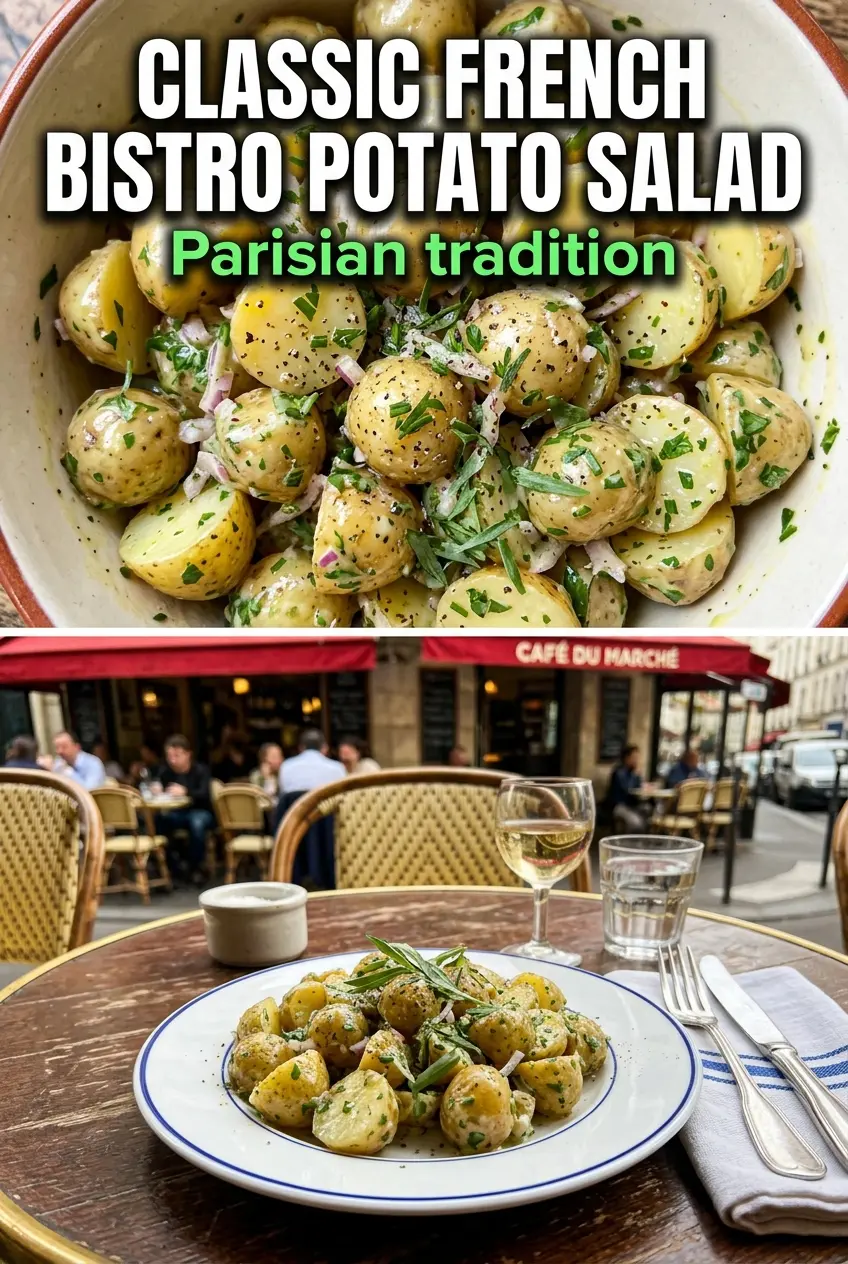
French Potato Salad
Ingredients
Equipment
Method
- Bring a pot of water to a boil, then add the fingerling potatoes and cook until tender, about 20 minutes at a steady boil with visible bubbling. Drain the potatoes and slice them while warm so the starch helps the vinaigrette cling.
- Whisk together the dry white wine, olive oil, white wine vinegar, Dijon mustard, minced shallots, salt, and pepper until smooth and glossy. Keep whisking until the mixture looks evenly emulsified.
- Pour the vinaigrette over the warm sliced potatoes and toss gently so the potatoes are evenly coated without breaking. Let the dressed potatoes stand at room temperature for 1 hour to marinate.
- Add the chopped parsley and chopped tarragon, then toss briefly to distribute the herbs. Serve at room temperature so the salad tastes balanced and light.