Pork chops in garlic mushroom sauce land on the plate with the kind of deep, savory comfort that makes a plain weeknight dinner feel finished. The chops stay juicy, the mushrooms turn browned and meaty, and the sauce pulls everything together with a glossy, pan-built richness that tastes like it simmered longer than it did.
What makes this version work is the order. The pork gets a hard sear first, then the mushrooms cook in the same pan until they’ve given up their water and taken on color. That browning is where the flavor lives, and it’s also why the sauce tastes rounded instead of thin. A splash of sherry or white wine loosens the pan, Worcestershire deepens the broth, and a small cornstarch slurry gives the sauce just enough body to cling to the chops without turning pasty.
If you’ve ever ended up with pale mushrooms or a sauce that felt flat, the notes below will help. I’ve included the parts that matter most, the swaps that actually work, and the little timing details that keep the pork tender.
The mushrooms browned instead of steaming, and the sauce turned out glossy and rich without getting heavy. I used the sherry and the whole skillet tasted deeper after that quick simmer.
Save these pork chops in garlic mushroom sauce for the nights when you want a pan-seared dinner with a deep brown skillet gravy.
The Reason the Mushrooms Need the Empty Pan
The biggest mistake in mushroom pork chops is rushing the middle of the pan. If the mushrooms go in while the pork is still releasing juices, they steam and turn soft instead of taking on that deep, browned edge that makes the sauce taste like dinner with some backbone. Once the chops come out, the pan needs to stay hot enough to drive off moisture fast.
The other thing that matters is resisting the urge to crowd the skillet. Give the mushrooms room to sit against the heat. They’ll shrink as they cook, then start to darken and pick up the browned bits left behind by the pork. That fond is the base of the sauce, and it’s the reason the finished dish tastes layered instead of just salty.
What Each Ingredient Is Doing in the Skillet

- Boneless pork chops — One-inch chops hold up well to a hard sear and a short finish in the sauce. Thinner chops dry out fast, while thicker ones need a little more oven or simmer time. If you swap in bone-in chops, add a few extra minutes and check for doneness at the bone.
- Mixed mushrooms — A mix gives you better texture and a deeper flavor than one variety alone. Cremini, baby bella, and button mushrooms all work; the important part is slicing them evenly so they brown at the same pace. Avoid pre-washed mushrooms sitting wet in the package if you can.
- Dry sherry or white wine — This is the sharp, bright note that lifts the sauce after browning. If you skip it, the sauce still works, but it loses some depth. Use a dry wine here, not anything sweet.
- Beef broth — Chicken broth can be used in a pinch, but beef broth gives the sauce a darker, rounder base that fits the mushrooms and pork. Choose a broth you’d actually sip; watery broth makes a thin sauce no matter how well you thicken it.
- Cornstarch slurry — This is what turns the pan juices into a sauce that coats the pork instead of pooling underneath it. Stir it in at a simmer, not a boil, so it thickens cleanly without turning gummy.
How to Keep the Pork Juicy While the Sauce Builds
Searing the Chops First
Season the pork generously and lay it into hot oil without moving it for the first few minutes. You want a browned crust that releases cleanly from the pan before you flip. If the chops stick, they’re not ready yet. Pull them once they’re browned on both sides; they’ll finish in the sauce later, and that short return keeps them tender instead of overcooked.
Cooking the Mushrooms Until They Brown
Add the butter and mushrooms to the same skillet and let them sit long enough to release their liquid, then keep cooking until that liquid cooks off and the edges go dark. This stage takes a little patience, but it’s where the sauce gets its savory backbone. If the heat is too low, the mushrooms go pale and rubbery. Medium-high heat is the sweet spot here.
Deglazing and Thickening the Sauce
Once the mushrooms are deeply browned, add the garlic and thyme for just a short burst so the garlic stays fragrant, not bitter. Pour in the sherry or wine and scrape the pan hard to loosen the browned bits, then add the broth and Worcestershire. When the sauce comes to a steady simmer, stir in the cornstarch slurry and let it bubble until it turns glossy and lightly coats a spoon.
Bringing Everything Back Together
Return the pork chops and spoon sauce over the top as they simmer for the final few minutes. That last simmer warms the meat through and gives the sauce a chance to cling to the chops. If you let it cook too long at this stage, the pork tightens up. A short finish is enough.
How to Change This Dish Without Losing What Makes It Work
Make It Dairy-Free
Swap the butter for more olive oil or a dairy-free butter you trust in a skillet. The sauce will still brown nicely because the mushrooms are doing most of the flavor work, but the finish will be a little less plush than the butter version.
Use Bone-In Pork Chops
Bone-in chops bring a little more flavor and stay forgiving if they’re on the thicker side, but they need extra time after the sauce goes in. Keep the simmer gentle so the outside doesn’t overcook before the center reaches temperature.
Skip the Wine
If you don’t want to cook with wine, use extra beef broth plus a small splash of apple cider vinegar or lemon juice at the end. You’ll still get acidity, which keeps the sauce from tasting flat, though the flavor will be a little less rounded than with sherry.
Make It Gluten-Free
This recipe is already close, but check your Worcestershire sauce and broth to confirm they’re gluten-free. Cornstarch is naturally gluten-free and thickens the sauce cleanly, so there’s no need for flour here.
Storage and Reheating
- Refrigerator: Store leftovers in an airtight container for up to 3 days. The sauce may thicken a bit as it chills.
- Freezer: It freezes, but the mushroom texture softens after thawing. For best results, freeze the pork and sauce together for up to 2 months and thaw overnight in the fridge.
- Reheating: Reheat gently in a skillet over low heat with a splash of broth to loosen the sauce. High heat can dry out the pork and make the sauce split or tighten too much.
Answers to the Questions Worth Asking
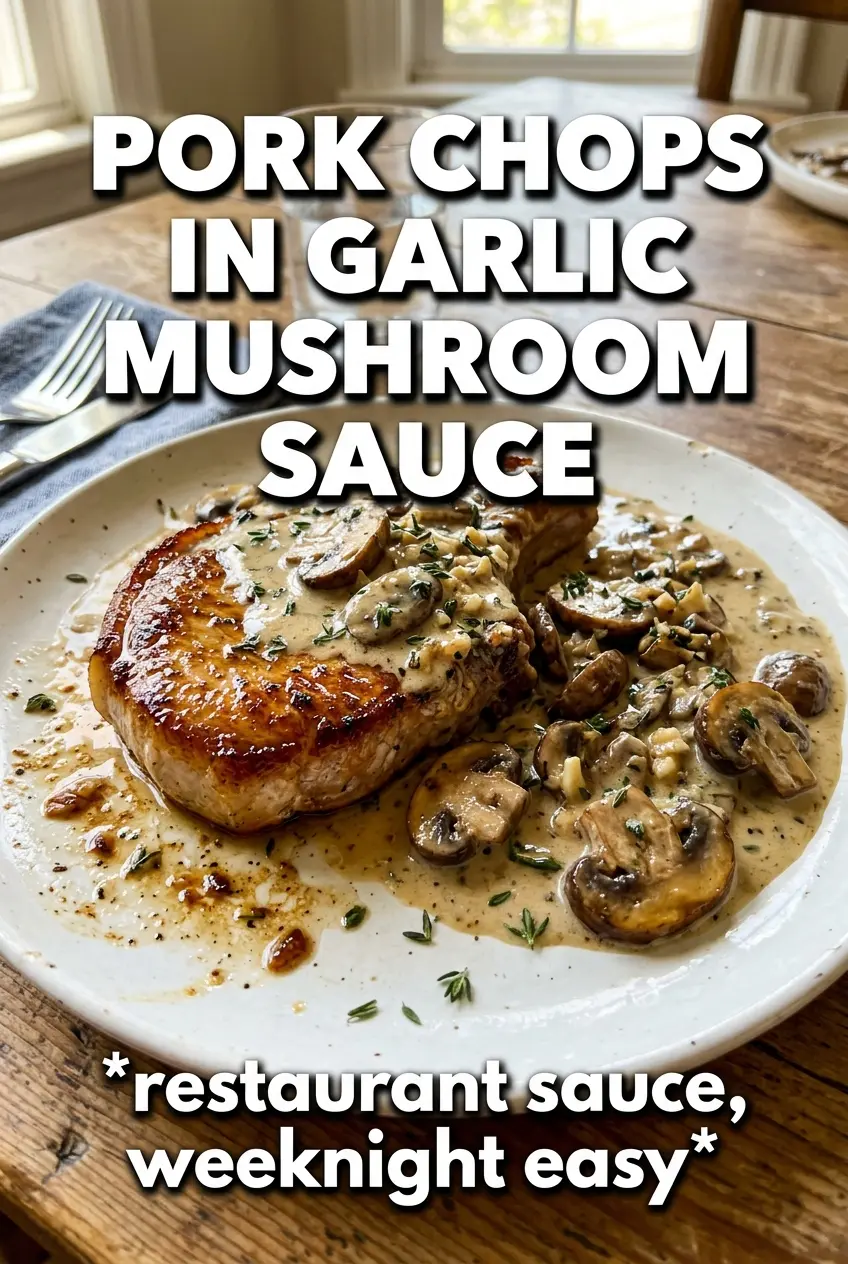
Pork Chops in Garlic Mushroom Sauce
Ingredients
Equipment
Method
- Season the pork chops with salt and pepper. Heat olive oil in a cast iron skillet over medium-high heat and sear pork chops for 4–5 minutes per side, until browned; set aside.
- Melt the butter in the same pan. Add sliced mixed mushrooms and cook for 5–6 minutes, stirring occasionally, until deeply caramelized and dark golden-brown.
- Add minced garlic and dried thyme and cook for 30 seconds. Deglaze with dry sherry (or white wine) and cook for 1 minute, scraping up browned bits; pour in beef broth and Worcestershire sauce and bring to a simmer.
- Stir in the cornstarch slurry and cook until the sauce thickens to a glossy consistency. Return pork chops to the pan, coat in sauce, and simmer for 3 minutes, then garnish with fresh parsley.