Golden-seared Greek chicken meatballs have a way of disappearing fast, especially when they land over a cool smear of tzatziki and get finished with feta, dill, and a squeeze of lemon. The outside gets crisp and deeply browned in the skillet while the inside stays tender and juicy, which is exactly what keeps this version in the weeknight rotation. They taste bright and herby without feeling heavy, and they hold together well enough to cook in a pan without falling apart.
The trick is in the balance. Ground chicken needs enough binder to stay intact, but not so much that the meatballs turn bready, so the egg and breadcrumbs are just enough to keep them tender. Fresh dill, garlic, oregano, lemon zest, and cumin build a classic Mediterranean flavor, and searing them in olive oil gives you that browned crust you can’t get from mixing alone. I also like to keep the shape fairly small so they cook through before the outside dries out.
Below, you’ll find the searing detail that keeps chicken meatballs juicy, plus a few smart swaps if you need to work around what’s in your kitchen. The serving ideas matter here too, because the cool tzatziki and salty feta turn a simple pan of meatballs into a full dinner.
The meatballs stayed incredibly juicy, and the lemon garlic flavor came through without overpowering the tzatziki. I baked a few to test and the skillet batch had the better crust by far.
These Greek chicken meatballs are made for a cool layer of tzatziki and a bright finish of lemon and dill.
The Secret to Juicy Chicken Meatballs Is Not Overmixing the Bowl
Ground chicken can go dense in a hurry if you work it like bread dough. The mixture should look evenly combined, but still loose enough that you can form the meatballs without compressing them into hard little rounds. If the mixture feels sticky, that’s normal; wet your hands lightly and keep the shaping gentle.
The other thing that matters here is size. Smaller meatballs cook more evenly and stay tender in the center before the outside overcooks. That’s why these are portioned into 18 pieces instead of a handful of large ones. They brown fast, finish fast, and still have time to pick up flavor from the skillet.
What Each Ingredient Is Actually Doing in This Dish

- Ground chicken — This is the base, and lean chicken benefits from a little structure plus a fast cook. If you swap in ground turkey, use the same method; just avoid extra-lean meat if you want the same tenderness.
- Breadcrumbs and egg — These hold the meatballs together without making them heavy. If you need a gluten-free option, use fine gluten-free breadcrumbs or crushed gluten-free crackers in the same amount.
- Fresh dill, oregano, lemon zest, and cumin — This combination gives the meatballs their Greek-leaning, savory-herb flavor. Fresh dill matters most here; dried dill won’t bring the same brightness, though you can use an extra teaspoon of dried oregano if that’s what you have.
- Garlic — Garlic runs through the meatballs and gives them backbone under the tzatziki. Mince it finely so it disappears into the mixture instead of hitting as sharp little raw bits.
- Olive oil — You need enough oil to sear, not shallow-fry. A good olive oil adds flavor and helps the meatballs pick up that deep golden crust without sticking.
- Tzatziki, feta, dill, and lemon wedges — These aren’t decoration. The cool, tangy tzatziki balances the richness of the meatballs, feta adds salt, and lemon sharpens everything at the end.
How to Sear Them So They Brown Before They Dry Out
Mix the Meatball Base Gently
Combine the chicken with the breadcrumbs, egg, garlic, dill, oregano, lemon zest, cumin, salt, and pepper just until the ingredients look evenly distributed. Stop there. If you keep stirring, the mixture tightens up and the finished meatballs turn springy instead of tender. A spoon or your fingertips works better than kneading.
Shape Small, Even Meatballs
Divide the mixture into 18 portions and roll them lightly into balls. They don’t need to be perfect, but they should be similar in size so they finish cooking at the same time. If your hands start sticking, rinse them or rub them with a thin film of oil. That keeps the shaping clean without packing the meat too tightly.
Get the Pan Hot Before the First Meatball Goes In
Warm the olive oil over medium-high heat until it shimmers. That’s the moment you want, not smoking-hot oil that burns the garlic flavor before the centers cook. Add the meatballs in batches with space between them; if they’re crowded, they steam and lose the crust. Give them 4 to 5 minutes per side and only turn them once a side has formed a deep golden surface that releases easily from the pan.
Check the Center, Then Let Them Rest
Chicken needs to reach 165°F in the middle, and an instant-read thermometer is the cleanest way to know. If the outside looks deeply browned but the center is short, lower the heat slightly and give them another minute or two. Once they come off the pan, let them rest for 2 minutes so the juices settle instead of spilling onto the plate.
Three Smart Ways to Adapt These Greek Chicken Meatballs
Make Them Gluten-Free Without Losing Structure
Swap the breadcrumbs for fine gluten-free breadcrumbs in the same amount. You want something fine enough to disappear into the mixture, not coarse crumbs that make the meatballs crumbly. The texture stays close to the original, and the pan-seared finish still works the same way.
Bake Them Instead of Searing
If you want to skip the stovetop, bake the shaped meatballs on a lined sheet pan at 425°F until they reach 165°F in the center. You won’t get quite the same crust, but you’ll still get a good browned exterior and a cleaner, hands-off finish. A quick broil at the end can help if you want more color.
Use Ground Turkey for a Slightly Leaner Version
Ground turkey works in the same recipe, especially if you use 93% lean rather than extra-lean. The flavor stays bright and herb-forward, but the texture can be a touch drier, so don’t overcook it. Serve it with plenty of tzatziki to keep every bite balanced.
Storage and Reheating
- Refrigerator: Store cooked meatballs in an airtight container for up to 4 days. They stay moist, but the crust softens a bit once chilled.
- Freezer: Freeze the cooked meatballs on a tray first, then move them to a freezer bag for up to 3 months. Tzatziki doesn’t freeze well, so freeze the meatballs plain and add the sauce fresh.
- Reheating: Reheat in a 350°F oven until warmed through, or use a skillet over medium-low heat with a splash of water and a lid. High heat dries chicken out fast, so don’t blast them in the microwave unless you’re using short bursts and checking often.
Questions I Get Asked About This Recipe
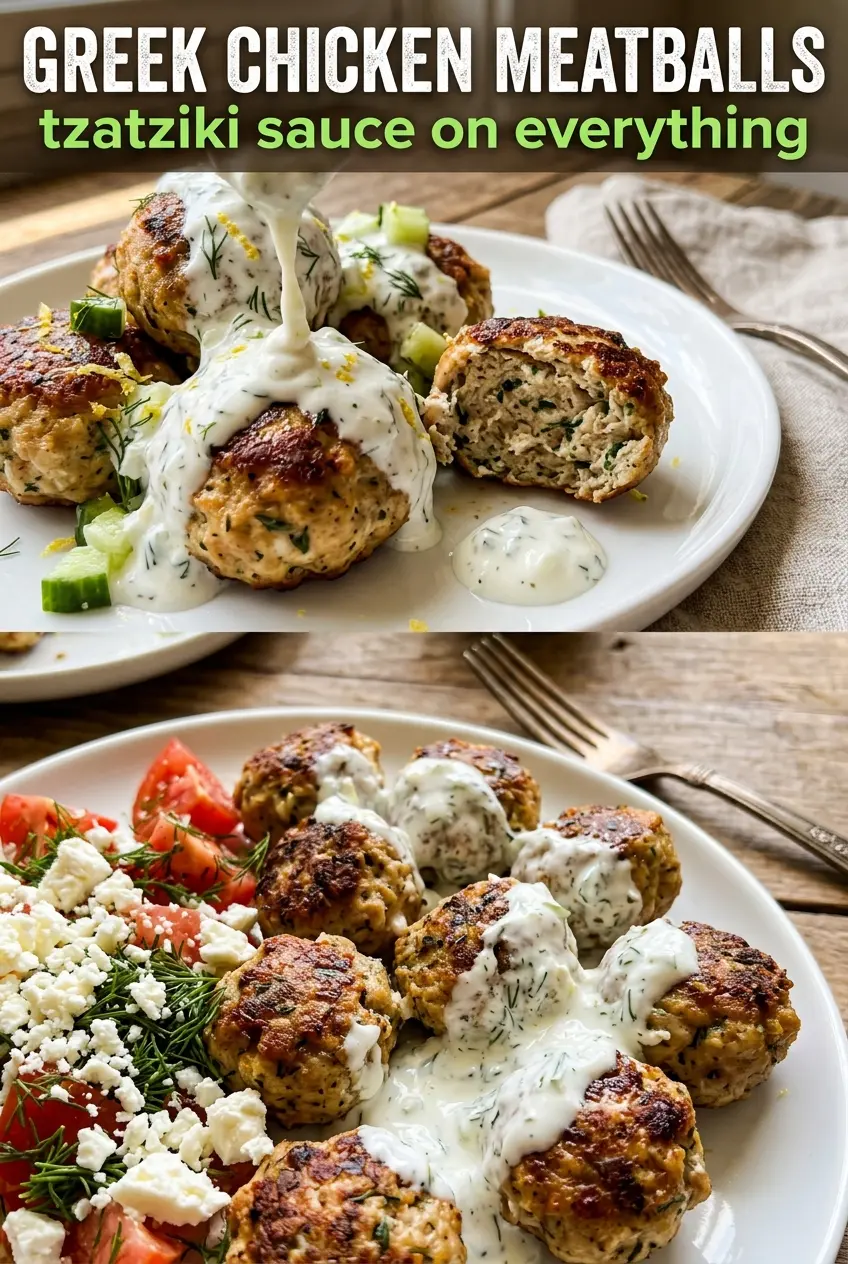
Greek Chicken Meatballs
Ingredients
Equipment
Method
- Combine ground chicken, breadcrumbs, egg, minced garlic, chopped fresh dill, dried oregano, lemon zest, cumin, and salt and pepper in a bowl. Mix gently until just combined, then shape into 18 even meatballs.
- Heat olive oil in a large skillet over medium-high heat until shimmering. Add meatballs in batches and sear for 4–5 minutes per side until deeply golden on all sides and the center reaches 165°F.
- Transfer meatballs to a plate and let rest for 2 minutes. Serve over a generous spread of tzatziki, then top with crumbled feta, fresh dill, and lemon wedges.