Roasted sweet potatoes, crispy chickpeas, and a glossy fig balsamic vinaigrette give these harvest bowls the kind of balance that keeps them in regular rotation. You get warm grains, cool raw Brussels sprouts, bright pomegranate seeds, and salty goat cheese all in one bowl, so every bite lands somewhere between hearty and fresh.
What makes this version work is the contrast. The sweet potatoes and chickpeas need enough oven time to pick up color, but they’re roasted separately so the chickpeas stay crisp instead of steaming beside the softer potatoes. The vinaigrette leans on fig jam for body and natural sweetness, while Dijon and balsamic cut through it so the whole bowl doesn’t taste flat or sugary.
Below, I’ve included the small details that matter: how to keep the chickpeas crunchy, how to shave the Brussels sprouts so they’re pleasant raw, and a few swaps if you need to change up the grains or dairy.
The chickpeas got crisp and the fig balsamic was thick enough to coat everything without making the greens soggy. I packed the leftovers for lunch and the farro held up beautifully the next day.
Save these harvest bowls with fig balsamic vinaigrette for a grain bowl that’s equal parts hearty, crisp, and tangy-sweet.
The Reason the Chickpeas and Sweet Potatoes Need Separate Roasting
If you roast the chickpeas and sweet potatoes together, one of them gives up what the other needs. The potatoes release moisture as they cook, and that steam softens the chickpeas before they can turn crisp. Keeping them on separate pans lets the potatoes caramelize and the chickpeas dry out enough to get that brittle, toasted shell.
This matters even more if your oven runs cool or you crowd the sheet pan. Give both ingredients space and let the chickpeas sit in a single layer after roasting so they keep their texture until assembly. If they go limp, it’s almost always because they were packed too tightly or dressed before they were cool.
What Each Component Is Actually Doing in These Bowls
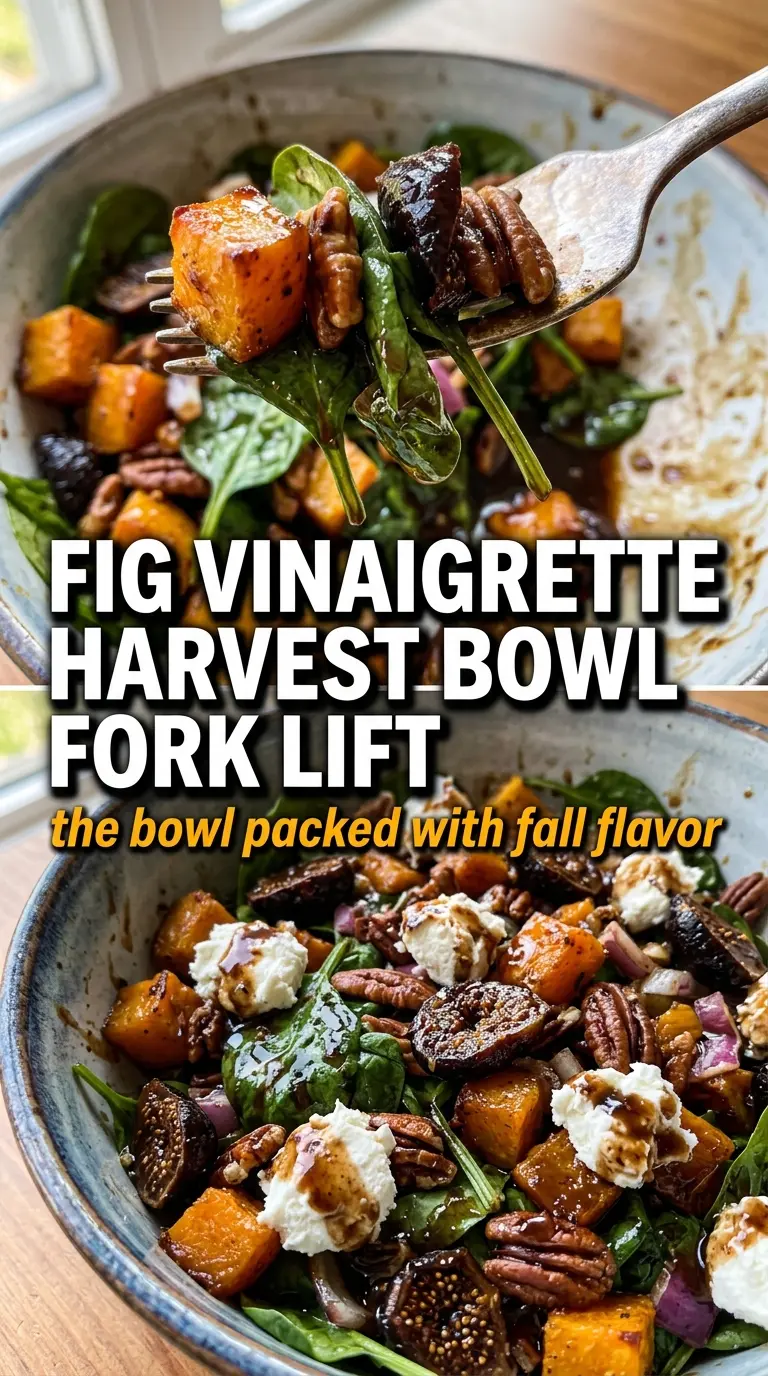
- Farro or quinoa — Farro gives the bowl a chewy, nutty base and holds up well under the vinaigrette. Quinoa is lighter and naturally gluten-free, and it works best if you fluff it after cooking so it doesn’t clump under the toppings.
- Sweet potatoes — These bring sweetness and a soft, caramelized center. Cut them into even cubes so they roast at the same pace; uneven pieces mean some will collapse before others pick up color.
- Chickpeas — Roasting is what turns them from bland and soft to crunchy and savory. Pat them dry before they hit the oven, or the moisture on the surface will keep them from crisping.
- Shaved Brussels sprouts — Raw Brussels add crunch and a little bitterness that keeps the bowl from tasting too sweet. Slice them thin enough that they soften slightly under the dressing, but not so thin they disappear.
- Fig jam — This is the backbone of the vinaigrette. It gives the dressing body, sweetness, and a little fruit depth that plain balsamic can’t provide on its own.
- Goat cheese — The tangy creaminess cuts through the sweet components and ties the warm and cool ingredients together. Feta works in a pinch, but it’s saltier and less lush.
Building the Bowl So Nothing Turns Watery or Flat
Roasting for Texture, Not Just Temperature
Get both sheet pans into a hot 425°F oven so the vegetables and chickpeas start browning quickly. The sweet potatoes are done when the edges look caramelized and the centers give easily with a fork, while the chickpeas should sound a little dry when you shake the pan. If the chickpeas still feel soft, keep them going a few minutes longer and let them cool on the pan instead of transferring them right away.
Whisking the Dressing Until It Turns Glossy
Combine the fig jam, balsamic vinegar, olive oil, Dijon, and garlic until the dressing looks smooth and slightly thickened. If it seems broken at first, keep whisking; Dijon helps the mixture emulsify, and the jam needs a minute to dissolve fully. Taste it before assembling. If it reads too sharp, add a touch more jam. If it feels sweet, add a pinch of salt and another splash of vinegar.
Assembling in the Right Order
Start with the warm grain base, then layer on the sweet potatoes, chickpeas, Brussels sprouts, pomegranate seeds, pecans, and goat cheese. Keep the vinaigrette off until the end so the sprouts stay crisp and the nuts keep their crunch. Drizzle generously, but don’t drown the bowl; you want each bite coated, not pooled.
Make It Gluten-Free With Quinoa
Quinoa is the cleanest swap if you need this bowl to be gluten-free. It changes the texture from chewy to lighter and fluffier, but it still gives the toppings a sturdy base and doesn’t soak up the dressing as aggressively as farro.
Make It Dairy-Free Without Losing Contrast
Leave out the goat cheese and add a little extra salt to the vinaigrette, then finish with more pomegranate seeds or a handful of avocado for creaminess. You lose the tangy dairy note, but the bowl still has enough brightness and texture to feel complete.
Swap the Grains When You Need Faster Cook Time
Use microwaveable brown rice or pre-cooked farro if dinner needs to move quickly. The bowl will be softer and less chewy, but the roasted toppings and vinaigrette still carry the whole dish.
Storage and Reheating
- Refrigerator: Store the components separately for up to 4 days. The chickpeas soften a bit, but the flavors hold up well.
- Freezer: The roasted sweet potatoes and grains freeze well for up to 2 months, but don’t freeze the assembled bowls or the fresh toppings. Brussels sprouts, pomegranate, and goat cheese lose their best texture after thawing.
- Reheating: Warm the grains, sweet potatoes, and chickpeas in a skillet or low oven until just heated through. Re-crisp the chickpeas in the oven if needed, and add the dressing only after everything is warm. Microwaving the whole bowl at once makes the sprouts wilt and the pecans lose their crunch.
Answers to the Questions Worth Asking
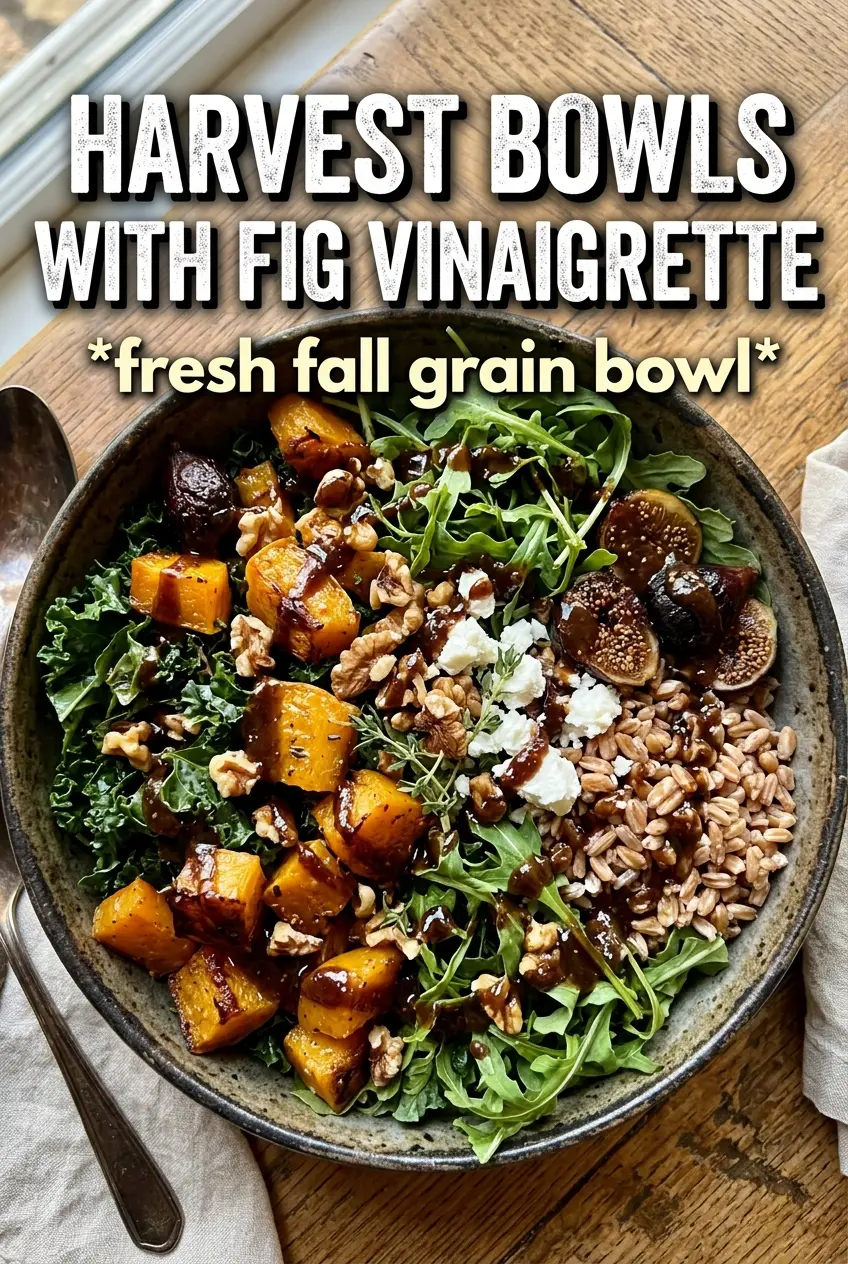
Harvest Bowls With Fig Balsamic Vinaigrette
Ingredients
Equipment
Method
- Preheat the oven to 425F and arrange cubed sweet potatoes on a sheet pan for roasting. Roast for 25 minutes until browned and tender, flipping once for even color.
- Spread drained chickpeas on a separate sheet pan so they roast in a single layer. Roast at 425F for 20-25 minutes until crispy, shaking the pan once halfway through.
- Whisk fig jam, balsamic vinegar, olive oil, Dijon mustard, minced garlic, salt, and pepper in a bowl until smooth. Continue whisking until no streaks of jam remain.
- Add cooked farro or quinoa to 4 bowls as the base. Keep the grains mounded so toppings don’t slide off.
- Top each bowl with roasted sweet potatoes. Distribute them evenly for a balanced mix of tender cubes.
- Add crispy roasted chickpeas over the sweet potatoes. Scatter so they stay crisp against the warm base.
- Layer shaved Brussels sprouts on top of each bowl. Use a light hand so the sprouts remain fresh and not soggy.
- Sprinkle pomegranate seeds across each bowl. Add them last for bright bursts of color.
- Finish with candied pecans over each bowl. Sprinkle generously for sweet crunch.
- Crumble goat cheese over each bowl. Aim for uneven crumbles so you get creamy bites in every forkful.
- Drizzle fig balsamic vinaigrette generously over the bowls. Stop when the toppings look glossy, not drenched.